








The birth of Starbucks Pike Place Roast coffee beans is inextricably linked to the coffee flavors of Latin American origins. This article begins with the development story of this classic blend, then traces the cultivation history and regional characteristics of Latin American coffee, focusing on the distribution of Guatemalan coffee regions, the grading system, and the washed processing method. At the same time, by combining two beans from the Front Street Coffee daily-drinking series—Huehuetenango and Antigua La Flor del Cafe—it presents a complete tasting path from variety and processing method to roasting and cupping, helping coffee enthusiasts build a systematic understanding of Latin American washed coffee.
For more specialty coffee knowledge, please follow the WeChat official account: Front Street Coffee (FrontStreet Coffee).
Latin America occupies one of the three major coffee-producing regions in the world, and the coffee beans born here often carry classic and highly recognizable flavors. In Front Street Coffee's daily-drinking series, there are several beans from Latin America, such as Brazil Cerrado, Guatemala Huehuetenango, and Colombia Huila, each presenting the most representative taste of the region. Front Street Coffee's approach to designing the daily-drinking series is, on the one hand, to preserve the basic flavor of the origin so as to build recognizability, and on the other hand, to pursue affordability and high cost performance.
Starbucks Pike Place medium roast coffee beans are made from Latin American coffee beans and display a typical Latin American style: chocolate notes, nutty aroma, a smooth and gentle mouthfeel, and a solid body. This bean was launched in 2008, when adjustments were made to the roasting method and the "Consistent Brew&" project was launched, meaning consistent brewing. The original trial formula included coffee beans from Colombia and Guatemala. After repeated revisions, the result was a balanced, smooth coffee bean with a sweet, gentle finish and rich layers of flavor. It was named Pike Place Roast to commemorate Starbucks' first store opened in Seattle's Pike Place Market.
Latin American Coffee-Producing Regions Latin America broadly refers to the region of the Americas south of the United States, covering Mexico (North America), Central America, the West Indies, and South America. The climate of this continent is known for being hot and humid, with low-altitude areas being stuffy and damp, while high-altitude areas are relatively dry and cool.
Coffee in Latin America Coffee cultivation in Latin America can be traced back to the eighteenth century and is closely related to Spanish colonial rule at the time. Spanish is the official language of most Latin American countries, while Brazil is mainly Portuguese-speaking because it was once a Portuguese colony. During the Spanish colonial period, coffee cultivation expanded significantly, but there were shortcomings in quality. It was not until the rise of the specialty coffee concept that Latin American countries began to emphasize refined production. Latin American coffee beans are mainly sold to the United States, followed by exports to Europe and Asia.
As mentioned earlier, Starbucks Pike Place coffee beans use coffee beans from Guatemala and Colombia, two countries located in Central America and South America respectively. Front Street Coffee has also recently introduced several coffee beans from different origins for tasting and evaluation, including beans from Guatemala. In fact, coffee tasting has always been an ongoing part of Front Street Coffee's work. Front Street Coffee's starting point is not simply selling coffee beans, but tasting coffee from around the world. In this process, Front Street Coffee hopes to understand the differences among each coffee-producing region, different varieties within the same region, and different processing methods for the same variety, and to build a corresponding database. At the same time, it conducts horizontal comparisons among different origins, allowing more coffee enthusiasts to glimpse the full picture of the coffee world.
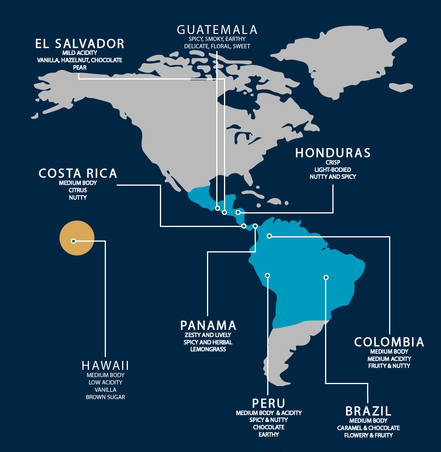
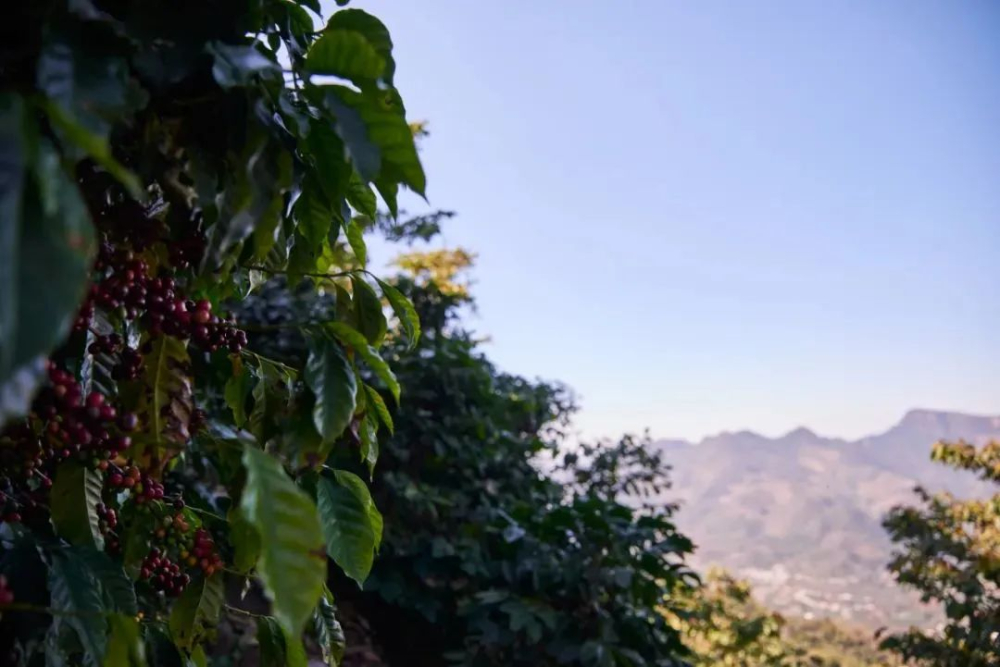
Guatemalan Coffee Coffee produced in Guatemala has a distinctive smoky flavor and abundant juiciness. The main varieties are Bourbon, Typica, Caturra, and Catuai. The coffee-growing belt is mostly located above 1,500 meters in altitude, with tropical rainforests, volcanic geology, and variable microclimates.
Guatemala is divided into eight major regions, including five volcanic regions and three non-volcanic regions. The five volcanic regions are: Antigua, Acatenango, Atitlan, Volcanic San Marcos, and Fraijanes. The three non-volcanic regions are: Huehuetenango, Coban, and New Oriente.
When people talk about Guatemala, most will first think of Antigua and Huehuetenango, which respectively represent the country's two major types of producing regions. In Front Street Coffee's daily-drinking series, there is a Guatemala Huehuetenango. In fact, Antigua's reputation long overshadowed Huehuetenango, especially four or five years ago, when the transaction price of Antigua coffee beans consistently ranked first among all regions. However, with the advancement of specialty coffee, the coffee quality of Huehuetenango gradually came into the view of enthusiasts, and the situation of one region dominating alone has also been quietly changing.
Of course, a good region does not mean that every batch of beans produced there has excellent flavor. When Front Street Coffee cupped several Huehuetenango beans from different estates, it found that one of them had an obvious rubbery taste, which had seriously deviated from Guatemala's signature smoky tone and was instead unpleasant.
[Guatemalan Coffee Bean Grading] The higher the altitude, the denser the coffee beans and the higher the green bean grade: SHB (Strictly Hard Bean): grown at 1,500-1,700 meters; HB (Hard Bean): grown at 1,350-1,500 meters; SH (Semi-Hard Bean): grown at 1,200-1,350 meters; Extra Prime (Extra Prime Washed Bean): grown at 1,000-1,200 meters; Prime (Prime Washed Bean): grown at 850-1,000 meters; Good Washed (Good Washed Bean): grown at 700-850 meters.
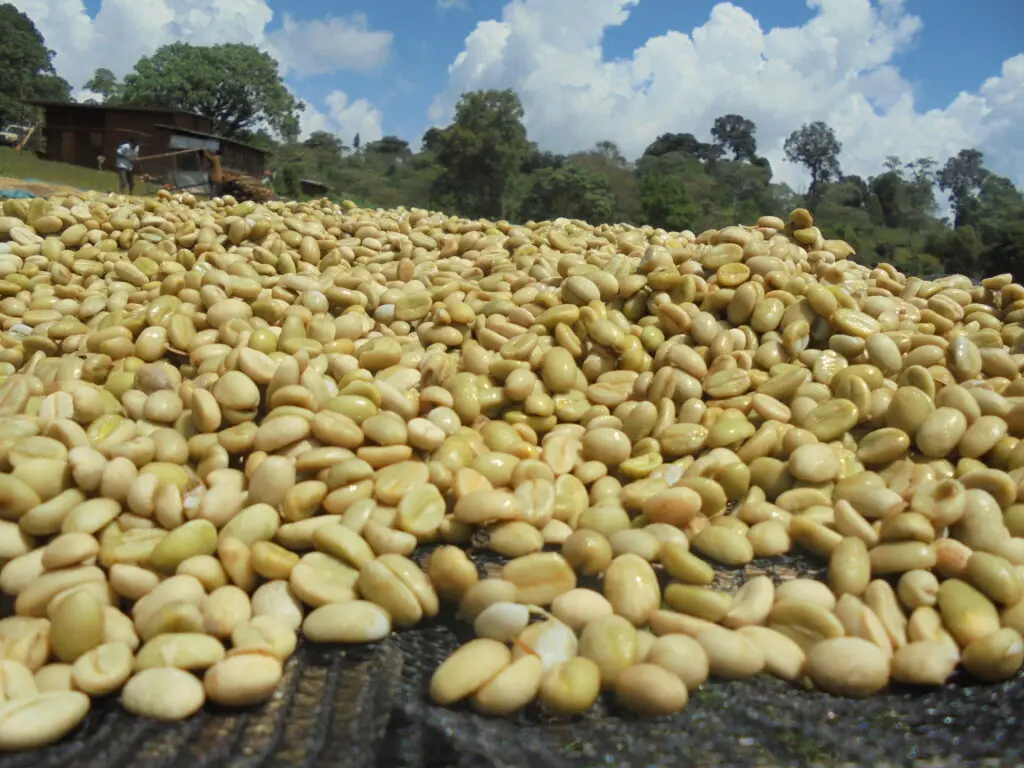
[Guatemalan Coffee Bean Processing Methods] Guatemala mainly uses washed processing, with sun-dried processing accounting for a relatively small proportion. Front Street Coffee often encounters customers asking: what exactly is the difference between washed and sun-dried? You should know that even coffee beans from the same region and the same estate are divided into washed and sun-dried. Friends who often buy Front Street Coffee daily-drinking beans will find that most of Front Street Coffee's daily-drinking beans use washed processing, because the washed method can present the basic flavor of a producing region and is also the starting point for understanding a region's flavor. Sun-dried processing, on this basis, adds extra sweet aroma and fermented notes.
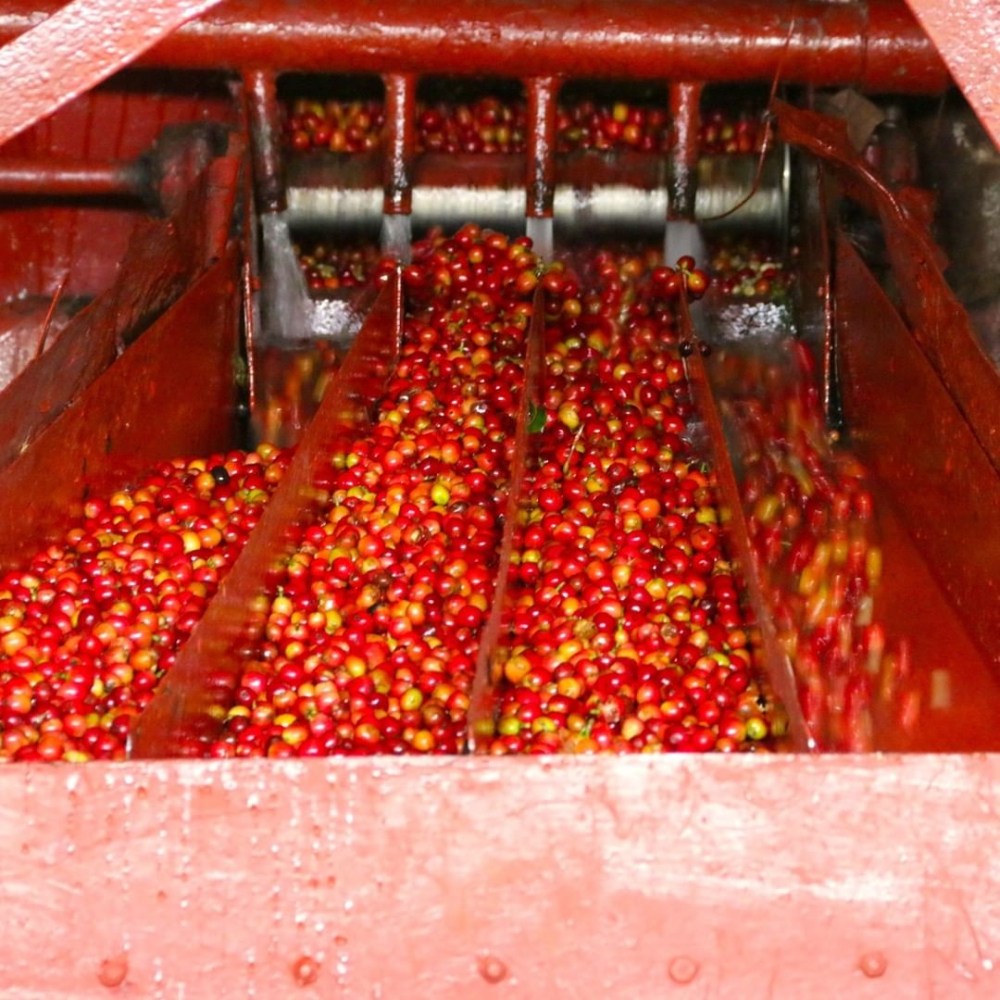
1. Harvesting. After ripe coffee cherries are picked, impurities and defective beans are initially removed and floating beans are screened out. This step is the same as in the sun-dried method. 2. Pulping. Fresh cherries are sent into a pulping machine to remove the skin and pulp. Unripe cherries are screened out at this stage because their pulp is difficult to separate. After passing through the pulping machine, what remains is mucilage, parchment, and seeds. 3. Fermentation to remove mucilage. The seeds with the pulp removed but still carrying mucilage are moved into a fermentation tank. Although it is called the washed method, it does not actually use water to wash away the mucilage. Instead, it uses fermentation to remove the mucilage through biological decomposition. Fermentation lasts about 16-36 hours, during which it must be stirred frequently to accelerate the separation of mucilage and seeds. Washed fermentation produces acidic substances such as citric acid, malic acid, and acetic acid. These acid values seep into the green beans, making washed beans more acidic than sun-dried beans. Only after fermentation is complete does the actual washing stage begin: rinsing the beans again.
4. Drying. After washing is completed, sun drying or machine drying is also needed to reduce the moisture content to 12%. Since the washed method has already removed the pulp, there is no need to worry about mold during drying as there is with the sun-dried method. The dried parchment green beans are also not as hard as sun-dried beans that still contain pulp and skin, and can be polished and hulled with a hulling machine to obtain green beans.
[Huehuetenango Coffee Beans]
Guatemala Huehuetenango Region: Huehuetenango Altitude: 1,500-2,000 m Varieties: Bourbon, Caturra, Catuai Processing method: washed processing
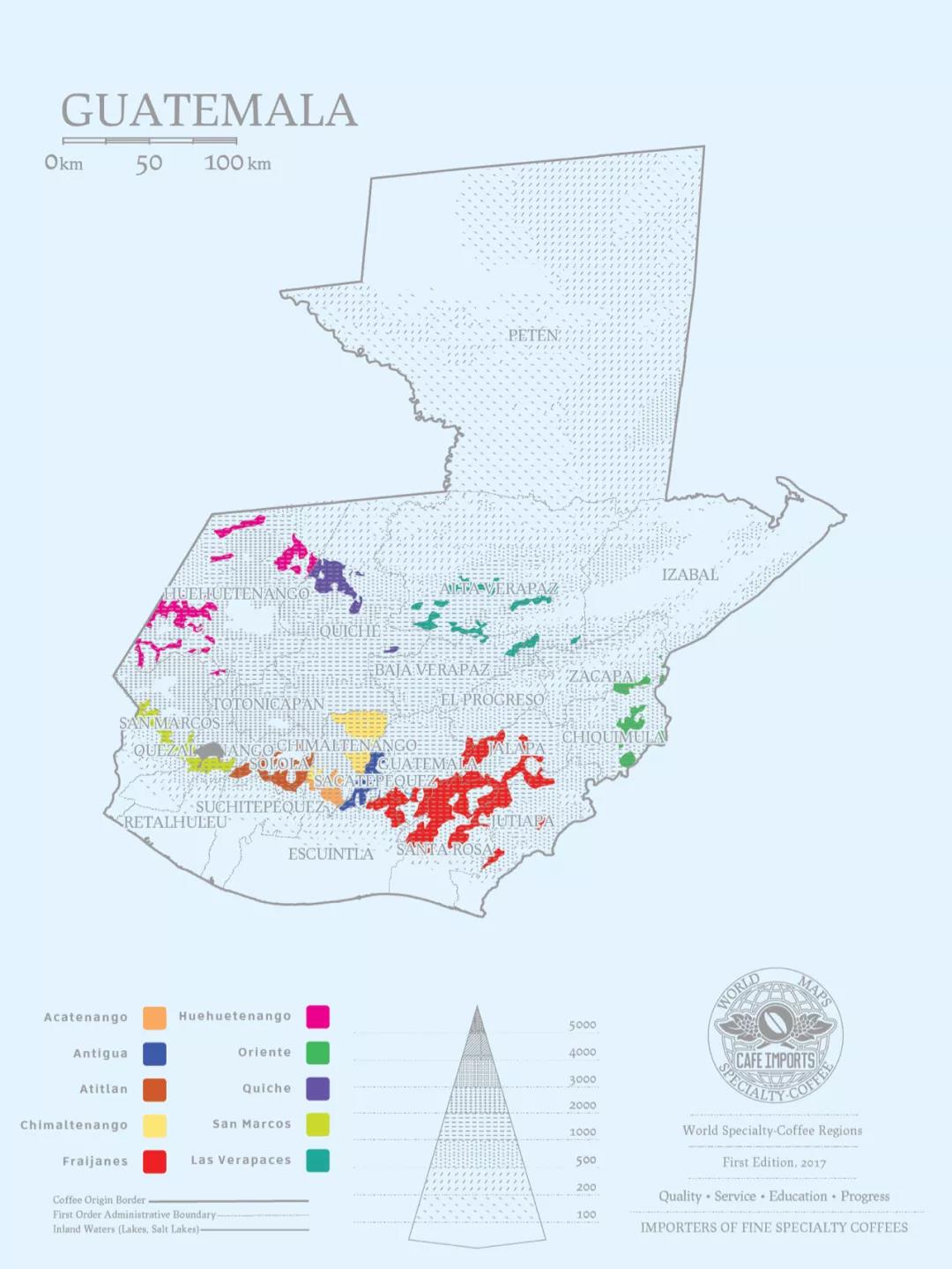
Huehuetenango is located in central Guatemala. Its name comes from Nahuatl and means "place of the ancients (or ancestors)." This region is almost the most remote from the capital among other producing regions, and the route is rugged. Because there is dry hot wind from Mexico, although the mountainous area is high, there is no frost damage, so coffee can be grown at nearly 2,000 m.
The batch of Huehuetenango selected by Front Street Coffee consists of the Bourbon, Caturra, and Catuai varieties. Bourbon is a natural mutation of Typica and, like Typica, is an ancient and high-quality variety. The beans are slightly smaller and rounder in appearance than Typica. Caturra is a natural mutation of Bourbon and has a fresh lemon-citrus acidity on the palate, with sweetness slightly inferior to Typica and Bourbon. Catuai is a hybrid of Caturra and the Mundo Novo variety. It can adapt to the harsh climate of high-altitude areas and also has high yield. It originated in Brazil and is now widely planted in Central America. Its acidity is bright, but its layers are thinner than Mundo Novo and its body is lower.
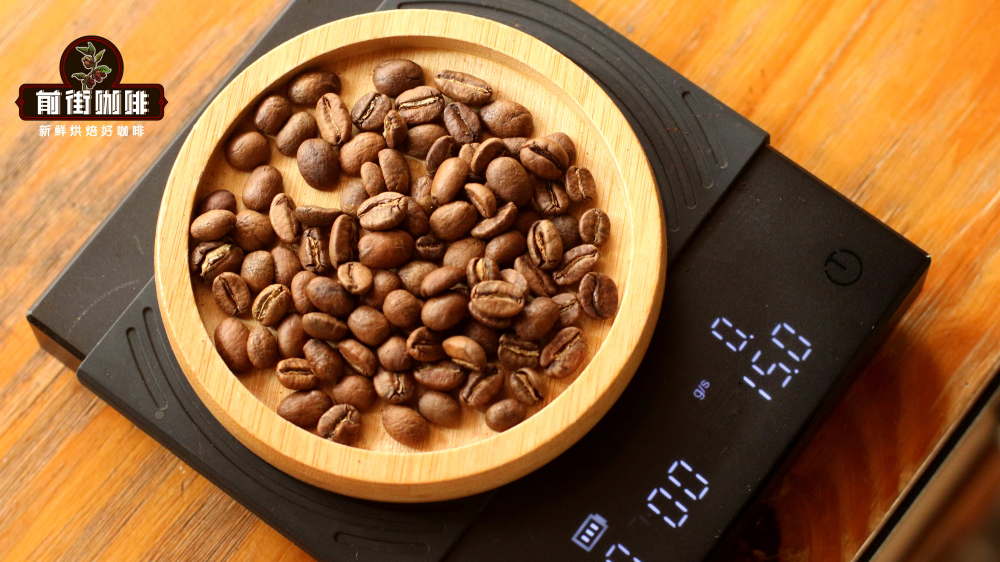
Front Street Coffee determined the direction of a light roast. In order to highlight its rich juicy mouthfeel, multiple parameter adjustments and cupping evaluations were carried out.
Front Street Coffee Guatemala Huehuetenango Coffee Bean Roasting Curve
Front Street Coffee Guatemala Huehuetenango Coffee Bean Cupping and Brewing Report
Brewing Suggestions
[Antigua Coffee Beans]
Guatemala La Minita La Flor del Cafe La Flor del Cafe Region: Antigua region Estate: La Minita Altitude: 1,200-1,600 m Varieties: Bourbon, Caturra Processing method: washed processing Grade: SHB
The Antigua region is located in the central highlands of Guatemala. It has a subtropical monsoon climate, abundant rainfall, and fertile volcanic ash soil. The coffee produced has bright acidity and fruity aroma, which has made Antigua a famously renowned coffee-producing region in Guatemala.
La Minita is a trader that created its own coffee brand in Guatemala, "La Flor del Cafe," meaning "flower of coffee," translated into Chinese as "花神."
The batch of La Flor del Cafe purchased by Front Street Coffee consists of the Bourbon and Caturra varieties. Bourbon is a natural mutation of Typica and, like Typica, is an ancient and high-quality variety. The beans are slightly smaller and rounder in appearance than Typica. Caturra is a natural mutation of Bourbon and has a fresh lemon-citrus acidity on the palate, with sweetness slightly inferior to Typica and Bourbon.
Front Street Coffee determined the direction of a light roast. In order to highlight its rich juicy mouthfeel, multiple parameter adjustments and cupping evaluations were carried out.
Front Street Coffee Guatemala La Flor del Cafe Coffee Bean Roasting Curve
Front Street Coffee Guatemala La Flor del Cafe Coffee Bean Cupping and Brewing Report
Brewing Suggestions
The above content is compiled by CoffeeHunters, a coffee news website.


