







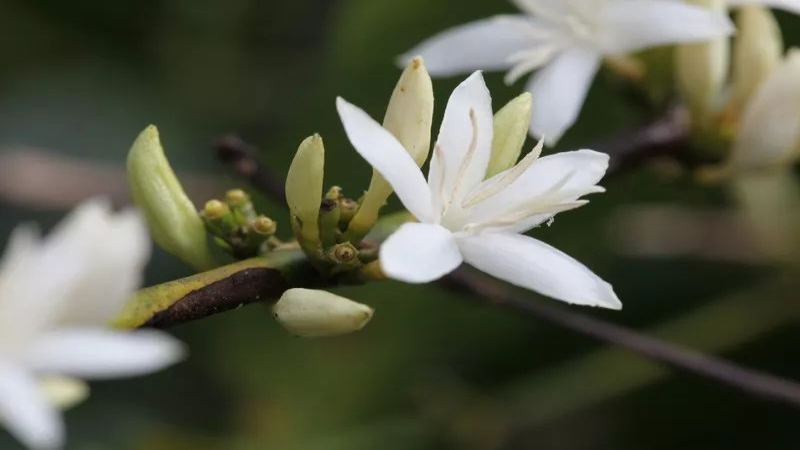
How do altitude and soil shape these Panama coffee seed estates?
El Burro Estate and Finca La Mula are two Boquete Geisha farms named after animals, and they are often confused. Both sit around the Baru Volcano in Chiriqui Province, Panama, on opposite sides of the range near Volcan and Boquete. Each has its own family heritage, and each produces Geisha with distinct aromatics.
The Lamastus family history underpins El Burro, and the roughly 22-kilometer gap between the two areas becomes nearly 100 kilometers by road. Altitude, microclimate and volcanic soil shape how the coffee seed develops, while drying and processing decide how much citrus and floral note reaches the cup. An old street coffee house in Boquete may pour either, so labels matter.
In the Boquete region of Panama, there are two famous Geisha estates named after animals that are often confused—El Burro Estate and Finca La Mula. Both are located around the Barú Volcano in Chiriquí Province, yet each has its own unique family heritage and pioneering story. Front Street Coffee guides you through the century-old history of the Lamastus family, into El Burro Estate and Finca La Mula, to understand how altitude, microclimate, and volcanic soil shape Geisha flavor, and shares Front Street's firsthand tasting experience of El Burro Estate's natural Geisha, providing coffee lovers with a clear guide to distinguishing these famous estates.
For more specialty coffee knowledge, please follow: Front Street Coffee (Frontsteet Coffee)
Friends familiar with Panamanian specialty coffee will probably, like Front Street, immediately think of Boquete when mentioning this country's quality bean-producing regions. After all, household names like Hacienda La Esmeralda, Elida Estate, and Duncan Estate are all rooted here, making it a top-tier lineup in the Geisha world.
However, on this fertile land, two estates coincidentally named after animals have Chinese names that sound particularly similar—one is called "El Burro Estate," the other "Finca La Mula," and it's easy to mix them up if you're not careful. Today, Front Street takes you into both estates and, by the way, lets you experience the unique charm of Geisha.
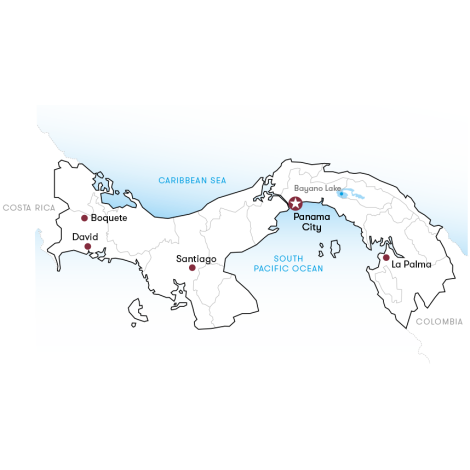
Let's start with geography. Coffee estates in Panama are almost all concentrated in the western province of Chiriquí, right next to neighboring Costa Rica, distributed on both sides of the Barú Volcano range: to the west is Volcán, and to the east is Boquete. Although the straight-line distance between Volcán and Boquete is only about 22 kilometers, driving requires going around the main mountain range, making the actual journey nearly 100 kilometers and taking at least an hour and a half.
Boquete is actually the name of a valley, nestled between the Barú Volcano and the Jaramillo mountain, running in a narrow, elongated direction. The scenery here is pleasant, cool and refreshing in the dry season, with fine drizzle in the rainy season. Even without mentioning coffee, Boquete itself is enough to attract tourists from various countries. Locals who have settled here long-term have built many restaurants, villas, and resorts along the Rio Caldera river, making this a popular place for leisure and exploration.
While looking at the map, Front Street noticed that Panama is located between two oceans, and the air currents from the Caribbean Sea and the Pacific Ocean converge in the Boquete Valley at areas above 6,500 feet in altitude, creating a unique and variable microclimate. Temperature and humidity are just right, and combined with the volcanic soil, coffee cherries grown here are more likely to develop rich, layered aromas.
El Burro Estate
El Burro means "donkey" in Spanish, and this estate comes from Panama's famous coffee family—the Lamastus family.
The Lamastus family's story began in 1918 and has been passed down through four generations. From the first generation, Robert Louis Lamastus, who established the first coffee estate, to his and his wife Elida's son Thatcher, then to the more familiar Wilford Lamastus, and finally to today's youngest fourth generation.
A century later, the Lamastus family owns three estates: Elida, El Burro, and Luisito. Among them, Elida Estate, named after the first-generation mistress, is not only the oldest and most famous but also a frequent winner in the BOP green bean competition.
As for the origin of El Burro Estate's name, Front Street has not found an exact official explanation. It is said that the estate's location was originally a place for raising livestock, so the owner named it "El Burro."
According to the official website, El Burro Estate was founded in 1925 and initially owned by Thatcher's father-in-law, Amado Boutet, who was also the maternal grandfather of the third-generation manager Wilford Lamastus. At that time, global coffee market prices were persistently low, and the family had to sell large portions of the estate. Wilford and his younger brother Patrick couldn't bear to see their ancestral property sold off, so they bought it back and continued to operate it. To keep the estate running, Wilford's family had to supplement their income with other work. After years of persistence, it has become today's "big-name estate" that has been shortlisted in major green bean competitions year after year.
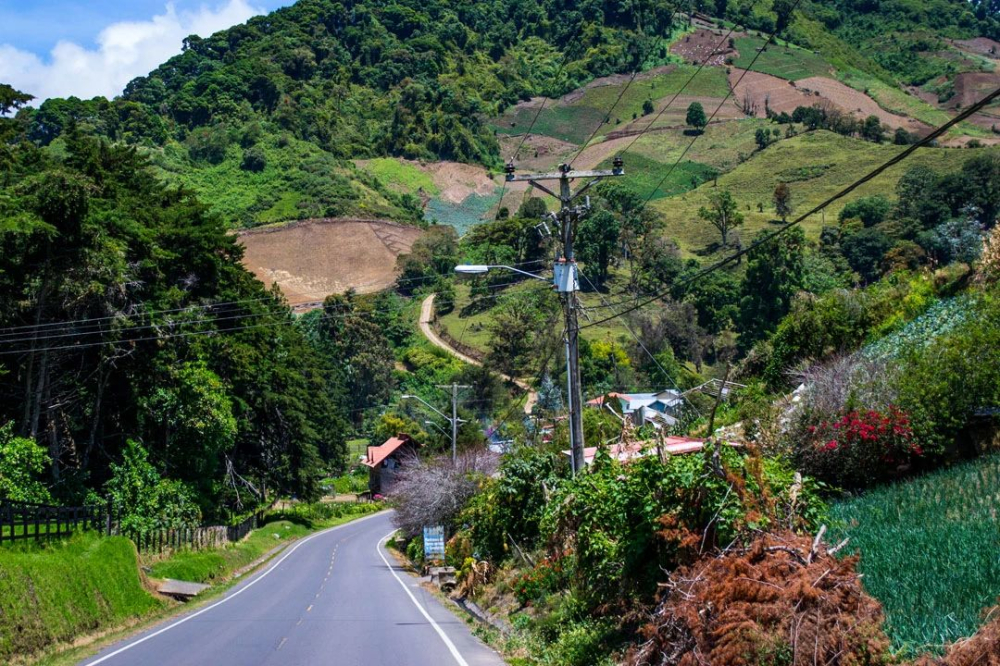
El Burro Estate is located southwest of Elida and is one of Panama's southernmost plantations, covering 65 hectares. Because part of the land falls within Barú Volcano National Park, only 30 hectares are actually used for growing coffee, while more than half of the rest is surrounded by primary forest. This has also preserved rich biodiversity on the estate, making it a habitat for many rare plants, birds, and mammals. For decades, the farm has strictly prohibited hunting.
El Burro Estate mainly grows two varieties: 50% Geisha and the other 50% Catuai. The coffee trees are distributed between 1,575 and 1,800 meters above sea level, with an average altitude of about 1,675 meters. The high altitude brings significant temperature differences between day and night, and combined with fertile volcanic ash soil, misty dry seasons, and cold, damp nights, the highest areas sometimes even drop below 10 degrees Celsius. Therefore, coffee trees here take four and a half to five and a half years to start bearing fruit, and the cherry ripening period is about a month later than in lower-altitude regions, allowing the beans more time to accumulate flavor compounds.
To taste the flavor of the competition, Front Street also once acquired a natural Geisha from El Burro Estate, using a medium-light roast. After brewing, it presented a rounded acidity like green grapes and apricots, high sweetness from oranges and dried longan, accompanied throughout by elegant floral notes and a slight fermented feel. As the temperature drops, the sweet-and-sour orange flavor becomes even more prominent!
Finca La Mula
Compared with El Burro Estate, Finca La Mula's origins are clearly documented and deeply connected to Geisha. Let's turn the clock back to 2004. In the very year Geisha began to emerge, Willem Boot, serving as a judge, tasted Geisha coffee for the first time and was immediately moved by its refined orange aroma and honeyed charm, which inspired him to establish his own estate.
Willem Boot is renowned in the coffee industry. Born in the Netherlands, he grew up in the small town of Baarn near Amsterdam and had a strong interest in coffee from an early age. Those who know Geisha are probably familiar with Willem, and may even find him recognizable—he is the guide who led the Gesha Village team into the gesha forest and is known as the "Godfather of Geisha."
At the age of 14, he roasted his first batch of coffee. After earning a master's degree in business economics from the University of Amsterdam, he co-owned and operated a specialty coffee business with his family. In 1989, he moved to San Francisco, USA, and worked at Probat. In 1998, he founded Boot Coffee, providing consulting to coffee companies, coffee associations, development banks, and governments worldwide. In 2016, he founded Boot Coffee Campus, a leading training institution near San Francisco, California, serving the coffee industry throughout the Pacific region.
Through an introduction by Panamanian estate owner Graciano Cruz, Willem found a high-altitude plot near the Barú Volcano that was very suitable for growing coffee, now known as Finca La Mula, and bought it in 2005. Because he rode a mule the first time he went there, he named the estate "La Mula."
Finca La Mula is located in southern Chiriquí Province, Panama, adjacent to Barú Volcano National Park, on a slope at 1,700–1,800 meters above sea level. The soil here is rich in minerals, the surrounding natural scenery is beautiful, and the jungle atmosphere is pristine, providing exceptional conditions for coffee cultivation, but it also meant that clearing the land was extremely difficult.
Because there was no proper road to the forest, all coffee seedlings had to be mixed by hand and carried along winding forest paths before they could be planted in the fields. It was not until 2007 that Willem and his team successfully planted more than 6,000 Geisha trees on this mere 5-hectare plot. Today, Willem owns three estates: Finca La Mula, Finca La Cabra, and Finca Sofia. Finca La Mula is the smallest, but since entering competitions in 2014, it has won numerous awards and has become a high-quality famous estate cherished by countless Geisha enthusiasts.
The above content is compiled by CoffeeHunters, a coffee news website.


