







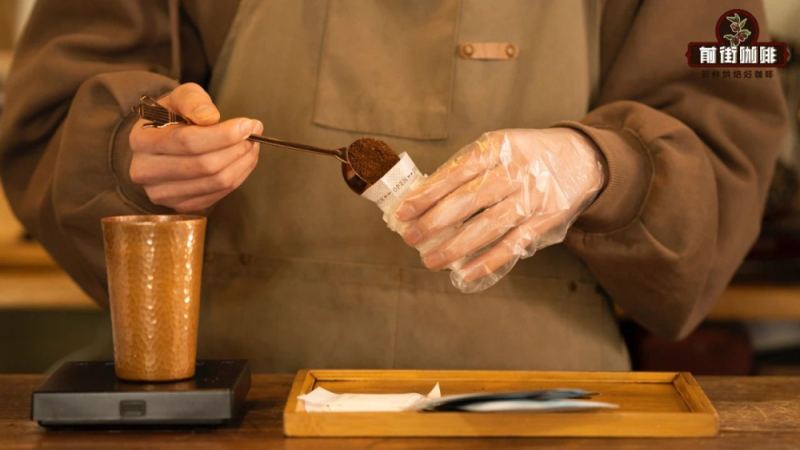
What water ratio and pouring steps does a drip bag coffee need?
A drip bag is a single-use brew, not a tea bag. Warm the cup, pre-wet the grounds, then pour in stages at a moderate temperature and let the bag drain before removing it. Repeated steeping and long soaking pull bitterness, and pouring water at random gives an uneven extraction.
Drip bag coffee uses ground Arabica, often the same lots sold for pour-over, so bean quality is not the limit. Each filter holds its coffee shape and bed depth, which controls how fast water passes through. Check the roast date and coffee powder shelf life, since flavor fades over time. Office workers can still brew consistently with these steps.
Drip bag coffee, with its combination of portability and flavor, has become the daily go-to for many coffee lovers in the workplace. However, this seemingly simple drip bag actually involves quite a few brewing pitfalls, such as treating it like a tea bag and repeatedly steeping it, pouring water arbitrarily, and paying no attention to water temperature. From the perspective of Front Street Coffee, this article systematically sorts out the essence of drip bag coffee, common brewing misconceptions, and provides a complete demonstration of steps including warming the cup, pre-wetting, and pouring, while also explaining how to choose drip bag products according to personal taste and the practical reference value of the shelf life, helping coffee enthusiasts consistently produce a delicious cup of drip bag coffee even when busy.
As the specialty coffee consumer base continues to grow, more and more people are beginning to encounter and try single-origin coffee. However, Front Street Coffee has found that most coffee-loving friends are office workers who find it hard to carve out time to make pour-over coffee themselves, so drip bag coffee has become their alternative. Yet in actual use, many people still misunderstand how to brew drip bags, such as repeatedly adding water as if it were a tea bag, or letting it steep for a long time without removing it. Below, Front Street Coffee will discuss drip bag coffee.
What Is Drip Bag Coffee
Although drip bag coffee and the instant coffee commonly seen on supermarket shelves both belong to the portable category, they are fundamentally very different. The coffee beans used in drip bags, like those in single-origin coffee, all come from the Arabica species. Taking the store as an example, Front Street Coffee's Honduras Sherry drip bags and Brazil Queen's Manor drip bags use exactly the same beans as the pour-over versions of the same origin, only the extraction method differs. Instant coffee, by contrast, is mostly made from Robusta beans, whose flavor performance differs markedly from Arabica, which is why Robusta beans basically never enter the circulation system of single-origin coffee. Simply put, drip bag coffee is portable coffee made by grinding coffee beans into powder, placing them in a filter bag, and sealing it.
According to Front Street Coffee's understanding, the prototype of drip bag coffee was invented by the Japanese. Japanese society has a high volume of coffee consumption along with an extremely fast pace of life, which gave rise to many portable foods. It was Yamanaka Sangyo Co., Ltd. that first transplanted the idea of the tea bag onto coffee, creating filter-drip coffee and applying for a patent.
However, the drip bags designed in Yamanaka Sangyo's early days could not stably bear the weight during brewing and tended to lose balance while pouring water, so they were not successfully commercialized. It was not until 1998 that Daiki Shoji improved the original design by extending the ear portions outward, forming the drip bag coffee shape we are familiar with today.
What to Pay Attention to When Brewing Drip Bag Coffee
As Front Street Coffee mentioned earlier, the core value of drip bag coffee lies in convenience, but brewing a delicious cup of drip bag coffee is not particularly simple, though its cost-effectiveness is indeed higher than pour-over, since not every coffee enthusiast has the time to gather all the pour-over equipment. So how can you bring out the good flavor of a drip bag?
1. Control the Amount of Water
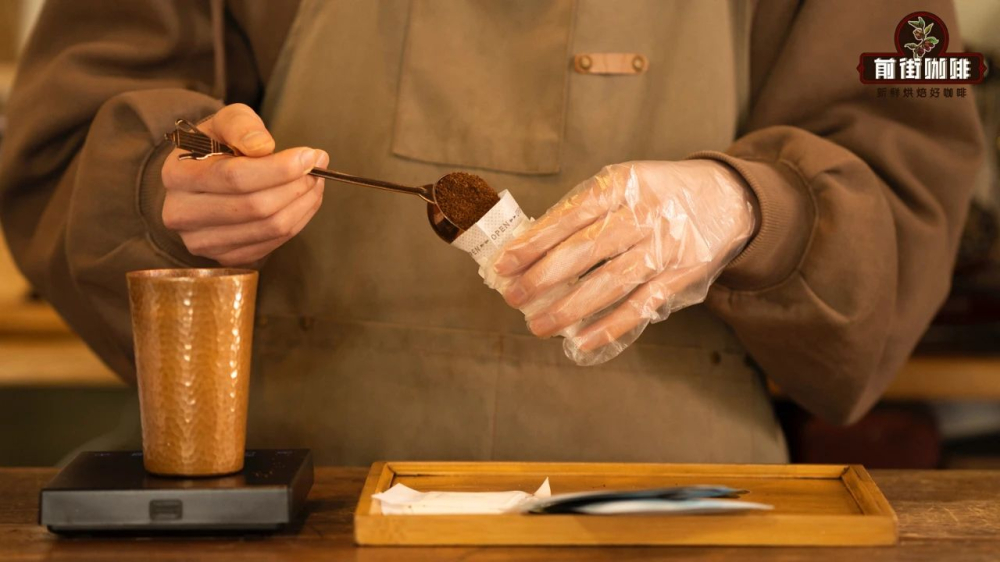
Front Street Coffee believes that among those new to drip bags, some will simply drop the drip bag into the cup and steep it in hot water. This is not entirely unworkable, but the coffee flavor will be diluted and taste rather weak. Unless you happen to like light American-style coffee, Front Street Coffee suggests pairing a 10-gram drip bag with 150 to 180 milliliters of water. Beyond that range, not only does the flavor become weaker, but it also tends to draw out undesirable extraction compounds. If you want it lighter, Front Street Coffee suggests first brewing to 150 milliliters, then removing the drip bag and adding hot water separately to adjust the strength.
2. The Drip Bag Should Not Stay in the Water
Although the drip bag was inspired by the tea bag, the logic of use is not the same. A tea bag steeped longer tastes stronger, whereas a drip bag left soaking for a long time will continuously release caffeine, causing over-extraction, with bitterness and off-flavors emerging along with it. Therefore Front Street Coffee suggests that the drip bag should be discarded after about 4 minutes of brewing, or used as flower fertilizer, which is also a fine use.
3. Pay Attention to Brewing Water Temperature
As Front Street Coffee said earlier, drip bag coffee is essentially ground single-origin coffee, so its water temperature requirements are the same as pour-over. Water that is too cool leads to under-extraction, so the temperature must be well controlled. Front Street Coffee suggests letting just-boiled water sit for 1 to 2 minutes before brewing.
4. Drip Bag Coffee Cannot Be Re-brewed
As Front Street Coffee mentioned in point two, a drip bag cannot be steeped for a long time, which naturally means it cannot be repeatedly brewed either, otherwise all you get is a cup of coffee that tastes bad and does your body no good.
Those are the key points to note when brewing drip bag coffee. Next, Front Street Coffee will explain the correct method of operation.
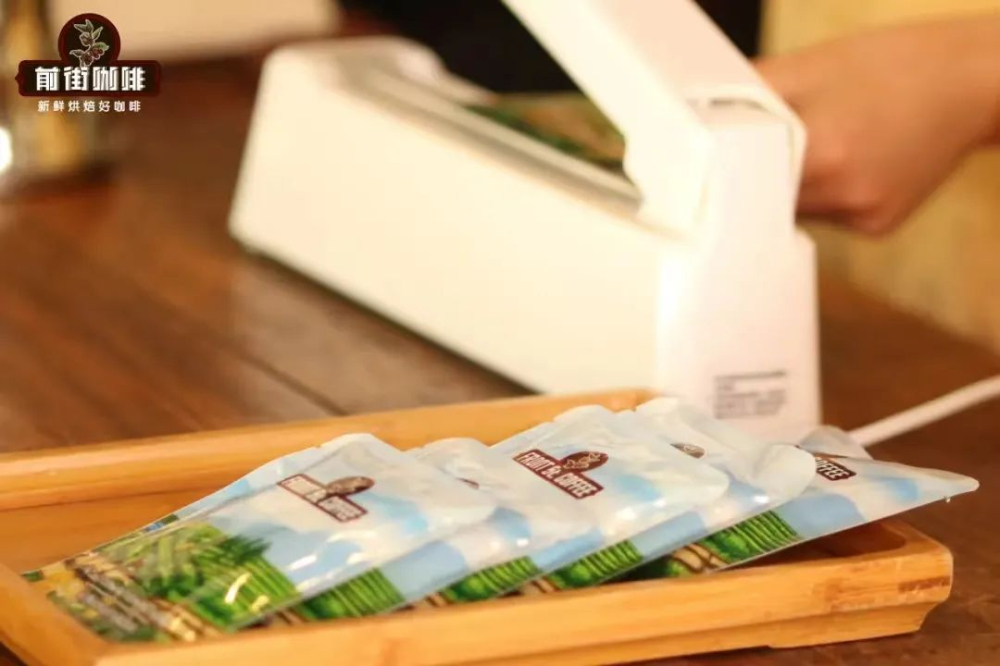
The Correct Steps for Brewing Drip Bag Coffee
1. Warm the Cup
First prepare the cup and pour in a small amount of hot water to warm it. The benefit is avoiding the brewed coffee cooling too quickly. Coffee flavor keeps changing with temperature, and if it cools too abruptly, many layers of nuance are gone before you can appreciate them.
2. Control the Water Temperature
The pouring temperature is crucial; it is recommended to keep it between 85 and 90 degrees Celsius. If the brewed coffee tastes bitter, try lowering the water temperature; if it is too weak or astringent, you can raise it appropriately, but never go outside the 85 to 90 degree range.
3. Hang It on the Cup Rim
First gently shake the drip bag to let the coffee grounds settle back to the bottom, avoiding powder spilling out when you tear it open. Then pour out the hot water used to warm the cup, tear open the drip bag's seal, spread open the paper ears on both sides, shake lightly to level the coffee grounds, and finally hang it on the rim of the cup.
4. Pre-wet
For the first pour, use just enough water to moisten the coffee grounds; too much or too little will affect the final flavor. After pouring, wait about 20 seconds to let the coffee grounds absorb water fully. The strength of the coffee can be adjusted through the pre-wetting time; extending it to 40 seconds yields a stronger result.
5. Pour the Water
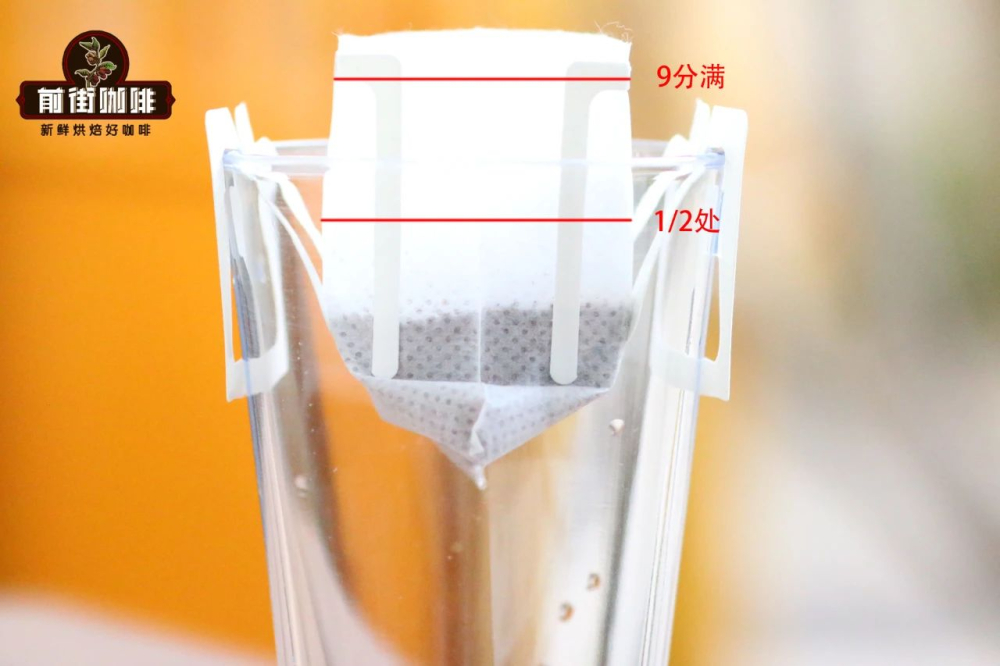
For the second pour, you can fill the filter bag to about eight-tenths full, keeping the stream as thin and steady as possible. Once the water level drops to the height it was at during pre-wetting, continue pouring to eight-tenths full until the total extraction reaches 150 to 180 milliliters. After extraction is complete, there is no need to wait for all the water in the filter bag to drip through; simply remove and discard it.
How to Choose Drip Bag Coffee
The above covers the correct drip bag brewing method and related considerations. As for how to choose drip bag coffee, Front Street Coffee suggests coffee enthusiasts simply choose based on the single-origin flavors they usually enjoy, because a drip bag is itself single-origin coffee ground and bagged. Single-origin beans like Ethiopian Yirgacheffe, Brazil Queen's Manor, Indonesian Mandheling, and Honduras Sherry can all be made into drip bag form by Front Street Coffee for friends who need them.
The Shelf Life of Drip Bag Coffee
For food safety reasons, China's relevant food regulations set the shelf life of coffee products at one year. But in reality, if you want to drink a cup of coffee that is up to standard, Front Street Coffee (FrontStreet Coffee) suggests finishing it as early as possible. Friends who regularly buy coffee beans from Front Street Coffee know that the peak flavor period of coffee beans is 30 days, meaning drinking within one month lets you better experience the flavor. After all, coffee aroma is a naturally volatile substance that diminishes over time, and once ground into powder it dissipates even faster. Of course, if you merely treat coffee as a pick-me-up beverage, using it up within a year is also fine.
That is everything Front Street Coffee has compiled about drip bag coffee. We hope it helps coffee enthusiasts understand drip bag coffee more clearly and thereby choose the flavor that suits them best.
For more specialty coffee beans, please add the private WeChat of Front Street Coffee (FrontStreet Coffee), WeChat ID: kaixinguoguo0925
The above content is compiled by CoffeeHunters, a coffee news website.


