







How Much Caffeine Does a Drip Bag Coffee Contains?
A single drip bag of coffee typically holds about 8 to 12 grams of ground coffee, which yields roughly 60 to 120 mg of caffeine per cup, depending on the bean and roast. The FDA cites 400 mg per day as a level not generally linked to negative effects for healthy adults, so most people can drink around three to four bags daily.
Drip bag coffee was first patented in Japan in 1990 by Yamanaka Sangyo, and the double-sided hook design that lets the bag rest on a cup rim arrived in 1999. Caffeine levels vary with the bean: arabica beans hold roughly half the caffeine of robusta, so a bag built on arabica lands lower in the range.
Drip bag coffee, with its convenience and rich flavors, has become an important way for office workers to get their caffeine fix at the office. But exactly how much caffeine does each bag of drip coffee contain? How many bags can you drink a day without exceeding the limit? This article starts with the origins of drip bag coffee, introduces its development history and brewing key points, and uses specific data to calculate caffeine intake, combining it with FDA recommendations to give a reference upper limit. It also explains differences in individual sensitivity to caffeine, and finally recommends several Front Street Coffee drip bag products with different flavor profiles, helping readers make choices based on their own needs.
Coffee's status as a pick-me-up among modern office workers has long been firmly established. However, some people don't care for espresso and instead favor the unique flavors presented by single-origin beans from different regions. But in a fast-paced office environment, they can neither find the time nor have the proper equipment.
Does that mean office workers are out of luck? Of course not. Drip bag coffee is exactly the solution to this pain point. But a small number of people are especially sensitive to caffeine—just one small cup can keep them awake all night. So the question follows: how much caffeine is actually in a bag of drip coffee? What's the maximum number of bags you can drink in a day without overdoing it?
Let's first review the development of drip bag coffee.
In 1990, Japan's Yamanaka Sangyo Co., Ltd. invented the earliest drip-style coffee and formally submitted a patent application that same year, though at the time the hooks appeared only on one side.
In 1996, Daiki Shoji Co., Ltd. proposed an improved filter bag design, moving the hook parts down to the bottom edge of the filter bag, but the hooks were still located on only one side of the bag.
In 1999, Daiki Shoji applied to the European Patent Office for an invention patent for double-sided hook parts. This improved design finally allowed the filter bag to rest steadily on the rim of a cup, with the bag's opening fully spread out. This concept later became the market mainstream.
In 2001, a Japanese inventor created drip bag coffee and registered a patent, then brought it to market. Because it's easy to use and easy to carry, and the brewed coffee far surpasses instant coffee in taste and aroma, drip bag coffee now accounts for about 15% of Japan's regular coffee market.
Why are more and more people choosing drip bag coffee?
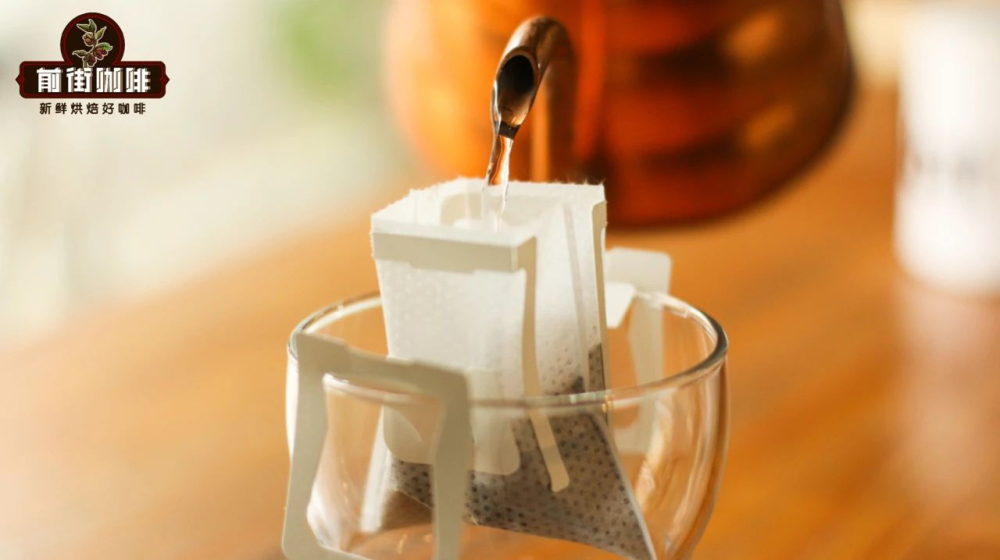
There's no other reason—it's just too convenient. Moreover, the drip bag does a good job of preserving the coffee's aroma and its original regional flavors. As long as you have hot water and a cup that holds about 200 ml, you can easily brew a cup of coffee. Sounds simple, right? It's also especially suited to places where it's inconvenient to set up coffee equipment—for instance, there's obviously no way to put a grinder in an office.
So, how do you brew a cup of drip bag coffee?
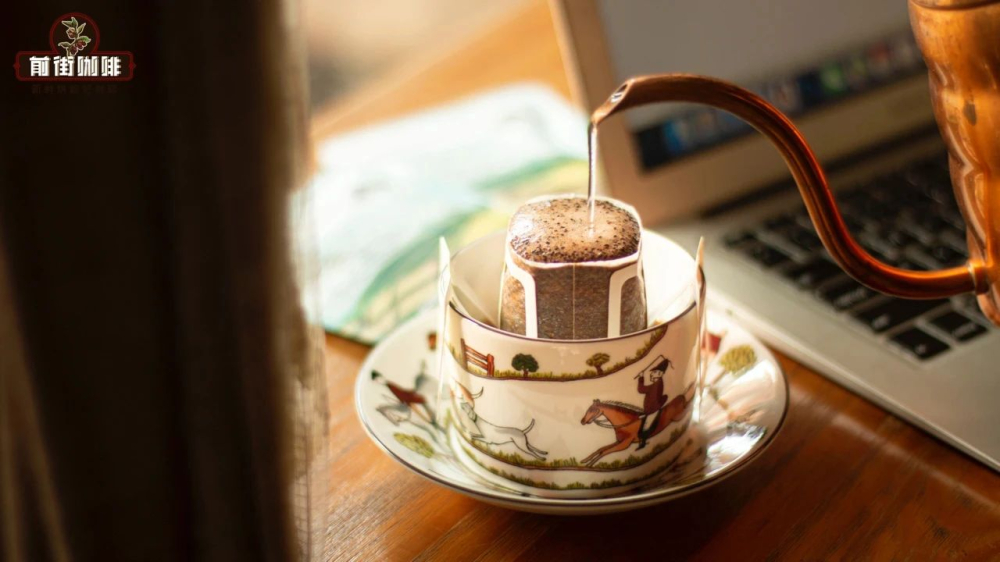
Choosing drip bag coffee is itself choosing convenience and speed, eliminating the steps of weighing beans, grinding beans, and wetting the filter paper that regular pour-over coffee requires. So how does Front Street Coffee brew drip bag coffee?
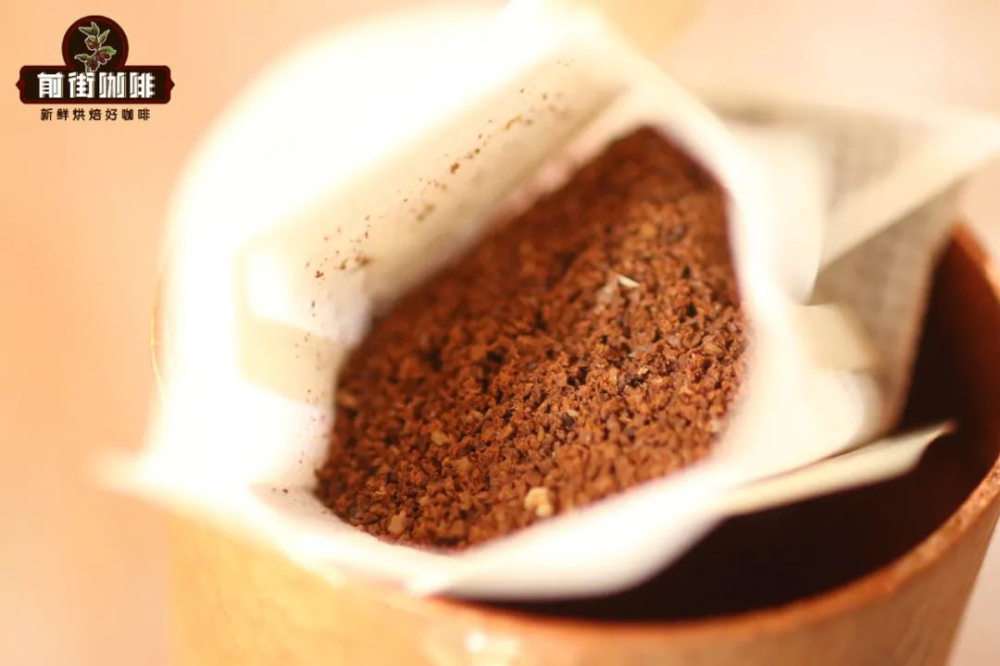
Generally speaking, a bag of drip coffee contains 8 to 12 grams of grounds, and each brew calls for about 120 to 180 grams of hot water. The exact amount can be adjusted to personal taste—use less water if you prefer it strong, more if you like it light. After pouring, remove the drip bag and discard it. The flavor of the beans used in drip coffee can be chosen according to personal preference.
In terms of convenience and the range of options, drip bag coffee offers richer, more natural aroma and flavor compared to instant coffee. However, a while ago Front Street received feedback from a customer who said there was a lot of sediment in the coffee. It turned out the customer had mistakenly assumed drip bags worked like instant coffee—that you could just pour the grounds into water and drink it. Though the taste wasn't bad, the sediment really did affect the mouthfeel.
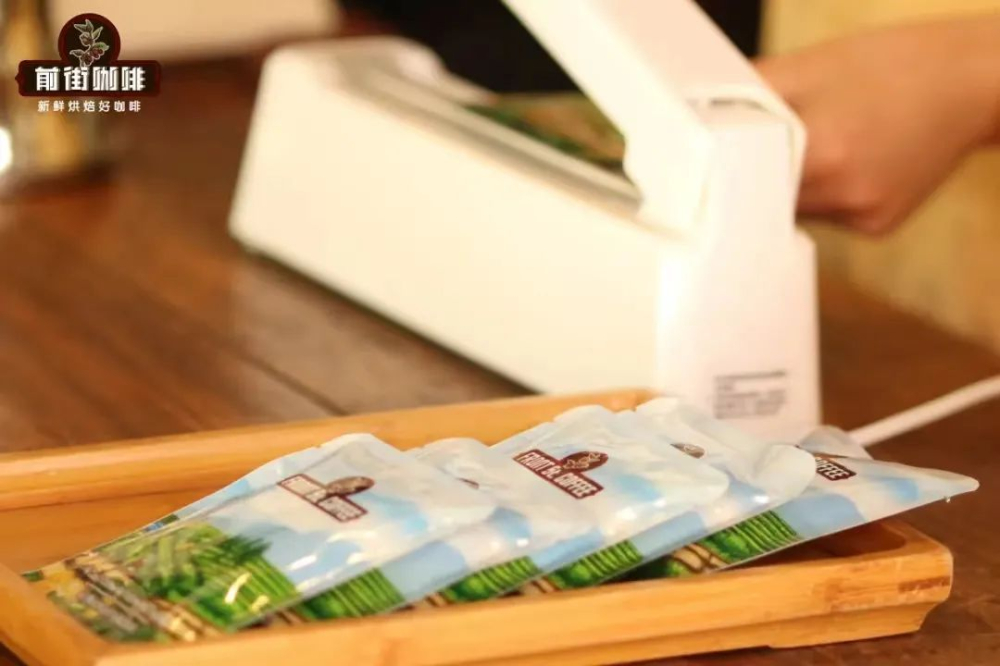
With normal brewing, try not to pour the coffee grounds out of the drip bag!
The coffee grounds in drip bag coffee are made from freshly roasted coffee beans, which contain a large amount of insoluble substances such as plant fiber. That's why drip extraction is typically used, to prevent coffee sediment from mixing into the final brew and affecting the taste.
How do you choose a drip bag coffee that suits you?
When shopping for drip bag coffee, you can consider freshness, bean origin, and coffee flavor. For example, to make it easier for customers to choose, Front Street Coffee divides its drip coffee flavors into five categories: fruity, floral, fermented, wine-like, and full-bodied.
For fruity flavors, the Yirgacheffe region of Ethiopia is recommended—Front Street · Gutingding drip bag is quite good. During cupping, Front Street found that washed Yirgacheffe has a clean, refreshing taste with bright, uplifting acidity, dominated by citrus notes, accompanied by fresh jasmine aroma and a honey finish.
For floral flavors, Front Street · Panama Geisha drip bag is recommended. Front Street's Panama Geisha coffee is mainly grown in the Baru volcano area of Boquete, at an altitude of 1,600 meters in a volcanic zone. Through cupping, Front Street Coffee found that Panama coffee performs exceptionally well in body, acidity, and floral notes.
If you like fruit-wine flavors, you can buy types with fermented aromas—Front Street · Mozart drip bag and Front Street · Strawberry Candy drip bag are highly recommended.
How much can you drink per day at most?
Having said all this and learned so much about drip bag coffee, Front Street believes everyone can now brew a cup of drip coffee themselves. So let's return to those two original questions: how much caffeine is in drip bag coffee? And what's the maximum you can drink in a day without overdoing it?
First, Front Street will answer the caffeine content question. Taking a serving of Front Street's hot pour-over coffee as an example, the formula is as follows: 15 × 0.18 (extraction rate) × 0.012 (Arabica caffeine content). Here, 15 represents the weight of the 15 grams of grounds used for one pour-over; 0.18 refers to the ideal Golden Cup extraction rate of 18%; and 0.012 represents the approximate caffeine content of Arabica beans at 1.2%.
The formula is clear, but how much coffee can a person drink in a day without overdoing it? Different regions give different standards. The U.S. Food and Drug Administration (FDA) recommends that adults consume up to 400 milligrams of caffeine per day as safe.
Calculated by the above formula, under ideal conditions with 15 grams of coffee grounds, an 18% extraction rate, and 1.2% caffeine content, this serving of coffee contains 32.4 milligrams of caffeine. In other words, an adult drinking 12 servings of pour-over coffee a day stays within the standard range.
But ideals are one thing, and reality often differs. Caffeine wakes you up because the human brain has adenosine and adenosine receptors. When adenosine binds to adenosine receptors, it sends fatigue signals to the brain, making you feel sleepy. After consuming caffeine-containing food, caffeine beats adenosine to the receptors, binding with them and blocking adenosine from doing its job, so fatigue signals are reduced.
More and more medical research shows that some people are born especially sensitive to caffeine. Others, as their caffeine intake increases, develop more adenosine receptors. Those who are "immune" to caffeine aren't addicted to it, but do have a certain degree of dependence and tolerance.
Finally, Front Street Coffee still wants to remind everyone: regarding how much coffee you can drink per day and your caffeine intake, even with recommendations from certain authoritative organizations, the final decision must be based on your own physical condition.
The above content is compiled by CoffeeHunters, a coffee news website.


