







Walking into any coffee shop, the dazzling array of names on the menu often makes one's head spin. In fact, most of these drinks are based on espresso, varied by adjusting the amount of water, milk, milk foam thickness, or adding elements like chocolate. This article uses one graphic to help you sort out the definitions, origins, and characteristics of common categories such as Dirty, Espresso, Americano, Latte, Cappuccino, Flat White, Mocha, Hand Drip, and Cold Brew, while weaving in Front Street Coffee's recommendations on bean selection—from blends to single origins, from light-roasted African beans to rich Asian beans—to help you find the cup that best suits your taste.
Dirty Coffee
Simple understanding: An iced-only, unstirred, layered, intensely coffee-flavored milk coffee
Every coffee's ingredients are clearly simple, and the methods aren't complicated either—so why are there so many names? Below, from both an introductory perspective and a coffee culture perspective, let's explore the origins and stories behind the names of popular coffee products, and see what kind of coffee they really are.
Espresso
Simple understanding: Super concentrated, super small serving of coffee liquid
Espresso is the past participle of the Italian word esprimere, derived from the Latin exprimō, meaning "to press out." Some linguists also believe its meaning is similar to the English "express," carrying the sense of "fast, personally exclusive." Although the two interpretations of its etymology differ, they precisely reflect espresso's two major characteristics.
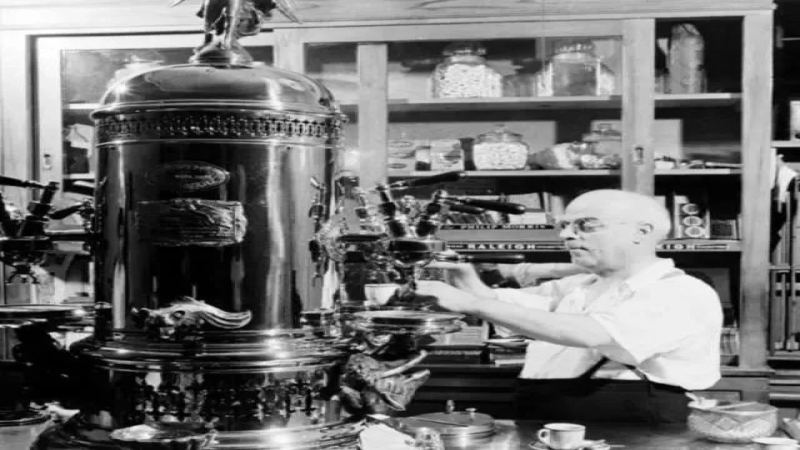
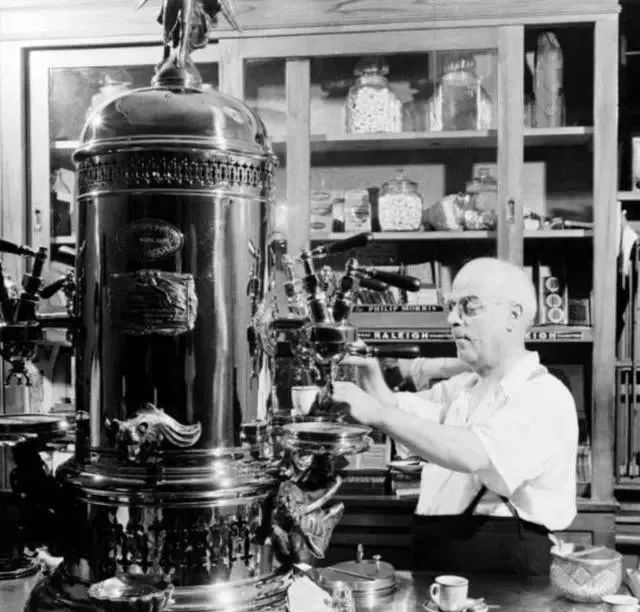
During the rapid development of the Industrial Age in the 18th and 19th centuries, everyone pursued efficiency. To quickly extract a cup of invigorating coffee, Italians used the pressure generated by steam engines to force hot water rapidly through coffee grounds, extracting a rich coffee liquid. In 1884, a machine that used steam power to pressurize and extract coffee was introduced and patented—what we now call the espresso machine.
Most espresso is made using blended coffee beans, because of lower cost and stable flavor quality. As coffee consumers pursue flavor further, some coffee shops today have begun using single-origin coffee beans to make espresso, also known as SOE (Single Origin Espresso).
Espresso's characteristics are: it requires pressurized extraction, a small serving (typically only 15-40ml), is drunk without adding anything to dilute it, is highly concentrated, has a rich golden crema, and delivers an intense flavor and strong mouthfeel.
Americano
Simple understanding: Espresso diluted with water
Rumor has it that during World War II, American soldiers in Italy couldn't get used to the local harsh, intense espresso, so they added the pressurized espresso liquid to hot water to dilute it before drinking.
The English name for Americano is Americano. According to the Cambridge Dictionary definition: "a type of coffee drink made by adding hot water to espresso coffee." Adding hot water to espresso is what makes it an Americano. Simply put, espresso diluted with water is an Americano.
Americano's characteristics are: uses espresso, diluted with water, rich coffee aroma, moderate concentration, and the strength can be adjusted to personal taste.
Caffe Latte / Coffee Latte
Simple understanding: Milk coffee
Regarding the origin of latte, the most widely circulated account is that in the early 20th century, Italy invented the semi-automatic steam-pressure espresso machine, adding steam-frothed milk to extracted espresso. "Latte" in Italian means "milk" (so not all lattes are necessarily coffee). Therefore, "Caffe Latte" originally expressed the fusion of coffee (caffe) and milk (latte).
However, some claim this milk coffee drink was not invented by Italians, but rather after the war between the Ottoman Empire and Vienna ended, Viennese people couldn't get used to coffee brewed the Turkish way, so they added milk and honey. Others claim it came from Dutch coffee-drinking habits during their stay in Indonesia in 1660, and still others say it came from the French way of drinking when the Dutch brought milk and coffee beans from Indonesia to France...
Regardless of the origin, the latte we drink today is made by combining espresso with steam-frothed milk. So latte's characteristics are: uses espresso, the finished product contains milk, (hot) has delicate and smooth milk foam, a balance of milk and coffee aromas, and a rich, smooth mouthfeel.
Cappuccino
Simple understanding: A foamy milk coffee with a marshmallow-like texture
Cappuccino is the transliteration of "Cappuccino." This word comes from the Italian word "Cappuccio"—meaning "hood." Observant readers may have noticed these two words differ by just one letter, n—and this n is the inspiration for cappuccino's appearance: the Capuchin, a Catholic Franciscan order.
When this order went to Italy to preach, they wore dark brown robes and small pointed hoods folded from cowls. The Italians at the time had a flash of inspiration: they frothed milk into a dense, stable foam and poured it into espresso. The coffee in the cup showed a ring of brown close to the robe's color, then they used a spoon to shape the milk foam on the surface into a pointed hood shape.
Since "Capuchin" and "Cappucci" sound similar, Italians, without changing the pronunciation rhythm, incorporated the n into "Cappuccio," and finally named this milk coffee "Cappuccino"~
Cappuccino's characteristics are: uses espresso, the finished product is very milky, (hot) has thick and dense milk foam, a balance of milk and coffee aromas, and a rich, dense mouthfeel.
Flat White
Simple understanding: A milk coffee with an intense coffee flavor
Popular from the Southern Hemisphere to the whole world, the origin of Flat White remains a topic debated between New Zealand and Australia for decades. Australian Alan Preston claims that in 1985 he opened Moors Espresso Bar in Sydney and invented this coffee; New Zealand barista Fraser McInnes says that in 1989, while working at a café in Wellington, he accidentally made a cappuccino with insufficiently thick foam and just went with it, giving it a new name.
As for where the true birthplace is, it's currently impossible to verify. The Australian method uses a smaller (about 3oz) glass, using a single shot of espresso mixed with a small amount of steamed hot milk, with foam thickness about half that of a latte. The New Zealand method uses a regular-sized glass, then uses a double ristretto mixed with steamed hot milk, with foam thickness also relatively thin.
Regardless of which school's method, Flat White's characteristic is that although it's also milk mixed with coffee, compared to latte and cappuccino, Flat White contains less milk and has a more prominent coffee flavor! So if you want a milk coffee but don't want too much milk, you can choose a Flat White—intense coffee flavor, rich and smooth mouthfeel~
This is a coffee that only started becoming popular around 2018. As its name suggests, visually, the entire coffee surface is covered by the thick crema of espresso, creating the sensation that the coffee liquid has dirtied the white milk.
Dirty requires using refrigerated milk with higher milk fat content, a frozen cup, and the espresso must float on top of the milk. So you need to directly use an iced cup filled with cold milk, then catch the extracted espresso at close range. Espresso is hot and has a layer of crema, so it floats on the milk's surface and slowly creates a gradient effect.
Dirty's mouthfeel is evolving—from strong to light, from dark to pale. The first sip is intense coffee, the last sip is sweet. So after getting a Dirty, don't let it sit too long, and don't stir it. If you can, try to finish a Dirty in three sips to experience the charm of its gradual transformation~
Mocha Coffee
Simple understanding: A milk coffee with added chocolate/dark cocoa
The word "mocha" comes from the Yemeni port of Mocha. Yemen, as the world's first country to cultivate and produce coffee beans on a large scale, began exporting its first batch of coffee beans to Europe in the early 17th century. At that time, Yemen had only one small port to Europe—Mocha Port. Goods exported here were stamped with "MOCHA" to prove they were shipped from Mocha Port, so Europeans called the delicious coffee shipped from Mocha Port "Mocha Coffee."
Although Mocha coffee beans are petite, they possess a very rich and fragrant flavor. Pronounced acidity, strong body and fermented notes, moderate sweetness, with a finish carrying intense dark cocoa aroma.
By the 18th century, Mocha Port came under the control of the Ottoman Empire (a multi-ethnic empire established by Turks). The Turks loved Yemeni coffee even more, so fewer and fewer Yemeni coffee beans were exported to Europe. The Italians at the time deeply missed the rich cocoa aroma of Mocha coffee beans, so they tried adding dark cocoa to espresso, beginning a new wave of mocha enthusiasm—the Espresso Mocha.

Mocha's characteristics: uses espresso, added dark cocoa/chocolate, most mochas on the market are sweet, rich smooth and sweet mouthfeel.
Hand Drip Coffee
Simple understanding: A drip coffee that is overall balanced, clean in taste, with distinct layers of aroma and flavor
Hand drip was first invented by German woman Melitta in the early 20th century. At the time, while making coffee at home, she had a sudden inspiration to use her son's blotting paper as a filter to brew coffee grounds, unexpectedly extracting a cup of coffee different from any before.
After several improvements, in 1908 the Melitta filter paper and ceramic filter cup obtained a German patent and became a big hit in Europe. The world finally got to drink clean, sediment-free filtered coffee. Compared to espresso, drip coffee has higher overall clarity, and you can also choose single-origin coffee beans that suit your taste preferences for brewing.
Today there are more and more single-origin coffee beans to choose from, and many people find the choice quite agonizing. Here's a little tip for choosing hand-drip coffee beans: if you like acidic, refreshing flavors, choose light-roasted African beans; if you like mild acidity and rich mouthfeel, choose Central American beans; if you like完全不酸 (completely non-acidic), high body, and solid mouthfeel, choose Asian or island region beans.
Remember, more expensive coffee beans aren't necessarily better tasting! Choosing what you like is what matters most!! In flavor descriptions, those dominated by floral and fruity notes mostly have acidity—the more fruit descriptions, the higher the sweet-sour taste. Those dominated by nutty descriptions are mostly mildly acidic; those without floral or fruity descriptions are mostly non-acidic.
Cold Brew / Ice Drip Coffee
Simple understanding: A cold coffee extracted at low temperature, with a clean, full, and smooth mouthfeel
Legend has it that in 1660, Dutch sailors were transporting coffee from their colony in Indonesia back to Europe. Mid-voyage, because there was no hot water on the ship, they couldn't drink hot coffee, so they came up with cold-water-extracted coffee—mild and pleasant, with an enticing aroma. Not just the sailors, but ordinary people loved it too. Later, Japanese merchants adapted this story into the origin of ice drip coffee.
Whether ice drip coffee or cold brew coffee, both use low-temperature extraction. Compared to other coffees extracted with hot water, cold water lacks the heat that drives water molecule movement; coffee's bitter compounds are difficult to release at low temperatures, so cold brew/ice drip coffee has a cleaner, more refreshing taste. The long extraction also allows the good flavor compounds in the coffee to be fully released, so the mouthfeel is also very full.
Due to the long extraction time, ice drip/cold brew coffee has higher caffeine content than drip coffee and espresso-style coffees, so if you urgently need a pick-me-up, you can choose them~
The above content is compiled by CoffeeHunters, a coffee news website.


