








Which Beans Suit a Moka Pot, and How Does It Brew?
A moka pot brews by steam pressure. The base is heated, pressure builds in the lower chamber, and hot water is pushed up through the coffee grounds in the filter basket and into the upper chamber. Alfanso Bialetti designed it in 1933, and it remains the cheapest way to make espresso-style coffee at home.
Use a medium-dark roast and a grind finer than drip but coarser than true espresso. Brazil Queen's Estate, Colombia Huila, Golden Mandheling and Yunnan Small Bean all work well. American coffee beans, by contrast, are usually roasted for filter brewing and taste thin in a moka pot, so keep those for drip or pour-over instead.
The moka pot is the most common coffee brewing device in Italian households, and with its simple operation and rich flavor expression, it is deeply favored by coffee lovers. This article will provide a detailed explanation of the moka pot's structural principles, standard usage process, and the types of coffee beans suitable for pairing. From the lower chamber heating to generate steam pressure, to hot water penetrating the coffee grounds basket to extract coffee liquid, every step has its nuances. At the same time, Front Street Coffee, targeting the brewing characteristics of the moka pot, recommends several medium-dark roasted everyday beans, including Brazil Queen's Estate, Colombia Huila, Golden Mandheling, and Yunnan Small Bean, helping you easily make a rich and full-bodied espresso-style coffee at home.

What exactly is a moka pot?
For friends who love espresso-style coffee, the deep connection between Italy and coffee is no secret. Locals are extremely dependent on coffee, treating it almost like daily drinking water. But if every cup is bought from a café, the cost adds up considerably over time. It was precisely this demand that drove Italian Alfanso Bialetti to design the moka pot in 1933. This device relies on heating its base to complete coffee brewing, belongs to a type of distillation-style extraction, and is also the most affordable option among all devices capable of making espresso-style coffee, so it is almost ubiquitous in Italian households.
How the moka pot works
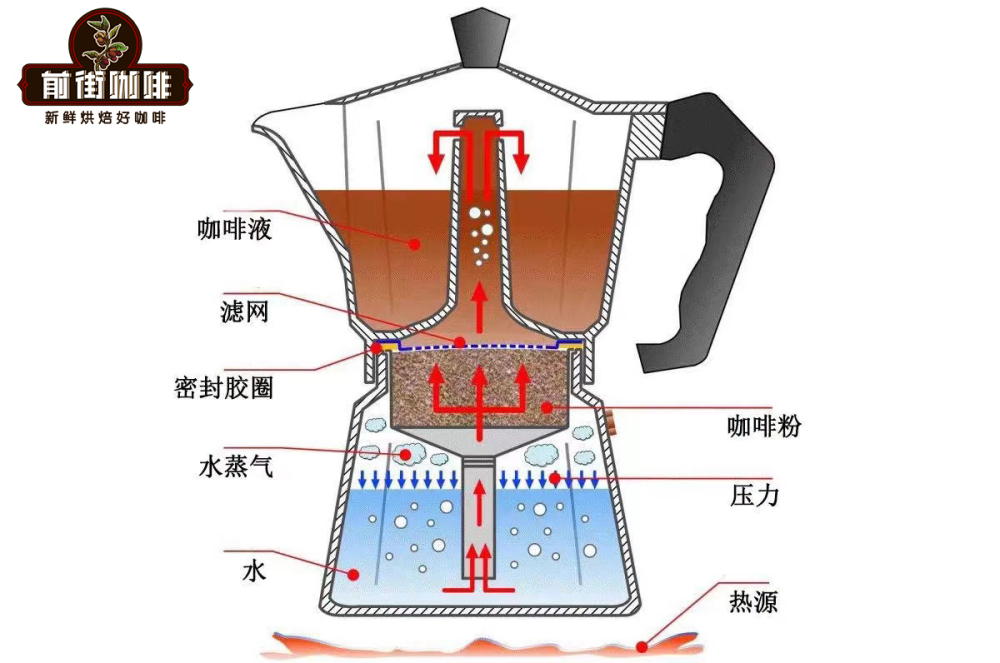
Structurally, the moka pot consists of three core parts: the upper chamber, the filter basket, and the base. The lower chamber holds water, the filter basket holds more finely ground coffee, and the upper chamber collects the brewed coffee liquid. Front Street Coffee provides a visual demonstration in the image below:
The logic of moka pot extraction is not complicated. After the lower chamber is heated, steam pressure builds up inside. When the pressure is sufficient to penetrate the coffee grounds layer, hot water is pushed up into the upper chamber, resulting in a cup of aromatic, rich coffee. The entire process uses the steam pressure formed by boiling hot water to extract a liquid close to espresso flavor, with a very low barrier to operation.
List of equipment needed to make espresso-style coffee with a moka pot:
1. Moka pot
2. Gas stove and stove rack, or induction cooker
3. Coffee beans
4. Coffee grinder
Now that you understand the basic working principle of the moka pot, how exactly should you operate it? Front Street Coffee explains step by step below.
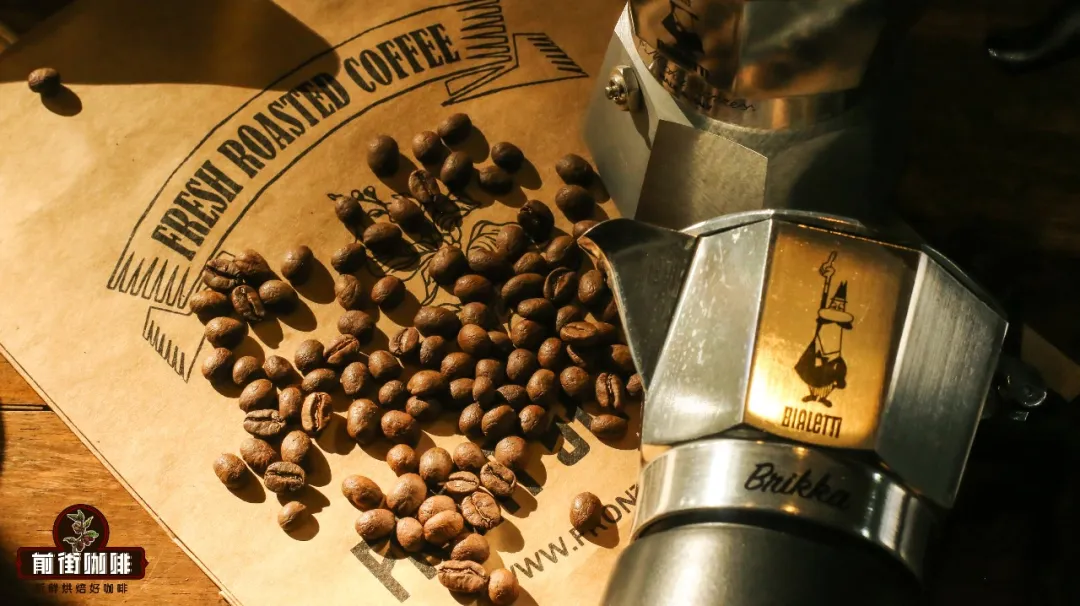
1. Although Front Street offers a wide variety of coffee beans, for the moka pot, Front Street recommends choosing medium-dark roasted single-origin coffee beans. The reason is that coffee extracted by the moka pot has a relatively thick mouthfeel, and more deeply roasted beans better highlight that full-bodied texture. Here, Front Street's classic espresso blend coffee beans are used for demonstration.
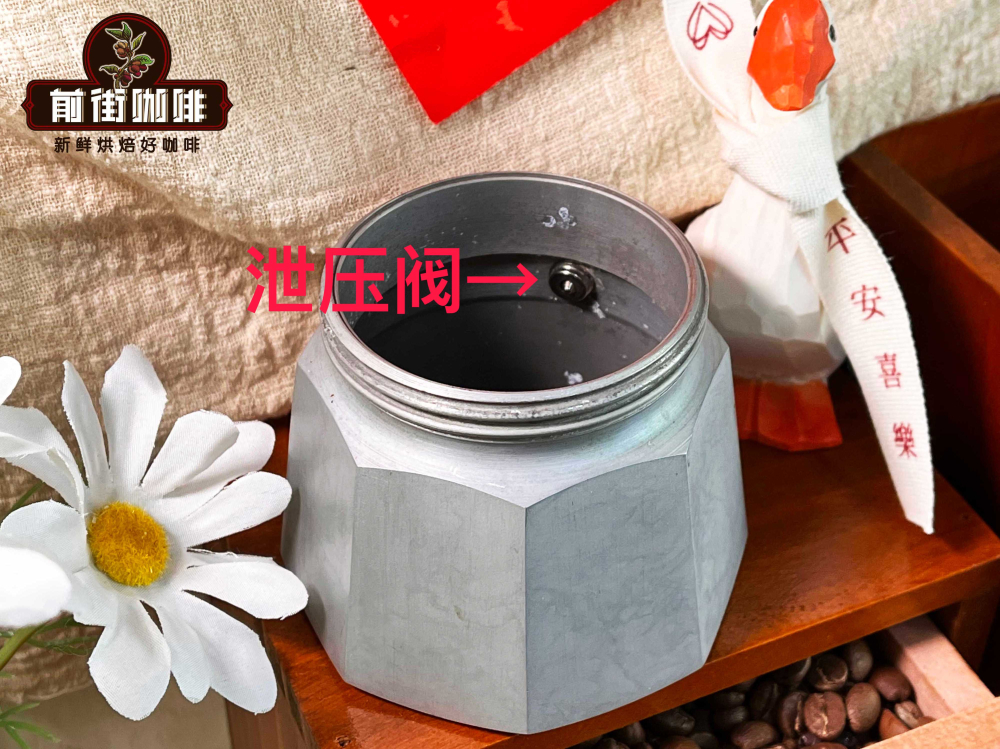
2. Pour purified water into the lower chamber of the moka pot, keeping the water level about 0.5 cm below the pressure relief valve.
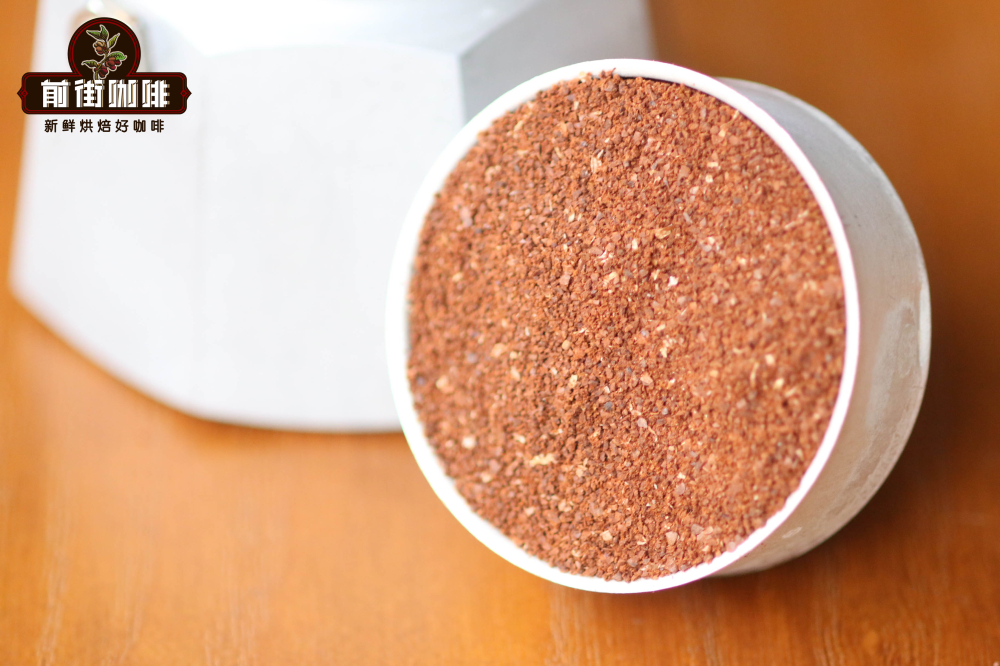
3. For grind size, choose a setting slightly coarser than espresso, and you can refer to the size of the filter basket mesh gap to ensure coffee particles do not fall into the lower chamber. Front Street recommends slowly pouring the coffee grounds into the filter basket, gently tapping to distribute them evenly, and after the coffee grounds pile up into a small mound, use leveling techniques to scrape the surface flat. The purpose of filling the filter basket is to avoid extracting undesirable defective flavors. When the density of the coffee grounds in the basket becomes uniform, it reduces the chance of some grounds being over-extracted or under-extracted, preventing uneven flavor or bitterness.
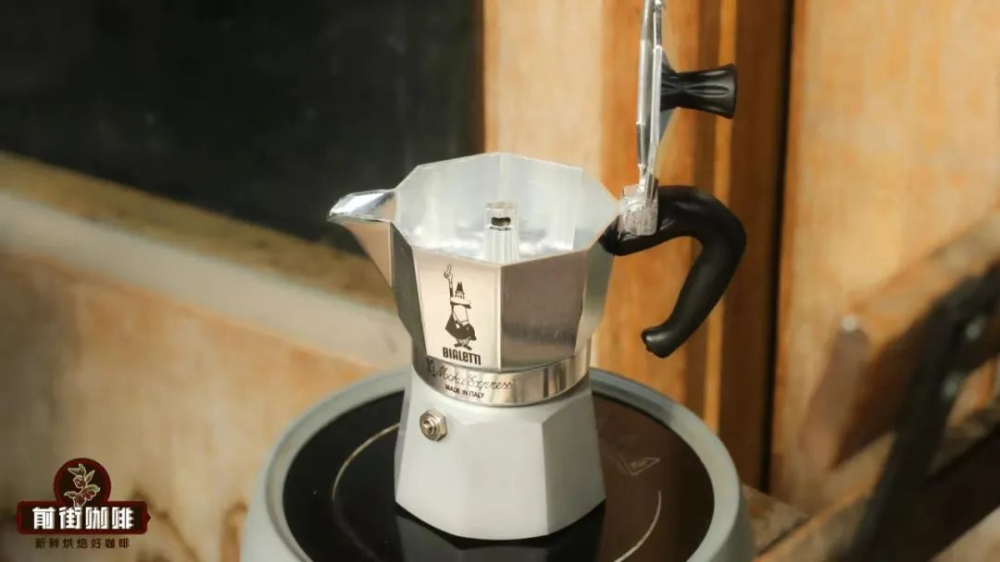
4. Place the filter basket into the lower chamber, tightly screw the upper and lower parts of the moka pot together, then place it on an electric ceramic stove and heat over high heat;
5. When the moka pot heats up to a certain point and makes a clear "hissing" sound, turn the electric ceramic stove to low heat and open the lid of the upper chamber.
6. When half of the coffee liquid has flowed into the upper chamber, turn off the electric ceramic stove. The residual heat and remaining pressure in the moka pot will push the rest of the coffee liquid into the upper chamber in a "surge."
7. After all the coffee liquid has been extracted into the upper chamber, pour it into a cup and enjoy. Coffee extracted by the moka pot is very intense and can even produce crema. You can also add an appropriate amount of water or milk to adjust it for better flavor.
By the way, a quick note: the so-called crema is actually made up of countless tiny carbon dioxide bubbles. The darker the roast, the more the coffee's body is enhanced, while the more carbon dioxide gas the beans need to release, which is also why the moka pot is suitable for pairing with medium-dark roasted coffee beans.
Coffee beans shipped by Front Street are all freshly roasted within 5 days and support shipment within 24 hours after ordering, ensuring they are still in optimal condition when you receive them. Even if you want a rich crema expression, coffee beans need a 4-to-7-day resting period for the flavor to stabilize, and when you receive Front Street's coffee beans, they have恰好 passed the resting period, with flavor at its peak.
Below is a list of everyday coffee beans suitable for moka pot brewing:
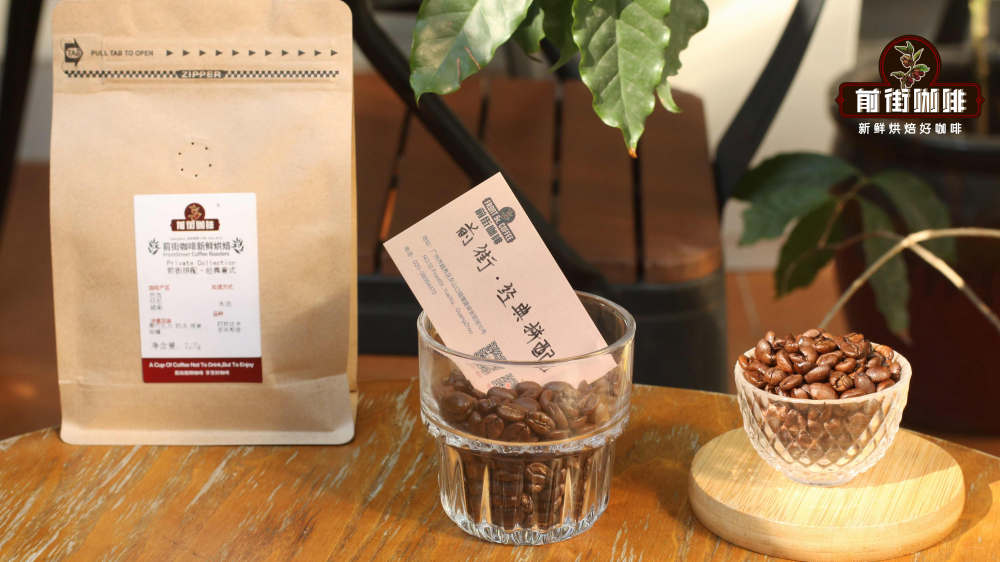
Latin American coffee beans have a relatively balanced flavor, often with nutty and cocoa notes, and a rich, smooth mouthfeel. Front Street Brazil Queen's Estate coffee beans and Front Street Colombia Huila coffee beans both have these characteristics.
2. Moka pot everyday beans — Front Street Brazil Queen's Estate coffee beans
Region: Mogiana, São Paulo, Brazil
Estate: Queen's Estate
Altitude: 1400–1950m
Variety: Yellow Bourbon
Processing method: Natural process
Flavor: Nuts, chocolate, cream, peanut, caramel
2. Moka pot everyday beans — Front Street Colombia Huila coffee beans
Region: Huila, Colombia
Altitude: 1500-1800m
Variety: Caturra
Processing method: Washed process
Flavor: Dark chocolate, nuts, caramel, soft fruity acidity
If coffees from Central and South America present the sweet deliciousness of nuts and chocolate, then Asian coffees carry a wild spice aroma. Taking Front Street Golden Mandheling and Front Street Yunnan Small Bean as examples, both use medium-dark roasting and show a full, rich profile.
3. Moka pot everyday beans — Front Street PWN Golden Mandheling coffee beans
Region: Gayo, Sumatra, Indonesia
Altitude: 1600m
Variety: Ateng
Processing method: Wet-hulled
Flavor: Spices, herbs, sandalwood, dark chocolate, caramel, nuts
4. Moka pot everyday beans — Front Street Yunnan Small Bean coffee beans
Region: Baoshan, Yunnan
Altitude: 1200m
Variety: Catimor
Processing method: Washed
Flavor: Nuts, chocolate, brown sugar, tea-like notes
The above content is compiled by CoffeeHunters, a coffee news website.


