







Where Does Sumatra Mandheling Coffee Come From?
Mandheling is the signature Indonesian arabica coffee, often called Sumatra coffee. It grows in the Lintong district, around Lake Toba, Lake Tawar, and the Gayo highlands. Sumatra's volcanic soil and early harvest season, running November to March, shape its full body and low acidity. The wet-hulling process, unique to the region, removes the parchment while the bean is still moist, creating those earthy, syrupy characteristics.
Indonesia's java coffee origin story includes Java, Sulawesi, and Sumatra, though about 90 percent of national output is robusta. Sumatra's northwest highlands produce the arabica coffees sold as Lintong and Mandheling. Green beans are graded G1 through G6, and PWN Pwani Coffee Company defines its Golden Mandheling label. The distinction between Lintong and broader Mandheling comes down to growing area and lot conditions.
Mandheling is the iconic representative of Indonesian Arabica coffee, often simply called "Sumatra coffee." Behind this name lies Sumatra's unique geographical layout, volcanic soil, earliest harvest season, and core producing regions such as Lintong, Lake Toba, Lake Tawar, and the Gayo highlands. The article also explains the principle by which wet-hulling gives Mandheling its full-bodied, low-acid flavor, describes Indonesia's G1–G6 green bean grading standards, and explains how PWN Pwani Coffee Company defines "Golden Mandheling," while retaining product information for Front Street Lintong Mandheling and Front Street PWN Golden Mandheling.
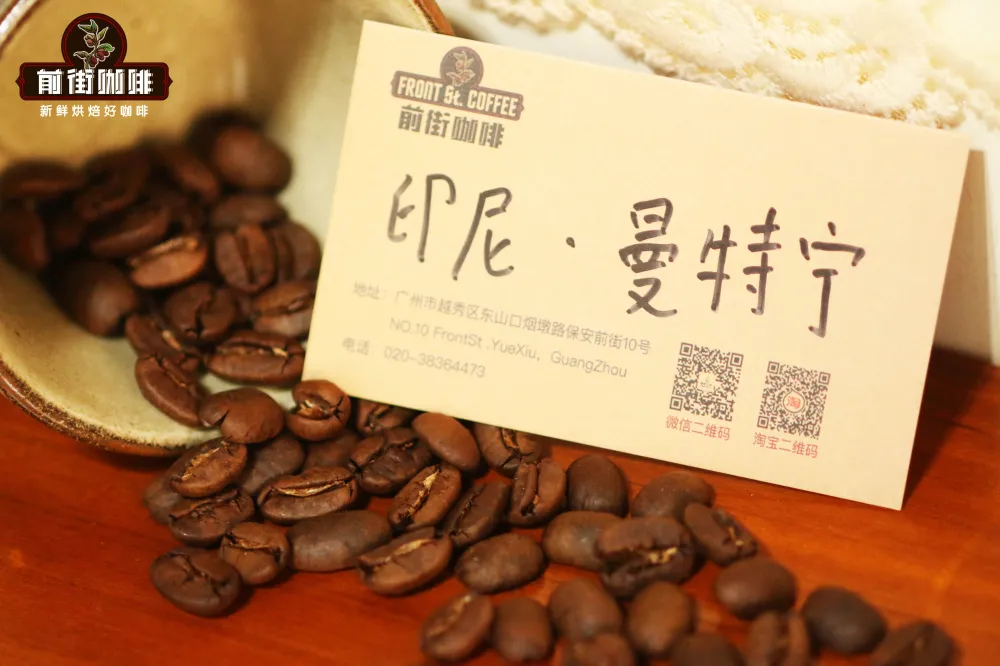
Mandheling is both an important member of Indonesia's specialty coffee scene and has almost become synonymous with Indonesian Arabica coffee. It has another widely known name—"Sumatra coffee."
Sumatra is not only the largest island in Indonesia but also ranks sixth in the world by island area. It lies in the northwest of Indonesia, extending from northwest to southeast, with the equator crossing its center. The island's northwest is higher in elevation, with the Barisan Mountains running through it; this area is dominated by Arabica and is the core producing region for Mandheling. The southeast is low and flat, mostly plains or swamps, mainly planted with Robusta. The island is home to over 90 volcanoes and numerous volcanic lakes, providing fertile soil for coffee cultivation. Thanks to its geographical location, Sumatra has Indonesia's earliest coffee harvest period—from November to March of the following year.
Indonesia's main coffee-producing regions include Java, Sulawesi, and Sumatra, of which about 90% is Robusta. Sumatra's "Mandheling" is particularly famous. Among the refined traditional Arabica coffees produced in northern Sumatra, the finest quality ones enter the market under the names Lintong and Mandheling. Strictly speaking, Lintong refers to coffee grown in a small area southwest of Lake Toba in the Lintong administrative district. The local small coffee-growing plots are scattered across a high-altitude, undulating clay plateau covered with ferns. Lintong coffee is not shade-grown and uses no chemicals, and is almost entirely held by small private owners. Mandheling is a broader term, covering Lintong coffee as well as coffee grown under similar conditions in Diari [capital Sidikalang] and the northern Lake Toba growing area.
Lintong Mandheling comes from the Lintong highlands in north-central Sumatra, near Lake Toba. It is an entry-level Sumatran Mandheling, focused on high value for money, allowing beginners to experience traditional Mandheling flavor in various ways and to sense the typical herbal, pine, roasted, and caramel notes of its muffled aroma.
Lake Toba is located in the center of North Sumatra Province. In 1888, Dutch colonists moved "Java Mandheling" north to the Lake Toba area, thus creating the legend of modern Mandheling.
Lake Tawar is located in the center of the Aceh Special Region, at the northern tip of Sumatra, with an area less than one-tenth that of Lake Toba.
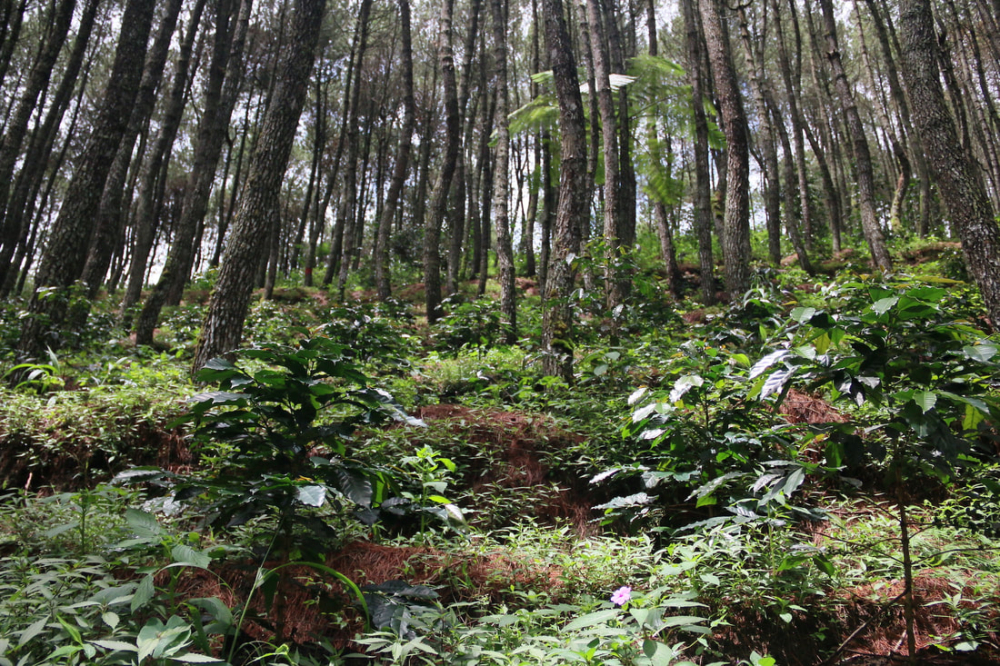
Currently, the highest-quality coffee beans in the Sumatra region come from the Gayo highlands, mostly grown from old tree varieties. The Gayo Mountains are located in the Aceh producing region of North Sumatra Province, at an altitude of 1,500–2,500 meters, and most coffee farmers are local Gayo people. The area has ideal growing conditions for coffee—high altitude, fertile soil, abundant rainfall, with Lake Tawar providing rich water resources, and local coffee is widely grown organically without chemical fertilizers, so it is considered a green coffee production region in the world. Therefore, Gayo coffee is also often called green coffee or Gayo organic coffee.
Traditional Mandheling coffee beans are processed using the locally unique wet-hulling method. When wet-hulling green beans, the fermentation process is very short and drying takes longer, so the acidity is relatively low while the mouthfeel is very full-bodied; this is also the flavor characteristic that wet-hulling gives Mandheling coffee.
However, during the wet-hulling stage, the parchment layer is removed from semi-dry, semi-wet green beans before drying, so the beans are directly exposed to the air. Combined with Indonesia's hot and humid local environment, improperly handled Mandheling coffee beans are prone to mold, carrying earthy and grassy flavors, and the defect rate also rises. Therefore, to produce higher-quality Mandheling green beans, strict quality control is essential.
Indonesia grades green coffee beans mainly by the proportion of defective beans, supplemented by screen size, and divides them into 6 main grades, namely G1–G6. The highest grade is G1, meaning that in a 300-gram green bean sample the total number of defects must be fewer than 3, with a bean size of 18 mesh or above. Front Street Lintong Mandheling and Front Street PWN Golden Mandheling coffee both belong to the G1 grade, with neatly shaped, uniform dark green green beans.
When it comes to "Golden Mandheling," we must start with PWN. This abbreviation often appears mixed with the name Mandheling coffee, but it is actually the abbreviation of a company—Pwani Coffee Company.
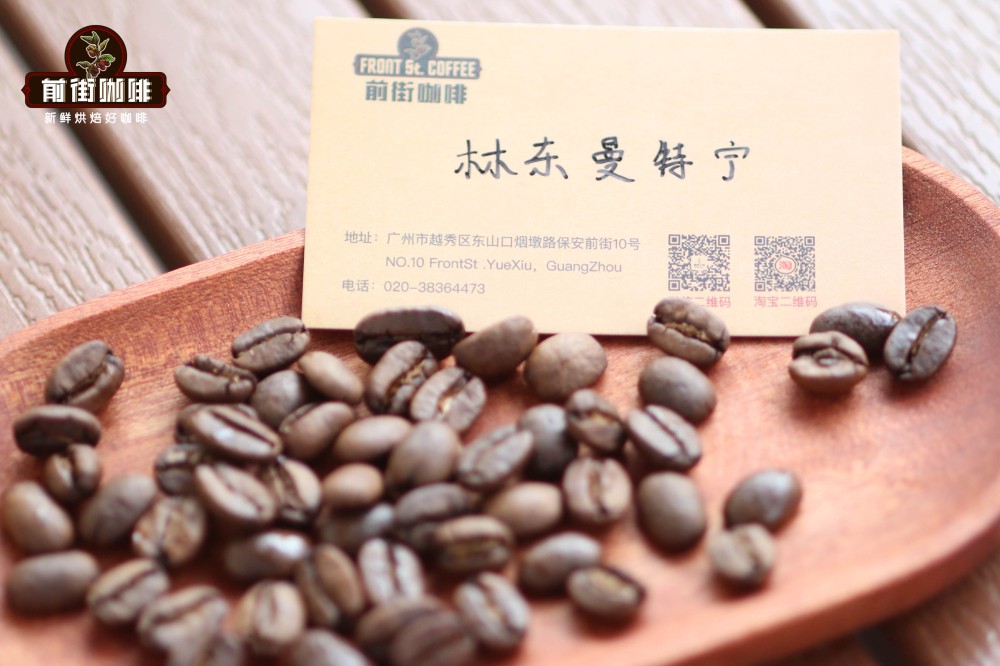
This company is a very famous local coffee purchasing company in Indonesia, mainly buying high-quality Mandheling green beans. Almost all of Indonesia's best producing regions have been acquired by it, so most of the beans that come from PWN are also uniquely top-grade. The green beans purchased by PWN undergo multiple rounds of manual sorting to select plump, defect-free beans. In the end, only these excellent beans, filtered through layer after layer like a talent contest, can be classified as Golden Mandheling. Because of this, the price is higher than regular Mandheling. You can purchase it at the Front Street Coffee Taobao store or the Front Street Tmall flagship store.
At the same time, PWN registered Golden Mandheling as a trademark, which means that from then on only Golden Mandheling produced by PWN can truly count as Front Street "Golden Mandheling." Many beans on the market that are not produced by PWN but bear the Golden Mandheling label can at most be called "specialty Mandheling."
The above content is compiled by CoffeeHunters, a coffee news website.


