








What defines Australian white coffee and its milk foam?
A flat white is a hot milk coffee with a thin layer of foam, a small cup size, and a stronger coffee presence than a latte. It grew out of Italian espresso culture brought to Australia after World War II, when drinkers wanted flatter foam than the thick cap on a cappuccino.
The drink spread to regular cafe menus in the 1980s and reached wider audiences when Starbucks introduced it in 2015. Baristas still argue over foam thickness and cup-to-volume ratios, and the beverage carries several other names. Its low foam level, level with the cup rim, is what gave it the name flat white.
Flat White is a hot milk coffee that has gained immense popularity among coffee lovers in recent years, known for its thin milk foam, small cup size, and rich coffee flavor. It originated from the localization evolution after World War II when Italian immigrants brought espresso to Australia, and it quickly became popular after Starbucks introduced it to China in 2015 under the name "馥芮白". This article will provide a detailed analysis of Flat White's historical development, the disputes among baristas in various countries over its preparation methods, the differences in milk foam thickness and cup-to-volume ratios, and how Front Street Coffee presents this beverage, helping readers gain a comprehensive understanding of this coffee's unique charm.
After the weather turned cooler, the number of customers visiting Front Street for hot milk coffee increased noticeably. Latte has a more prominent milk flavor, while those who prefer the true taste of coffee often lean toward choosing Flat White. When Front Street first tasted Flat White, its delicate, soft, rich, and smooth texture was deeply impressive, and since then, they have been particularly fond of this coffee.
The Origin and Evolution of Flat White
After World War II ended, a large number of Italians migrated to Latin America, Australia, and other places to make a living, bringing Italian coffee culture with them. Compared to the classic latte, local consumers in Australia wanted the coffee flavor in milk beverages to be more prominent. Additionally, at that time, the cappuccino's surface layer of "hamburger-like" milk foam was at least three centimeters thick, so people began to pursue a flatter (Flat) foam effect. As the foam on the surface of the milk coffee gradually became thinner, eventually leaving only a very thin layer of milk foam completely level with the cup rim, this beverage was named Flat White. "Flat" means "level," while "White" refers to the white coffee with milk added.
Entering the 1980s, Australians added Flat White to the regular menus of coffee shops, and it soon became a common option in coffee shops in the United States and elsewhere. Flat White's rise to popularity in China is thanks to Starbucks introducing it in 2015 and naming it "馥芮白" as a flagship product, marking this milk coffee's entry into the mainstream. It also has other names: 澳白, 澳瑞白, 小白, 平白, etc.

Divergences in Flat White Preparation
The original concept of Flat White was to let the drinker experience the fusion of milk foam and the milk coffee beneath it in every sip, and to finish it as quickly as possible before the foam dissipates. To achieve this, the milk foam must be sufficiently fine, thin, and at a palatable temperature. From this, the basic characteristics of Flat White can be summarized: dense thin milk foam, moderate temperature, coffee flavor not masked, and a consistent mouthfeel from start to finish. However, baristas in different countries interpret this coffee according to their own understanding.
When New Zealand baristas make Flat White, they choose a smaller cup than for a latte (about 150ml) and uniformly use a double espresso as the base. With less milk, the proportion of coffee naturally increases, making the coffee flavor more prominent. Therefore, Flat White is also called a "small latte."
As extraction techniques continue to advance, in order to more fully showcase the aroma of the coffee beans in the Flat White, Melbourne coffee shops also replace the base with a double Ristretto, pouring milk foam of similar thickness to a latte into a 150ml cup. Ristretto refers to extracting a smaller liquid yield of espresso using the same dose of coffee grounds, essentially a concentrated version of espresso, with flavor more focused on the front and middle stages of extraction, resulting in a richer taste, and therefore placing higher demands on coffee bean quality.
In Australia, however, baristas argue that it is enough to simply keep the milk foam thinner than a latte. Their Flat White is served in the same cup size as a latte, with the key difference being the thickness of the milk foam. The thickness of the milk foam is one of the important criteria for distinguishing Flat White from other milk coffees. Thin milk foam is intended to allow the drinker to better taste the coffee liquid and highlight a smooth, velvety texture. Some baristas, in order to prevent the crema flavor from interfering with the served Flat White, even filter out the foam layer, leaving only the coffee liquid. So how thin the milk foam layer should be beaten initially had no unified standard.
As this beverage became increasingly popular, in order to distinguish it from regular hot lattes and cappuccinos, people defined the thin milk foam thickness of Flat White at around 0.3cm to 0.5cm. Front Street wants guests to enjoy a Flat White with a creamy smoothness without being too "watery," so they retain a 0.3cm milk foam layer.
How Front Street Serves Flat White
When preparing it, Front Street retains the characteristics of small cup size, thin milk foam, and double Ristretto espresso to present Flat White, with the aim of allowing the drinker to fully experience the aroma characteristics of the coffee beans. The espresso blend used by Front Street is their own roasted "Sunflower Sunshine Blend," composed of 70% Honduras Sherry coffee and 30% Yirgacheffe sun-dried Red Cherry coffee. The whisky, vanilla, and cream notes of the Sherry, combined with the tropical fruit and fermented notes of the Red Cherry, give the coffee a rich and soft overall flavor profile.
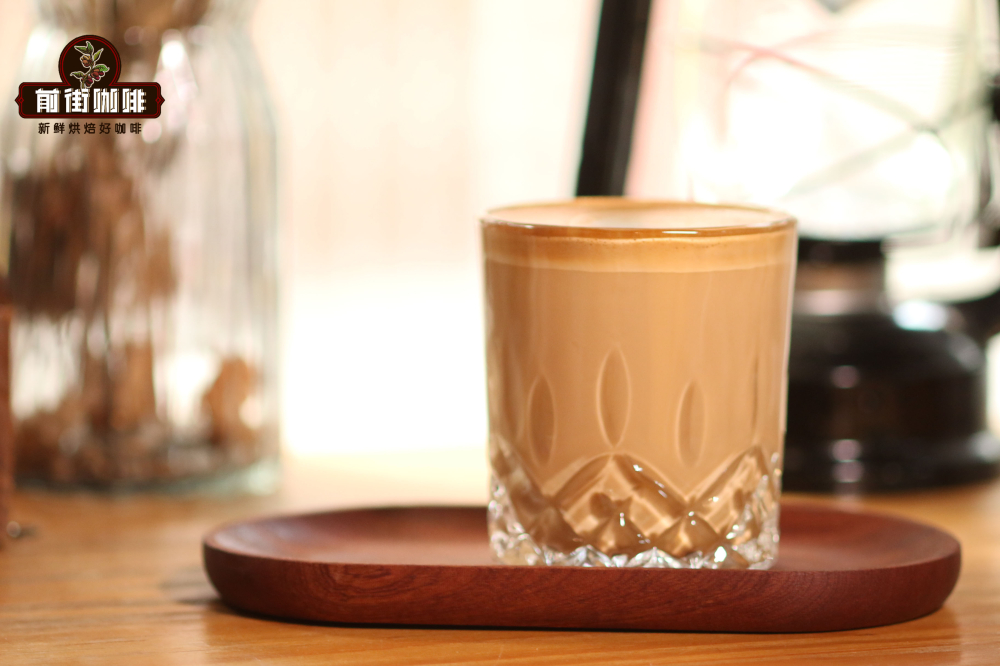
For the coffee base, FrontStreet Coffee uses a double Ristretto, extracting 30 grams of coffee liquid from 20 grams of coffee grounds, with extraction time controlled at 25 to 27 seconds. However, FrontStreet Coffee reminds everyone that the extraction plan for each coffee bean will vary slightly. This plan is a parameter adjusted by the barista before daily opening based on the Sunshine Blend used in the store.
Pour the extracted coffee liquid into a pre-prepared cup of about 200ml capacity, then take 150ml of milk and pour it into a milk pitcher for frothing. When frothing the milk, the air intake should be less than for a latte, with a thinner and finer foam layer, and the temperature should ideally be maintained at 55 to 60 degrees Celsius, making it easier to drink. Finally, evenly incorporate the frothed milk into the coffee liquid, with or without latte art. Front Street's Flat White presents flavors of chocolate milk and whisky-filled chocolate, with a smooth, rich, and mellow entry and a long-lasting finish.
For professional coffee knowledge exchange and more coffee bean information, please follow Coffee Workshop (WeChat public account: cafe_style)
For more specialty coffee beans, please add private WeChat FrontStreet Coffee, WeChat ID: qjcoffeex
The above content is compiled by CoffeeHunters, a coffee news website.


