







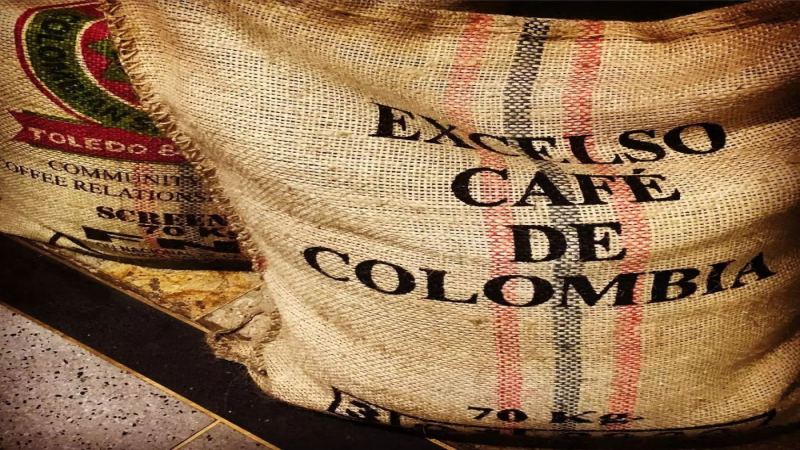
Why does Huila coffee taste the way it does?
Colombia is the third-largest coffee producer and the largest exporter of washed Arabica beans. Its southern Huila Department, with high-altitude canyon terrain and volcanic soil, produces coffee that combines gentle berry acidity with nutty and caramel sweetness. Coffee reached Colombia in 1808 via Jesuit missionaries from the French Antilles through Venezuela.
Specialty regions cluster in the south above 1,500 meters, including Huila, Cauca, Narino, and Tolima. In Huila, the Caturra and Catuai varieties are common, and the traditional washed method shapes the cup. The Arabica bean grown here reflects mineral-rich volcanic soil, which is why the region is often described as a natural ranch for coffee.
Colombia is the world's third-largest coffee producer and the largest exporter of washed Arabica beans. Among its many specialty regions, the southern Huila Department, with its high-altitude canyon terrain and volcanic soil, nurtures a coffee flavor that interweaves gentle berry acidity with nutty and caramel sweetness. This article will outline the history of coffee's introduction to Colombia and the distribution of its specialty regions, focusing on the terroir conditions of the Huila region, the characteristics of its main varieties Caturra and Catuai, and the traditional washed processing method, along with information on Front Street Coffee's Huila daily drinker beans and V60 pour-over parameters, to help coffee lovers gain a comprehensive understanding of this classic region.
For professional coffee knowledge exchange and more coffee bean information, please follow Coffee Workshop (WeChat public account: cafe_style)
For more specialty coffee beans, please add the private WeChat of Front Street Coffee (FrontStreet Coffee), WeChat ID: qjcoffeex
Colombia is located in northern South America, possessing both marine and terrestrial geographical features. The southern part of its eastern plains and its Pacific coast have a tropical rainforest climate, with frequent volcanic activity nearby, which has accumulated mineral-rich volcanic soil for the land. For this reason, Colombia is often described as a veritable "natural ranch," and these natural conditions also give local coffee beans strong specialty potential.
According to historical records compiled by Front Street Coffee (FrontStreet Coffee), coffee cultivation in Colombia can be traced back to 1808, when it was introduced by Jesuit missionaries from the French Antilles via Venezuela, and then gradually spread throughout the country. Today, Colombia is the world's third-largest coffee producer and exporter, while also holding two "world number ones": the largest exporter of Arabica coffee beans and the largest exporter of washed coffee beans.
Colombian Specialty Coffee Regions
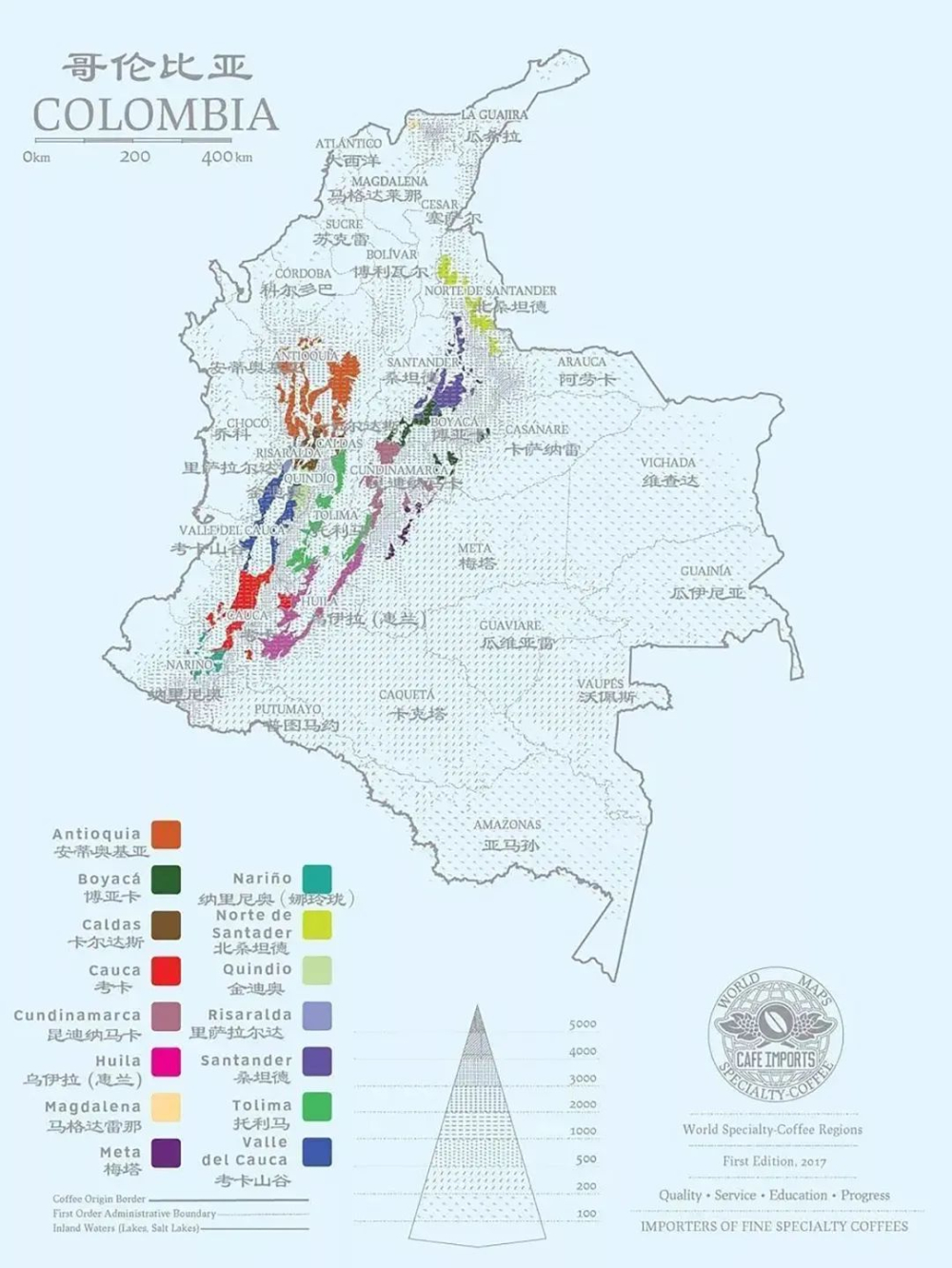
Colombia's specialty coffee regions are mainly concentrated in the south, generally at altitudes above 1,500 meters, covering San Augustin, Huila in Huila Department, Popayan, Cauca in Cauca Department, Narino Department, and Tolima Department.
Among these regions, the coffee beans produced in Huila are especially favored by consumers. Many specialty single-origin coffee beans and espresso blends on the market include coffee beans from the Huila region.
Introduction to Colombia's Huila Region
Huila Department is located in the southern section of Colombia's Central Cordillera and is the country's most representative specialty coffee region. Surrounded by mountains, with cultivation altitudes exceeding 1,500 meters, Colombia's most important rivers converge here, bringing abundant water resources and humidity to this land.
Huila's terrain is dominated by mountains, and coffee trees are planted on canyon slopes, thus combining the advantages of high altitude and suitable temperatures. The canyon slope terrain not only blocks the intrusion of cold winds, but also welcomes cool mountain breezes, avoiding the trouble of high temperatures. Together with abundant rainfall, it can be called a natural treasure land for coffee cultivation.
Coffee Varieties of Colombia's Huila Region
Currently, the main varieties in the Huila region are Caturra and Catuai.
Caturra is a natural mutation of the Bourbon variety. Its plant branches are compactly spaced, and the fruit is slightly smaller than Bourbon, so it can bear more fruit within the same area, significantly increasing yield. Caturra coffee beans are round and long, with a curved tail end, and the cup is bright and clean with prominent sweetness.
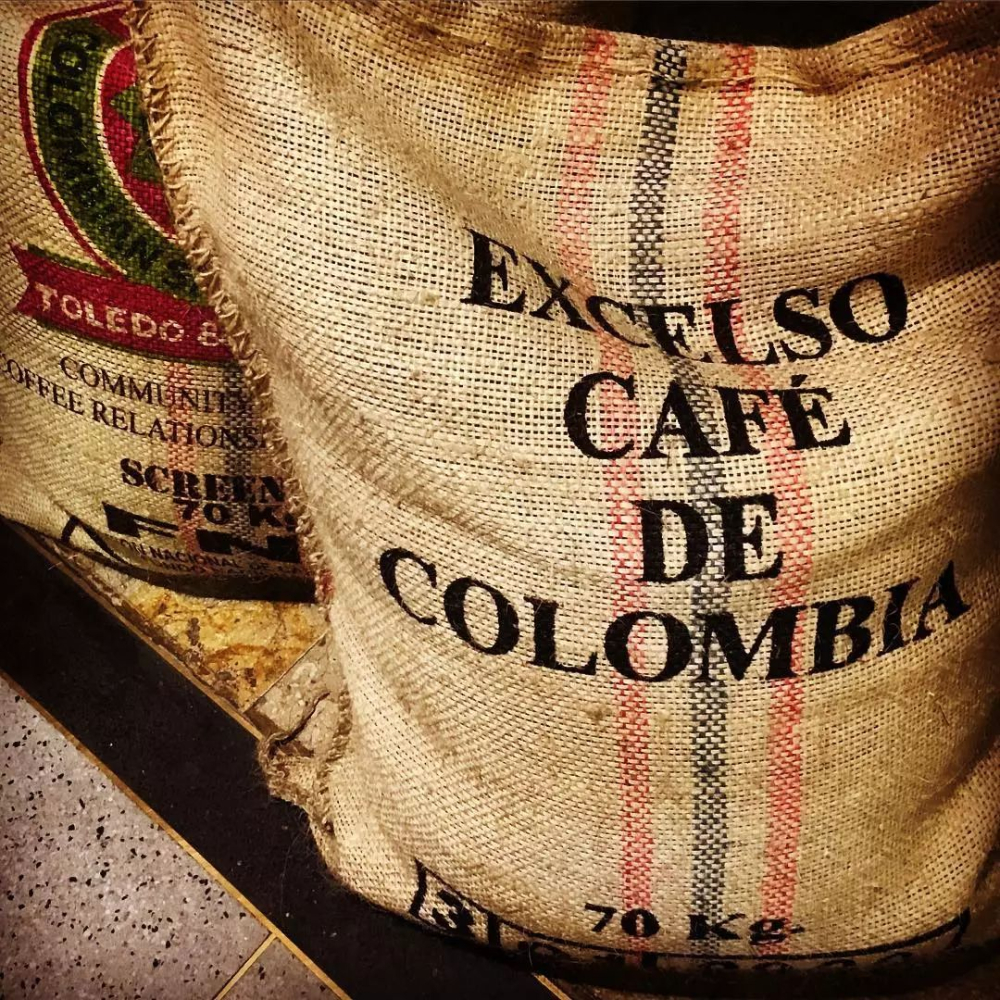
Catuai was developed by artificially crossbreeding Caturra and Mundo Novo. It inherits Mundo Novo's genes for high yield, strong disease resistance, and excellent cupping performance, while also retaining Caturra's characteristics of a small plant, high-quality acidity, and suitability for natural processing. Because the tree is smaller, planting density can reach twice the usual level. Catuai coffee beans are oval and flat, with a relatively slender tail end, soft acidity, a clean cup, and rich fruity aromas.
These two varieties themselves have a clean cup and soft acidity, and when combined with the high altitude and volcanic soil conditions of the Huila region, they ultimately present refined berry acidity, roasted nut notes, and a noticeable caramel finish, with full sweetness.
Coffee Processing Method of Colombia's Huila Region
Colombian coffee workers pick coffee cherries by hand on the mountains, and the vast majority of coffee beans undergo washed processing.
Coffee farmers first pour the harvested cherries into a large water tank. Underdeveloped defective beans float to the surface, while ripe, plump cherries sink to the bottom. At this point, the floating defective beans (cherries) are scooped out. Then the outer skin and pulp are removed with a pulping machine, and at this stage the coffee beans still have a layer of slippery mucilage attached to their surface.
The coffee beans with mucilage are placed in fermentation tanks for 16 to 36 hours, during which microorganisms gradually break down the mucilage. After fermentation is completed, a large amount of clean water is used to rinse off the remaining mucilage on the coffee beans. Finally, the washed coffee beans are dried.
Recommended Coffee Beans from Colombia's Huila Region
Front Street Coffee (FrontStreet Coffee) believes that the traditional washed processing method can most intuitively reflect the quality of a coffee bean and the distinctive flavor of its region. Therefore, the key to judging whether a bean reaches specialty grade is whether it can demonstrate regional flavor and cleanliness under washed processing.
In order to let consumers experience the unique flavors of different regions with high cost-effectiveness, Front Street Coffee (FrontStreet Coffee) launched the "Front Street Coffee (FrontStreet Coffee) Selected Origin Daily Drinker Coffee Beans" series. This series brings together 7 of the most popular coffee regions among consumers (including Yirgacheffe in Ethiopia, Huehuetenango in Guatemala, Huila in Colombia, Tarrazu in Costa Rica, Sumatra Mandheling in Indonesia, Cerrado in Brazil, and Baoshan in Yunnan, China).
Among them, for the Colombian daily drinker beans, Front Street Coffee (FrontStreet Coffee) selected Caturra grown at an altitude of 1,500-1,800 meters in the Huila region, using the washed processing method. This coffee bean very well showcases the distinctive flavor of the Huila region: soft fruit acidity, nuts, dark chocolate, caramel.
Front Street Coffee (FrontStreet Coffee) - Colombia Huila Coffee Beans
Region: Huila
Altitude: 1,500-1,800 meters
Processing Method: Washed
Variety: Caturra
How to brew Colombia Huila coffee so it tastes good?
The flavor description of every Front Street coffee is based on freshly roasted beans. If coffee beans are stored for more than a month, the aroma may have partially dissipated, making it difficult to reproduce the original performance during brewing. Front Street knows well the importance of freshness, so it ensures that only coffee beans within 5 days after roasting are shipped, allowing consumers to enjoy the fullest peak flavor period when they receive them.
Considering that the Huila daily drinker beans use a medium-dark roast, with a flavor profile leaning toward the rich, mellow tonality of nuts and chocolate, the deeper roast makes the coffee beans more porous and the coffee grounds more absorbent. To avoid over-extraction, Front Street uses a medium grind size and medium water temperature, paired with a V60 dripper for extraction.
Dripper: Hario V60
Water Temperature: 90 degrees Celsius
Dose: 15 grams
Coffee-to-Water Ratio: 1:15
Grind Size: Medium grind / white sugar coarseness. China standard No. 20 sieve passing rate 73%
Pour the coffee grounds into the V60 dripper, wet the coffee bed with twice the amount of water as the coffee grounds, form a dome and bloom for 30s, then pour in a thin stream in a circular motion from the inside out until 125g, then pause. When the coffee bed drops to half the height of the dripper, continue pouring the third stage with the same thin stream until 225g, until all the coffee liquid has filtered through. Remove the dripper, about 2 minutes.
The above content is compiled by CoffeeHunters, a coffee news website.


