







Is Yunnan Small-Bean Coffee Really an Arabica Variety?
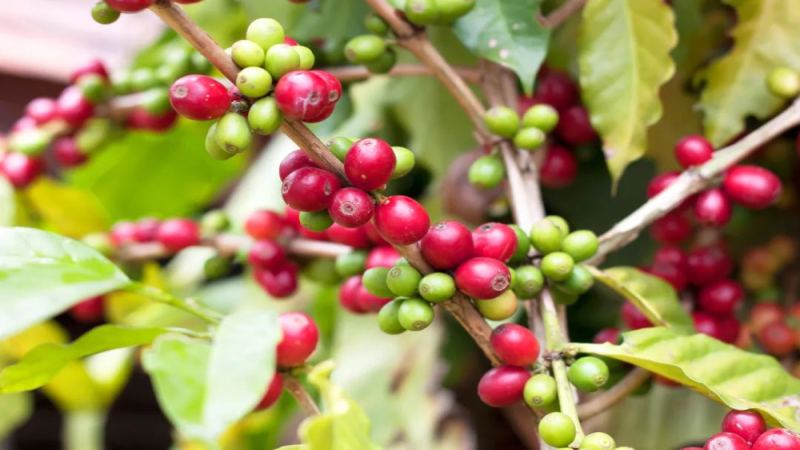
Yunnan small-bean coffee is the Arabica species, and more than ninety percent of current output is Catimor, a hybrid bred for disease resistance and high yield. Marketing calls it the finest coffee in the world, but the cup tells a more modest story. The term small-bean simply points to Arabica, originally from Ethiopia, with smaller beans, clean acidity and floral notes.
The thread runs from the first coffee tree at Zhukula Village in 1904, to trial planting at Baoshan's Lujiangba in the 1950s, to Nestle introducing Catimor in the 1980s. Early Baoshan plantings were Typica, an older Arabica variety, and the 1970 leaf rust outbreak in Brazil reshaped which varieties coffee countries planted.
Yunnan small-bean coffee has frequently been crowned "the world's finest" in recent years—how much basis does this claim actually have? This article examines it from three dimensions: variety origin, cultivation history, and flavor in the cup. The small-bean coffee mainly grown in Yunnan is actually the Arabica species, and over ninety percent of current output is Catimor, a hybrid variety that excels in disease resistance and high yield but has long carried a reputation for mediocre flavor. The article traces the complete thread from the first coffee tree in Zhukula Village in 1904, to systematic trial planting in Baoshan's Lujiangba in the 1950s, to Nestlé's introduction of Catimor in the 1980s that drove industrial expansion. It also explores Yunnan's current situation and difficulties in washed processing and cultivation techniques, and introduces Front Street Coffee's practice of building its own estate in Lincang with full management from breeding to green beans, along with pour-over parameters and flavor descriptions for Front Street Yunnan small-bean everyday coffee, for coffee enthusiasts' reference.
In the market, many distributors and brands, when promoting Yunnan coffee, often tout the slogan "Yunnan small-bean coffee is the best coffee in the world." Faced with such marketing, we can't help but ask: does the quality of Yunnan small-bean coffee really deserve such an evaluation? To answer this question, it's worth examining it one by one from three aspects: its variety classification, cultivation history, and actual drinking performance.
What exactly is Yunnan small-bean?
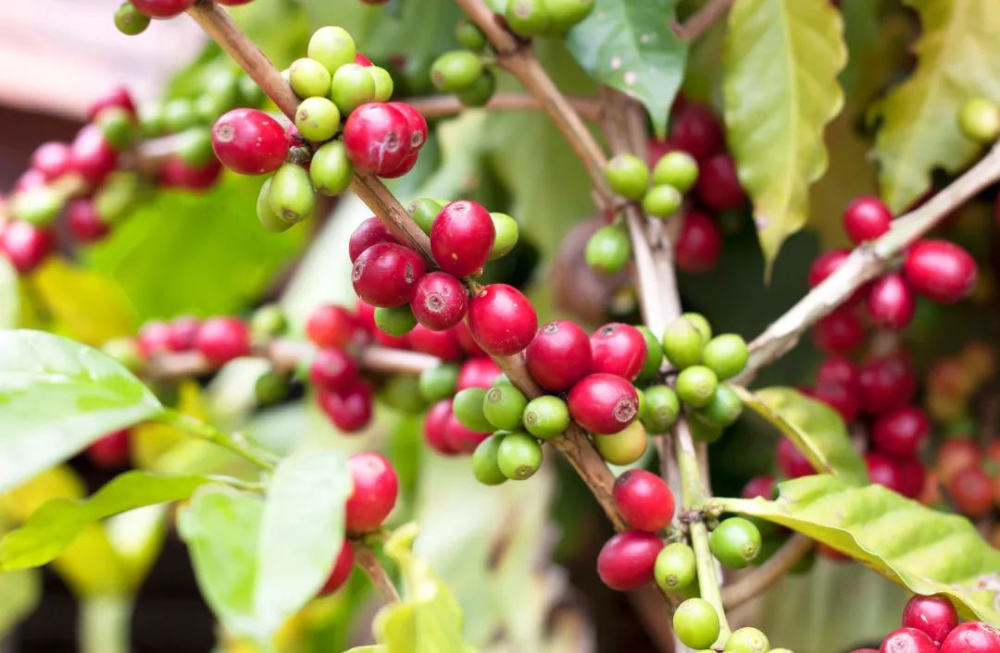
Small-bean coffee refers to the Arabica species, whose place of origin is Ethiopia. The original small-bean coffee has several distinctive characteristics: smaller beans, clean and pure acidity, and prominent floral and fruity aromas. Generally speaking, small-bean coffee is suitable for planting at altitudes above 1,200 meters; the temperature difference between day and night at high altitudes slows fruit ripening, allowing for richer nutrient accumulation.
The coffee planted in Yunnan's Baoshan area in the early days was Typica, a very old Arabica variety. In 1970, leaf rust first broke out in Brazil in the Western Hemisphere; once coffee trees were severely infected, branches would die, and the entire global coffee industry suffered a shock. In 1959, the Portuguese successfully bred Catimor, a variety with extremely strong tolerance to leaf rust. Because it contains about one-quarter Robusta genes, it has excellent disease resistance, is suitable for dense planting, and offers both high and stable yields. Promoted by international organizations, it was widely introduced, and Yunnan began importing it in the 1980s. Currently, the small-bean coffee varieties that can be mass-produced in Yunnan include Catimor, Typica, and Bourbon, with Catimor accounting for about 95% of all coffee trees.
The cultivation history of Yunnan small-bean coffee
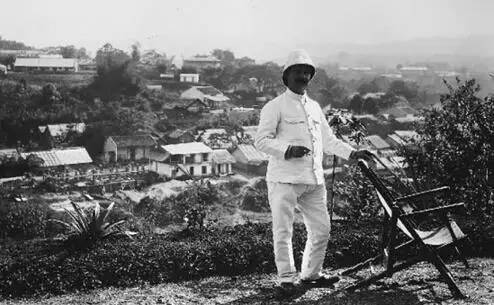
Coffee truly entered China after the Sino-French War in the 1880s. As the country was opened up, the Yunnan-Guizhou Plateau in the southwest was forced into foreign trade, and large numbers of foreign merchants and missionaries poured in. In 1904, a French missionary built a church in Zhukula Village, Binchuan, Dali, Yunnan, and planted China's first coffee tree beside the church.
Yunnan coffee entered the stage of large-scale cultivation in the 1950s. At that time, in order to supply coffee to the Soviet Union, the Yunnan Academy of Agricultural Sciences distributed 80 kilograms of coffee seeds to farmers in Baoshan's Lujiangba for trial planting, and established the Tropical Economic Crop Research Institute, carrying out systematic coffee selection and cultivation work for the first time. This can be regarded as the true starting point of Yunnan's coffee industry.
After the reform and opening up, in the 1980s China began promoting the upgrading of Yunnan's coffee industry on multiple levels. Among these, the foreign enterprise Nestlé set up a branch in Yunnan to advance coffee planting projects, introduced the high-yield Catimor variety, and promised to purchase green coffee beans at the then-current U.S. spot market price. This move brought Yunnan's coffee industry into a new stage.
Unfortunately, although Catimor as a hybrid variety brought high yields, it also came with shortcomings in flavor, and for a long period it was not favored by industry insiders. Starting in the 1990s, a large number of instant coffee factories settled in Yunnan, purchasing green coffee beans at low prices. At that time, the overall quality of Yunnan coffee was not high and drew criticism from many foreign media outlets; the saying "Yunnan coffee is only good for instant coffee" spread widely. In public perception, Yunnan coffee was often equated with instant products.
Cultivation of Yunnan small-bean coffee
In recent years, as living standards have risen, people's understanding of coffee has gradually changed and deepened, and they have begun to encounter truly specialty coffee. Yunnan coffee has also begun exploring new paths in planting and production methods.
From the perspective of growing conditions, Yunnan indeed has the foundation to produce high-quality coffee. Whether in terms of altitude, climate, rainfall, wind, sunshine duration, or soil conditions, Yunnan, located between the Tropic of Cancer and the Tropic of Capricorn, belongs to a typical "coffee-growing belt." Especially in places such as Baoshan, Dehong, Lincang, Pu'er, and Nujiang, the annual temperature difference is small, the day-night temperature difference is pronounced, and rainfall is abundant, creating a superior environment for coffee growth and indeed making it possible to produce high-quality coffee.
In terms of cultivation techniques, Yunnan still lags behind major coffee countries with long growing histories such as Brazil and Colombia. Management and care techniques are relatively backward, the proportion of specialty lots is extremely small, and it is difficult to sell at good prices, which directly affects growers' incomes. Hu Lu, vice president of the Yunnan Coffee Industry Association, once pointed out that the only direction for the development of Yunnan's coffee industry is to increase the specialty rate, but this is a long and difficult process. Facing this reality, coffee practitioners are also helping to revitalize Yunnan coffee through various channels; both planting techniques and promotion channels are crucial.
In the green bean processing stage, because Yunnan has a long rainy season and the harvest period coincides with winter, sunshine conditions cannot be fully guaranteed, so Yunnan coffee mostly uses the washed processing method. The washed process involves removing the skin and then placing the fruit in a tank to soak and ferment, with the aim of removing the pectin layer. The washing process can screen out defective beans at different steps, so the flavor can better express the coffee's own characteristics. But this also brings a problem: Catimor processed by traditional washing is prone to flavor defects. Some farmers have begun trying the special processing methods popular in recent years, using technical means to correct undesirable flavors in green beans, which has also won considerable positive feedback for Yunnan small-bean coffee.
Front Street Coffee, by contrast, started "from the beginning" at the coffee plant cultivation stage. Front Street established its own coffee estate in Lincang in 2013, starting from coffee breeding research, and strictly manages every step—site selection and planting, pruning branches and leaves, fertilizing, harvesting, and processing green beans—while personally participating in all of them. Finally, in the past two years, Front Street produced its own coffee beans and received considerable praise. Front Street hopes that by understanding the life of coffee from the source, it can more thoroughly understand what specialty coffee is and pass correct coffee knowledge on to everyone.
Front Street Yunnan small-bean coffee beans
Front Street's daily coffee bean list always includes three Yunnan coffees: the Typica varieties Front Street 2013 Typica Coffee and Front Street 2013 Coffee, and the Catimor variety Yunnan Small-Bean Coffee. Front Street Yunnan small-bean everyday coffee is one of the seven basic regional flavor representatives launched by Front Street. It uses washed processing, and medium roasting preserves the soft acidity of Yunnan small-bean while also carrying a nutty tone.
Front Street Coffee: Yunnan small-bean coffee beans
Region: China, Baoshan
Altitude: 1,200 meters
Processing method: Washed
Variety: Catimor
Flavor: Nuts, melon and fruit aromas, brown sugar, plum acidity
Next, Front Street will brew Yunnan small-bean everyday coffee once according to the store's pour-over standard, which everyone can use as a reference. Front Street used a Hario v60 dripper, with 15 grams of coffee powder, ground to fine sugar coarseness (80% passing rate on a No. 20 standard sieve), a water-to-coffee ratio of 1:15, a water temperature of 90°C, and three-stage extraction.
In choosing coffee beans, Front Street uses freshly roasted Yunnan small-bean coffee. After roasting, coffee goes through a 4- to 7-day resting period and then enters its best tasting stage. Once this window passes, the aroma dissipates more quickly, and the flavor and mouthfeel decline noticeably. To ensure that everyone drinks coffee at its optimal flavor stage, Front Street ships beans freshly roasted within 5 days, so that when you receive them, the coffee beans' aroma is at its peak.
After the coffee is ground, pour it into the filter paper, and starting from the center, pour in 30 grams of water to bloom for 30 seconds. Be careful to keep a small stream throughout, circling steadily from the inside outward. For the second pour, add 95 grams of water. When the coffee liquid has almost drained, begin the third pour of 100 grams, and once all the coffee liquid has filtered through, remove the dripper. The total time is about 2 minutes, with a margin of about 10 seconds either way.
Small-bean Catimor coffee has a dry aroma of nuts and berries. On the palate, you can feel the sweetness of nuts, herbs, chocolate, and brown sugar, along with a balanced plum-like acidity, and a faint fruity acidity in the aftertaste.
For professional coffee knowledge exchange and more coffee bean information, please follow Coffee Workshop (WeChat public account cafe_style)
For more specialty coffee beans, please add the private WeChat Front Street Coffee, WeChat ID: qjcoffeex
The above content is compiled by CoffeeHunters, a coffee news website.


