







How Panama Geisha coffee beans compare with Golden Mandheling
Golden Mandheling is the premium tier within Mandheling coffee, defined by PWN's production standards: green beans of 18 mesh or above, no more than three defective beans per 300 grams, and three rounds of hand sorting. Regular Mandheling, grown in Sumatra and wet-hulled, still carries the deep, low-toned aroma and full body the category is known for.
Before this century, beans were generally roasted darker, and top-tier coffee was judged by the rich, heavy-bodied style championed by Japan, with Blue Mountain and Mandheling as typical examples. After the turn of the millennium, roasters lowered roast levels, and Panama Geisha coffee beans showed how floral and fruity acidity could be expressed, while classic medium-dark coffees kept their following.
Mandheling coffee is known for its full-bodied mouthfeel and deep, low-toned aroma, and Golden Mandheling is the premium representative within this category. What exactly is the difference between the two? And what does the definition of Golden Mandheling actually mean? This article will trace the historical origins of Mandheling coffee and its wet-hulling process from the ground up, analyze how Sumatra's unique flavor profile is formed, and focus on the strict production standards that PWN has set for Golden Mandheling—green beans of 18 mesh or above, no more than 3 defective beans per 300 grams, three rounds of hand sorting, and so on. At the same time, Front Street Coffee's roasting and brewing methods will also be shared to help coffee enthusiasts gain a more comprehensive understanding of the value of this classic Indonesian coffee bean.
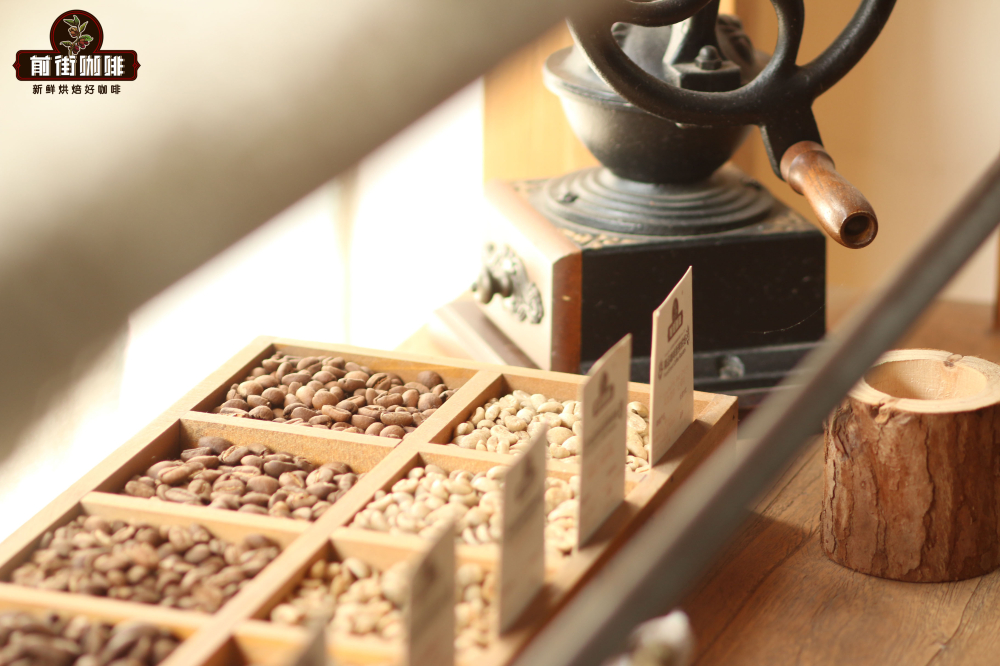
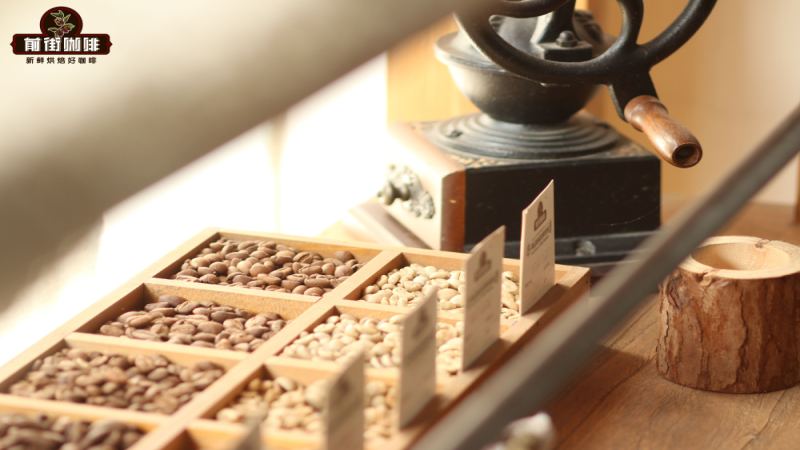
As coffee culture becomes increasingly embedded in daily life, more and more people are starting to try brewing at home. Whether choosing coffee grounds or coffee beans, many friends find themselves at a loss when standing in front of Front Street Coffee's shelves. There is a type of enthusiast who does not particularly favor bright, acidic flavors but instead prefers deep aromas and a rich, substantial mouthfeel. In such cases, Front Street Coffee usually recommends Mandheling coffee beans from Indonesia.
Before the arrival of the twenty-first century, coffee beans were generally roasted on the darker side. Veteran drinkers of that era often believed that coffee with acidity could not be considered good coffee. The standards for judging top-tier coffee in the last century were heavily influenced by Japan, which championed a rich, heavy-bodied style—Jamaican Blue Mountain coffee and Indonesian Mandheling coffee being typical representatives.
After the turn of the millennium, a group of roasters began rethinking roasting curves and generally lowered the roast level of coffee beans. Meanwhile, Panama Geisha coffee beans emerged on the scene, making people realize that coffee flavors could present such rich and expressive floral notes and fruity acidity.
Even so, classic medium-dark roasted coffees—such as Blue Mountain coffee, Mandheling coffee, and Brazilian coffee—have continued to maintain enduring vitality.
Compared with the sweet-and-sour, refreshing character of Ethiopian coffee, some friends have confided in Front Street after drinking Mandheling: the aroma is indeed captivating, the mouthfeel is substantial enough, and the aftertaste is satisfying—except that the bitterness is on the heavier side.
The reason Mandheling coffee presents such flavor characteristics is inextricably linked to the way coffee beans are processed locally in Sumatra.
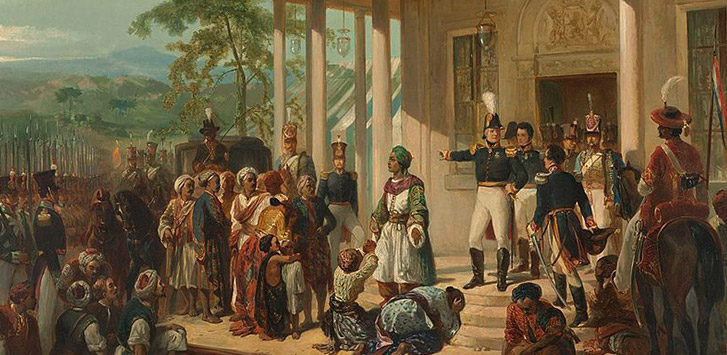
In the seventeenth and eighteenth centuries, coffee gradually became the most sought-after beverage in Europe. European coffee consumption surged dramatically in the eighteenth century, soaring from just over nine hundred tons to nearly fifty-five thousand tons. In order to capture a larger share of the coffee market, the European powers of the time established coffee plantations in their respective colonies. In the eighteenth century, Sumatra was under Dutch colonial rule, and the Dutch accordingly introduced coffee trees to Sumatra for cultivation. However, it was not until after the end of World War II, when Mandheling coffee beans achieved great success in the Japanese market, that they truly became an object sought after by coffee lovers worldwide.
The key driver behind Mandheling coffee's signature deep aroma, powerful sweetness, and full body is precisely the wet-hulling process. Sumatra has a tropical rainforest climate with heavy rainfall year-round and relatively short sunshine hours; combined with limited local economic conditions that made it impossible to afford the capital investment required for fully washed processing, the wet-hulled method came into being.
The wet-hulling process is as follows:
The sorted coffee cherries are depulped to remove the skin and mucilage, briefly rinsed with a small amount of water, then placed in containers for a short fermentation before being evenly spread out for sun-drying. When the parchment coffee is in a semi-dry, semi-wet state, the parchment layer is removed, and finally the beans are once again evenly spread out for drying until the moisture content drops to approximately 13%.
Throughout the wet-hulling process, the length of fermentation directly affects the acidity and the viscous mouthfeel of Mandheling coffee. Some growers choose to skip the fermentation step in order to suppress acidity to the greatest extent and enhance the viscous texture. In addition, during the parchment removal stage, because the parchment coffee has a moisture content of about 50%, the green coffee beans are relatively soft, which is why Mandheling coffee beans often contain some beans shaped like "sheep's hooves."
At the same time, the parchment layer is originally the protective layer of green coffee beans. To prevent infection from various bacteria and fungi in the environment, other producing regions typically choose to remove the parchment layer only after drying is complete and just before the green beans are exported. Sumatra's wet-hulling method, however, removes the parchment while the parchment coffee is still semi-dry and semi-wet. On one hand, this shortens the drying time of the green beans as much as possible; on the other hand, it exposes the green coffee beans directly to the air, accelerating the metabolism of sugars, proteins, and fats within the beans, thereby making Mandheling coffee's aroma even more intense.
Mandheling coffee is well known, but compared with Lintong Mandheling, Front Street Coffee receives more inquiries about Golden Mandheling. Just from the word "golden," one can sense its prestige—higher price, superior quality. Behind this is a set of rigorous production standards.
The Golden Mandheling selected by Front Street Coffee is produced by Indonesia's PWN company. The green bean screening requires a size of 18 mesh or above, and no more than 3 defective beans per 300 grams of green beans, meeting the highest grade G1 requirements. On top of this, PWN also conducts three rounds of hand sorting to ensure defective beans are thoroughly removed, resulting in a cleaner taste and more pronounced sweetness.
Under PWN's strict production standards, every single green bean in Front Street Coffee's batch of Golden Mandheling displays a uniform, beautiful blue-green hue, with consistent bean size and intact bean shape. Of course, there are also Golden Mandheling products on the market not produced by PWN, and their appearance is quite similar to Front Street's PWN Golden Mandheling. Front Street has also purchased several for blind tasting comparisons, and Front Street Coffee's baristas were all able to accurately identify Front Street's PWN Golden Mandheling—because its cleanliness and sweetness are unmatched by other products.
Mandheling coffee is synonymous with richness and is one of the representative coffees of Asia's coffee-producing regions. Naturally, Mandheling coffee beans are an essential part of Front Street Coffee's everyday drinking series. Front Street's everyday drinking beans primarily feature washed coffee beans from signature producing regions, while the Mandheling coffee beans use Sumatra's unique wet-hulling method, allowing more coffee beginners to discover the flavors of the world's signature producing regions at an affordable price.
Front Street Coffee's everyday drinking Mandheling coffee beans come from the Lintong producing region. Compared with the now-common Aceh producing region, Lintong was once the traditional producing region for Mandheling coffee beans, though Aceh's output later far surpassed Lintong's. Even so, the two producing regions together continue to present Sumatra Mandheling coffee's stunning flavors to the world.
Front Street Coffee has also noticed that in the process of exploring regional terroir, more and more consumers are diving into the world of rich and complex acidity. In pursuit of this acidity, products such as light-roasted Mandheling coffee beans have appeared on the market. While they allow one to taste more fruity acidity, they also lose the full-bodied mouthfeel of classic Mandheling coffee.
To present the traditional flavor of Mandheling coffee, Front Street Coffee's roasters adopted a medium-dark roast level. The darker the coffee beans are roasted, the faster the exchange of substances between the grounds and water during brewing. Therefore, when brewing Golden Mandheling, Front Street Coffee chooses to lower the water temperature and coarsen the grind size. The specific parameters are as follows:
Dripper: KONO
Water temperature: 88°C
Coffee dose: 15 grams
Coffee-to-water ratio: 1:15
Grind size: 70% passing through a Chinese standard No. 20 sieve
The coffee beans shipped by Front Street Coffee are freshly roasted within 5 days, and by the time they arrive, they have already gone through a 4-to-7-day resting period. After coffee beans are roasted, they contain a large amount of gas within the bean body. This gas gradually escapes over time, and the flavor becomes fuller accordingly, until the coffee beans stop degassing.
When coffee beans are too fresh, the gas inside the coffee ground particles inhibits extraction during brewing. Therefore, freshly roasted coffee beans not only struggle to display a full flavor but instead give a sensation of "harshness." That is why Front Street Coffee recommends performing a bloom during brewing to help carbon dioxide escape from the coffee ground particles.
First pour 30 grams of hot water for a 30-second bloom, then slowly pour in a thin stream in circular motions from the center point until reaching 125 grams; when the water level in the dripper drops to the point where the coffee bed is about to be exposed, continue pouring in circular motions until reaching 225 grams, with a total extraction time of about 2 minutes.
For more coffee bean information, please follow Coffee Workshop (WeChat public account: cafe_style)
For professional coffee knowledge exchange, please add WeChat ID: kaixinguoguo0925
The above content is compiled by CoffeeHunters, a coffee news website.


