







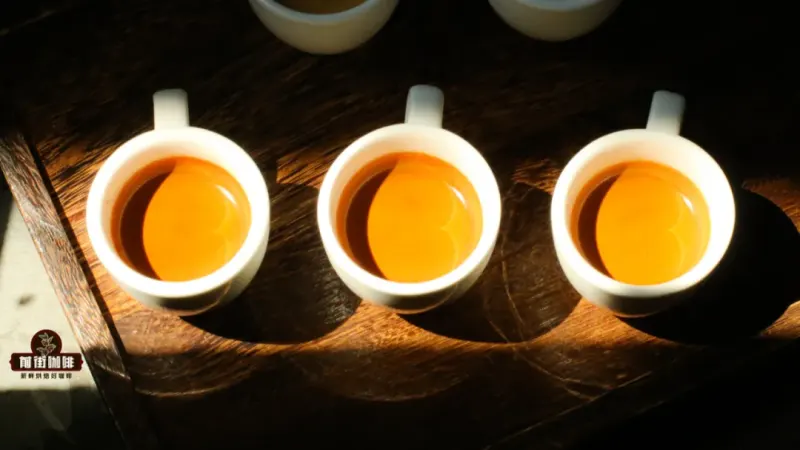
What are the main principles of coffee blending?
Coffee blending dates to the 17th century, when Indonesian Java and Yemeni Mocha were combined into the famous Mocha Java. The core purpose is to merge the flavor strengths of beans from different origins so they cover each other's gaps, while also considering cost and crema performance. Espresso blends, usually two or three beans, later became the mainstream.
Four principles guide a blend. Raw beans should carry distinct characteristics, and beans with similar profiles should be avoided. Blending can also lower costs, and traditionally used espresso blended coffee beans include robusta, which adds thicker crema and a viscous, smooth base for milk drinks. Yunnan small-bean coffee can play a role in such recipes.
The history of coffee blending dates back to the 17th century, when Indonesian Java and Yemeni Mocha were combined to create the famous Mocha Java. Thereafter, espresso blends became mainstream, and classic recipes such as Mamba blend became widely known. The core purpose of blending is to integrate the flavor strengths of coffee beans from different origins, making up for each other's shortcomings, while also taking into account cost and crema performance. This article revolves around the definition of espresso blend coffee beans, the four major principles, preparations before blending, and the application of Yunnan small-bean coffee in blending, and uses several "Front Street" espresso blend products as examples to analyze their flavor characteristics and extraction parameters, helping coffee enthusiasts understand blending logic and practical directions.
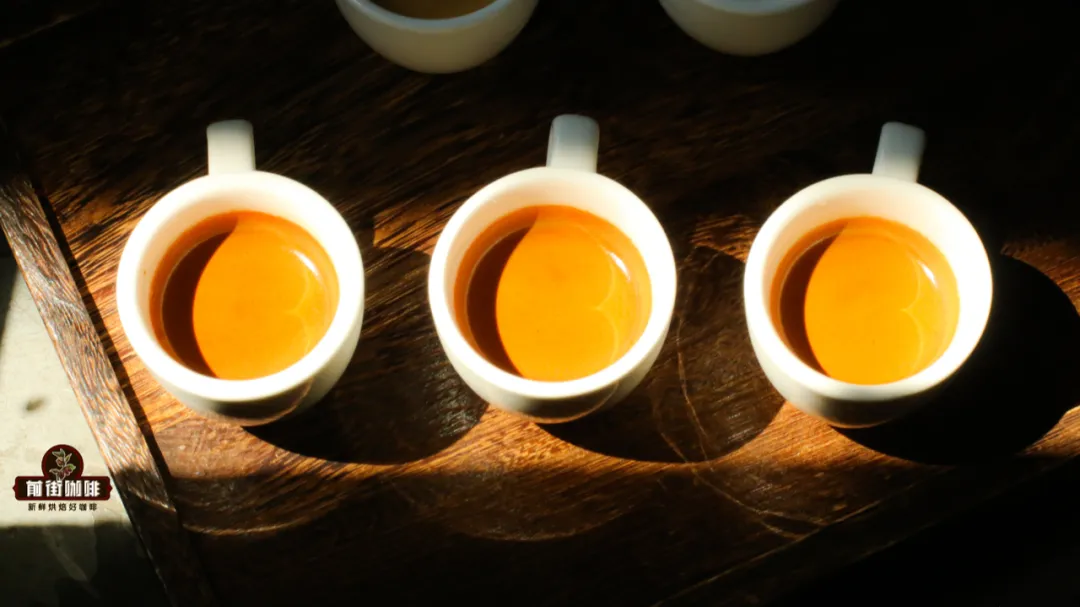
The history of coffee blending can be traced back to the 17th century, when people mixed Indonesian Java with Yemeni Mocha to create the famous Mocha Java. Since then, espresso blending has become mainstream, and classic recipes such as Mamba blend are widely known. So what are the benefits of blended coffee? How do you formulate a blending plan? Front Street will share its own blending plans.
What are espresso coffee beans
Espresso coffee beans are actually also called espresso blend coffee beans. So-called blending is mixing coffee beans from different origins and different varieties together; generally, blending two or three kinds of coffee beans is more common. The purpose of blending is obvious: to bring together the flavors of different coffee beans and present a brand-new flavor, achieving a more balanced effect, while also serving as a shop's signature. For example, if one coffee bean is smooth but lacks aroma, another bean rich in aroma can be added, making the most of strengths and avoiding weaknesses, creating a complementary effect. Another purpose of espresso blend coffee beans is to reduce costs. Traditionally used espresso blend coffee beans are mixed with robusta beans, which can also provide richer and thicker crema for fancy coffee, while as a base for milk coffee it can provide a viscous and smooth mouthfeel.
Four major principles of espresso blend coffee beans:
1. The raw beans used for blending should be coffee beans with distinct characteristics, while avoiding coffee beans with similar flavors, such as the same coffee processing method, the same green bean origin, and the same coffee flavor.
2. Blending ratio: each coffee shop will also blend coffee beans in different proportions according to its own characteristics. Generally, a 1:1 blending ratio is not adopted, because the same ratio will mutually suppress the other's unique flavor. Therefore, when blending, there must be a distinction between primary and secondary components in order to create a more wonderful taste than single-origin coffee.
3. Blending and roasting method: blended coffee beans can be blended raw, that is, mixing green beans in proportion; or blended roasted, that is, mixing in proportion after roasting is completed, depending on the specific flavor requirements of the blend.
4. Flavor principle of blending: balance of acidity and sweetness. When blending, generally 2-6 kinds of coffee beans are used. No matter what kind of beans they are, or what roast level they have, too many types will make it impossible to express the unique flavor of coffee.
5. Blending coffee requires constant experimentation. The purpose of blending coffee is generally to stabilize flavor. Before blending, a blending plan table should be drafted using mathematical combinations, and then the best plan should be determined through the process of blend cupping.
Before blending:
1. Determine the goal of the blend, for example: the general tone of the coffee flavor.
2. Understand the characteristics of each coffee bean, and become familiar with the subtle relationship between the characteristics, roast level, and coffee flavor of each single-origin coffee.
3. Determine the most prominent flavor characteristic of the coffee beans participating in the blend. Since multiple coffee beans are used in the blend, you must clearly understand the most prominent characteristic of each coffee bean, whether you want it to highlight a soft bitterness, a distinct acidity, or a heavy body, etc.
For how Yunnan small-bean coffee can be blended into espresso, first of all, the ideal Espresso has low acidity, high body, and rich, velvety, thick reddish-brown Crema, containing the aroma and flavor of coffee. Crema is an important indicator of Espresso, and it basically must carry the coffee's intense flavor. During the extraction of Espresso, the vapor produced is contained in fine oily foam. When drinking Espresso, these bubbles explosively release volatile aroma molecules, rushing from the oral cavity to the olfactory receptors in the nasal cavity. These bubbles also attach to the taste buds, producing a long-lasting finish that can last up to an hour. The advantage of using Yunnan in blended beans is that the Catimor variety has robusta genes, which gives it the factors required by traditional espresso in terms of innate conditions.
To add flavor components to the recipe, you can choose one or two coffees whose aroma and taste you truly like. Brazilian coffee is characterized by moderate body and low acidity. The next step is that you must balance the recipe. All the characteristics must blend together without any one particularly overpowering the others. It must be smooth, mild, and full-bodied, without unpleasant bitterness, and what is felt should be low acidity. The crema should be rich, smooth, velvety, and not easily dissipating. Special attention should be paid to the aftertaste, and the aroma must be very pleasant. Brazil and Yunnan small bean both belong to medium-dark roast and are sufficiently full in body. The robusta genes of Catimor provide the required oil factor. Combined together, they form a blended coffee with a balanced mouthfeel, low acidity, moderate body, and stable crema.
Taking the Front Street espresso coffee bean series as an example, espresso coffee beans recommended by many baristas - Front Street Black Cocoa Blend Coffee, Front Street Commercial Blend Coffee, Front Street Specialty Blend Coffee, Front Street Classic Blend.
1. Espresso coffee beans recommended by many baristas - Front Street Black Cocoa Blend Coffee Beans:
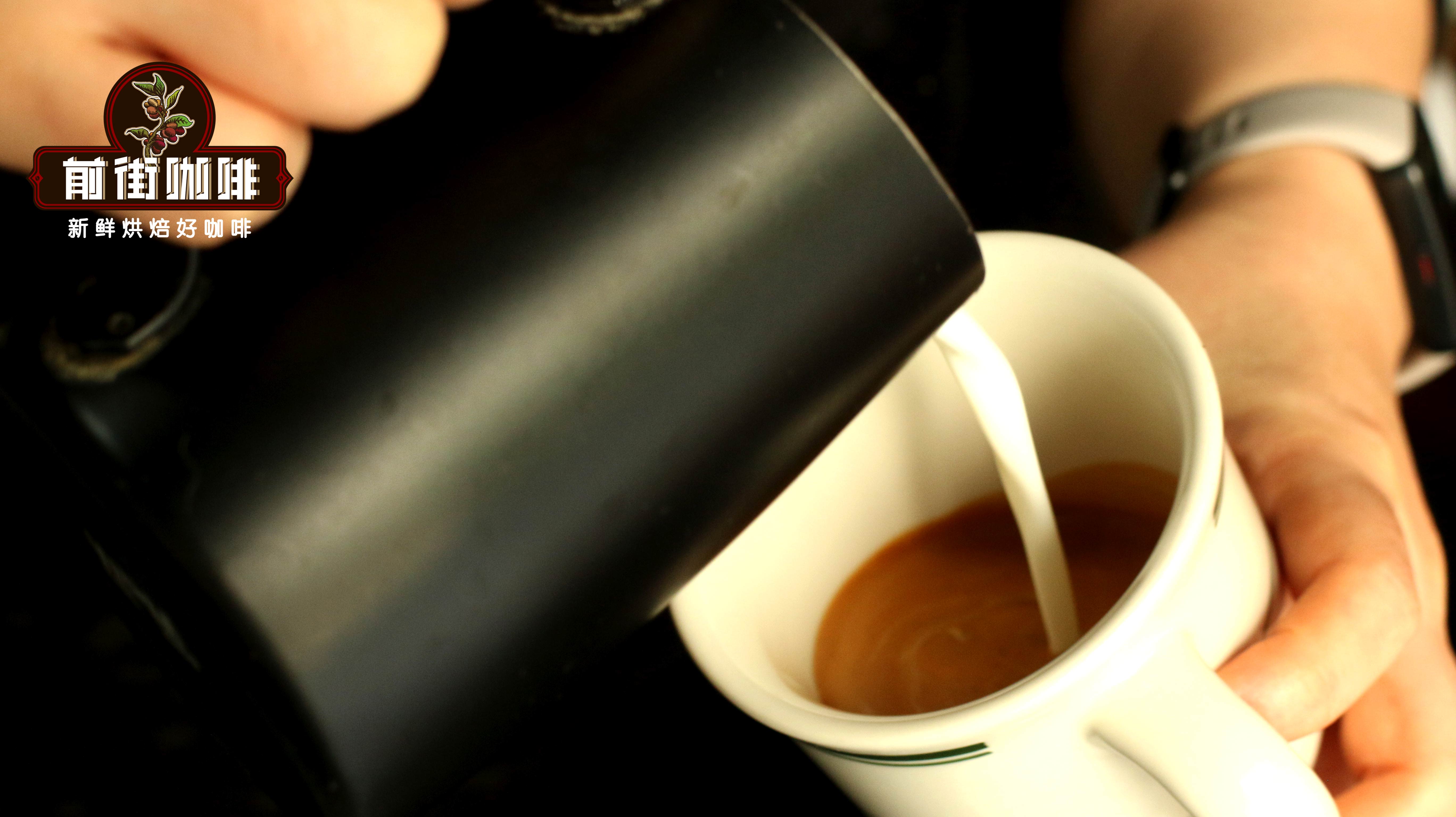
Flavor: with soft fruit acidity, caramel sweetness, nutty and dark chocolate flavors, smooth and viscous, but the taste is on the lighter side.
2. Front Street Commercial Coffee Blend:
Robusta beans have strong resistance to pests and diseases and high yield. They are usually not as acidic as Arabica beans and often carry a slight woody aroma. Their caffeine content is 2.2%, higher than Arabica beans' 1.2%, and their chlorogenic acid content is also higher. They are also quite bitter and are usually used as commercial beans, costing less than Arabica beans.
In terms of the flavor of a single bean, the coffee taste obtained from commercial beans is much inferior to that of specialty coffee beans. Generally, commercial beans are chosen for blending. Through blending, coffee with a very good taste can also be made, and it can be used to make lattes, cappuccinos, and other espresso drinks. When Front Street Commercial Blend is used to make Espresso, because it contains robusta beans, the crema will be richer, the taste classic, with caramel sweetness, nutty, cocoa-type, and dark chocolate flavors, balanced acidity and sweetness, slightly bittersweet, and a long-lasting finish.
Flavor: caramel sweetness, nutty and cocoa-type, dark chocolate flavors, balanced acidity and sweetness, slightly bittersweet, long-lasting finish.
3. Front Street Specialty Coffee Blend:
The Colombian beans selected by Front Street come from Huila, located in southwestern Colombia, one of the main coffee cultivation regions. Colombia generally has an altitude of 1,500-1,800 meters, mostly Bourbon and Caturra varieties, washed processing method, relatively high density, uniform screen size, and plump bean shape (the distance from the center to the surface is thicker). Because the Huila region is full of famous coffee cultivation areas, the names of various small areas have become brand names and circulated. Although the cultivation conditions in this region are also very good, the cultivation infrastructure of coffee farms and surrounding conditions is still not very developed. The green bean drying equipment or washed processing facilities are still not perfect, which is a very regrettable point. Coffee from the Huila region has a strong mouthfeel and relatively heavy body. In particular, the nutty, chocolate, and caramel aromas and suitable acidity of coffee from the Huila region can be called high-grade specialty coffee.
Brazilian coffee generally grows at an altitude of 1,000-1,300 meters, so its density is relatively low. It is mostly Bourbon variety, using semi-dry processing, with moderate moisture content, relatively soft bean texture, and a thinner thickness from the surface to the center, so it is not suitable for roasting at too high a temperature. The temperature of the inner wall of the drum will scorch the bean surface, resulting in a burnt bitter taste. We hope to express the characteristics of nuts, milk chocolate, and better body, and use it as the blending base, so Front Street Coffee (FrontStreet Coffee) adopts the method of charging beans at medium heat, maintaining the heat until the dehydration stage, and making slight adjustments as the temperature rises after first crack begins, promoting a more complete caramelization reaction. When the temperature rises to near second crack, the beans can be discharged.
Flavor: soft slight acidity, light sweetness, nutty sweet aftertaste, overall feeling is not too stimulating,平和, and the crema is medium.
4. Front Street Classic Blend Coffee Beans
"Best-selling espresso coffee bean recommendation - Front Street Classic Blend Coffee Beans" is suitable for beginners, for learning latte art, and for specialty coffee shops pursuing a high-end positioning. Friends who want to learn latte art at home should buy Front Street Classic Blend. This is a medium-dark roasted espresso recipe composed of three producing regions. Its design inspiration comes from the ancient popular "Mamba," namely Mandheling and Brazil. To add aroma and crema, Front Street Classic Blend also contains a small amount of robusta, thereby enhancing flavor intensity, allowing beginners to easily make espresso with golden crema at home.
Front Street Espresso Extraction Parameters
Grinder: Galileo Q18
Grind size: 1.6
Pressure: 9 bar
Temperature: 94 degrees Celsius
Time: 20~30 seconds
Dose: 20g (double espresso)
Yield: 40ml
Extracted espresso flavor: Smooth mouthfeel, medium body, with obvious fruit acidity on entry accompanied by a faint berry aroma, whisky aroma, rich chocolate flavor, and a noticeable sweet aftertaste.
The above content is compiled by CoffeeHunters, a coffee news website.


