







Is cold brew coffee the same as ice drip coffee?
Cold brew coffee is a direct translation of "Cold brew coffee," and any black coffee obtained through cold water extraction can fall under the category, whether by immersion, drip, or injection. In Chinese, the term cold brew tea already existed, so most people use cold brew coffee to mean soaking grounds in cold water for a long time.
That leaves the aliases. Iced drip, ice brew, Dutch coffee, and Kyoto coffee all appear in summer searches, and the definition of ice brew coffee is the vaguest, with some equating it to cold brew and others to ice drip. Ice drip equipment, parameter settings, and bean choices for cold extraction are the practical starting points when learning coffee.
When searching for iced coffee in the summer, names like ice drip, ice brew, cold brew, Dutch coffee, and Kyoto coffee always leave people baffled. What exactly is the difference between these terms? This article starts with the broad concept of cold brew coffee, sorts out the historical origins and extraction principles of ice drip coffee, clarifies the precise meaning of ice brew coffee, and, using Front Street's store practice as an example, introduces in detail the equipment structure, parameter settings, and operating procedures of ice drip coffee, as well as several types of coffee bean flavor directions suitable for making ice drip, helping coffee enthusiasts clarify concepts and master methods.
Front Street has found that in the process of self-learning coffee, what really gives people headaches is often not the cumbersome brewing techniques or parameter adjustments, but when you search for a certain professional term, a series of expressions that look similar but have different meanings in the Chinese context pop up, making them hard to distinguish. Take cold brew, the iced coffee that sweeps through the entire summer—as long as you search online, a bunch of aliases are bound to appear: ice drip, ice brew, cold brew, plus Dutch coffee, Kyoto coffee... for a moment it is really hard to tell who is who.
Among these names, the definition of ice brew coffee is the vaguest. Some equate it with cold brew, some think ice brew should refer to ice drip, and others understand it as a method of soaking coffee grounds in a mixture of ice and water. Don't worry, let's start with the broad category of cold brew coffee.
As is well known, "cold brew coffee" is a direct translation of "Cold brew coffee," and its popularity cannot be separated from Starbucks' promotion and marketing. If this name is extended a little, it becomes clear that in fact any black coffee obtained through cold water extraction can be included in the category of "cold brew coffee." In other words, whether it is immersion, drip, or injection, as long as the liquid is obtained by bringing low-temperature cold water into contact with coffee grounds, theoretically it all counts as cold brew coffee.
However, because the term cold brew tea has long existed in Chinese, in most cases when people say "cold brew coffee," they only mean the method of soaking with cold water for a long time, that is, cold brew coffee—soaking coffee grounds in room-temperature water, putting it in the refrigerator for several hours, and then filtering out the coffee grounds. As a typical immersion extraction, cold brew coffee is simple and convenient to make, offers a wide range of bean choices, and has a low failure rate, so it is both a regular product in coffee shops and a popular choice for homemade coffee.
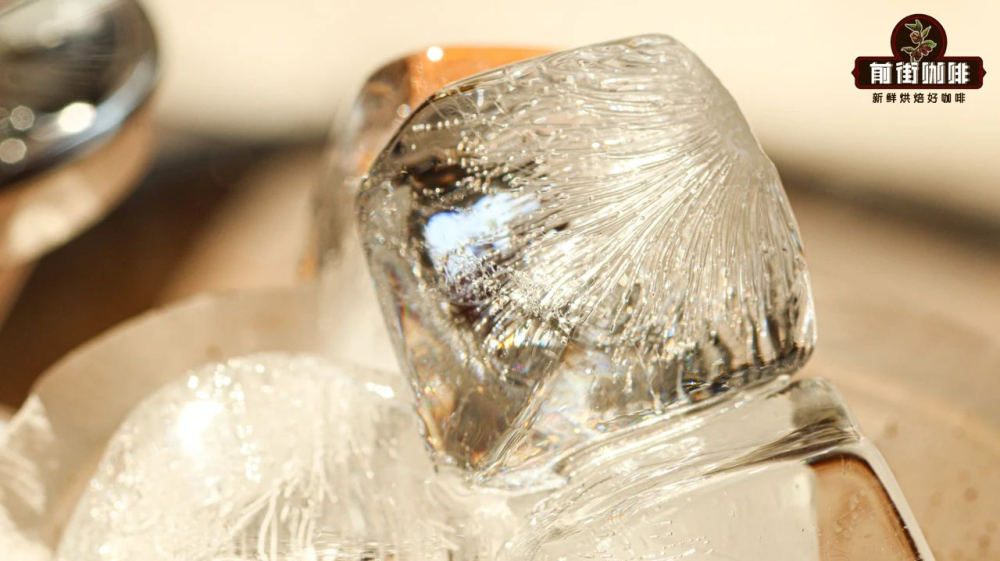
Another common low-temperature extraction method belongs to the drip type, that is, letting the continuously melting ice-water mixture seep drop by drop into the coffee grounds and completing extraction over a long period. This is ice drip.
In many English textbooks, ice drip is usually not called "Ice Drip Coffee," but Dutch Coffee, so it is often literally translated as "Dutch coffee." It is said that around the 17th century, Dutch sailors tried soaking coffee grounds in cold water during long ocean voyages, and found that the coffee made this way was not bitter and was convenient for long-term storage and transportation. Later, the Dutch brought this cold drink method to Japan during the Edo period through trade, where it was widely welcomed, and thus the name Dutch Coffee came into being.
Although the authenticity of this story is difficult to verify, what is certain is that the cool multi-layer drip device in today's coffee shops was invented by the Japanese, and the ice drip coffee made with it truly became popular starting from Japan.
In the 1850s, the owner of a Kyoto shop called Hana Fusa偶然 came across this cold brew process and, together with several chemistry students, developed a three-layer, valve-equipped high tower-type ice drip pot, using low-temperature cold water to slowly and evenly drip-extract coffee grounds. At the time, this device was also praised as one of the most artistic coffee brewing methods. After that, as well-known Japanese equipment brands such as HARIO, KINTO, and Kalita successively launched the cold brew bottles and ice drip pots familiar to everyone today, this type of low-temperature extracted black coffee spread widely in Japan. It was not until the rise of the third wave of coffee that this special device was introduced to Europe, and therefore Westerners also called it Kyoto Coffee.
Compared with cold brew and ice drip, the word "ice brew" rarely appears in coffee shops, and Front Street has not been able to find its exact origin either. People's understanding of it is even more varied. As for ice brew coffee, it can be regarded as an elegant translation of "Cold Brew," basically equivalent to the meaning of cold brew coffee.
In Front Street's view, the key to ice brew coffee lies in the character "brew," whose original meaning is to make alcohol, to brew, and is related to alcohol. In coffee, whether ice drip or cold brew, after production it needs to be sealed in a container for brewing, undergoing several hours or even one or two days of aging so that flavor substances further integrate with water and gradually develop a fermented taste similar to fine wine. So whether ice drip or cold brew, as long as it has gone through the process of storage and brewing, it can be understood as "ice brew coffee."
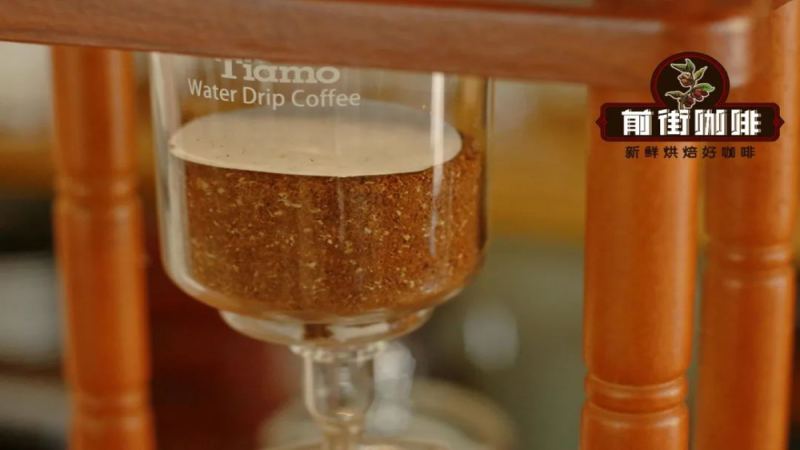
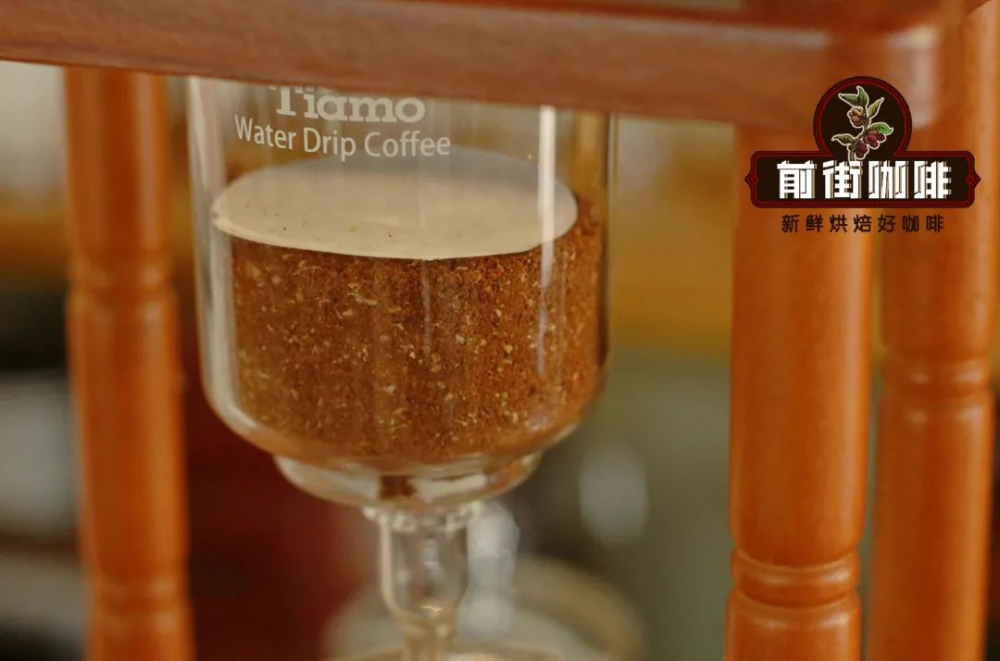
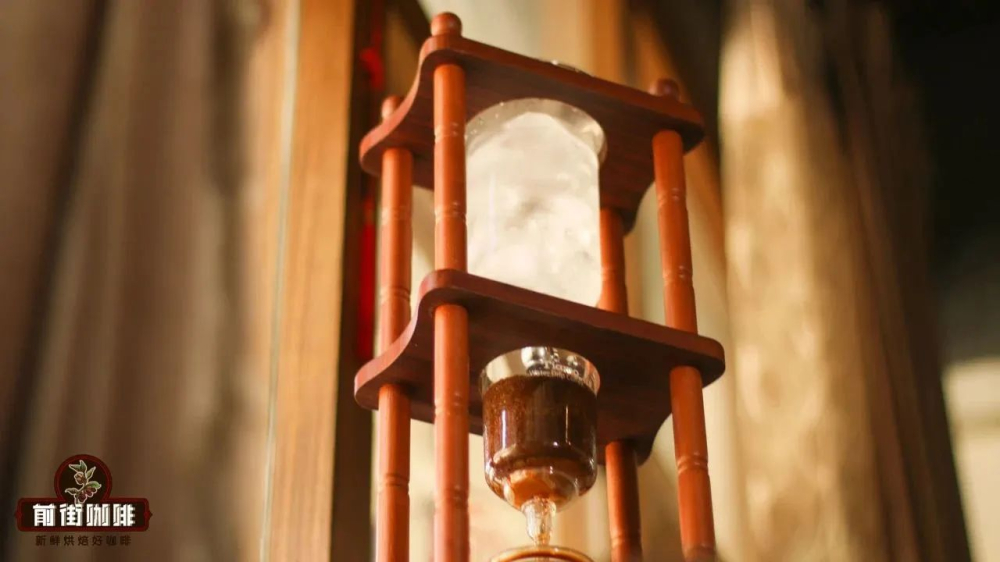
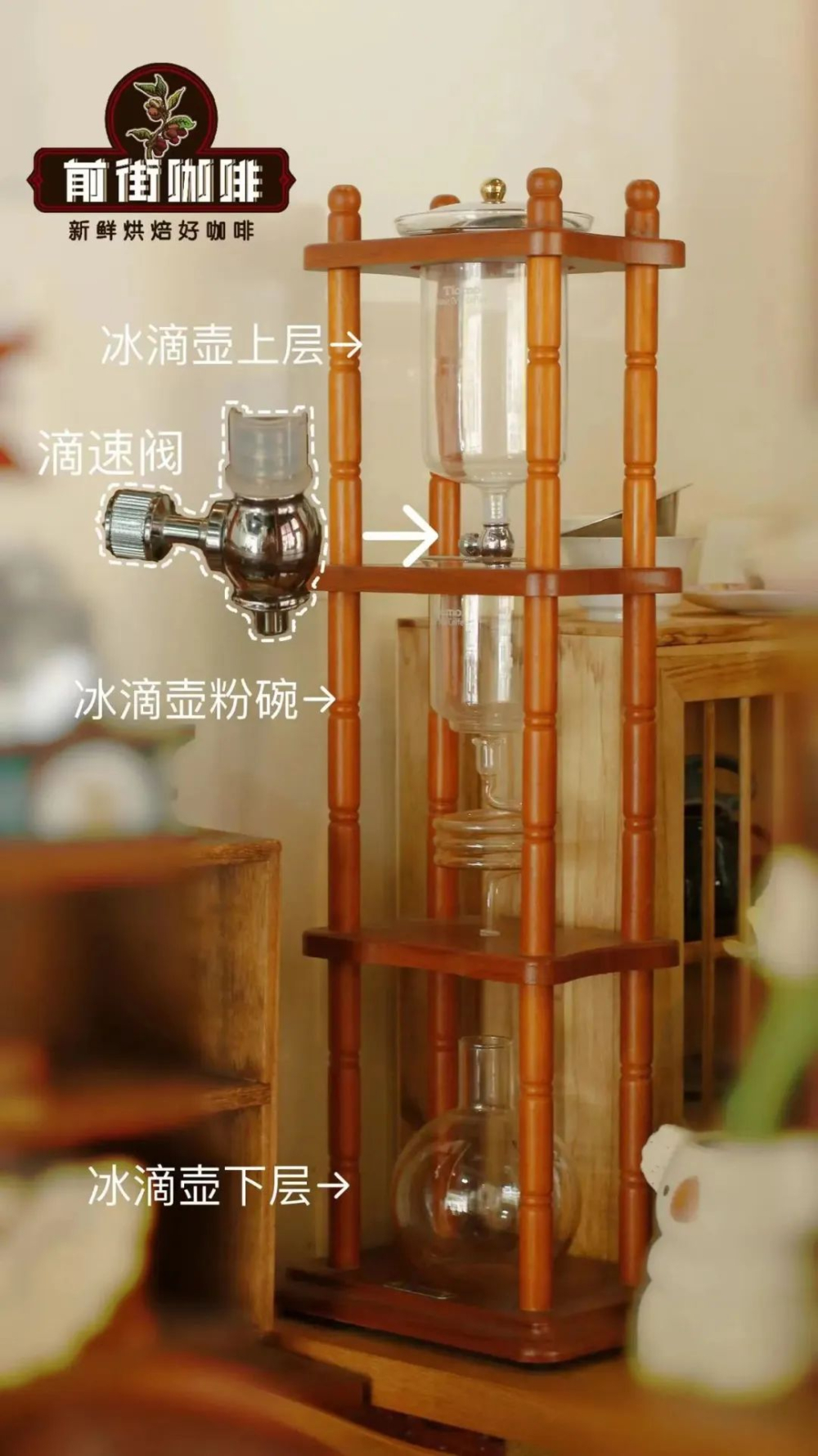
The ice drip pot devices seen online come in all kinds of styles, with different materials and shapes, but they usually cannot do without three parts: upper, middle, and lower, and can also be divided into four main structures: upper pot, valve, powder cup, and lower pot.
The upper container is mainly used to hold ice cubes and water, and a metal component is connected below it—this is the valve, which controls the water droplet speed by adjusting the outlet diameter, letting ice water drip evenly into the coffee grounds. The middle glass pot, similar to a cup, is used to hold the ground coffee powder. There is a filter hole in the center of the bottom, through which the extracted coffee liquid drips out, and the large pot below is responsible for collecting the coffee liquid.
Here Front Street chooses a Costa Rica Mozart coffee that is relatively popular in stores to make it. Mozart coffee beans use raisin anaerobic honey processing, and the flavor presents the sweet aroma of raisins, osmanthus, and fruit fermentation. Ice drip coffee can make the fermented feeling more prominent. In terms of grind size, Front Street generally chooses the same grind size as ice hand brew. Because low-temperature water reduces the extraction rate, the coffee is ground finer to improve the extraction effect. For this bean, a 85% passing rate with the Chinese No. 20 standard sieve is chosen, corresponding to Front Street store's grind size, which is 9 on the ek-43s grinder.
Usually we first determine the extraction parameters, using a coffee-to-liquid ratio of 1:10, extracting 600 milliliters of coffee liquid from 60 grams of coffee, with an ice-water mixture ratio of 1:1, and the valve flow rate controlled at 7 drops per 10 seconds. The drip filtration is generally completed within 6 to 8 hours.
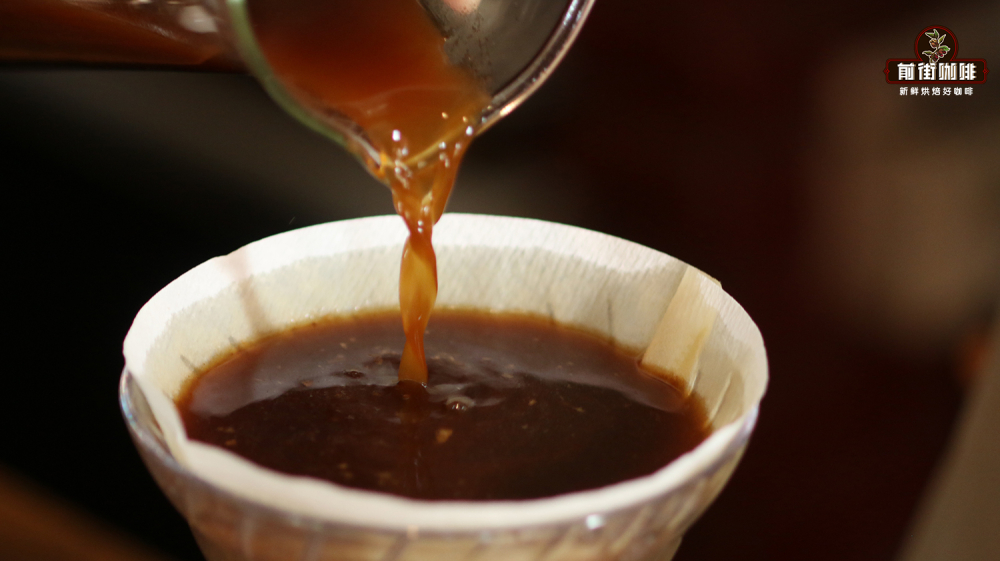
At the bottom of the middle pot, wet a round filter paper and fit it in place, then grind the coffee beans into powder and pour them in, taking care to level them to ensure even extraction. Place another round filter paper on the surface of the coffee bed to prevent water droplets from disturbing the coffee bed. Before dripping, the coffee bed needs to be moistened with cold water first, which both saves extraction time and avoids uneven extraction at the beginning. Place the powder cup on the rack and begin loading the ice-water mixture, usually half ice and half water. Adjust the valve flow rate to 7 drops/10 seconds, and make sure the dripping water droplets align with the position where the coffee liquid filters out. After the drip filtration is completed, pour the coffee liquid from the lower pot into a sealable container. Front Street uses a glass bottle, and puts it in the refrigerator to ferment for more than 12 hours. It is usually ready to drink the next day.
After a night of refrigeration, Mozart coffee presents an alcoholic fermented feeling, with the sweet-tartness of berries, pineapple, and other tropical fruits. The taste is rich but not bitter. After adding ice cubes to dilute it, it feels like drinking a refreshing fruit wine.
The biggest feature of ice drip coffee is long-time extraction at low temperature, so when choosing beans, types with more prominent flavor characteristics are generally considered. Here Front Street introduces several more typical flavor directions.
1. Tropical fruit, fermented wine aroma type
For example, the Mozart coffee mentioned earlier by Front Street has the sweet-tartness of dark berries, plus the wine aroma flavor produced by low-temperature aging, making the overall taste even better. In addition, there are several other coffee beans on Front Street's bean list that also belong to this type: Colombia's Flower Moon Night coffee, Honduras' Sherry coffee, and Costa Rica's Strawberry Candy coffee. Their aromas are very obvious, and they are likewise suitable for making with ice hand brew or cold brew.
2. Refreshing and clean type
Some washed-process coffee beans have very clean and full acidity. When made into ice drip coffee, they present a juice-like acidity, with the transparent fresh fragrance of cherry tomatoes and pomelo, very suitable for drinking in hot summer.
3. Sweet and delicious type
Compared with the above two medium-light roast coffees, dark roast coffee is generally less often used to make ice drip, as it is thought to be too strong and bitter. Actually, that is not the case. Front Street has tried using Indonesia's Golden Mandheling to make ice drip coffee. After adding ice cubes, it has a rich chocolate sweetness and also a fermented aroma, and is not bitter at all.
4. Flavor blend type
In addition to using single-origin beans with clear flavors, ice drip coffee can also be made by blending single-origin beans. For example, Front Street blends Honduras Sherry coffee and the Musician series Beethoven coffee at a 1:1 ratio. After mixed drip extraction, the coffee has both a rich whiskey aroma and a smooth creamy mouthfeel, as well as a refreshing fruity sweet-tartness.
For flavor types, you can refer to Front Street's classification recommendations above when choosing, but still make your purchase according to your own budget and preferences.
The above content is compiled by CoffeeHunters, a coffee news website.


