







What do the red, green and blue labels mean in Panama Geisha coffee?
Panama Geisha coffee from Hacienda La Esmeralda is graded under three labels: Red, Green and Blue. Each tier reflects a different altitude range, production plot and processing method, so the labels function as a tasting map rather than simple marketing. A later replacement batch, Volcanic Rock, was added to the lineup.
The name Geisha comes from Gesha or Geisha in English, pronounced like the Japanese word, which is why Taiwan translated it as geisha coffee. The variety demands high altitude, cloud cover or shade trees, and fertile soil. La Esmeralda's rise from an accidental discovery to auction records established the benchmark for Panama Geisha coffee.
Geisha coffee is hailed as the king of coffee, and the Geisha produced by Panama's Hacienda La Esmeralda is the benchmark among them. This article will systematically sort out the origin of the name Geisha coffee, its stringent growing conditions, and Hacienda La Esmeralda's legendary journey from accidental discovery to becoming a world champion. It will focus on interpreting the three grades of Hacienda La Esmeralda Geisha—Red Label, Green Label, and Blue Label (including the subsequent replacement batch "Volcanic Rock")—explaining one by one each tier's altitude range, production plots, processing methods, and flavor performance, and will include Front Street Coffee's brewing parameters and purchasing suggestions to help coffee lovers fully understand the tasting system of this top-tier coffee.
For more specialty coffee knowledge, welcome to follow: Front Street Coffee (Frontsteet Coffee)
When Geisha coffee is mentioned, the first thing that comes to most people's minds is Panama's Hacienda La Esmeralda. Usually when we talk about Geisha, we mean the Geisha from Panama's Hacienda La Esmeralda, not the Geisha from Gesha Village. Although the two belong to the same variety, the Geisha from Gesha Village is still slightly inferior in flavor performance to that of Panama's Hacienda La Esmeralda. Today, Front Street Coffee (FrontStreet Coffee) will introduce you to the origin and flavor characteristics of Panama Geisha coffee.
Geisha and "Geisha" are actually different translated names for the same coffee bean. If not placed in a coffee context, at first hearing it sounds like a person's name, and a very beautiful one at that. Why is it called Geisha coffee? Because Geisha is written in English as Gesha or Geisha, which is pronounced the same as the Japanese word for "geisha," so the Taiwan region translated it as geisha coffee. The name "Geisha" comes from Mr. Yuan of Coffee Lumo, and is currently more commonly used in China.
The growing environment of Geisha coffee
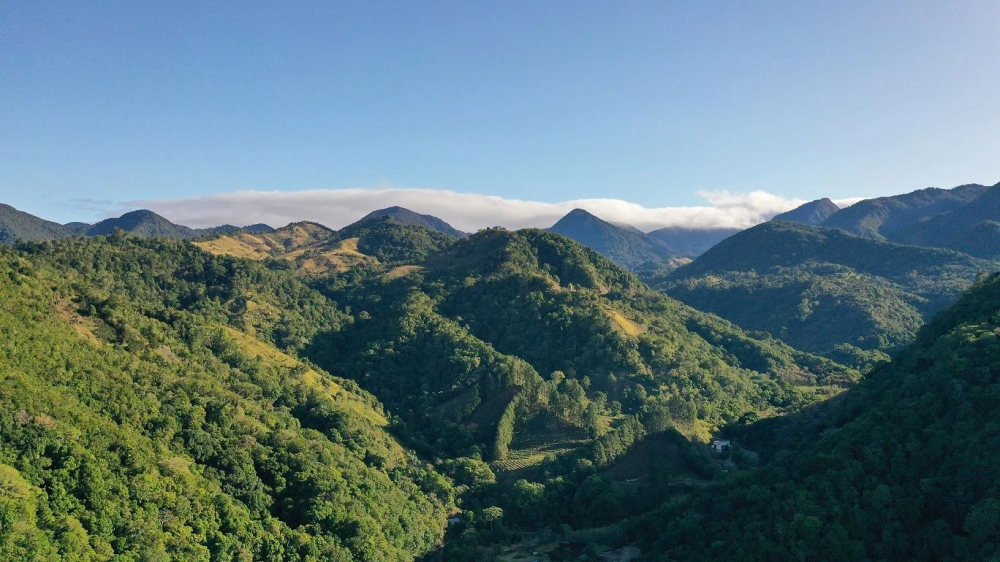
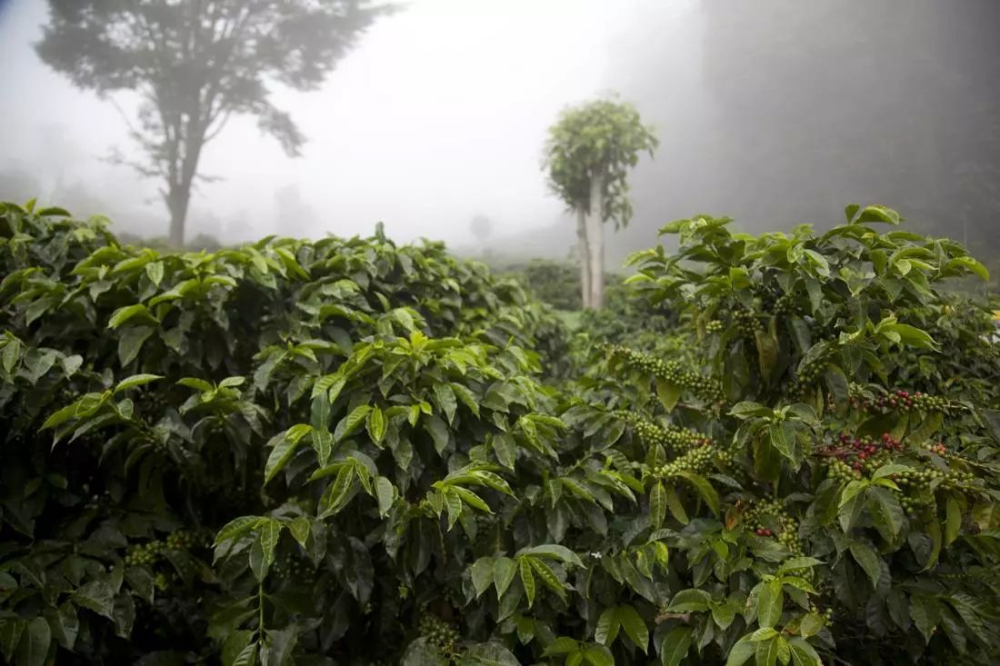
What kind of growing conditions are needed to produce the world's top coffee beans? Such an excellent Geisha is naturally extremely picky about its growing environment: high altitude is required (the higher the altitude, the better the quality and the more outstanding the flavor performance), cloud cover or abundant shade trees are needed, the soil must be fertile, and there must also be sufficient accumulated temperature. Aurora Coffee Estate is located in the northwest corner of Chiriquí Province, Panama, with an average altitude of 1,625 meters, an average annual temperature of 16°C to 25°C, and average annual rainfall of about 3,500 millimeters. This plantation uses semi-shade cultivation, and the tree species are all local endemic varieties, some of which are high-altitude Hass avocado trees. It is precisely this unique environment and climate that gave birth to the king of coffee.
The main producing areas of Geisha
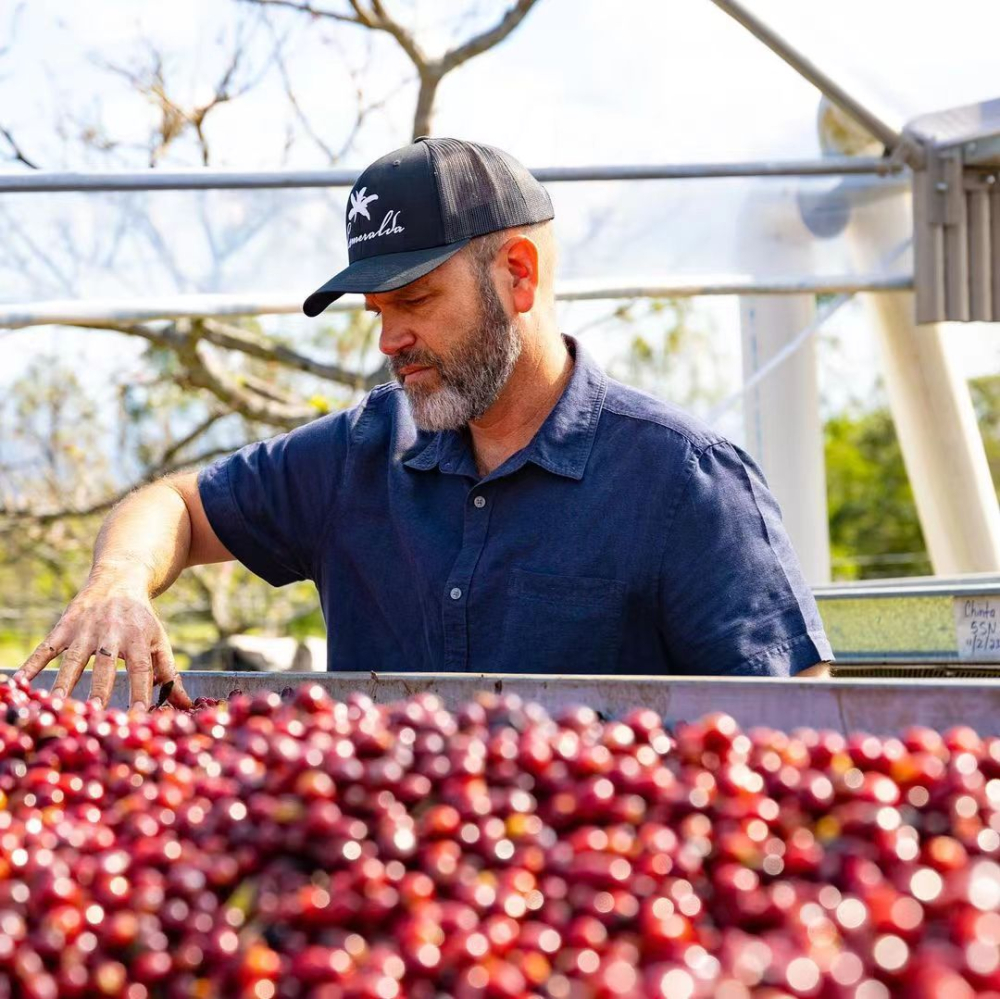
The reason Panama Hacienda La Esmeralda's Geisha could become a world-famous coffee originated from an accident. Retired Swedish banker Rudolph A. Peterson bought Hacienda La Esmeralda in Panama with the intention of spending his later years in peace, but unexpectedly, an unintentional act produced a great result—the coffee trees on the estate bore fruit, and he conveniently sent them to a competition, where they became famous overnight and won the 2004 Panama Best of Panama national championship in one stroke. The Geisha of Panama Geisha Hacienda La Esmeralda can be called the most famous Geisha. Since 2005, Hacienda La Esmeralda's Geisha has won championships in various world coffee competitions more than ten times. Hacienda La Esmeralda's Geisha is generally divided into three tiers: Red Label, Blue Label, and Green Label. Top tier—Red Label [auction lot]
Introduction to Panama Hacienda La Esmeralda
The history of Panama Hacienda La Esmeralda can be traced back to 1964. That year, American banker Rudolph Peterson retired and moved to Panama, bought Hacienda La Esmeralda in Boquete, and initially focused on dairy. Later, his son Price resigned from his job as a doctor to help his father run the farm, and in 1987 introduced Caturra and Catuai coffee varieties, and in 1994 established a washing station, from then on having its own coffee processing plant. In 1996, they bought the nearby Jaramillo estate, which had a superior geographical environment and excellent flavor in its original coffee varieties, and merged it into Hacienda La Esmeralda.
According to relevant information consulted by Front Street Coffee (FrontStreet Coffee), the reason the Jaramillo estate was favored by the Petersons, father and son, was that coffee was already planted there and the terrain was relatively high. Daniel Peterson (the younger son), while managing the estate, discovered that some coffee trees were in a neglected state. He noticed that some coffee trees were sparse with slender branches. At the time, coffee consultant Mr. Don Pachi recognized at a glance that this was a tree species he had brought back from Costa Rica 30 years earlier, but because it was difficult to manage and weak and sickly, Panama's coffee farmers had all cut down this variety.
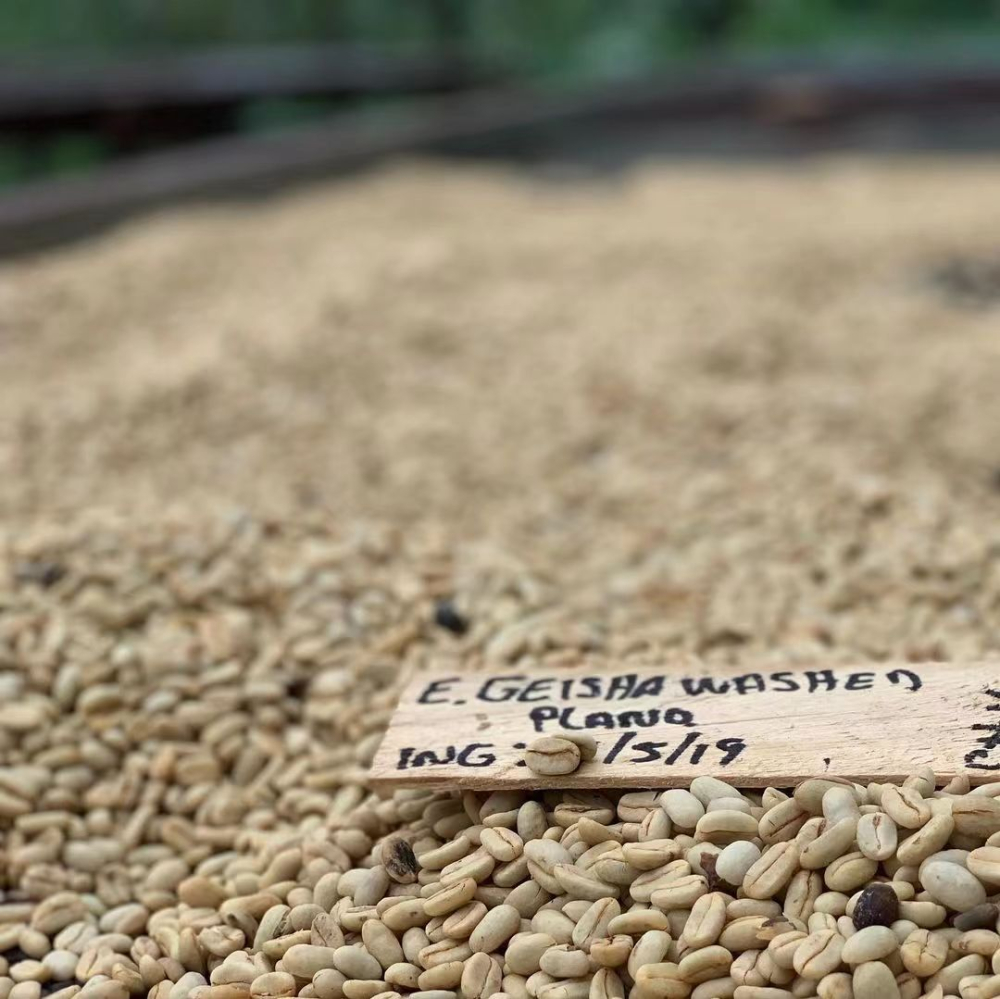
Daniel decided to plant these trees at a higher altitude and learned coffee cupping. These coffee trees were the later famous Geisha. Later, this Geisha coffee bean discovered by Peterson participated in the 2004 Panama Best of Panama green bean competition and won the championship, and from then on had an astonishing run. Later, after expert identification, it was discovered that this coffee bean was the Ethiopian Geisha variety. After that, the Peterson family devoted most of its energy to infrastructure construction to support strict separation of excellent lots and meticulous processing, namely the Red Label Geisha, Green Label Geisha, and Blue Label Geisha now seen in Front Street Coffee (FrontStreet Coffee) stores.
Hacienda La Esmeralda Red Label Geisha
The Geisha produced by Esmeralda Special is what we often call Red Label. It uses Geisha coffee beans grown at an altitude of 1,600-1,800 meters, with a cupping score above 90, and originating from the two production areas of Jaramillo and Cañas Verdes.
It must also participate in Hacienda La Esmeralda's own independent auction, and only the Geisha lots put up for auction from the divided plots are the auction Red Label. However, there are now also non-auction Red Labels on the market, which in fact are Geisha selected from the same plots that were not auctioned and then circulated to the market. The variety quality is the same, with only a difference in selling price.
Front Street Coffee (FrontStreet Coffee): Panama Hacienda La Esmeralda Red Label Geisha coffee beans
Region: Boquete, Panama
Estate: Hacienda La Esmeralda Mario plot
Altitude: 1,600-1,700 m Variety: Geisha Processing method: Natural process Flavor: Citrus, complex fruit, rose tea, honey
Hacienda La Esmeralda Green Label Geisha
Private Collection, commonly known as Green Label. Its difference from Red Label Geisha is that it is not an independent competition lot, but its quality is still that of an excellent Geisha variety. Green Label Geisha uses micro-lot coffee beans grown at an altitude of 1,600-1,800 meters and originating from different plots such as Jaramillo and Cañas Verdes.
Second, although Green Label Geisha is not as high-grade as Red Label Geisha, it still carries the classic flavors of Geisha, such as the floral aroma, fruit aroma, citrus acidity, and thick juicy mouthfeel unique to Geisha coffee. Therefore, Front Street Coffee (FrontStreet Coffee) believes that Green Label Geisha has the highest cost-performance ratio among these three labels.
Front Street Coffee (FrontStreet Coffee): Panama Hacienda La Esmeralda Green Label Geisha coffee beans
Region: Boquete, Panama Estate: Hacienda La Esmeralda Altitude: 1,600-1,700 m Variety: Geisha Processing method: Natural process Flavor: Jasmine, citrus, melon, berries
Hacienda La Esmeralda Blue Label Geisha
The brand Geisha 1500 is what we commonly see as Blue Label Geisha. It uses coffee beans grown at an altitude of 1,400-1,500 meters and originating from three different plots: Jaramillo, Cañas Verdes, and El Velo. The flavor is slightly floral, with fruity acidity and sweetness.
However, Hacienda La Esmeralda believed that Blue Label was priced too low and did not fit the estate's positioning, so it discontinued the Blue Label Geisha lot in 2021. A few months later, a Geisha coffee bean named "Volcanic Rock" appeared. After cupping comparison, Front Street's baristas found that this "Volcanic Rock" was very similar in flavor to the previous Blue Label. Front Street Coffee (FrontStreet Coffee)'s washed Blue Label Geisha has slight floral notes, fruity acidity, and sweetness, with a less thick mouthfeel; while the naturally processed Blue Label has slight floral notes, an obvious fermented feel, a berry-juice-like mouthfeel, and high sweetness.
Front Street Coffee (FrontStreet Coffee): Panama Hacienda La Esmeralda washed Blue Label Geisha coffee beans
Origin: Boquete, Panama Estate: Hacienda La Esmeralda Altitude: 1,400-1,500 m Variety: Geisha Processing method: Washed process Flavor: Lemon, oolong tea, cane sugar, peach
Front Street Coffee (FrontStreet Coffee) brewing suggestions for Panama Hacienda La Esmeralda coffee beans:
Front Street suggests using freshly roasted coffee beans for brewing, as this allows you to experience the coffee's rich flavors to the greatest extent. The coffee beans shipped by Front Street Coffee (FrontStreet Coffee) are all within 5 days of roasting, because Front Street deeply understands the great influence of coffee bean freshness on flavor. Front Street's roasting principle is "freshly roasted good coffee," so that every customer who places an order receives the freshest coffee when it arrives. The resting period of coffee is about 4-7 days, so when customers receive it, it is exactly at its best flavor.
Dripper: Hario V60 Water temperature: 90°C Dose: 15 g Coffee-to-water ratio: 1:15 Grind size: Medium-fine grind (80% passing through a Chinese standard No. 20 sieve)
Front Street Coffee (FrontStreet Coffee) brewing method: staged extraction
Use 30 g of water for a 30-second bloom, pour in a small stream in circles until 125 g for the stage break, and when the water level drops and is about to expose the coffee bed, continue pouring until 225 g and stop. After the coffee finishes extracting, remove the dripper. Start timing from the beginning of pouring; the total extraction time is 2'00".
Flavor description of Panama Hacienda La Esmeralda Geisha
[Red Label] Bright rose and citrus aromas, genmai, berries, apricot, complex fruit, honey, a thick juicy mouthfeel, rich flavor layers, and obvious sweetness.
[Green Label] On the palate, intense jasmine aroma, high sweetness, citrus, berries, juiciness, cream, green tea, orange peel, cantaloupe; the overall flavor layers are rich, with a lingering finish of floral and citrus.
[Volcanic Rock Blue Label] On the palate, soft acidity of lemon and grapefruit; as it cools slightly, there are oolong tea, honey, and cane sugar sweetness in the aftertaste, with a relatively clean and bright mouthfeel.
Front Street believes that besides Panama, Colombia, Guatemala, and Costa Rica are also famous Geisha producing areas. Compared with the price of Hacienda La Esmeralda, the flavors of Colombia's Hacienda La Esperanza Geisha and Costa Rica's Goddess Estate Geisha are also quite impressive, but the price is only about 1/3 of Red Label Geisha, making them very worth trying. Of course, besides Geisha coffee, there are actually many coffees with different flavors that are worth trying. Taste different flavors and experience different moods!
The above content is compiled by CoffeeHunters, a coffee news website.


