







The flavor profile of espresso is largely determined by the Arabica varieties and their proportions in the blend. Blending is not simply mixing beans together; rather, through pre-roast blending or post-roast blending, it allows the acidity, bitterness, sweetness, and body of beans from different origins to complement one another, ultimately creating a balanced and consistent taste. This article starts from three recipes — Front Street Specialty Blend, Commercial Espresso Blend, and Basic Espresso Blend — to break down the flavor roles of Colombian Huila, Brazilian Cerrado, Robusta, and Yunnan AA, and explains how roasting methods and the primary-secondary relationships in blending affect the final performance of a cup of Espresso.
The Art of Blending Coffee Beans and Espresso Blend Recipe Sharing
So-called blended coffee is the combination of multiple single-origin coffee beans in certain proportions, allowing the strengths of each bean to be brought out, resulting in a more balanced flavor. It is usually composed of beans from different regions, with the goal of complementing one another — for example, if one bean has a smooth mouthfeel but insufficient aroma, another bean with a prominent aroma can be added to compensate. Through complementing or reinforcing, a richer new flavor with more layers is ultimately created. In practice, sometimes green beans are mixed first and then roasted, which is called pre-roast blending; sometimes they are roasted separately and then mixed, which is called post-roast blending.
Whether to choose pre-roast blending or post-roast blending depends on the characteristics of each bean in the recipe, and both methods have their own applicable scenarios. The advantage of post-roast blending is that different roast levels can be set for different beans, allowing each component to present its ideal state.
Before starting to blend beans, it is necessary to first understand the flavor differences of coffee from around the world, because beans from different origins present different characteristics. With different varieties and origins, there are subtle differences in dimensions such as acidity, bitterness, sweetness, aroma, and body. Single-origin beans tend to emphasize the unique personality of a certain type of coffee, while blended beans are mostly used for Espresso, Americano, Latte, Cappuccino, and other espresso drinks, pursuing a more balanced, smoother, and more consistent taste, and therefore also more mass-market in flavor.
So, how exactly should the blending be done?
(1) Front Street Specialty Blend Coffee Beans: Colombia : Brazil
Colombia Huila Region: Located in southwestern Colombia, it is one of the main coffee-growing regions. Colombian coffee is generally grown at an altitude of 1500-1800 meters, with varieties mostly Bourbon and Caturra, processed by the washed method, with relatively high density and uniform bean size, and plump bean shape (the thickness from the center to the surface of the bean is greater). The Huila region contains many famous producing areas, and quite a few small place names have directly become commercial brands. Although local cultivation conditions are good, the infrastructure around the farms is still not sufficiently developed, and green bean drying equipment and washed processing facilities are not yet complete, which is somewhat regrettable. Huila coffee has an intense taste and heavy body, especially aromas such as nuts, chocolate, and caramel, plus suitable acidity, making it a high-grade specialty coffee.
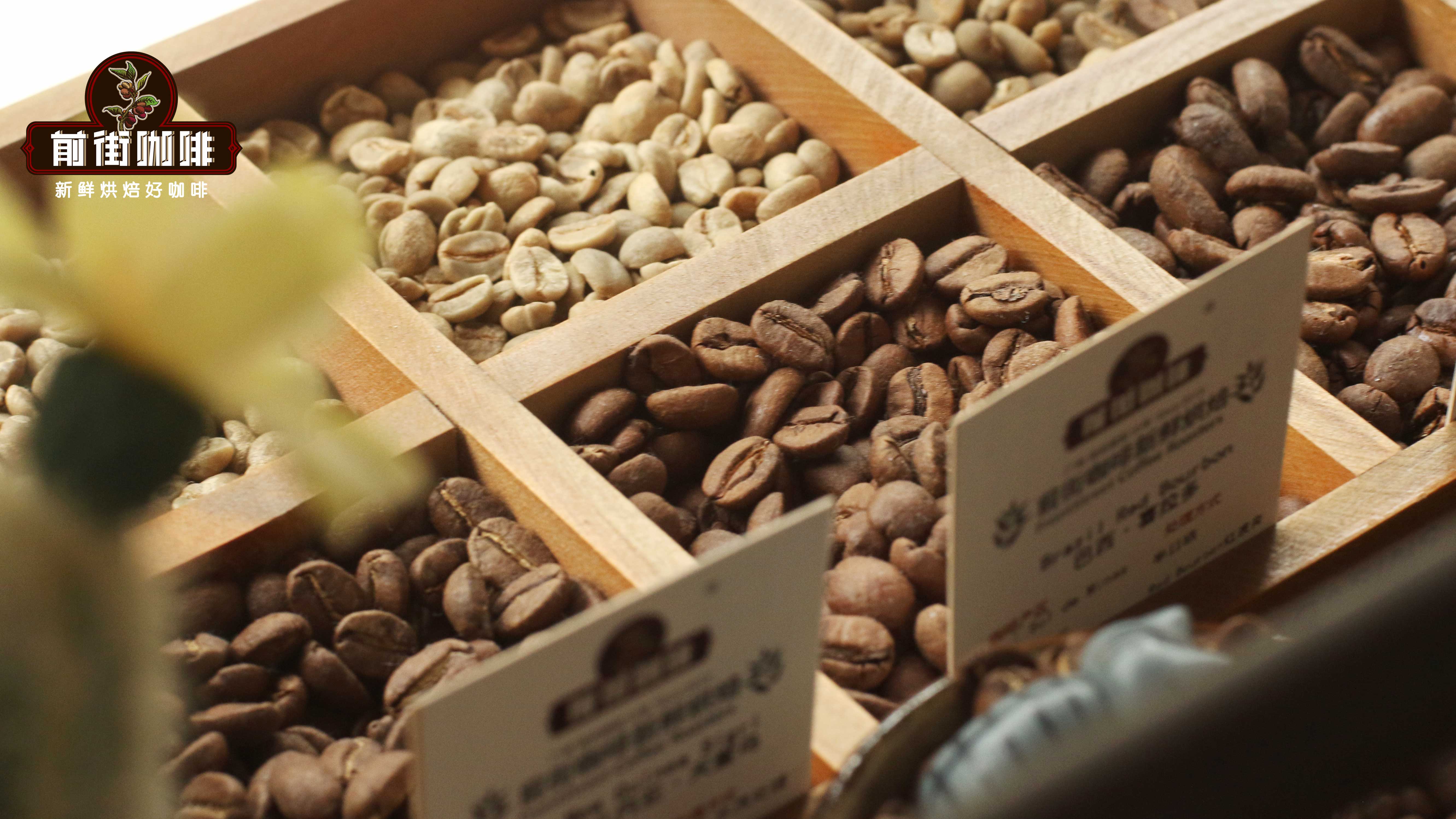
Flavor characteristics of Front Street Colombia Huila coffee: rich and solid mouthfeel, pleasant acidity, fragrant aroma, moderate acidity, and rich sweetness that is thought-provoking. Because it is inexpensive and the beans are on the smaller side, it is very suitable for use in blended coffee. It has an intense taste and relatively heavy body, and its aromas of nuts, chocolate, and caramel together with suitable acidity make it a high-grade specialty coffee, suitable as a single origin or as an espresso blend base.
Brazil Cerrado Region: Brazilian coffee is generally grown at an altitude of 1000-1300 meters, with relatively low density. The variety is mostly Bourbon, processed by the semi-washed method. With moderate moisture content and relatively soft bean texture, the thickness from the bean surface to the center is relatively thin, so it is not suitable for roasting at too high a temperature; otherwise, the temperature on the inner wall of the roaster can easily scorch the bean surface and produce a burnt bitter taste.
At the same time, if we want to express the characteristics of nuts, milk chocolate, and good body, and use it as a blend base, we adopt a medium-heat bean-drop method, maintaining the heat through the drying phase, and after first crack begins, make fine adjustments as the temperature rises to promote a more complete caramelization reaction; when the temperature rises to near second crack, the beans can be discharged.
Flavor characteristics of Front Street Brazil Cerrado coffee: a comfortable bittersweet taste, extremely smooth on entry; with a faint grassy aroma, delicate fragrance with slight bitterness; sweet and smooth, with a pleasant aftertaste.
Flavor after blending: a sweet and fragrant taste. Using a medium-dark roast, when making espresso, the mouthfeel has a soft slight acidity, clean sweetness, and nutty sweet aftertaste; the overall impression is not too stimulating, mild, with medium crema, meeting the daily output needs of coffee shops.
(2) Front Street Commercial Espresso Blend Beans: Colombia : Brazil : Robusta
[Robusta] beans have strong resistance to pests and diseases and high yields. They are usually less acidic than Arabica beans and often carry a slight woody aroma. Their caffeine content is 2.2%, higher than the 1.2% of Arabica beans, and their chlorogenic acid content is also higher. The taste is quite bitter, and they are usually used in commercial beans, with a lower cost than Arabica beans.
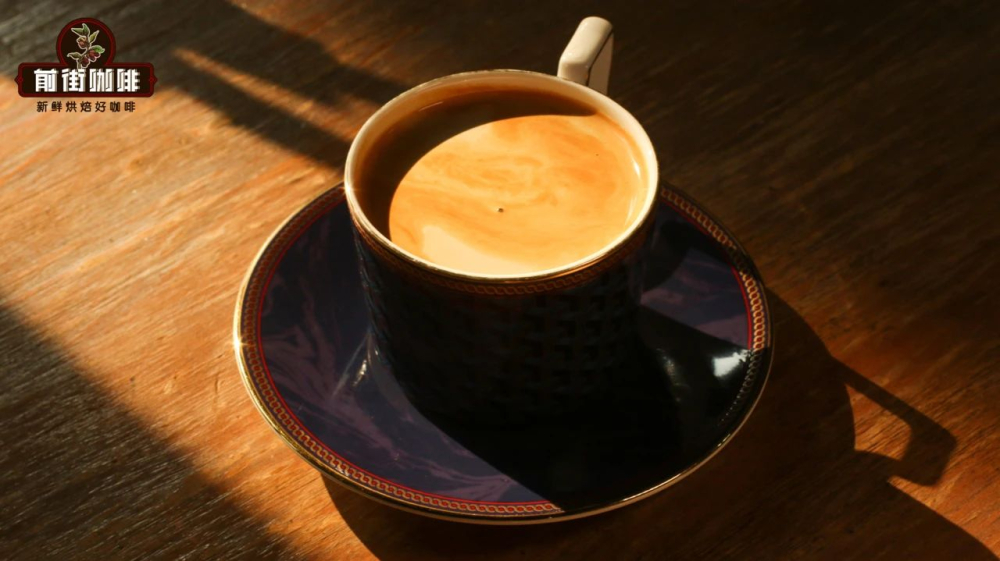
In terms of the flavor of a single bean, the coffee taste of commercial beans is indeed much inferior to specialty coffee beans. Generally, commercial beans are chosen for blending, and through blending, coffee with a very good taste can also be produced, suitable for making latte, cappuccino, and other espresso drinks. For our commercial blend used to make Espresso, because of the Robusta beans, the crema will be richer, the taste classic, with caramel sweetness, flavors of nuts, cocoa, and dark chocolate, balanced acidity and sweetness, and a slight bittersweetness, with a lasting finish. It is suitable for making classic coffees such as flat white, Americano, and latte at home on a daily basis.
(3) Front Street Basic Espresso Blend Coffee Beans: Yunnan AA : Brazil;
Our Yunnan AA is [Typica], the oldest native variety from Ethiopia, produced in Ethiopia and southeastern Sudan; all Arabica varieties are derived from Typica. The top leaves are copper-red, which is why it is called red-top coffee. The flavor is elegant, but the plant constitution is relatively weak, with poor disease resistance, prone to leaf rust, and low fruit yield. Typica has four slender leaves in an spreading posture, with an inclination angle of 50~70 degrees. The opposite leaves are long oval-shaped, with smooth leaf surfaces; the branches at the ends are very long, with few branches, and the flowers are white, blooming at the base where the petiole connects to the branch. The ripe coffee cherries resemble cherries in appearance and are bright red.
During cultivation, it requires more shade, and it can usually only be harvested once about every two years. Yunnan's high-quality geographical and climatic conditions provide good conditions for coffee growth, with planting areas in Lincang, Baoshan, Simao, Xishuangbanna, Dehong, and other prefectures. Yunnan's natural conditions are very similar to Colombia's: high altitude and large temperature differences between day and night. Its flavor belongs to the mellow-aroma type, with moderate acidity, a fragrant, rich, and full-bodied taste, uniform bean size, high oil content, and fruity aroma; its quality and mouthfeel are similar to Colombian coffee.
The espresso beans recommended by many baristas — Front Street Dark Cocoa Blend flavor: with soft fruity acidity, caramel sweetness, nutty and dark chocolate flavors, smooth and viscous, but the taste is on the lighter side. This cost-effective espresso blend bean is suitable for opening shops and home users who prioritize cost and have average requirements for flavor.
When blending, there must be a distinction between primary and secondary components in order to create a flavor more wonderful than single-origin coffee. Before formulating a blending plan, first envision the more suitable combination method, then blend after appropriate roasting, and determine the best plan through cupping and later adjustments. I hope this helps everyone~
The above content is compiled by CoffeeHunters, a coffee news website.


