







As the autumn and winter camping season arrives, the moka pot has once again become a popular piece of gear among outdoor coffee enthusiasts. However, when faced with the choice between single-valve and double-valve models on the market, many consumers hesitate because they are unclear about the differences. From the perspective of Front Street Coffee, this article takes an in-depth look at the extraction principle of the moka pot, compares the specific differences between single-valve and double-valve models in terms of pressure, strength, crema performance, and suitable scenarios, and answers the question of whether espresso blend beans can be used in a moka pot. At the same time, for home users, it offers practical advice on choosing the right moka pot size. Whether you are after a rich milk coffee or prefer a pure black coffee, this guide will help you make a wiser purchasing decision, so that every penny is spent where it matters most.
Every autumn and winter camping season, many coffee enthusiasts think about getting a moka pot so they can enjoy freshly brewed coffee outdoors. This is also an important reason why moka pots have surged in popularity over the past two years. But once you open an e-commerce platform, you will find that apart from brand and size, moka pots also come in single-valve and double-valve versions.
"What exactly is the difference between single-valve and double-valve?" Many friends delay placing an order because they cannot figure out the difference between the two. Today, Front Street Coffee will go into detail about what exactly differs between single-valve moka pots and double-valve moka pots.
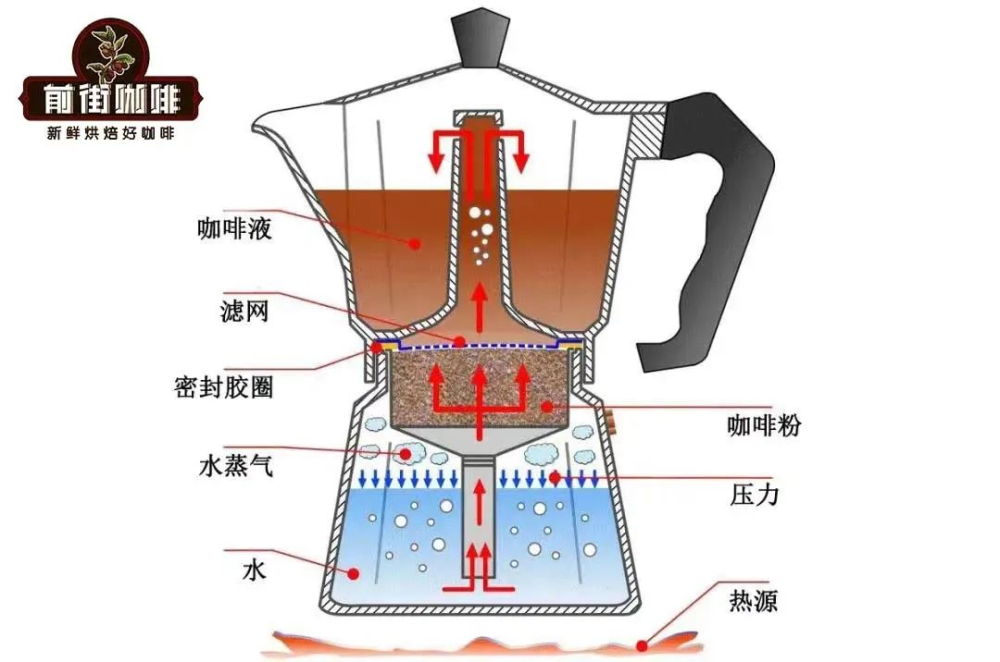
To understand their differences, we first need to start with the basic working principle of the moka pot, because the double-valve version is essentially the original structure with one "special component" added. The working principle of the moka pot Using this diagram again, we can intuitively see the structure and operating logic of the moka pot. It is mainly divided into three parts: the lower chamber that holds hot water, the middle filter basket that holds coffee grounds, and the upper chamber with a filter screen.
The principle of the moka pot is not complicated: it uses steam pressure to push hot water through the extraction process. After the lower chamber is heated, the water temperature rises to boiling point and turns into steam. The steam expands and squeezes the internal space, forcing the hot water to flow upward only through the tube. As the hot water passes through the coffee grounds, extraction is completed, and finally the coffee liquid flows out from the top outlet.
This is the extraction logic of the moka pot: pressure buildup and high temperature work together to produce a cup of black coffee with relatively high strength. If dark-roasted beans are used, the taste will be very intense; if light-roasted beans are used, it can easily become sour and sharp. Therefore, only medium-dark roasted coffee beans match the extraction conditions of a moka pot.
If you prefer a rich crema, you might try Front Street Coffee. Front Street Classic Blend, which can present the most traditional espresso flavor; if you pursue floral and fruity notes, you can choose Front Street Coffee. Strawberry Candy Espresso, which is favored by people who are afraid of bitterness. Using it to make moka pot coffee will carry notes of rose, dried fruit, grape, and fruit gummy.
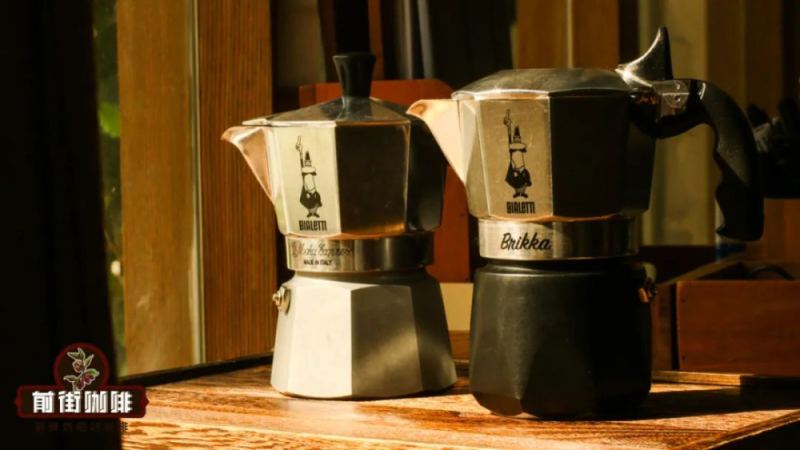
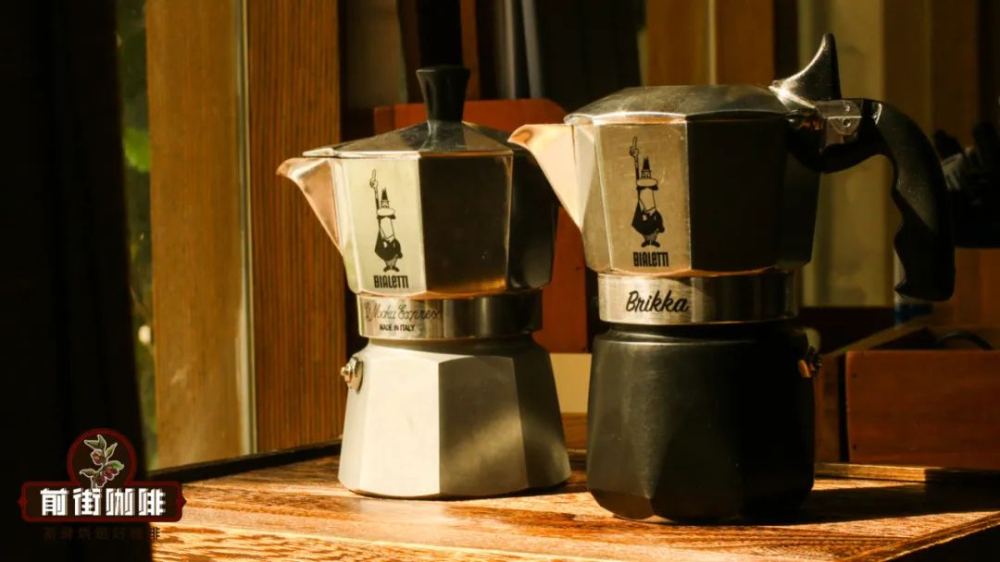
In addition to the most common single-valve moka pot extraction method, the double-valve version adds a pressure valve on top of that, namely the device at the spout.
(Left is single-valve, right is double-valve)
As the name suggests, the core function of the pressure valve is to increase pressure. It deliberately narrows the gap in the channel, restricting the outflow path of the coffee liquid. When the coffee liquid cannot smoothly seep out because the gap is too narrow, it accumulates inside and forms a blockage, thereby achieving a pressure-boosting effect.
Pressure is one of the key parameters in pressure-based extraction methods such as moka pots and espresso machines. The greater the pressure, the higher the extraction efficiency. Since the pressure valve allows the moka pot to obtain higher pressure, it also means we can make coffee with more efficient extraction. Under the same parameters, coffee made with a double-valve moka pot is closer to espresso in both strength and extraction yield. When used to make a latte, you do not need to worry about an obvious watery taste due to insufficient strength, nor do you need to fear that the coffee flavor will be covered by milk.
This change is very practical for most people. The extraction pressure of the original single-valve moka pot is relatively low, so the coffee needs to be ground close to espresso fineness, even as fine as flour, which is not friendly to most hand grinder users.
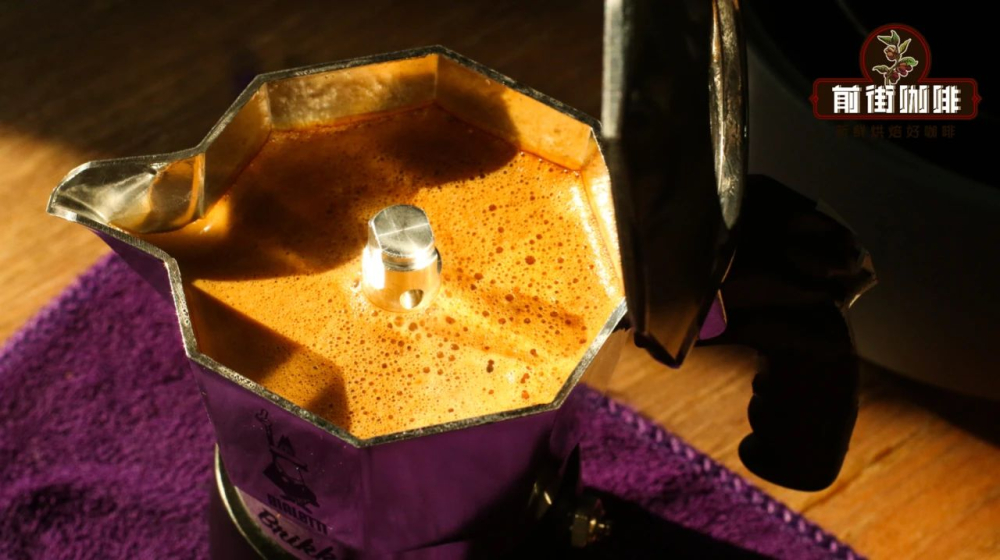
When the grind particles are coarser, both the strength and extraction yield of the brewed coffee will decrease, and the taste will naturally suffer. But after the pressure is increased, even if the grind is slightly coarser, the higher pressure can still produce coffee with satisfactory strength and extraction yield. In addition, the presence of the pressure valve makes the extracted coffee not only stronger, but also accompanied by more coffee crema. As a result, many merchants use the ability of the double-valve moka pot to extract crema as a selling point in their marketing, for example claiming that a double-valve moka pot can produce more attractive latte art patterns.
But in reality, the crema produced by a double-valve moka pot is not suitable for latte art. This is because this layer of crema is different from the crema on espresso from an espresso machine and has no delicacy at all. It is merely foam forcibly formed when the coffee liquid is squeezed through an overly small gap. This layer of foam has a rough texture and will break and dissipate shortly after extraction. Therefore, the crema effect can only bring an improvement in mouthfeel, and it is not suitable for latte art, and may even hinder it. So everyone should not place too high expectations on this layer of "crema."
Overall, Front Street Coffee still more strongly recommends that friends planning to buy a moka pot choose the double-valve version, because it is more inclusive and suitable for a wider range of scenarios. If you have no need for milk coffee and only want to drink a cup of black coffee, then buying a single-valve moka pot is enough. After all, the price difference between the two is not small (over 100 yuan), and money should still be spent where it matters most.
The above content is compiled by CoffeeHunters, a coffee news website.


