







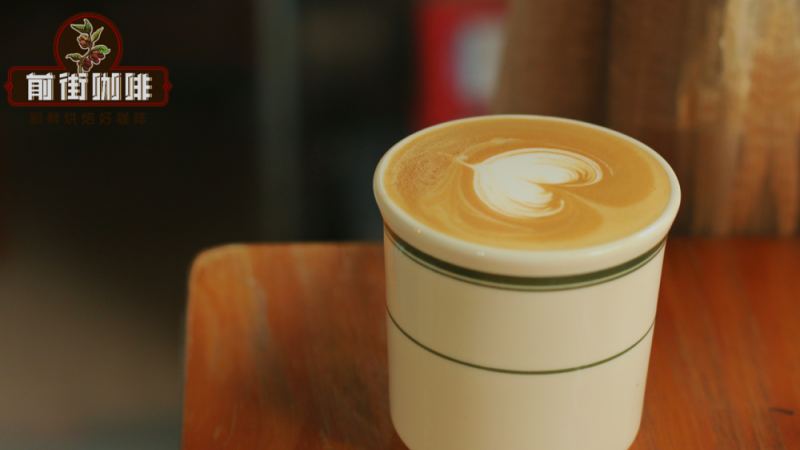
How does a flat white differ from a latte, and can it be iced?
An authentic flat white is served hot only. It began in New Zealand and Australia in the 1980s and uses a higher coffee-to-milk ratio than a latte, with thinner milk foam, often built on ristretto for a velvety texture. Starbucks added an iced flat white for customers who want it cold, and it tastes lighter than the hot version.
The drink's latte origins trace to Italian immigrants who brought coffee culture to New Zealand and Australia after World War II. Two stories explain its birth: a barista whose cappuccino foam failed to steam properly, and shops wanting a small milk coffee near a 1:1 ratio instead of a latte's 1:6. For a fuller cup, pick a bean with strong chocolate and nut notes.
Flat White is called 馥芮白咖啡 at Starbucks in China. Originating from New Zealand and Australia, it is a flavored milk coffee with a higher coffee concentration than a latte and thinner milk foam. Can it be made as an iced drink? The authentic version only offers it hot, but Starbucks has introduced an iced Flat White to meet demand. This article will also cover the pronunciation of Flat White, its origin legends, the characteristics of ristretto, and Front Street Coffee's recommended bean list and brewing parameters, helping you fully understand this velvety-textured milk coffee.
For more specialty coffee knowledge, welcome to follow: Front Street Coffee (Frontsteet Coffee)
The Chinese translations of Flat White include 平白 and 澳白咖啡, also called "fresh milk espresso," and Starbucks names it "馥芮白咖啡." It originated as a flavored milk coffee from the New Zealand and Australia region. It is said that during World War II, Italian immigrants brought coffee culture to New Zealand and Australia, and by the 1980s, Flat White became popular locally.
The Origin of Flat White Coffee
There are two theories about the birth of Flat White coffee. One is that a barista intended to make a cappuccino (which has a stronger coffee taste than a latte and thicker milk foam), but the milk foam was not steamed properly, resulting in a milk coffee with a stronger coffee taste than a latte but thinner milk foam than a latte.
The other theory is that many customers wanted a milk coffee with a rich coffee flavor but did not want a latte with a coffee-to-milk ratio of 1:6, so some coffee shops introduced a small-sized milk coffee with a coffee-to-milk ratio of about 1:1, producing a fresh milk espresso of only about 3oz.
Can Flat White Coffee Be Made Iced?
Regardless of which theory, it is clear that Flat White coffee has a higher coffee concentration than a latte. Some coffee shops also use ristretto (which has a higher concentration than regular espresso), paired with thinner milk foam than a latte, to create a milk coffee with a velvety-smooth texture and rich coffee flavor.
Therefore, authentic Flat White coffee is only available hot. However, to cater to different customer needs, Starbucks has launched a cold version—"Iced Flat White." Compared to the hot version, the cold Flat White tastes relatively lighter. If you want a rich Flat White, Front Street Coffee (FrontStreet Coffee) recommends choosing the hot one.
The Taste and Mouthfeel Characteristics of Ristretto
Ristretto is a type of espresso. Compared to what we commonly call espresso, ristretto extracts less coffee liquid under the same extraction parameters, thus having a higher concentration than espresso. If the beans used for espresso are inherently acidic, the acidity of ristretto will also be more pronounced than that of espresso.
Currently, all espresso-based products from Front Street Coffee (FrontStreet Coffee) use a house blend called "Sunflower Warm Sun Blend Coffee Beans," composed of 30% Ethiopian sun-dried Yirgacheffe and 70% Honduran Sherry coffee beans. According to Front Street's cupping, this bean's flavor profile includes whiskey aroma, soft berry acidity, and vanilla cream and nutty caramel.
If you prefer a rich, aromatic coffee, Front Street's classic espresso blend is worth trying. It combines beans from three origins—Brazil, Indonesia, and Vietnam—and uses a dark roast to maximize the coffee's rich aroma, making it easy to extract abundant, dense crema. It is suitable for both Americano diluted with water and latte paired with milk.
When Front Street routinely extracts espresso, it uses 9-10 bar of pressure to achieve a coffee-to-liquid ratio of about 1:2. Typically, a single shot uses 9-11g of coffee grounds to extract 15-25g of coffee liquid; a double shot uses 18-20g of coffee grounds to extract 35-45g of coffee liquid. The less coffee liquid extracted, the higher the concentration.
Ristretto is essentially an espresso with a smaller extraction ratio. Therefore, Front Street Coffee (FrontStreet Coffee) uses the same grind size and dose as espresso but extracts less coffee liquid, with a longer extraction time, generally at a coffee-to-liquid ratio of about 1:1.6.
How to Make Flat White Coffee
Front Street Coffee (FrontStreet Coffee) uses a 200ml cup, adds a double shot of ristretto (35g), and pours steamed hot milk with thin milk foam from the center while dispersing the espresso, creating a layered flavor experience. The first sip is the rich fermented wine aroma of espresso, the second sip is the strawberry milkshake flavor produced by the fusion of espresso and milk, and the third sip is the roasted nut flavor brought by a small amount of coffee mixed with milk.
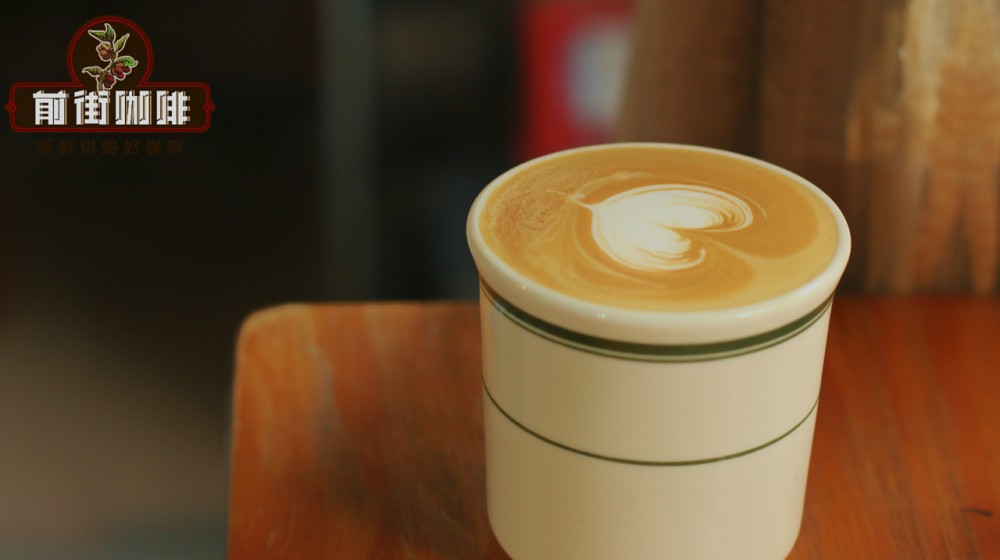
To allow tasters to finish the coffee in its most perfect state, it should be neither too hot nor too thick, but still dense and creamy. If cappuccino and latte pursue an airy "fluffiness," then Flat White coffee pursues a silky "smoothness." Front Street hopes guests will taste a Flat White that is as smooth as cream but not too "watery." We retain a 0.3cm milk foam layer to blend with the espresso and create latte art, and control the temperature at 50-55°C, making it easier to drink.
The above content is compiled by CoffeeHunters, a coffee news website.


