







Why does a second brew of a drip coffee bag taste so weak?
A drip coffee bag should be brewed once. The 10 grams of ground coffee release most of their soluble flavor during the first pour, so a second pass mostly yields bitter, hollow water. To brew, tear along the arrow, unfold the two paper ears, rest them on a cup with an 8 to 9 centimeter rim, and pour hot water at about 90 degrees Celsius.
The reason comes down to coffee extraction rate. Most desirable acids, sugars and aromatics dissolve early; what remains is largely harsh compounds. Reusing the bag extracts those instead, so the cup turns thin and astringent. A coffee association of america style tasting approach treats each serving as a single, measured extraction rather than a repeat steep like tea leaves.
Drip bag coffee has become a popular choice in offices, homes, and travel scenarios thanks to its convenience. Simply hang the small tabs on both sides of the filter bag over the rim of your cup, pour in hot water, and you get a cup of black coffee. However, many friends new to drip bag coffee wonder: can one bag be brewed repeatedly like tea leaves? This article will start with the brewing steps for drip bag coffee, explain why drip bag coffee is not suitable for a second brew based on the principles of coffee extraction rate, and introduce several drip bag coffee beans from Front Street Coffee with good flavor profiles for your reference when purchasing.
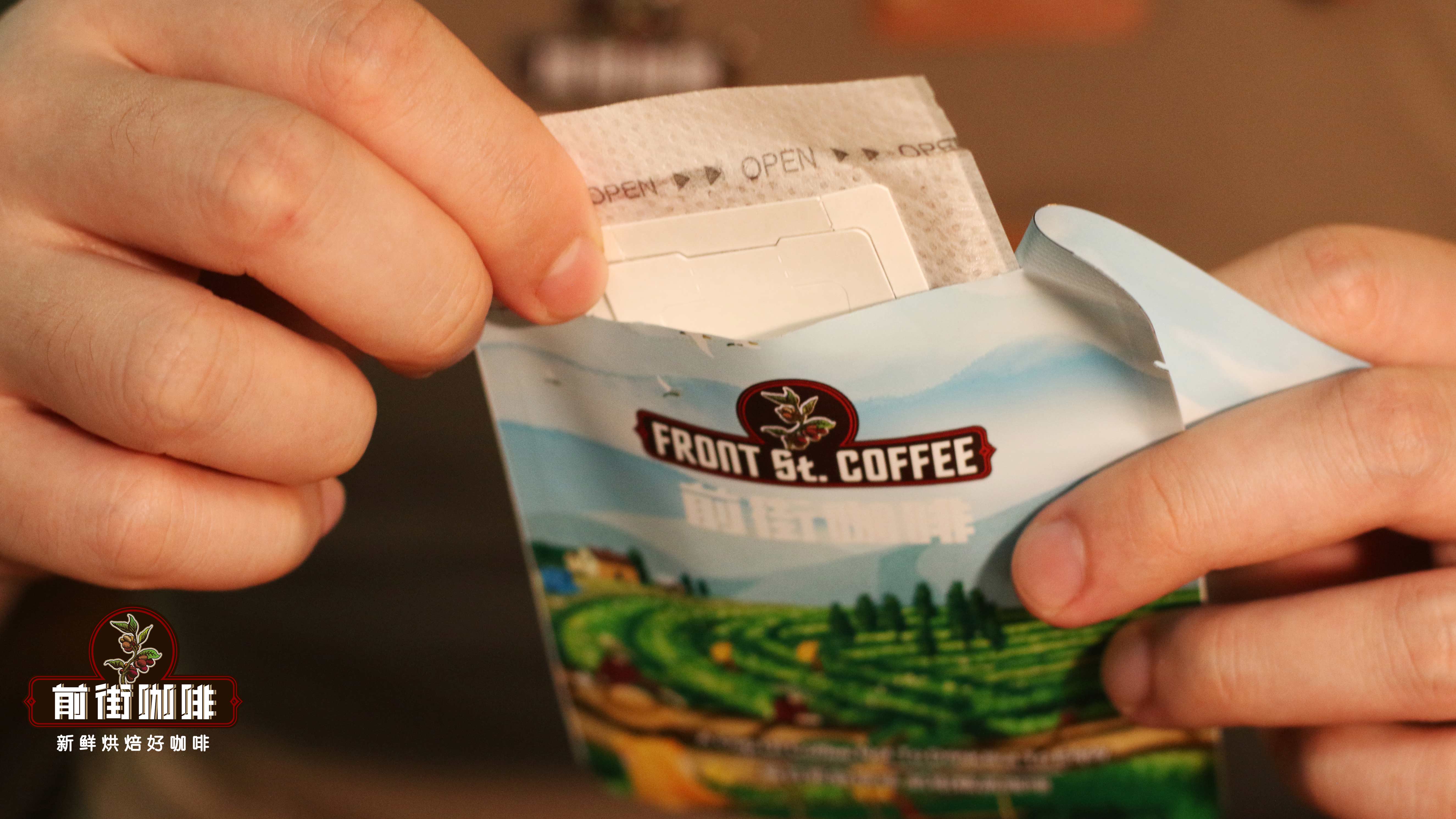
Drip bag coffee is made by placing ground coffee into a sealed filter bag. It is called drip bag coffee because during extraction, you need to unfold the small paper tabs on both sides of the filter bag—those "small ears"—and rest them on the rim of the cup, allowing hot water to pass through the coffee grounds to complete extraction. Its core selling point is convenience and speed, allowing you to enjoy a cup of black coffee anytime, anywhere, making it a staple beverage in offices, homes, and during travel.
After all, drip bag coffee's main appeal is convenience. Although you could bring out the whole set of grinding and brewing equipment for pour-over coffee, doing so would overshadow the convenience advantage of the drip bag itself. Moreover, people who like drip bag coffee often also appreciate the flavor of pour-over coffee. In the office, at home, or on the road, when you don't have a grinder, digital scale, gooseneck kettle, or dripper on hand, drip bag coffee becomes a great way to satisfy your craving.
How to Brew Drip Bag Coffee
Taking Front Street Coffee's own Front Street Drip Bag Coffee as an example, the coffee grounds weigh 10g:
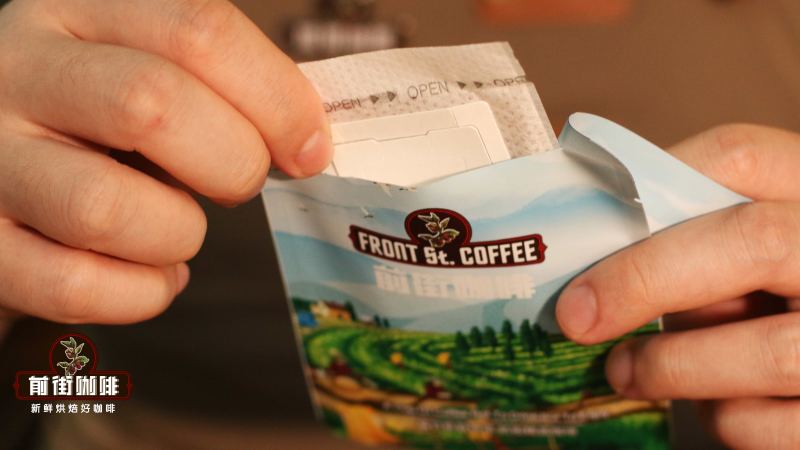
1. Tear open along the arrow mark on the packaging, unfold the small ears on both sides of the filter paper, and rest them on the cup. Front Street Coffee (FrontStreet Coffee) drip bags all have opening instructions printed on them, making them easy to tear.
2. Choose a cup with a relatively small rim, otherwise the two ears of the drip bag may not rest securely. The cups used at Front Street Coffee have a rim diameter of about 8-9cm.
3. Front Street Coffee's brewing method is the same as for pour-over single-origin coffee: pour in 90°C hot water, just enough to cover the coffee grounds. If you want to be more precise, you can measure exactly 20g of water and let it bloom for 30 seconds.
4. After blooming, pour in about 130ml of hot water in stages. Those who prefer a stronger taste can add less water, while those who prefer a lighter taste can add more.
5. After brewing, lift out the drip bag and throw it in the trash.
So, one small drip bag can only brew one small cup of coffee—can it be brewed repeatedly like tea?
In fact, only 30% of coffee beans is soluble material, while the remaining 70% is insoluble fiber. Taking 10g of coffee as an example, brewing once according to Front Street's recommended method already extracts 18%-22% of the substances in the coffee, which happens to be the optimal flavor extraction rate range determined by research from the Specialty Coffee Association of America. The remaining 8%-12% of soluble substances are the less desirable flavor components, and continuing to extract them will drag down the flavor performance of the entire cup.
If you pay attention, you will notice that the coffee liquid extracted in the early stage is very dark in color, becoming lighter as it goes on, until only a faint yellow remains at the end. Actually, the tail end has basically no flavor to speak of—it just tastes watery.
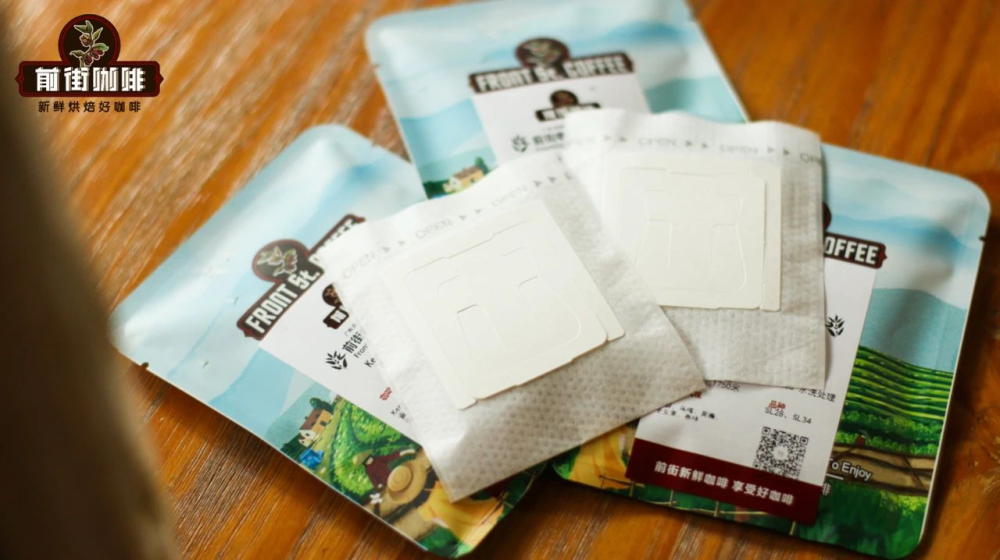
Which Drip Bag Coffees Have Good Flavor
Front Street Panama Butterfly Drip Bag Coffee Beans
Panama is located in Central America, bordered by Costa Rica to the west and Colombia to the east. Panamanian coffee became famous worldwide thanks to the Geisha from Hacienda La Esmeralda, and the entire country is shrouded in a strong Geisha atmosphere, with many estates planting Geisha coffee beans. However, Geisha is difficult to cultivate, low in yield, and outstanding in flavor, so its price is naturally not cheap. This Front Street Panama Butterfly has 70% premium Geisha lineage, along with Catuai and Caturra, grown in the Baru Volcano region of Boquete at an altitude of 1,600 meters. The unique local microclimate brings abundant rainfall and significant day-night temperature differences, and combined with careful harvesting and meticulous processing, this Front Street Panama Butterfly coffee delivers impressive performance in body, acidity, and floral notes.
What's even more pleasantly surprising is that despite having such excellent quality and growing conditions, its price is very affordable, allowing people to experience the flavor of Panamanian Geisha at a high cost-performance ratio.
Front Street Costa Rica Tarrazu Drip Bag Coffee
Costa Rican coffee has always been known for its balanced flavor, rich chocolate notes, and smooth mouthfeel. Tarrazu is located south of the capital San Jose and is one of Costa Rica's most closely watched coffee-producing regions. These Front Street Costa Rica Tarrazu coffee beans are plump, with a rich body, smooth mouthfeel, intense chocolate and nut aromas, moderate acidity, and an enticing fragrance.
Front Street Yunnan Small Bean Drip Bag Coffee
At Front Street Coffee, you can find two Front Street Yunnan coffee beans: one is washed Typica, and the other is Catimor. At Front Street Coffee, Yunnan Typica is labeled as Yunnan Specialty Coffee, while Yunnan Catimor is labeled as Yunnan Small Bean Coffee according to market convention.
Both of these Yunnan coffee beans are roasted to a medium level by Front Street Coffee, because Yunnan is not a region known for its acidity—its flavor is generally balanced, with nutty and brown sugar notes as the base. Front Street Coffee (FrontStreet Coffee) chose medium roasting precisely to showcase the balance, nutty and brown sugar sweetness, and gentle fruit acidity of Front Street Yunnan coffee.
When it comes to Yunnan coffee beans, there are two sayings that often end debates about varieties: one is "Thanks to the efforts of coffee farmers and improvements in technical proficiency, Yunnan coffee beans are pretty good now," and the other is "Yunnan beans are good." These two have become classic statements for evaluating Yunnan coffee. Yunnan Small Bean was originally named after Typica, because Typica belongs to the Arabica small bean variety. But times have changed—the Typica variety has degraded and its yield is low, so it has gradually been replaced by Catimor, and the name "Small Bean Coffee" has been inherited by Catimor.
The above content is compiled by CoffeeHunters, a coffee news website.


