







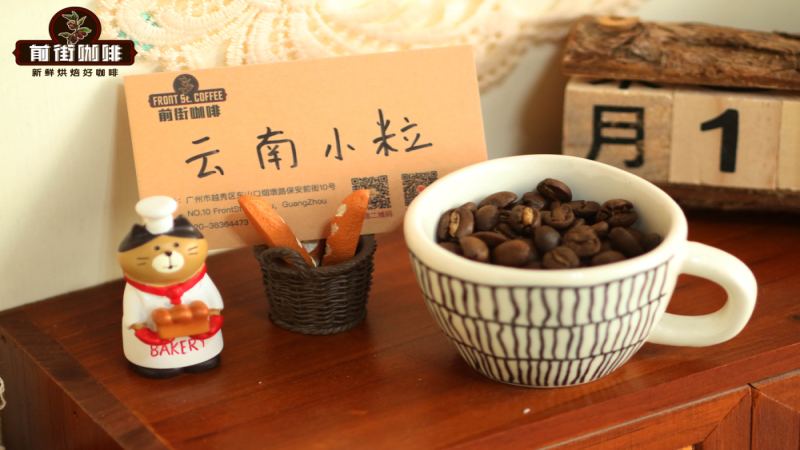
Is Catimor in Yunnan an arabica or robusta coffee bean?
Yunnan Catimor is an Arabica-Robusta hybrid, bred by the Portuguese Coffee Rust Research Center from a cross involving Timor Hybrid. It carries disease resistance and high yield from robusta coffee beans lineage while keeping the cup profile of Arabica. More than ninety percent of Yunnan's planted area is now Catimor, which is what the local term small-bean coffee usually means.
Historically Yunnan grew Typica and Bourbon, both Arabica varieties with weak rust resistance and low yield, so growers replaced them. Catimor CIFC7963 changed that balance. Under medium roast, a washed Yunnan Catimor shows nuts, herbs, brown sugar, and plum-like acidity, and it works well as a daily pour-over with standard 1:15 parameters. The definition of arabica coffee covers these traditional varieties.
Yunnan coffee is often labeled "small-bean," but what variety does this name actually point to? Today, over ninety percent of Yunnan's planted area is occupied by Catimor, which is both a hybrid descendant of Arabica and Robusta and inherits the dual nature of disease resistance and high yield alongside balanced flavor. Front Street Coffee has specifically included a washed Yunnan Catimor in its daily staple bean series, presenting through medium roasting a tonality interwoven with nuts, herbs, brown sugar, and plum-like acidity. This article starts from the variety's origins, genetic composition, flavor flaws, and potential, explains in detail the definition of small-bean coffee and the ins and outs of Catimor, and appends Front Street's pour-over recommendations and complete parameters, helping coffee lovers build a true understanding of "the taste of Yunnan."
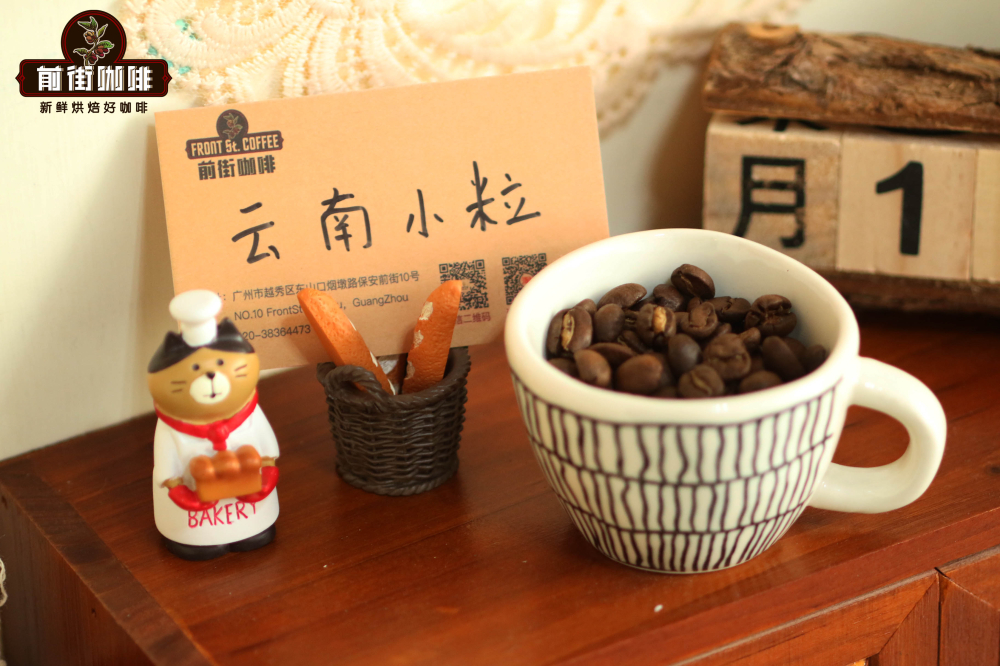
For more specialty coffee knowledge, please follow: Front Street Coffee (Frontsteet Coffee)
When Yunnan coffee is mentioned, people's reactions often fall into two camps: one group frowns and says outright they do not like it, while the other is full of curiosity and eager to try it. In discussions about Yunnan coffee, the term "small-bean" appears with extremely high frequency, so what exactly does small-bean coffee refer to? And which variety does it belong to?
Today, most Yunnan small-bean varieties are Catimor
Coffee is essentially a crop, and if examined from the perspective of botanical classification, "small-bean coffee" is not a formal category name. The so-called "small-bean" actually refers to Arabica varieties with smaller fruit, used to distinguish them from the medium-bean Robusta coffee beans grown in Hainan.
At present, more than ninety percent of Yunnan coffee is planted with the Catimor variety. Historically, however, Yunnan was dominated by two ancient Arabica varieties, Typica and Bourbon, which local farmers customarily called "old varieties." Later, because these two varieties had poor disease resistance and low per-unit yield, growers found it difficult to profit from them, so they gradually replaced them with higher-yielding Catimor. Therefore, what we now call "small-bean coffee" actually refers to Yunnan Catimor coffee beans.
Is Catimor Arabica or Robusta?
Catimor CIFC7963 is a hybrid variety bred by the Portuguese Coffee Rust Research Center (CIFC) to combat coffee leaf rust. In appearance, this variety shows a compact tree shape, dwarf plants, dense branching, short fruit nodes, vigorous growth, and strong vitality. Its most prominent advantages are extremely strong rust resistance and high yield. Catimor's fruit is rather small, and taxonomically it is classified under Arabica, but genetically it is a hybrid descendant of 75% Arabica and 25% Robusta.
Robusta's caffeine content ranges between 2.7% and 4%, about twice that of Arabica. As a natural pesticide produced by the plant itself, caffeine helps the plant resist most insect attacks, so Robusta is easier to grow and lower in price. In addition, because of its higher amino acid and chlorogenic acid content, its flavor tends toward a heavy, low bitterness, and if mishandled it can also show astringency and an irritating moldy taste. For this reason, Robusta is often used as the raw material for instant coffee.
By contrast, the "delicate" Arabica plant has weaker disease resistance and lower per-plant yield. The pronounced day-night temperature difference brought by high-altitude environments slows the ripening process of coffee fruit, allowing coffee cherries to accumulate more nutrients and form richer aromas. The unique microclimates of each coffee-producing region further provide Arabica with diverse growing conditions, creating varied flavor expressions.
Catimor inherits characteristics from both Robusta and Arabica, so it possesses both strong disease resistance and high-yield advantages, and after roasting it also offers fruit-like acidity and sweetness on the palate. However, its Robusta lineage also brings flavor shortcomings: its tonality is dominated by nuts and brown sugar, lacking rich, uplifting higher-order flavors such as citrus, florals, and tropical fruit. Coupled with the relatively crude green bean processing methods of earlier years, Yunnan coffee is often described as having a "devil's aftertaste," and in competitions it struggles to compete with pure Arabica varieties such as Caturra. In addition, Catimor's rust resistance gradually degrades after 20 to 30 years. If the Yunnan coffee industry wants to improve overall quality and achieve long-term development, it must gradually replace varieties. In recent years, many popular varieties have emerged on the market, such as Typica, Bourbon, and Geisha.
What basic flavor tonalities does Yunnan Catimor have?
Front Street believes that as a product grown domestically in our country, coffee professionals should understand "the taste of Yunnan," so Front Street has added Yunnan Catimor coffee to its regular staple bean series and selected the washed process.
Some merchants use novel flavored processing methods to mask the flaws of Yunnan beans themselves, while adding large amounts of aroma to them in order to raise prices. Front Street feels that this approach neither truly preserves the original taste of Yunnan coffee nor avoids misleading consumers. After tasting specially processed Yunnan coffee beans, some friends find the aroma especially prominent and mistakenly assume this is the mainstream processing method for Yunnan coffee. In fact, most Yunnan coffee farmers have limited conditions and do not possess expensive processing equipment, so the vast majority of Yunnan coffee beans can only use natural processing methods, namely washed and natural.
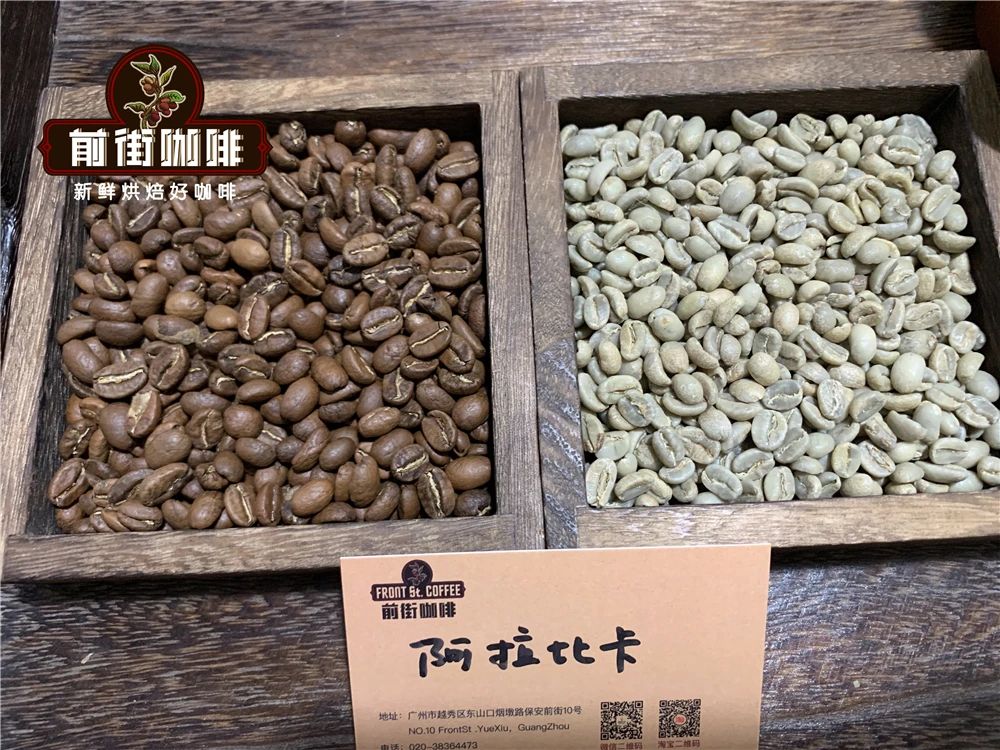
The washed process is as follows: after harvesting, the coffee fruit is first machine-depulped to remove the skin and pulp, and the depulped coffee beans are placed in fermentation tanks to ferment, using fermentation to break down the mucilage layer; after fermentation is complete, they are rinsed repeatedly with clean water to wash away the broken-down mucilage, and finally the coffee beans are dried for one to two weeks. Washed Yunnan coffee not only reduces the defect rate, but also produces more stable quality, while taking flavor cleanliness to an even higher level.
Front Street believes that the flavor given to coffee by Yunnan's terroir is a neutral, balanced tonality, that is, possessing acidity, sweetness, and bitterness all at once. Therefore, Front Street's Yunnan coffee is uniformly medium-roasted, highlighting roasted aromas such as chocolate and nuts while retaining some acidity. In Front Street's cupping, the Yunnan small-bean staple beans presented aromas of nuts, herbs, and brown sugar, a melon-and-fruit-like sweetness, and plum-like acidity, with a balanced mouthfeel.
Brewing suggestions for Yunnan small-bean
Front Street matches corresponding parameters when brewing different coffee beans. For darker-roasted beans, such as Mandheling coffee and Brazil coffee, Front Street uses a water temperature of 87 to 88 degrees Celsius and a medium-coarse grind; for lighter-roasted beans, such as Ethiopian Yirgacheffe and Panama Geisha coffee, Front Street uses a high temperature of 91 to 93 degrees Celsius and a medium-fine grind to bring out the aroma of high-altitude hard beans. Returning to today's Front Street Yunnan small-bean coffee, Front Street chooses a medium water temperature and grind to highlight Yunnan coffee's neutral balance.
Front Street's pour-over parameters:
Dripper: hario v60
Dose: 15g
Water temperature: 90 degrees Celsius
Grind: 75% passing a No. 20 sieve
Water-to-coffee ratio: 1:15
Three-stage pouring: first wet the coffee bed with twice the coffee grounds' weight in water, forming a dome and blooming for 30s, then pour in a small stream in circles from the inside out, pausing at 125g, and when the coffee bed drops to half the height of the dripper, continue pouring the third stage with the same fine stream to 225g, until all the coffee liquid has finished filtering, then remove the dripper; total time about 2 minutes.
Front Street Yunnan small-bean staple bean coffee flavor: it smells very nutty, with herbs, chocolate, and caramel on the palate, a slight faint fruit acidity in the finish, an overall balanced mouthfeel, and good cleanliness.
The above content is compiled by CoffeeHunters, a coffee news website.


