







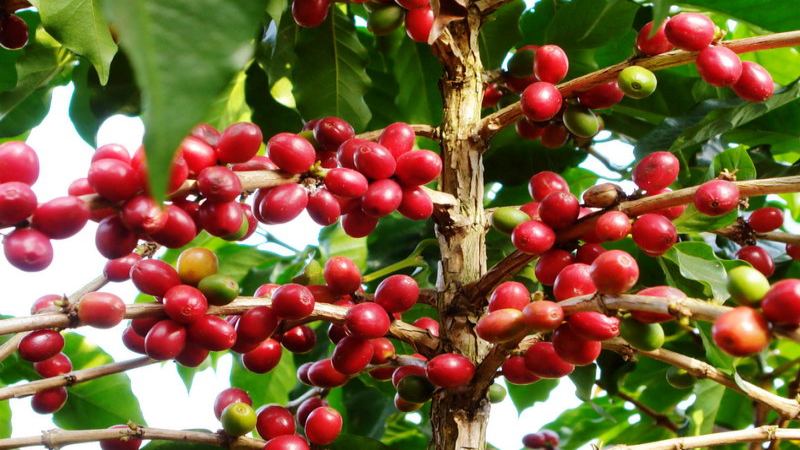
Guatemala, with its volcanic soil and microclimates, has become a major hub for specialty coffee. Among its estates, El Injerto is renowned for winning multiple CoE championships, and its Geisha has repeatedly fetched high prices in global auctions. This article systematically reviews the origin of El Injerto's Geisha variety and the background of its auction lots, and further introduces Guatemala's overall growing environment, the division of its eight major regions, main cultivated varieties, and washed processing methods. Combining Front Street Coffee's roasting and brewing practices, it provides specific parameters and flavor descriptions for two representative beans—medium-light roasted Huehuetenango and Flower God—offering coffee enthusiasts a complete reference from origin knowledge to daily brewing.
For professional coffee knowledge exchange and more coffee bean information, please follow Coffee Workshop (WeChat public account: cafe_style)
Guatemalan coffee often carries a hint of smokiness, rooted in the fact that coffee trees grow in volcanic soil, which also constitutes the signature characteristic of the country's coffee. Guatemala is located in the middle of North and South America, occupying a key position in Central America. It has a subtropical climate, with high-altitude volcanic terrain dominating the country. Mild temperatures combined with fertile soil create ideal conditions for coffee cultivation. For this reason, coffee has become an important cash crop in Guatemala, with green bean exports accounting for about 40% of the country's total agricultural exports.
Guatemala El Injerto White Stone Geisha
Among the many estates in Guatemala, El Injerto stands as a benchmark. It has repeatedly won honors in international competitions, and combined with the fertile volcanic soil and unique microclimate of its region, its coffee quality is exceptionally outstanding. Guatemala's most famous estate, El Injerto, has cultivated two Geisha varieties, originating from Panama and Malawi respectively. The Panama Geisha seeds were introduced from Hacienda La Esmeralda. Through careful cultivation, it ultimately became El Injerto's most sought-after bean after Pacamara, with auction prices even surpassing the long-dominant Pacamara.
The lot of Geisha won by Sang Ho Park is the Panama Geisha, which El Injerto named "Young Gesha Central America." It comes from a very remote micro-lot within the estate called "Peña Blanca" (White Stone), located beneath a massive cliff with a distant view of the Injerto valley. Peña Blanca is a newly developed Geisha production area, which only saw its second harvest last year. The seeds come from El Injerto's most famous Geisha production area, La Calaca, and are classified as second-generation Geisha. In the estate's own global auction, it is an independent lot, distinguished from the African Geisha lot from Malawi.
El Injerto is located on the Huehuetenango highlands of Guatemala. It has won awards nine times in the Guatemala Cup of Excellence (CoE), taking first place five times, most recently in 2015. In its early days, El Injerto was known for its Bourbon variety, then Pacamara became the mainstay for several years, followed by Geisha. At the 2017 Cup of Excellence, El Injerto's Geisha won second place. The Geisha introduced in this article is precisely the 2016 El Injerto estate auction lot.
Geisha was originally a coffee variety originating in the forests of Ethiopia. It was discovered in the Geisha forest of Ethiopia in 1931, then sent to the Kenya Coffee Research Institute, introduced to Uganda and Tanzania in 1936, spread to Costa Rica in 1953, and entered Panama around 1960. Later, Panama's Hacienda La Esmeralda separated it from other varieties. In 2004, Hacienda La Esmeralda's Geisha made a name for itself at the BOP competition and won the national coffee competition championship, thereby establishing Hacienda La Esmeralda's position in the specialty coffee world.
Guatemala Growing Environment
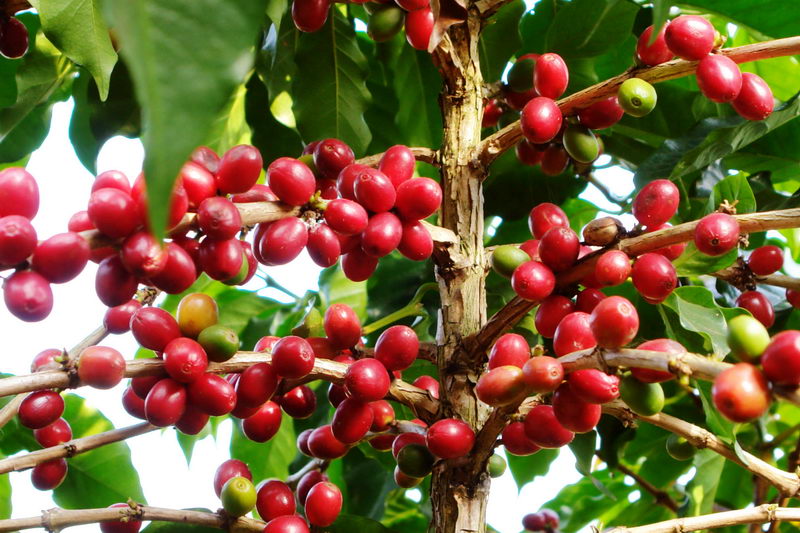
Guatemala has a unique geographical location, bordering Mexico, Belize, Honduras, and El Salvador, with the Pacific Ocean to the south and the Gulf of Honduras in the Caribbean Sea to the east, covering a total land area of 108,889 square kilometers. The country is located in the tropics. The northern and eastern coastal plains have a tropical rainforest climate, while the southern mountains have a subtropical climate. There are two seasons: the wet season from May to October and the dry season from November to April. The narrow, fertile flatlands along the Pacific coast have a tropical climate. The central highlands are Guatemala's cultural center, where temperatures at elevations of 1,300 to 1,800 meters are mild year-round, with daily temperatures between 18 and 28°C, and higher areas tend to be colder in January and February. Annual precipitation is 2,000 to 3,000 mm in the northeast and 500 to 1,000 mm in the south. Guatemala's national emblem is circular, with an open scroll in the middle of a blue circle.
Guatemala Coffee Regions
Guatemala has eight major regions in total, divided into five volcanic regions and three non-volcanic regions. The five volcanic regions are: Antigua, Acatenango, Atitlan, Volcanic San Marcos, and Fraijanes. The three non-volcanic regions are: Huehuetenango, Coban, and New Oriente. Guatemala possesses over three hundred microclimates throughout its territory, arguably the most in the world. Coffee flavors vary across regions, but overall, Guatemalan coffee presents a mild, mellow body, elegant aroma, and pleasant acidity similar to fruit acids, making it truly the nobility of coffee. Among them, Antigua Classic is highly recommended by coffee connoisseurs worldwide.
*Huehuetenango Highland Huehue
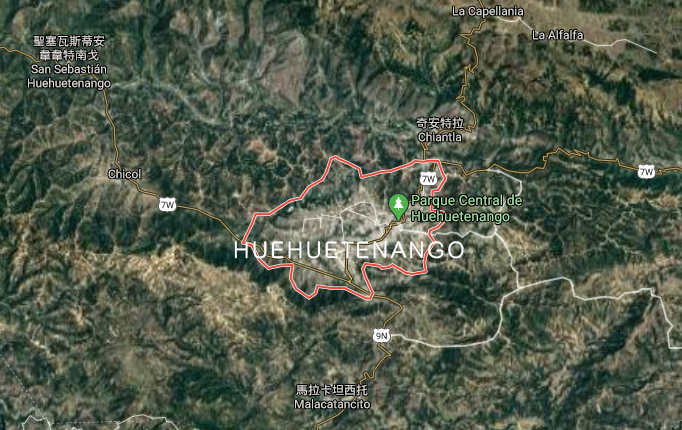
Among the three non-volcanic regions, this is the driest and highest-altitude area producing single-origin coffee. It is currently the most rugged and remote place in Guatemala. Due to dry, hot winds blowing into the mountains from the Mexican plains, the mountainous area is free of frost damage, allowing coffee to be planted at elevations up to 6,500 feet, producing plump, full beans. For example: Front Street's daily beans, Huehuetenango coffee. Front Street Coffee (FrontStreet Coffee) selected washed Guatemala Huehuetenango as the representative coffee of Guatemala. It has distinct citrus notes, the acidity of lemon peel yet the richness of berries, with a nutty finish.
*Antigua:
Rich volcanic soil, low humidity, intense sunlight, and cool evening breezes are the characteristics of the Antigua region. Three spectacular active volcanoes—Agua, Acatenango, and Fuego—form a beautiful valley landscape. The active Fuego volcano occasionally adds a hazy dust. For example: Front Street's single-origin Guatemala Flower God coffee.
Coffee Varieties
Guatemala mainly cultivates Bourbon, Typica, Caturra, and Catuai. Bourbon and Typica are both the oldest Arabica coffee varieties, mostly appearing as specialty coffee.
Bourbon: It is a natural mutation of Typica. The coffee cherries turn wine-red when ripe, and the beans are relatively round. Bourbon grown at high altitudes typically has better aroma and bright acidity, with a flavor reminiscent of red wine.
Typica: Typica has excellent flavor expression and is recognized as a specialty coffee variety, but its yield is extremely low and it is susceptible to leaf rust, requiring more labor for management. Typica coffee originated in Ethiopia and southeastern Sudan and is the most widely cultivated coffee variety in the Western Hemisphere. The plant is relatively robust but not tolerant of light. Typica's top leaves are copper-red, hence the name "copper-top coffee." Examples include: Blue Mountain coffee, Panama Elida coffee, and Front Street's own estate-grown Front Street 2013 sun-dried Typica coffee.
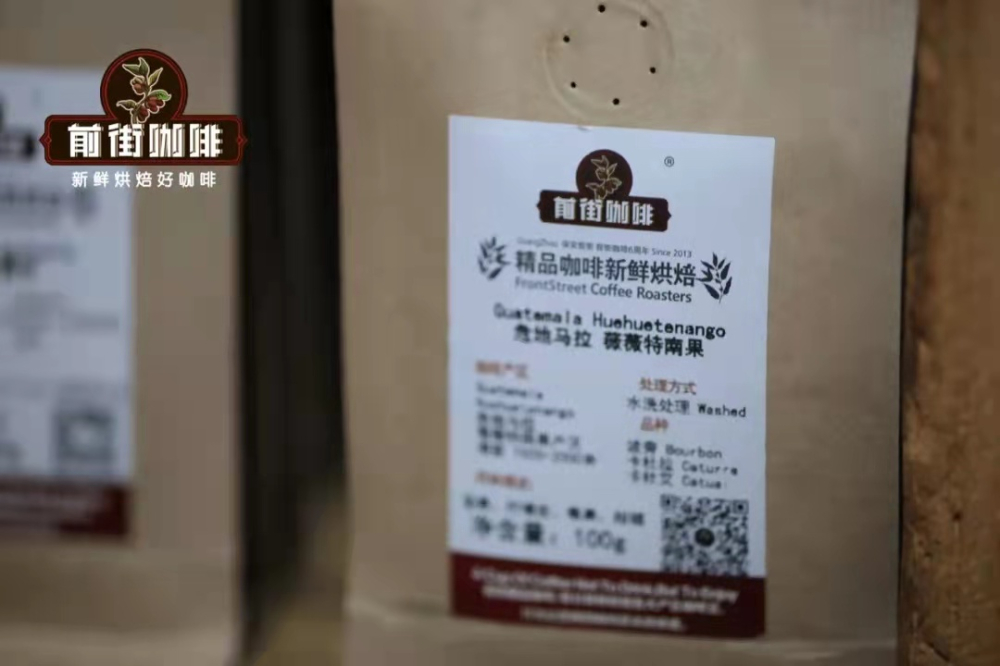
Caturra: It is a natural mutation of Bourbon, discovered in Brazil in 1937. Its tree is shorter than Bourbon. Because it inherits Bourbon's lineage, its disease resistance is relatively weak, but its yield is higher than Bourbon. Although discovered in Brazil, Caturra is not suitable for growing in Brazil, so it was not widely planted there. Instead, it became widespread in Central and South America, such as Colombia, Costa Rica, and Nicaragua, where Caturra is planted on a large scale. For example: Front Street's Colombia Flower Moon Night and Rose Valley coffees are both Caturra varieties.
Catuai: A coffee variety artificially hybridized from Caturra and Mundo Novo. Catuai inherits Caturra's short tree stature, requires no shade, is easy to grow, and convenient to harvest. It also has better resistance to natural disasters than Mundo Novo. It has good acidity in flavor. Catuai generally presents two types: red fruit and yellow fruit.
Guatemala Coffee Bean Processing Methods
Coffee processing methods: Guatemalan coffee beans are mainly processed using the washed method.
After harvesting, the selected coffee cherries are placed in a depulper to initially remove the skin and pulp. Then the green beans with residual pulp and mucilage are placed in water for about 24 hours of fermentation. After fermentation, they are washed in a flowing water channel. After washing, the coffee beans are sun-dried or dried with a dryer until the moisture content drops to about 12%, then transferred to a warehouse. Finally, the parchment of the green beans is removed and they await sale. This processing method can express a very clean cup profile. At the same time, Front Street believes that washed coffee best reflects the basic flavor of a region, so this bean is also very suitable for coffee beginners, marking the Guatemalan origin flavor.
Front Street Roasting Suggestions
Guatemalan coffee beans inherently carry the nutty and cocoa notes characteristic of Latin America, with a hint of light floral aroma and soft fruit acidity. Front Street adopts a medium-light roast to preserve more floral and fruity aromas, with clean and bright acidity.
Front Street Brewing Parameters for Guatemala Coffee:
Light-roasted beans have a lower extraction rate than dark-roasted ones. Front Street recommends using a faster-flow V60 dripper, higher water temperature, and a finer grind. Front Street uses a medium-fine grind / caster sugar coarseness (80% passing through a Chinese No. 20 standard sieve). Use 15g of coffee powder, then brew with a V60 dripper, 91°C water temperature, a 1:15 coffee-to-water ratio, and a three-stage pouring technique.
Using three-stage extraction, bloom with twice the amount of water as coffee powder, i.e., 30g of water for a 30-second bloom. The reason for the blooming process is to allow the coffee powder to release internal carbon dioxide gas, thereby making the subsequent extraction more stable. Pour in a slow circular motion until reaching 125g, then pause. Continue pouring until 225g and stop. After the water in the dripper has dripped through, remove the dripper. Start timing from the beginning of pouring; the extraction time is 2'00". Next, pick up the entire cup of coffee, shake it evenly, then pour it into a cup for tasting.
Guatemala Huehuetenango Coffee Flavor Characteristics: Citrus and berry acidity, lemon peel, nutty aroma in the mid-palate, tea-like aftertaste.
Guatemala Flower God Coffee Flavor Characteristics: Berry acidity, citrus, slight chocolate, rich layers, smooth mouthfeel.
Front Street Coffee Brewing Suggestions:
Regarding coffee brewing, Front Street has always believed that the freshness of coffee beans has a great impact on coffee flavor. Therefore, the coffee beans shipped by Front Street Coffee (FrontStreet Coffee) are all within 5 days of the roast date. Front Street's roasting philosophy is "freshly roasted good coffee," so that every customer who places an order receives the freshest coffee. The resting period for coffee is about 4-7 days, so when customers receive it, it is at its optimal flavor.
For friends who need ground coffee, Front Street kindly reminds you: if the coffee beans are pre-ground, there is no need for further resting, because during transportation, the pressure from carbon dioxide inside the packaging also rounds out the coffee flavor. So once you receive the ground coffee, you can immediately brew a cup and drink it. However, ground coffee needs to be brewed promptly, because after contact with air, ground coffee oxidizes relatively quickly, meaning the coffee flavor dissipates faster and the coffee won't taste as good. Therefore, Front Street recommends buying whole beans and grinding fresh for each brew, so you can better taste the coffee's flavor.
Front Street Coffee (FrontStreet Coffee) has over fifty single-origin coffee beans from different countries and regions. Among the Geisha coffees, besides Panama Hacienda La Esmeralda's Geisha, there are also Colombia's Flower See Geisha coffee, Costa Rica's Mirazu Geisha blend coffee, Ethiopia's Gesha Village Red Label and Gold Label coffee, and more. Of course, it's not to say you must drink Geisha coffee. In fact, Front Street believes other varieties are also very good, such as: Ethiopia's fresh floral coffee, Mantenin coffee for those who like a mellow mouthfeel, Brazil coffee that is neither bitter nor sour, etc. Front Street can satisfy everyone's taste!
For more specialty coffee beans, please add private WeChat Front Street Coffee (FrontStreet Coffee), WeChat ID: qjcoffeex
The above content is compiled by CoffeeHunters, a coffee news website.


