







What Does the SOE Coffee Meaning Cover in a Cafe?
SOE means single-origin espresso: espresso pulled from beans grown in one origin rather than a blend of two or more. An SOE americano or SOE latte is simply an americano or latte built on that single-origin shot. Because only one coffee is in the basket, the cup shows the origin's own flavors instead of a designed, balanced profile.
The term 'SOE blend' is a contradiction, since blending by definition mixes two or more coffees or origins to reach a target flavor. Blends can round off a bean that is too bitter or too acidic, adding sweetness and body, which makes them forgiving for beginners. Single-origin espresso, by contrast, demands tighter control of dose, yield, time and grind.
In coffee shops, you may often hear SOE latte or SOE americano, which refers to drinks made with espresso extracted from single-origin coffee beans as the base. SOE and blended beans each have their own strengths in flavor expression and extraction difficulty. This article will start with a conceptual analysis, explaining why SOE cannot be called a blend, and how blends achieve balance through complementarity. It will further analyze the advantages of SOE in amplifying origin flavors and the challenges in extraction. Then, using Front Street Mozart SOE as an example, it will share specific extraction parameters and operating procedures, including dose, yield, time, and grind setting. Finally, it will offer suggestions for drinking it straight, making an americano, or a latte, helping coffee enthusiasts gain a more comprehensive understanding of SOE.
In everyday conversation, we often hear terms like SOE latte or SOE americano. Put simply, these are lattes or americanos made with single-origin coffee beans as the base. Front Street is also frequently asked by customers what coffee beans we use as the base for our espresso offerings, and why we don't simply use SOE.
If you hear the phrase "SOE blend" in a coffee shop, it likely means the person has a misunderstanding of the SOE concept. By industry convention, SOE can only be single-origin coffee beans; blending refers to mixing two or more beans, or beans from different origins, to achieve a target flavor. Therefore, the term "blend" cannot be placed before SOE coffee.
When comparing various single-origin coffee beans, Front Street noticed that if a particular bean is too bitter or too acidic, blending several beans together can help balance the taste, making acidity, bitterness, and sweetness more harmonious, with a fuller body.
Overall, the advantage of blends over SOE lies in their ability to complement each other with different coffee beans. If the blend is well-designed, the flavor will combine the strengths of each bean, producing an espresso with good balance, aromatic notes, and rich crema—very friendly to beginners as well. In this case, we recommend Front Street Classic Blend (flavor: caramel, dark chocolate, butter, toasted bread), which comes with rich crema, and Front Street Dark Cocoa Blend (flavor: mixed nuts, cocoa, plum ), the espresso bean recommended by many baristas and used in coffee shops.
SOE, on the other hand, amplifies the bean's own character, especially for light-roasted beans, with intense aromatics and more striking sweet-and-sour flavors. For example, many coffee shops like to use Yirgacheffe for SOE, producing a very prominent floral aroma and a rather acidic taste, ideal for enthusiasts who prefer acidity.
The rise in popularity of SOE coffee also reflects the growing demand for coffee quality. A delicious cup of SOE coffee can greatly improve your impression of a coffee shop. SOE stands for single-origin espresso; a single region can also count as single-origin, so SOE typically uses coffee beans that highlight the basic flavors of the region.
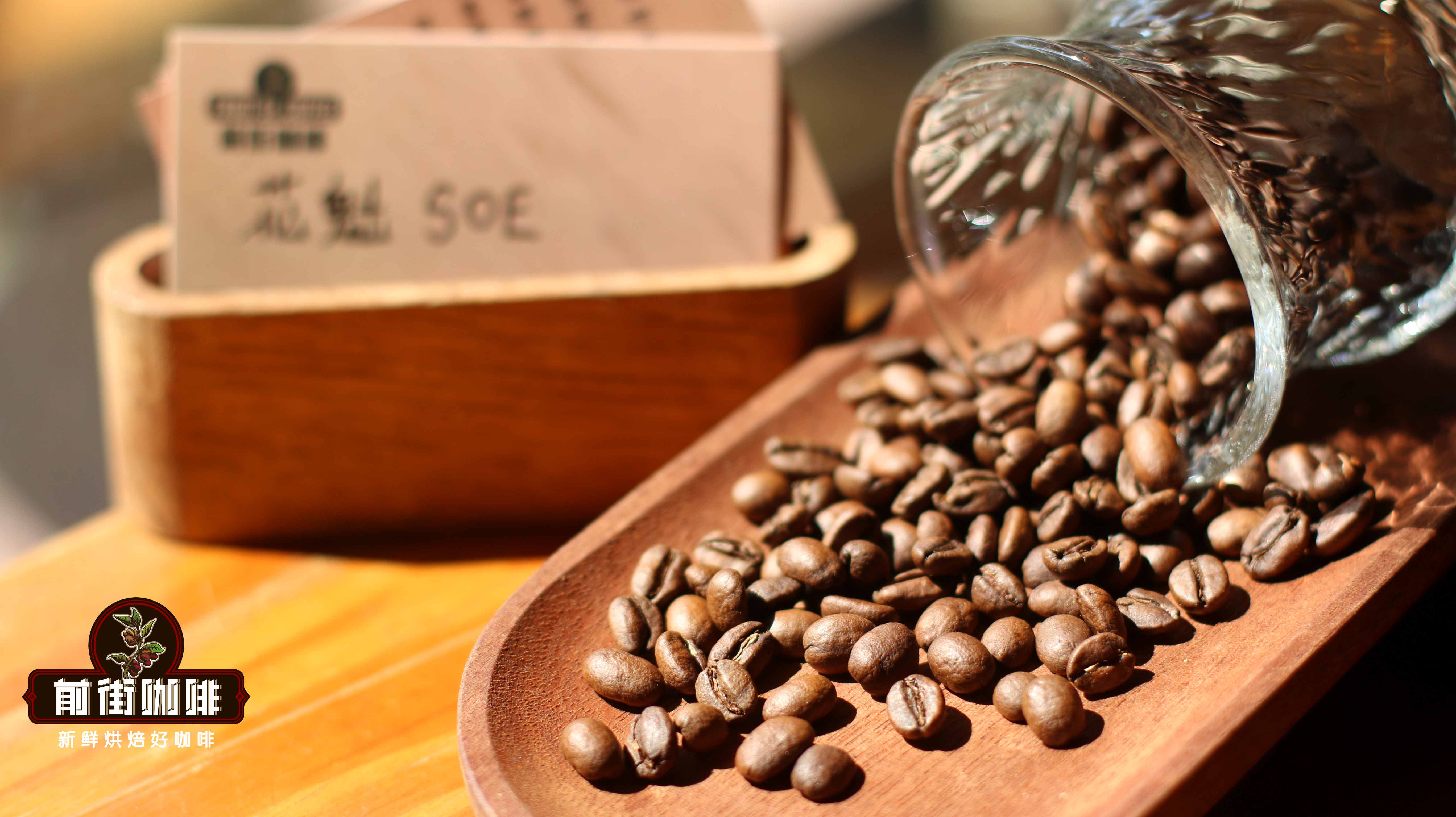
If you enjoy the floral and fruity notes of Ethiopian coffee, buy Front Street Sun-Dried Huakui SOE; if you want a type with full dried-fruit sweetness, try Front Street Mozart SOE; if you want to taste tropical fruit flavors, Front Street Xizhua SOE is recommended.
However, compared to traditional espresso beans, SOE is more difficult to extract in terms of flavor. Each SOE's extraction parameters, extraction time, coffee grind size, dose, and so on all need to be readjusted.
Although blends have better balance, they lack distinctive flavor characteristics. In contrast, SOE single-origin coffee has very prominent flavors. If the craftsmanship is good enough and professional enough, the espresso produced will be very delicious and impressive. Basically, the quality of a bean largely determines the quality of the cup. This is because SOE single-origin coffee amplifies the bean's own quality, and its flavor is difficult to keep stable.
It is easy to see that SOE, which emphasizes single origin, tends to use fruity, acidic beans with a lighter roast, aiming for an espresso with light aromatics and high flavor distinctiveness. To achieve a more ideal extraction, we adjust parameters according to actual conditions. However, under the influence of high temperature and pressure, fine grinding, fast flow, and crema, the flavor expression of espresso will differ somewhat from pour-over extraction. Below, Front Street will demonstrate using Front Street Mozart SOE.
SOE Extraction Parameters
Coffee beans: Front Street Costa Rica Mozart
Dose: 20g
Yield: 40g
Ratio: 1:2
Extraction time: 26–32 seconds
Grind setting: Galileo 2.0
The coffee machine used by Front Street has a double basket capacity, requiring 20 grams of coffee powder each time. The powder-to-liquid ratio is 1:2, meaning 40 grams of coffee liquid is produced within a reasonable time. Extraction time is related to the flow rate of the coffee powder. Generally, a single extraction is controlled between 20 and 35 seconds. If less than 20 seconds, the coffee tastes thin and weak; if more than 35 seconds, over-extraction can cause a burnt, bitter taste. Therefore, Front Street controls the espresso time within 26–32 seconds.
Before extraction, we need to wipe the basket dry, turn on the grinder, grind a double dose of coffee powder, and place it on an electronic scale to measure and adjust until it reaches exactly 20 grams. Then use a distribution tool to level the coffee powder, and use a tamper to press down vertically with force, compacting the coffee puck to ensure more stable extraction.
Then turn on the extraction switch to release water for 1–2 seconds to moisten the group head, which also removes any stuck coffee grounds. Place an electronic scale under the cup for the espresso, tare it to zero, and place it under the group head during extraction.
Gently lock the portafilter onto the group head and start the extraction switch. Observe the changes in the extracted liquid. When the scale shows 40 grams of coffee liquid at about 30 seconds, turn off the extraction switch. The brewing parameters will vary subtly depending on daily air humidity and the condition of the coffee beans, so the dose, grind setting, and extraction yield need to be adjusted accordingly.
The Front Street Mozart SOE made this way can be drunk straight, and it is not bitter at all. Remember to pair it with a glass of water to rinse your mouth, so you can taste the dense crema foam and the rich dried-fruit aroma of the coffee liquid underneath. If you cannot accept the strong bitterness of espresso, you can of course add ice water or warm water at a 1:4 ratio according to your preference to make a refreshing SOE Mozart americano, or add steamed fresh milk at a 1:6 ratio to soften the taste, making a delicious SOE Mozart latte.
The above content is compiled by CoffeeHunters, a coffee news website.


