







How does siphon coffee brewing actually work?
Siphon coffee brewing uses a vacuum principle: water in the lower glass vessel is heated until it rises into the upper chamber, where it mixes with the grounds, then returns down through a filter when the heat is removed. The method demands attention at every step, from grind size and water temperature to stirring and timing, because small changes shift the extraction and the flavor in the cup.
The earliest glass vacuum pot was made by S. Leoff in Berlin in the 1830s, and the upright design close to the modern shape was patented in 1841 by Madame Vassieux of Lyon. The history of siphon coffee also includes the story that Beethoven counted out 60 beans each morning for a pot of this general style.
Brewing coffee with a siphon both tests your patience and carries a strong sense of ritual. From grinding the beans and simmering to controlling the heat, every step demands full concentration—a slight deviation will affect the flavor. From the perspective of Front Street Coffee, this article systematically reviews the origin and evolution of the siphon, the origin of the name "Syphon," and the flavor differences from pour-over coffee, and explains in detail the extraction parameters, stirring techniques, choice of backup tools, and the complete operating procedure. Whether you are a beginner just getting to know the siphon or an enthusiast looking to refine your technique, you will find practical reference here.
For more specialty coffee knowledge, please follow the WeChat official account: Front Street Coffee (FrontStreet Coffee)
Making coffee with a siphon takes quite a bit of time, yet it is excellent for building patience and showing taste. From grinding the coffee grounds and blooming to adjusting the heat, the whole process requires the operator to be fully focused—a little too much and it becomes over-extracted, a little too little and it turns out too weak. Only with proper technique can the best parts of the coffee be extracted. Although it is somewhat cumbersome, Front Street has always felt that the sense of ritual itself is one of the pleasures coffee brings.
Who designed and invented the siphon coffee maker?
The appearance of the siphon coffee maker seems to have stepped out of a history textbook—a scientific instrument from hundreds of years ago, carrying an air of classical elegance. In fact, this kind of pot does have a history of about two hundred years. Its basic principle relies on the vacuum siphon phenomenon. According to documentary records, the earliest glass vacuum pot was made by S. Leoff in Berlin, Germany, in the 1830s. After that, this glass pot spread rapidly throughout Europe, giving rise to various improved versions, while the upright siphon coffee maker close to the modern shape was designed and patented in 1841 by Madame Vassieux of Lyon, France.
There is an amusing anecdote that the great composer Beethoven, during his lifetime, would personally count out 60 coffee beans every morning to brew his coffee, and the coffee pot he used was exactly the type with upper and lower glass vessels similar to a siphon. However, Beethoven passed away in Vienna, Austria, in 1827, which suggests that the prototype of the siphon coffee maker may have existed before the documentary records.
In addition, the English word for the siphon coffee maker is written as Syphon, and because of its pronunciation, it is also often called "Saifeng pot." So when you see the characters "赛风" in the future, you will know it refers to the siphon coffee maker.
Why is it called "Saifeng" syphon?
The siphon pot, also known as "Saifeng" syphon, originated in Germany and is a method of brewing coffee by using the pressure generated when water boils. The pot consists of two parts, upper and lower, connected by a tube in the middle. When water is heated and turns into steam, the pressure on the water surface increases, and the boiling water rises through the tube into the upper pot. After adding coffee grounds, it flows back down through the tube fitted with a filter cloth into the lower pot, after which it is ready to drink.
If the strength of pour-over coffee lies in its ability to bring out the fruit acidity and aroma of the coffee, with a full-bodied flavor and clear layers, then siphon coffee, because of its higher extraction temperature, releases the essence of the coffee in a shorter time, giving the final cup more bitterness. At the same time, because the siphon uses a flannel filter cloth, it does not filter out the coffee oils, so the mouthfeel is also thicker and rounder.
How to brew coffee with a siphon
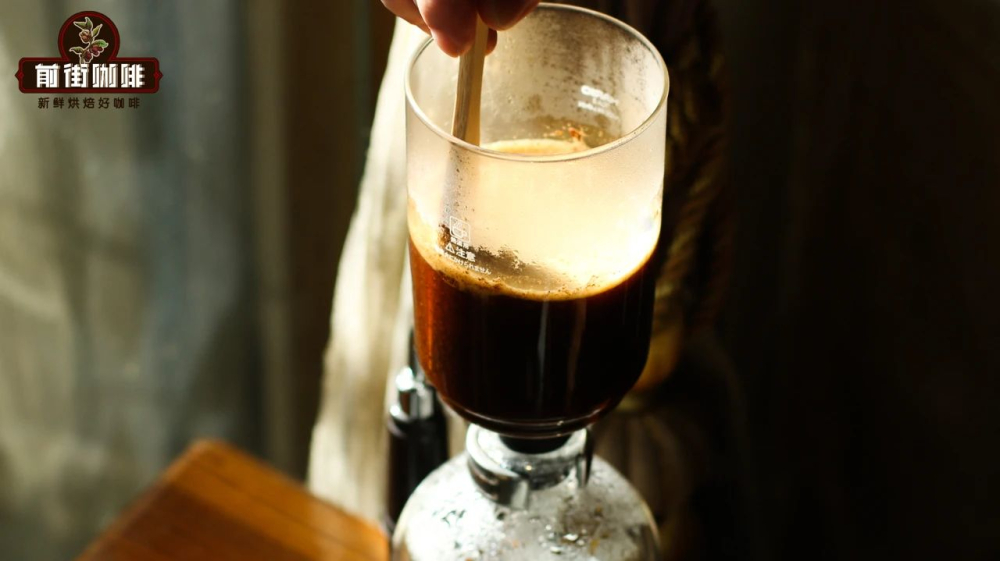
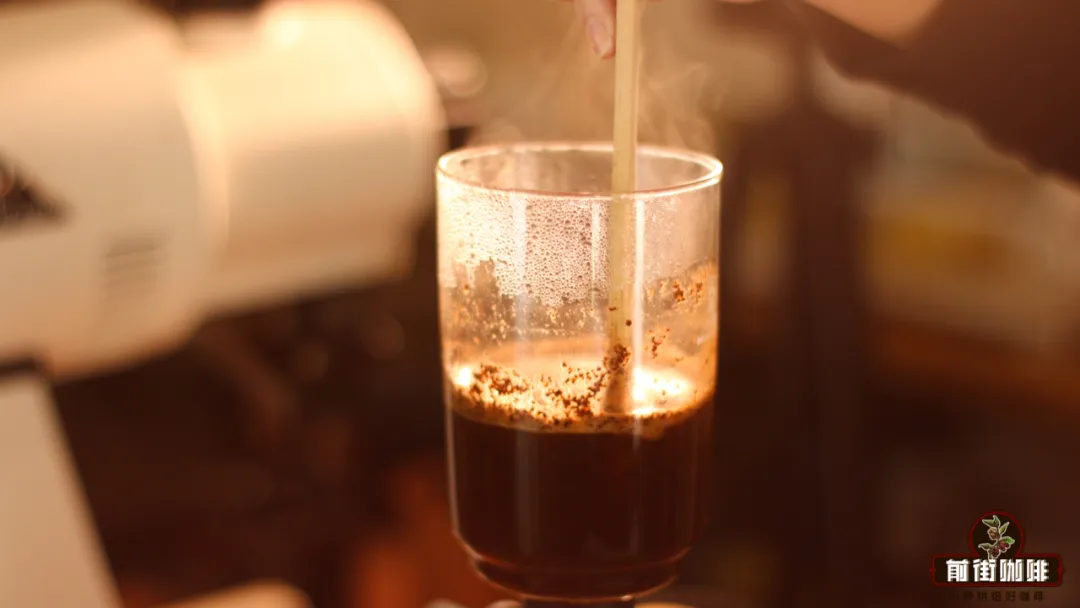
When you buy a siphon, besides the pot itself, a stirring rod is also included. This is because siphon coffee is an immersion-style extraction, and stirring is inevitably required during the process.
There are many kinds of stirring techniques, such as the patting method, circular stirring method, cross stirring method, Z-shaped stirring method, and even the ∞-shaped stirring method. Except for the patting method, the other methods involve relatively strong stirring, which can significantly increase the coffee extraction rate (the specific effect depends on the strength and speed of stirring). The patting method, by contrast, presses the coffee grounds into the water by patting, mainly to ensure the grounds are fully saturated. These techniques can be chosen according to your own extraction needs, and there is no rule that only one of them may be used.
Backup tools for the siphon
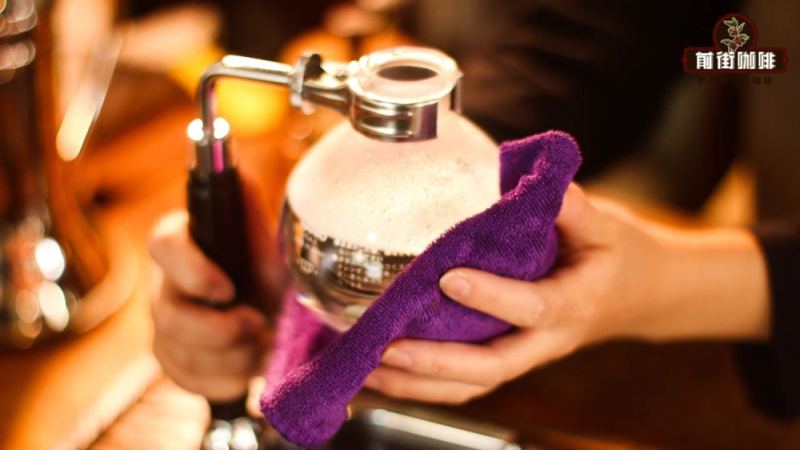
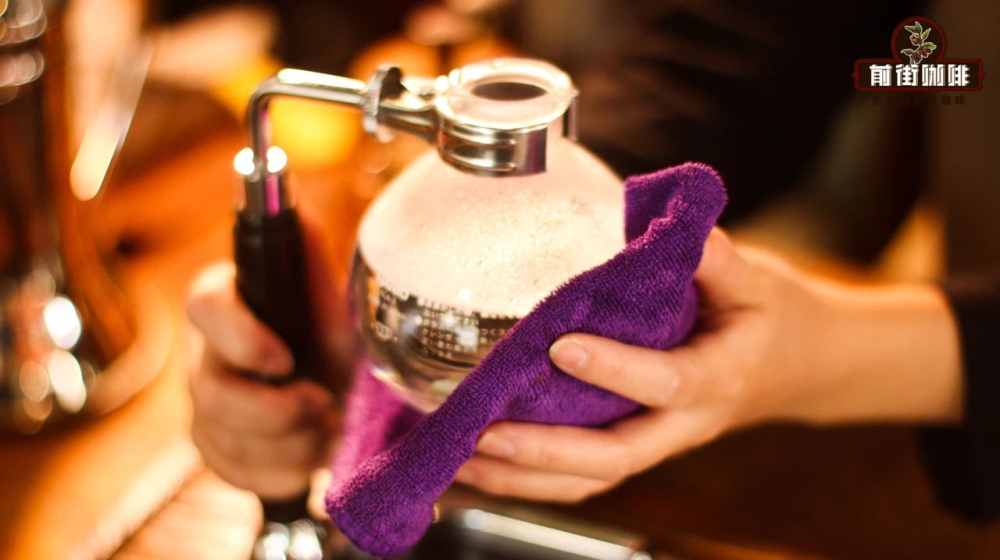
In addition to the two tools mentioned above, two more things need to be prepared when extracting siphon coffee: a cloth and a heat source. You need two cloths, one dry and one wet. The purpose of the dry cloth is to prevent the pot from cracking—before heating the lower pot, you need to wipe dry the moisture on its surface, otherwise there is a high risk of the pot cracking during heating. The wet cloth is used to control the speed at which the coffee liquid flows back, which will be explained specifically later, so I will not elaborate here.
The choice of heat source is very flexible—a gas stove, a light-wave stove, or an alcohol lamp, anything that can provide heat will do. Common gas stoves and light-wave stoves can adjust the heat level, heat up quickly and stably, but cost more. An alcohol lamp, although low in cost, has a small and unstable heat source and takes longer to heat. But it does not matter—they all work, so use whatever you have. However, Front Street suggests that when using an alcohol lamp, it is best to add hot water rather than room-temperature water to the lower pot, otherwise the heating process will be extremely long!
Alright, that is all the essential information for making siphon coffee. Next, Front Street will explain how to operate the siphon coffee maker based on actual practice!
How to make siphon coffee
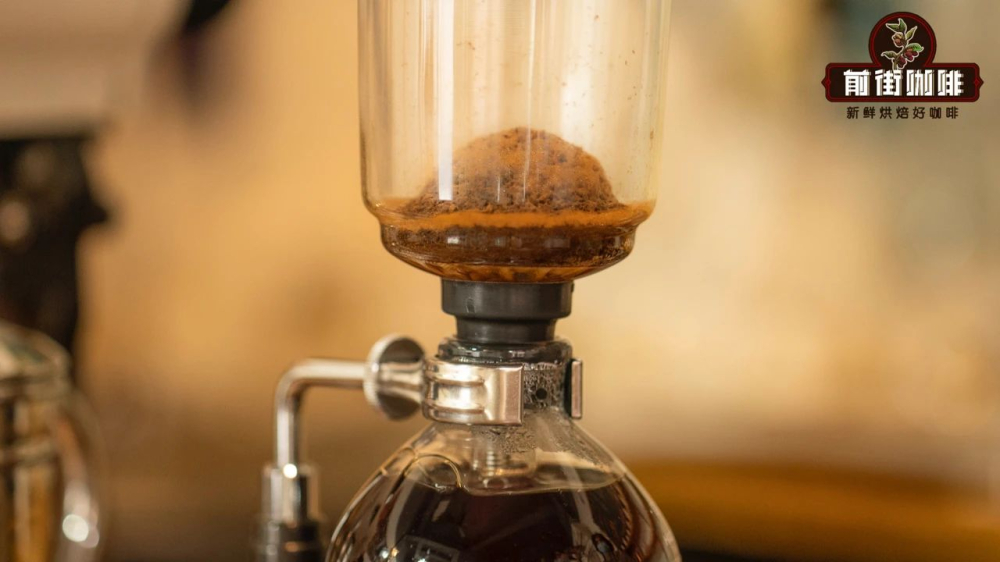
First, let us understand the extraction parameters: this time Front Street uses a fast-paced extraction method, paired with a light-roasted coffee bean—Kenya Asalia! Therefore the water temperature is higher, about 92°C, meaning the lower pot is sealed when it is bubbling frequently. Since the extraction time is shorter, only 60 seconds, and the coffee beans are light-roasted, a grind two degrees finer than pour-over is used, that is, 9 on the EK43, with a 90% pass rate through a No. 20 sieve. The coffee-to-water ratio is 1:14, that is, 20g of coffee grounds to 280ml of hot water.
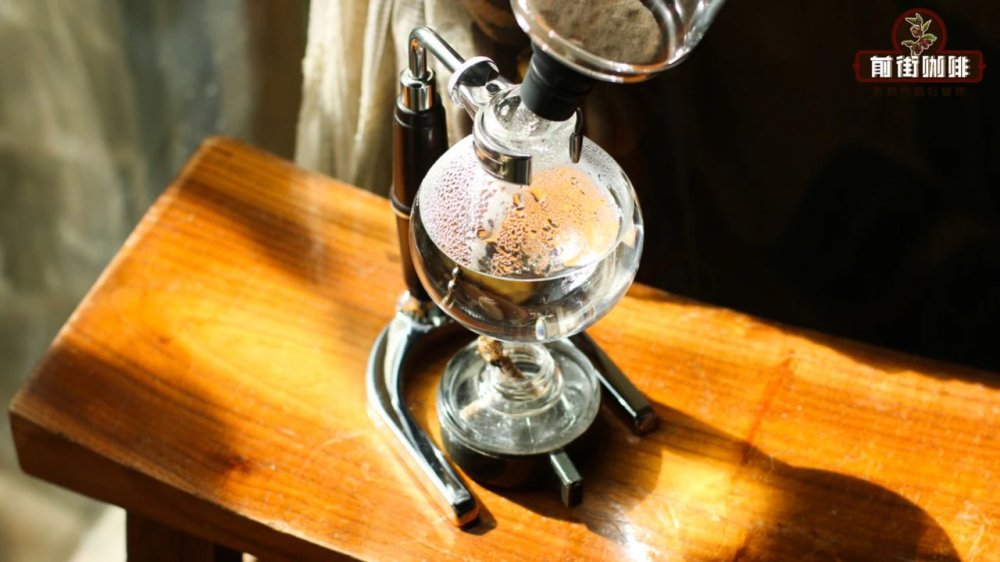
So first, we prepare all the equipment properly, then pour the target amount of water into the lower pot.
The above content is compiled by CoffeeHunters, a coffee news website.


