







Where did coffee originate from, and why Sumatra matters
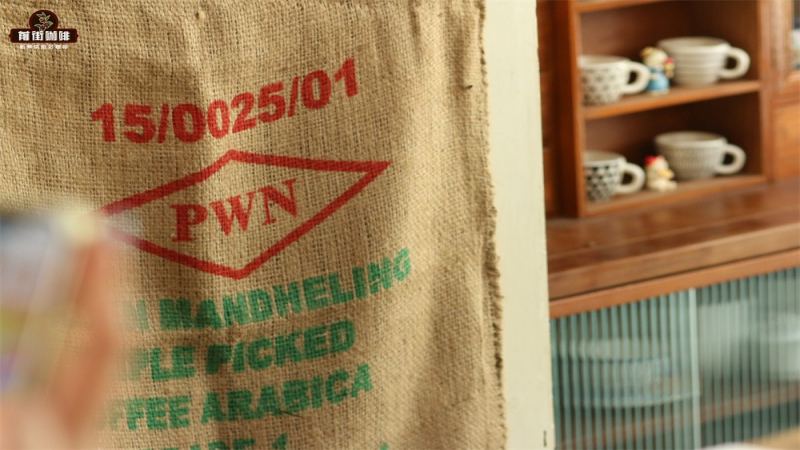
Sumatra coffee is known for a full body and herbal aroma, and Starbucks chose it as a classic single-origin offering with a tiger on the packaging. Sumatra Island splits into two main growing areas: the south around Medan, Lake Toba, and Lintong, which is the traditional Mandheling zone, and the Gayo Highlands and Aceh in the north, where quality has risen steadily in recent years.
The tiger symbol ties the bag to Sumatra's origin story rather than to a flavor claim. Traders source from more than fifty regions, with five Mandheling lots alone, and the coffee beans process behind that character is wet hulling, often called Giling Basah. It removes the parchment while the bean is still moist, giving the earthy, low-acid profile Mandheling is known for.
Sumatra coffee is renowned for its full-bodied mouthfeel and herbal aroma. Starbucks selected it as a classic single-origin offering, and the tiger图案 on its packaging hides a story about its origin. From the perspective of Front Street Coffee, this article sorts out the distribution differences between Sumatra's two major producing regions, interprets the meaning behind Starbucks' tiger packaging, and takes a deep dive into the cupping performance, wet-hulling process, and variety characteristics of Front Street's Tiger Mandheling coffee beans. The article also includes complete brewing parameters and flavor descriptions for this bean from Front Street Coffee's baristas, making it suitable for enthusiasts who want a comprehensive understanding of Indonesian Mandheling coffee.
For more specialty coffee knowledge, welcome to follow our WeChat public account: Front Street Coffee (FrontStreet Coffee)
Most people have surely heard of Sumatra coffee. This coffee tastes rich and full-bodied, with prominent sweetness, restrained bitterness, and a blend of vanilla and herbal notes, making it widely favored. Starbucks stores carry a Sumatra single-origin coffee that has consistently ranked among the top sellers. Front Street Coffee (FrontStreet Coffee) sells beans from over fifty producing regions, with five Mandheling offerings alone. So why are both Front Street Coffee (FrontStreet Coffee) and Starbucks so drawn to Sumatra coffee beans?
Let's start with Front Street Coffee's (FrontStreet Coffee) introduction to Indonesia's Sumatra producing region. Sumatra Island can be divided into two major sections: the southern area, centered around Medan, Lake Toba, and Lintong, is the traditional Mandheling growing zone, and most of the Mandheling coffees sold by Front Street Coffee (FrontStreet Coffee) come from there; the second section is located in the Gayo Highlands and Aceh area of northern Sumatra, which is where Front Street Coffee's (FrontStreet Coffee) 2020-crop Golden Mandheling originated. In recent years, the quality of Mandheling produced in the Aceh region has shown a steady upward trend.
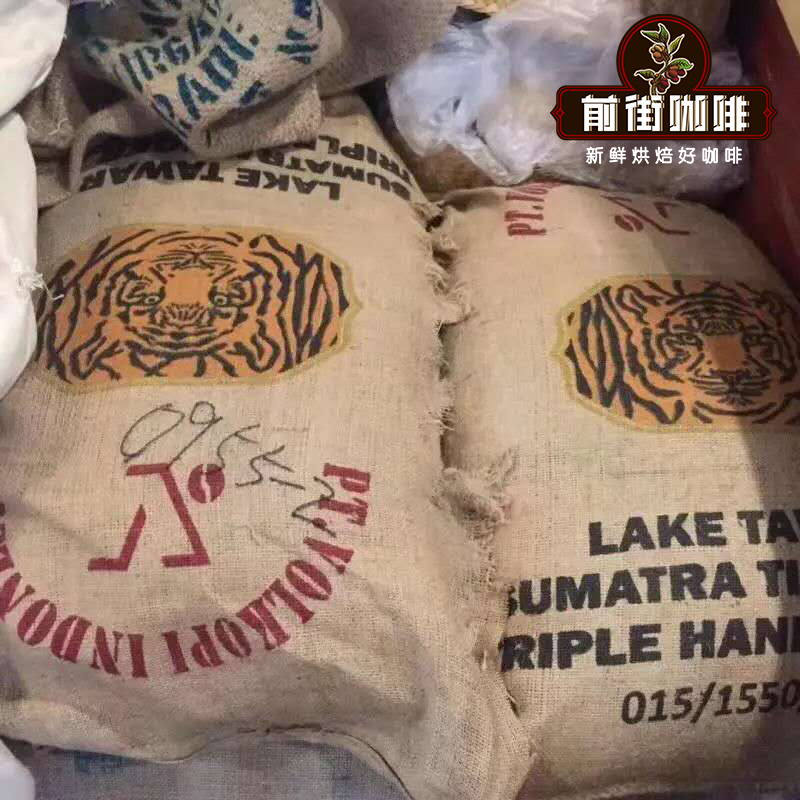
Have you noticed the thoughtful design behind Starbucks' thirteen coffee bean packages? Take Starbucks Sumatra coffee beans, for example—the packaging features a tiger. According to Front Street Coffee (FrontStreet Coffee), the tiger was chosen as the visual symbol because Sumatra is one of Indonesia's largest islands, and Indonesia itself is made up of thousands of small islands, with ninety percent of the nation's coffee coming from small independent farms. The label on this coffee features the famously renowned Sumatran tiger, making it highly representative of the region. Its flavor profile has a prominent herbal spiciness and intense aroma, perfectly reflecting Indonesia's abundant sunshine and rich natural resources—the very qualities that give rise to such captivating coffee.
There are many tiger subspecies, including the Siberian tiger, Bengal tiger, Sumatran tiger, and Indochinese tiger. The Sumatran tiger mainly inhabits the Sumatra archipelago in Indonesia and is the only remaining tiger subspecies found exclusively on islands. Starbucks uses the name "Sumatran tiger" to convey the rarity and preciousness of this Sumatra coffee bean.
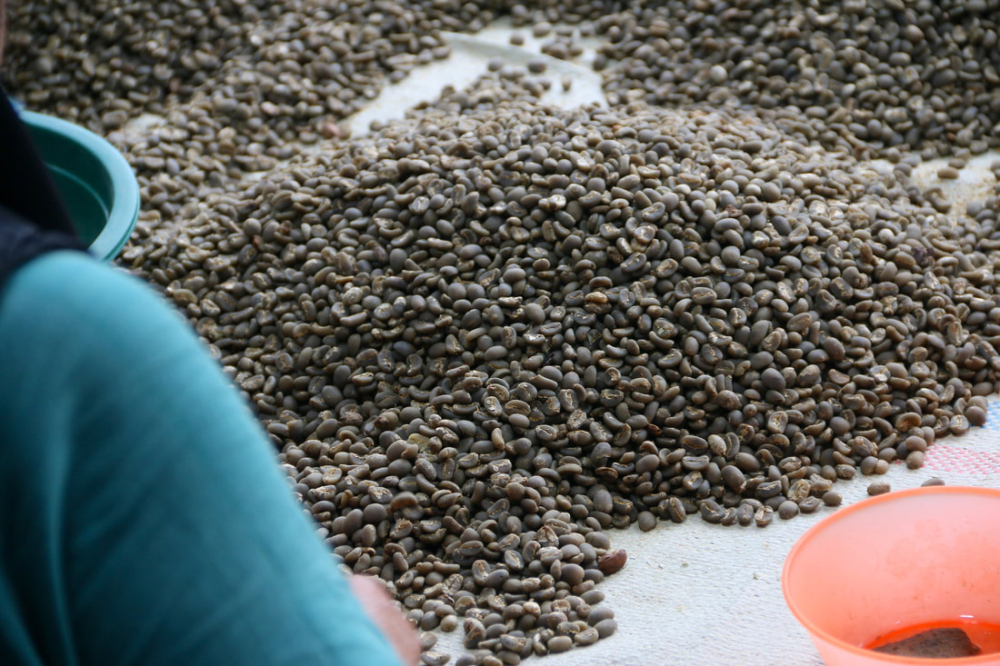
Front Street Coffee (FrontStreet Coffee) currently offers a similar product: Sumatra·Tiger coffee. However, Front Street Coffee's (FrontStreet Coffee) Indonesian Mandheling comes from the Tiger Estate in the Aceh region. From Golden Mandheling to Tiger Mandheling, Front Street Coffee's (FrontStreet Coffee) bean sources all come from Aceh, where Mandheling has now surpassed the Lintong region in both quality and output.
Before launching, Front Street Coffee (FrontStreet Coffee) conducted repeated cupping sessions on this Indonesian Tiger Mandheling. The barista used a standard 200ml cupping bowl, weighed 11.3g of grounds, controlled the water temperature at 94°C, and ground the coffee before smelling the dry aroma. This Tiger Mandheling's dry aroma presented notes of dark chocolate, herbs, and pine; then water was poured to fill the bowl to confirm the wet aroma. After four minutes, the crust was broken and skimmed for flavor evaluation. The wet aroma carried tones of Chinese herbal medicine and caramel. The overall flavor can be summarized as: herbal, nutty, creamy, dark chocolate.
Through cupping, Front Street Coffee (FrontStreet Coffee) found that this Tiger Mandheling has the most intense aroma among several Sumatra coffees. Its production process is equally rigorous: first, ripe and plump coffee cherries are harvested and strictly filtered through a 19-mesh screen, keeping only 19-mesh cherries; then, after three rounds of manual sorting to remove unripe cherries, the green bean processing begins. Through these multiple steps, Tiger Mandheling achieves higher viscosity, a smooth mouthfeel, rich agarwood-like depth, outstanding sweetness, and a long, sweet finish—truly worthy of the name Sumatran tiger.
After rigorous sorting, the Tiger Mandheling then enters the depulping and demucilaging stage. Indonesia's high heat and abundant rain led locals to develop a highly distinctive wet-hulling method to speed up green bean processing. Farmers first remove the coffee cherry's skin and pulp, allow a brief fermentation, then sun-dry, remove the mucilage and parchment layer, and continue the later drying stage until the moisture content drops to 12%—this is the complete Indonesian wet-hulling process.
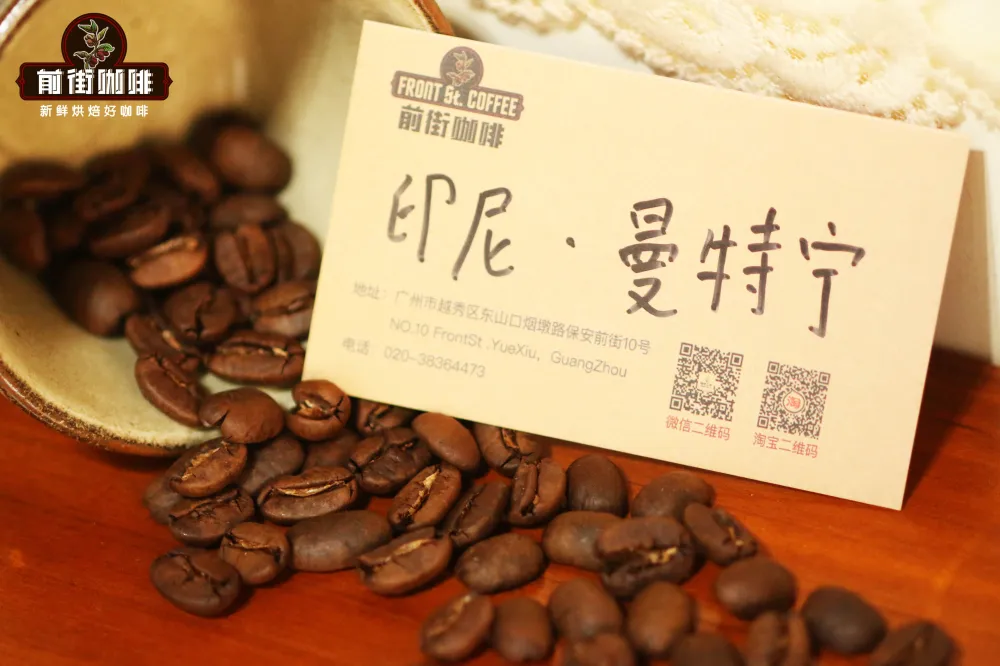
When Front Street Coffee (FrontStreet Coffee) received this Indonesian Mandheling coffee bean, it observed that the bean color leaned toward a dark bluish-green, with the typical horseshoe shape. According to Front Street Coffee (FrontStreet Coffee), it's not just Tiger Mandheling that has a horseshoe shape—all Mandheling coffee beans processed by the wet-hulling method share this form. The reason is that during wet-hulling, the green beans still have relatively high moisture content, and the machine presses the coffee beans, so wet-hulled Mandheling often shows varying degrees of compression cracks on the surface.
Front Street Coffee (FrontStreet Coffee) also compared the differences between this Tiger Mandheling and the new-crop Golden Mandheling. Although both belong to the Aceh producing region, Golden Mandheling's variety is Ateng, commonly known in China as Catimor—Ateng is the local Indonesian name for Catimor; while Front Street Coffee's (FrontStreet Coffee) Tiger Mandheling is composed of Typica and Caturra. Front Street Coffee (FrontStreet Coffee) has cupped Typica from multiple origins, and its serene, clean flavor and balanced characteristics are clearly present. Caturra is a Bourbon variant with a curved tail, round and slender, with better productivity and disease resistance than Bourbon, an overall bright flavor, and quite good sweetness.
Tiger Mandheling combines excellent genetics with local wet-hulling processing. The fermentation period of the coffee beans is shortened, acidity is greatly reduced, while body is enhanced, with prominent caramel and fruity notes, even carrying herbal, grassy, and woody aromas—thus shaping Sumatra's distinctive regional flavor. To highlight this Tiger Mandheling's rich mouthfeel, Front Street Coffee (FrontStreet Coffee) chose the KONO dripper for brewing, which features an immersion function that extracts more coffee substances through soaking, thereby enhancing the full-bodied feel.
Below are Front Street Coffee's (FrontStreet Coffee) brewing parameters for this Indonesian Mandheling coffee bean, for your reference.
Dripper: Kono Meimon
Dose: 15g
Coffee-to-water ratio: 1:15
Water temperature: 88°C
Grind size: medium-coarse (approximately 73% passing through a 0.85mm standard sieve)
Front Street Coffee (FrontStreet Coffee) uses a staged extraction: first bloom with 30g of water for 30 seconds, then pour in a slow circular stream until reaching 125g and pause, wait for the water level to drop to just before exposing the coffee bed, then continue pouring to 225g and stop, wait for the water level to drop again to just before exposing the coffee bed, then remove the dripper. (Timing starts from the beginning of the bloom) Total extraction time: 2 minutes 5 seconds.
Brewed flavor: nutty, creamy, dark chocolate, caramel, Chinese herbal medicine, with pronounced sweetness and a relatively clean, clear flavor.
For more specialty coffee knowledge, welcome to follow our WeChat public account: Front Street Coffee (FrontStreet Coffee)
The above content is compiled by CoffeeHunters, a coffee news website.


