







How Does the Geisha Coffee Variety Differ From Yirgacheffe?
Geisha is a coffee variety, not a producing region, and that distinction explains the price gap. The Geisha coffee variety was found in 1931 in Ethiopia's Geisha forest, moved through Kenya, Uganda, and Tanzania, and reached Panama's Hacienda La Esmeralda, where it set auction records. Yirgacheffe is an Ethiopian region, not a variety.
Both share citrus and berry notes, and both are arabica bean coffees, but they express differently. High-altitude Geisha shows prominent floral aromas and refined, elegant fruit acidity. Yirgacheffe, shaped by the Red Cherry Project and careful processing, delivers clean fruit flavors at a far lower price. Roasting and brewing choices then widen the gap in the cup.
Geisha and Yirgacheffe both carry citrus and berry notes, yet their prices differ dramatically—what are the essential differences between them? From the perspective of Front Street Coffee, this article systematically sorts out the similarities and differences between Geisha and Yirgacheffe in terms of origin, historical background, coffee variety, flavor expression, roasting approach, and brewing parameters. You will learn how Geisha traveled from the forests of Ethiopia to Panama's Hacienda La Esmeralda and set auction records, and you will also see how the Yirgacheffe Red Cherry Project created clean fruit flavors through meticulous processing. Whether you are a beginner just starting out or an enthusiast who wants to understand specialty coffee more deeply, you can gain clear comparative insight and practical brewing references from this.
Guests often ask me, why is Geisha coffee so expensive? It shares the same citrus and berry flavor direction as Yirgacheffe, which is known as a "beginner's introductory bean"—so what exactly is the difference between the two? Today, Front Street Coffee will compare these two beans one by one, from origin, history, variety, flavor, roasting, to brewing method. If you're interested, follow along with Front Street and read on!
The difference between Geisha coffee beans and Yirgacheffe coffee beans
Geisha coffee is actually the name of a coffee variety, written in English as "Geisha/Gesha." Because the spelling happens to be the same as the Japanese word for "geisha" (Geisha), some people call it geisha; while in Chinese, it is transliterated from Geisha as "瑰夏," which can also be considered an elegant translation that balances sound and meaning.
Variety has a decisive influence on the overall flavor direction of coffee, just as apples include green apples and Red Delicious. Geisha varieties grown at high altitudes often express prominent floral aromas and refined, elegant fruit acidity, which many other varieties find difficult to match. Front Street believes that it is precisely this elegant flavor characteristic that made Geisha quickly become popular around the world.
The discovery journey of Geisha
The Geisha coffee variety was discovered in 1931 in the Geisha forest of Ethiopia, and was subsequently sent to the coffee research institute in Kenya; in 1936 it was introduced to Uganda and Tanzania, and in 1953 it reached Costa Rica. Panama began growing Geisha in the 1970s, after Mr. Francisco Serracin of Hacienda Don Pachi obtained seeds from CATIE in Costa Rica.
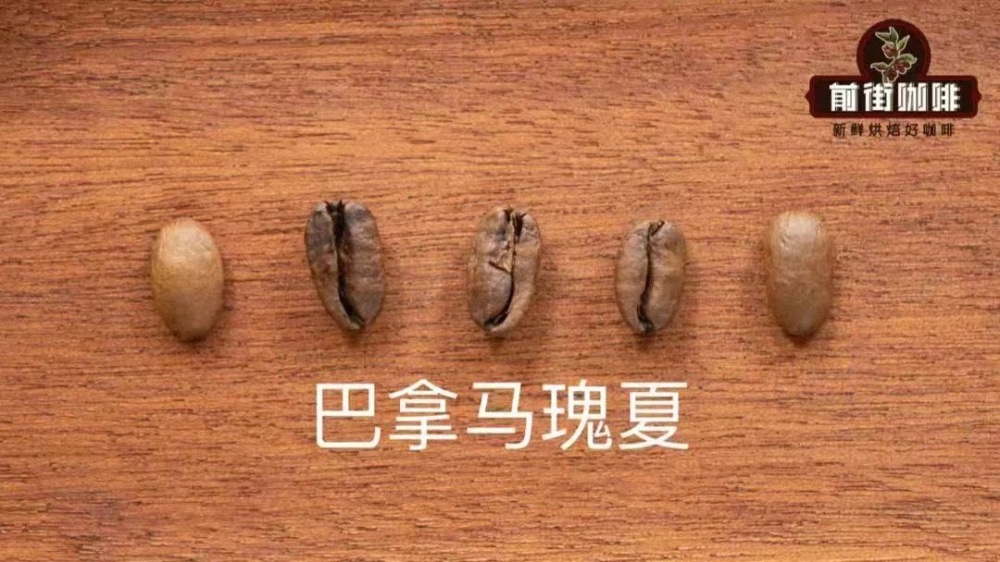
Back then, Daniel repeatedly cupped different harvest batches and recorded the flavor performance of each batch, and only then noticed that one batch had something special in its flavor. To find the difference, the only way was to compare batch by batch. After narrowing down the batch, he went back to check that batch's harvest date and area within the estate, re-examined all the records, and finally confirmed the harvest location of the batch and traced it to a specific position. After determining the location, he then observed the appearance, leaves, and fruit condition of the coffee trees one by one, and only then discovered Geisha. It was not as simple as outside rumors suggested; in the end, it was effort and persistence far beyond ordinary people that brought this legendary variety to the world.
The astonishing auction records of Hacienda La Esmeralda Geisha
This is mainly thanks to the unshakable championship record it set. Once a competition bean wins an award, its price is bound to rise sharply, and the price of a champion bean can even reach dozens of times its market value. Hacienda La Esmeralda's winning record is unprecedented—as of 2013, it had won championships in fifteen different coffee competitions, especially the 2013 Best of Panama natural group champion natural Geisha lot, which was bid at US$350.25 per pound! At the time, the price of non-auction specialty coffee beans in Panama in 2013 was about US$6 per pound, making this bid more than 58 times that of other specialty coffees!
Geisha variety
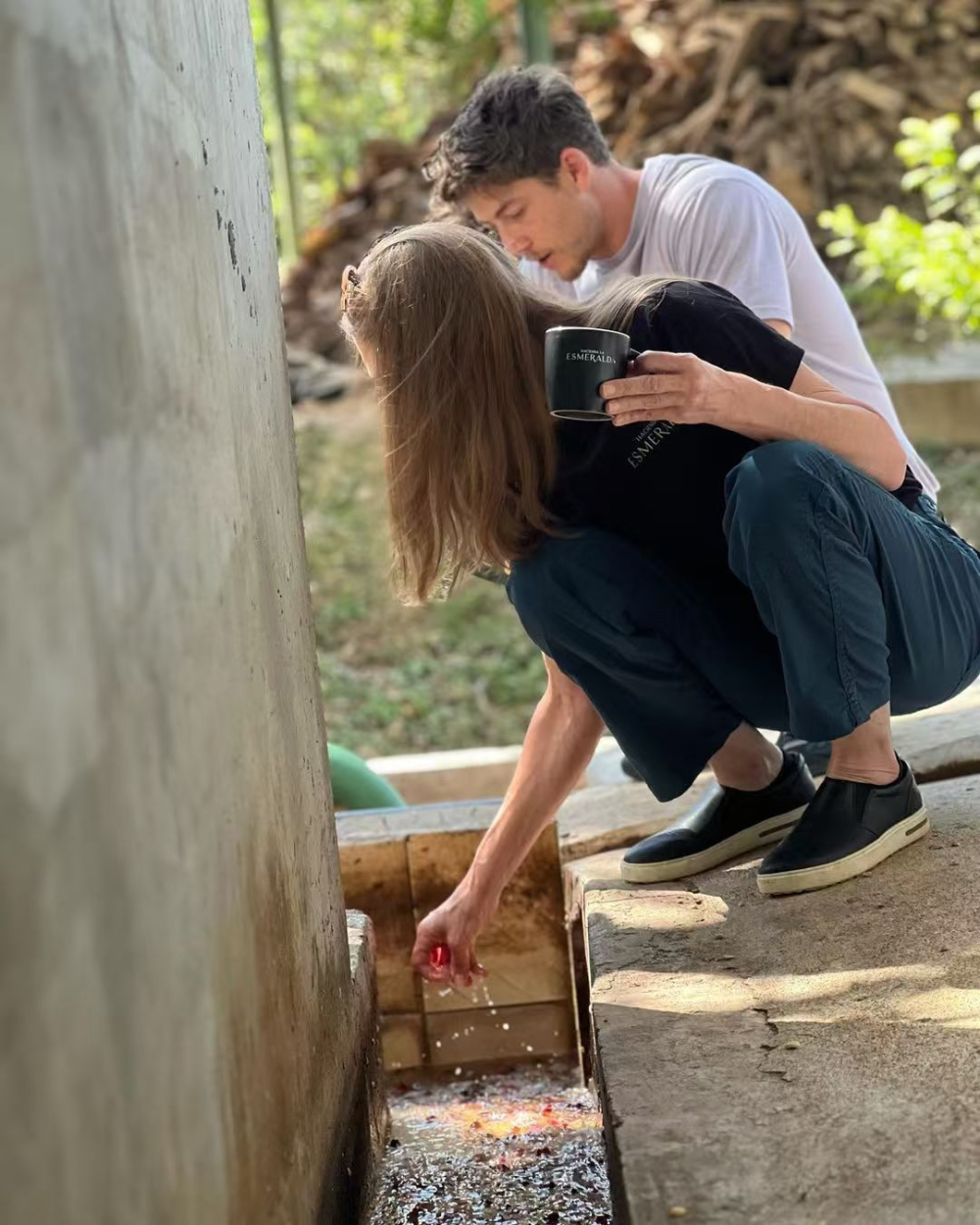
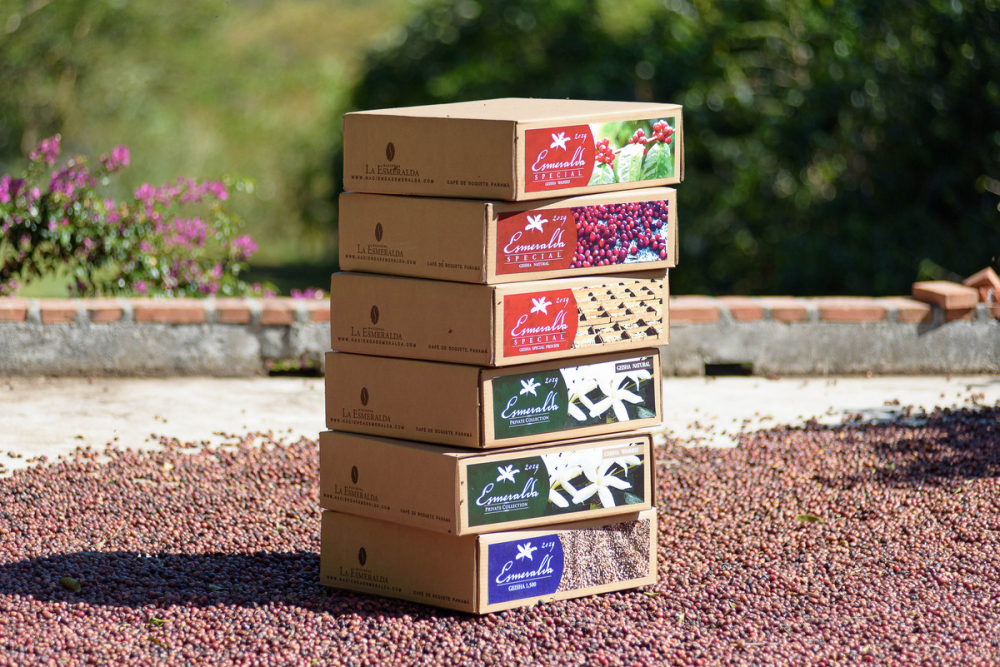
Taking Hacienda La Esmeralda Red Label as an example, this bean is highly recognizable as a washed Geisha. The dry aroma smells of slight florals, while the wet aroma after brewing carries obvious fruit and floral notes. On the palate, there is clear citrus acidity and a medium tea-like body, making the whole cup feel like a jasmine tea.
Front Street Coffee Panama Hacienda La Esmeralda Geisha Red Label Coffee
Region: Boquete, Panama Estate: Hacienda La Esmeralda, El Velo lot Altitude: 1,600-1,800 meters Variety: Geisha Processing method: Natural
Geisha green beans present a very beautiful blue-green color, with a warm, jade-like texture. They smell of fresh grass, peach, berries, and the unique milky sweetness of oolong tea that most coffee beans do not have. It seems that aroma and taste are things that greatly require association, but the faint tea note is something we can clearly perceive. In order to highlight this bean's characteristics and aroma, the roast level is taken to the brink of second crack. The brink of second crack and the first sound of second crack are relatively commonly used roast levels, as this better brings out the bean's own characteristics; too light will produce off-flavors, while too dark will consume floral aroma and fruit acidity. Of course, this also needs to be adjusted according to the characteristics of the coffee beans and the roaster's understanding of the beans themselves.
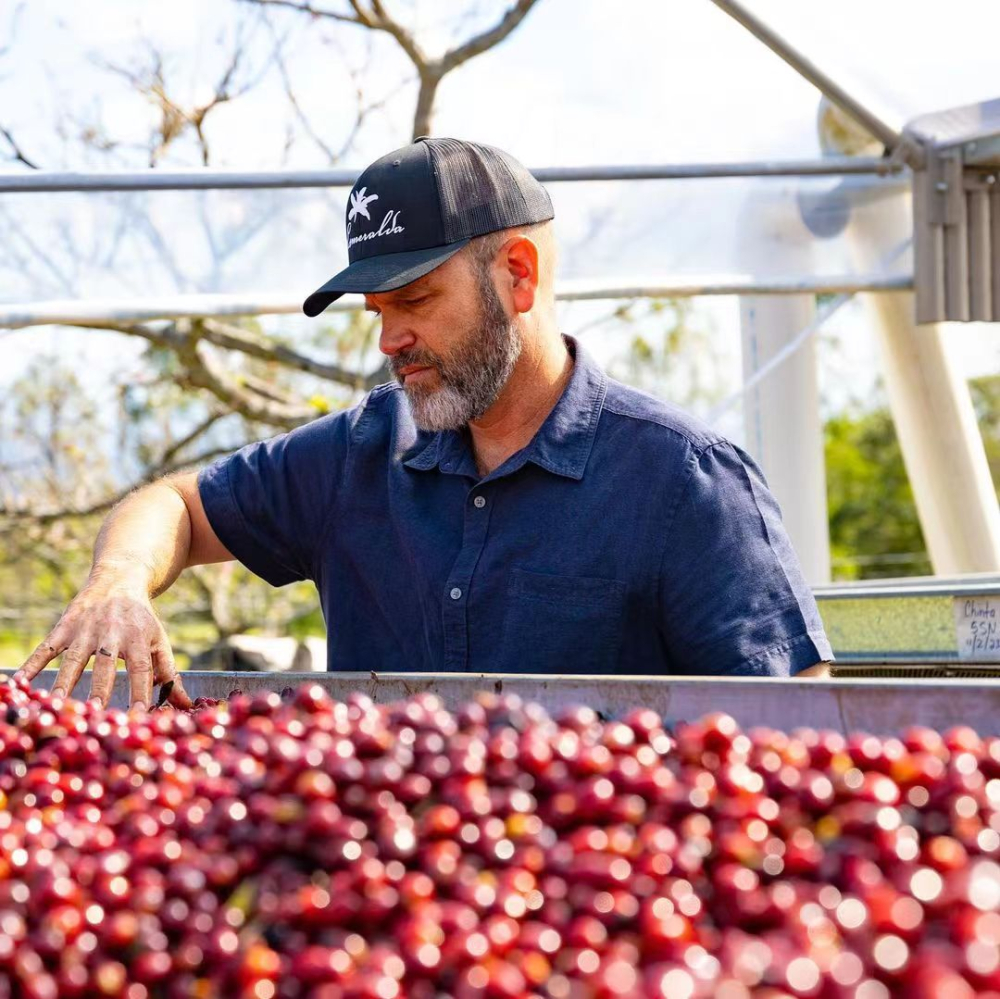
Flavor:
Floral, tropical fruit, intense sweetness; with proper roasting, they make you feel as if you are sipping the fragrance of a bouquet of fresh flowers. It was originally an ancient heirloom variety from Ethiopia, brought into Costa Rica's coffee experimental garden as a coffee sample and distributed to several small farms for small-scale trial planting. For a long time, not many people paid attention to Geisha, until one day Panama's Hacienda La Esmeralda separated it from other varieties and immediately won the national coffee competition championship. Its fruit flavors and floral elements are almost like Yirgacheffe from Ethiopia in Africa, on the other side of the world. Of course, some small farms have now also obtained Geisha seeds and are eager to try growing their own Geisha.
What grade is Geisha coffee?
As is well known, the Geisha from Panama's Hacienda La Esmeralda is the new king of specialty coffee, commonly known as "Red Label Geisha," with relatively high quality and naturally a high price. Red Label Geisha is harvested from areas above 1,550 meters in altitude, and Red Label Geisha participates in the global auction every May.
Front Street Coffee roasting analysis
Charge at a drum temperature of 150°C, heat 120, airflow open to 3; turning point at 1'36", when the drum temperature is 140°C open the airflow to 4, heat unchanged; when the drum temperature is 147.6°C the bean surface turns yellow, the grassy smell completely disappears, and it enters the dehydration stage. When the drum temperature reaches 150°C, adjust the heat to 100, airflow unchanged;
At 7'38", the bean surface shows ugly wrinkles and dark spots, and the bread-like smell clearly turns into coffee aroma, which can be defined as the prelude to first crack. At this time, you need to listen clearly for the sound of first crack. At 8'10" first crack begins, airflow open to 4, develop for 1'28 after first crack, and drop at 189.5°C.
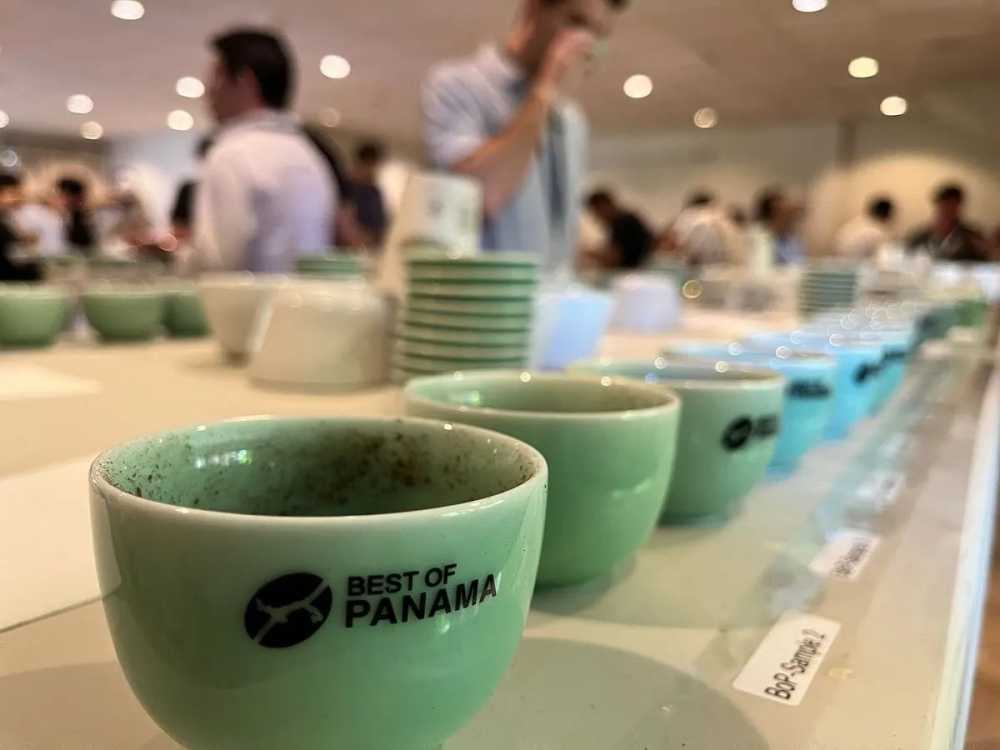
Today cupping a set of Red Label Geisha, the aftertaste is all very sweet
Cupping result: lychee, the peach juice sensation is especially clear, orange, black tea, fruit juice, honey, long-lasting sweetness. In the mouth it is initially gentle and round, with strong fruit sweetness and returning sweetness, like swallowing a sip of fresh fruit tea, sweet and refreshing to the heart. The lower the temperature, the more delicate the acidity. The lingering charm is also quite long-lasting, making one feel very satisfied!
Front Street Coffee brewing recommendations
Recommended brewing method: pour-over Dripper: V60 Water temperature: 88-90°C Coffee-to-water ratio: 1:15 Grind size: fine grind (80% passing a Chinese standard No. 20 sieve), i.e. medium-fine grind
Brewing technique: staged extraction. Use 32 grams of water for a 30-second bloom, then pour in a small stream in circles until 125 grams for the stage break. When the water level drops and is about to expose the coffee bed, continue pouring until 228 grams and stop. When the water level drops and is about to expose the coffee bed, remove the dripper. (Timing starts at the beginning of the bloom.) The extraction time is 1'52".
Introduction to the Yirgacheffe region
Yirgacheffe in Ethiopia is a famous specialty coffee region, and its coffee carries elegant floral and fruity aromas with bright, lively acidity. As the homeland of coffee, Ethiopia's thousands of years of cultivation history and processing tradition have produced high-quality washed Arabica beans. Light roasting gives it unique lemon, floral, and honey-like sweet aromas, soft fruit acidity, and citrus notes, with a fresh and bright mouthfeel. Natural-process Yirgacheffe has rich tropical fruit flavors, a sweet and full body, round and soft acidity, and lasting sweetness.
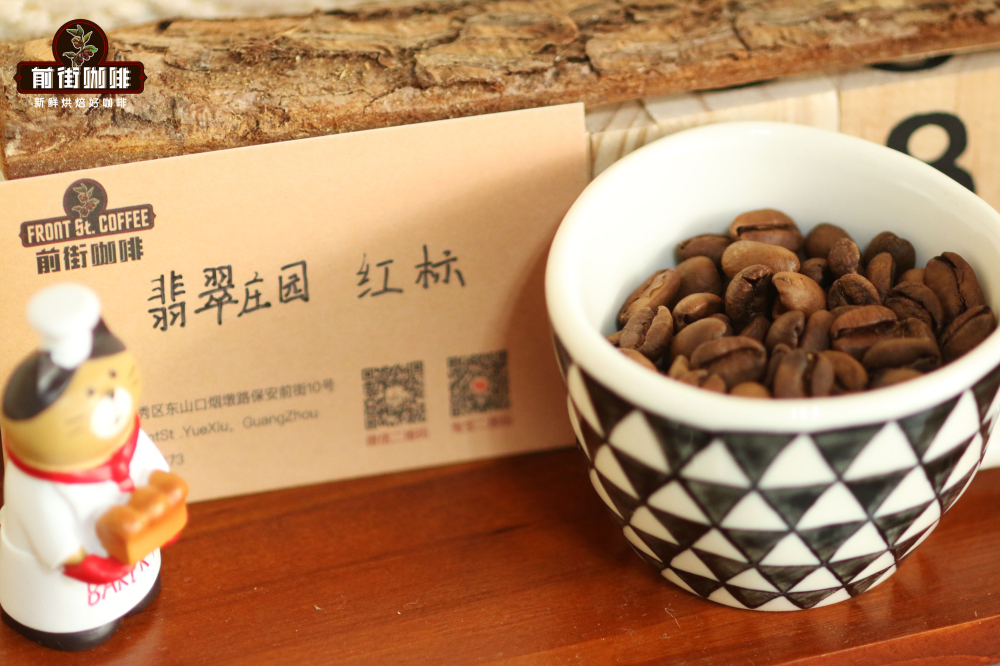
Front Street Coffee Yirgacheffe Natural Red Cherry Coffee
Region: Yirgacheffe Regional altitude: 1,900-2,300 m Variety: Heirloom Processing method: Natural Grade: G1
About Operation Cherry Red
When it comes to Operation Cherry Red, quite a few friends are no strangers to the name. But what exactly is the Operation Cherry Red project? Perhaps only a few people can say. In order to help Ethiopian coffee farmers earn better incomes and improve local living standards, in 2007 a Dutch trader, Trabocca, together with farmers in the producing area, launched the "OPERATION CHERRY RED PROJECT." It was purely to encourage farmers to improve coffee bean quality. Starting in the harvest season in the producing area, Trabocca designates harvest plans for microclimatic zones, hand-picking 100% ripe red coffee cherries, with output of about 1,500 kg to 3,000 kg.
The Operation Cherry Red project invested US$5,000 in 2008 to purchase new sun-drying racks. In 2009, it invested another US$8,000 to purchase new sun-drying racks and shade nets. In 2010, it invested in a US$9,000 generator, and in 2011 continued to invest US$10,000 to improve some local coffee transport roads, making coffee transport more convenient and efficient. Trabocca provided interest-free loans to purchase new coffee cherry pulpers and coffee bean sorters. To make procurement easier for suppliers, in 2012 it invested US$14,000 to build a high-quality Addis Ababa coffee cupping laboratory.
Trabocca provides financial loan support, new hardware equipment, and production and processing knowledge and technical assistance to help farmers raise their production level. It promises that as long as the actual output quality meets the cupping standards in the Addis Ababa, Ethiopia and Amsterdam, Netherlands cupping rooms, it will purchase at a generous price. The passing standard set by Trabocca is 88 points. After processing at origin is completed, Operation Cherry Red coffee beans are immediately packed in GrainPro bags or vacuum boxes and then transported to Djibouti to wait for shipping. Through real-time monitoring, safe transport, and timely and appropriate handling, it strives for perfect quality. Roasters can also buy high-quality coffee beans because of Operation Cherry Red, which also improves Ethiopian coffee quality and earns better prices. Trabocca can then return profits to farmers, and continuous improvement further raises quality.
Processing method
This naturally processed Yirgacheffe coffee has slightly larger beans and slightly lower density and moisture content. Every coffee from this processing station can be considered high-quality meticulously processed coffee, and its performance is superior to other coffees. Regardless of which processing method is used, the coffee beans here can be considered the best coffee in the Yirga area.
After the processing station screens the usable coffee cherries, the coffee cherries with the whole pulp and skin kept intact are placed on raised beds for natural sun-drying. It is precisely this raised-bed drying method, which requires intensive manual labor, that isolates the cherries from contact with the ground, prevents earthy off-flavors from developing during sun-drying, and creates exceptionally clean fruit flavors. After more than two weeks of sun-drying, the dark brown coffee fruit is professionally stored, waiting for the entire flavor to mature. Only before shipment does the processing station remove the coffee beans from the coffee cherries, so the sweetness can be imagined.
Green bean analysis
About Yirgacheffe grading
According to different green coffee bean processing methods, Yirgacheffe can be divided into two major categories:
For naturally processed green coffee beans, the grades are Gr-1, Gr-3, Gr-4, and Gr-5. Likewise, the highest grade G1 natural Yirgacheffe has rich fruity aromas. Opening a bag of freshly roasted G1 natural Yirgacheffe can overturn people's original understanding of coffee. Only those who have tasted the highest-grade natural Yirgacheffe will believe that coffee is a fruit.
Exported in ordinary jute bags, with Trabocca printed on the bags
The Yirgacheffe coffee variety is a local heirloom, a small-bean type, relatively round in appearance, with a very small bean size, mostly between 14-15 screen sizes. Yirgacheffe Cherry Red Grade 1 green beans are yellow-green in color, the typical color of natural coffee, with uniform, plump beans and few defective beans.
Front Street Coffee roasting analysis
A bean with such brilliant flavor is of course not suitable for medium-dark roasting, so this Yirgacheffe coffee bean is intended to use a light, slow roasting method, which best expresses its round, sweet character and rich floral and fruity aromas. This coffee's beans are relatively small, and its moisture content means it also absorbs a relatively large amount of heat during roasting, and the Maillard reaction process is also relatively fast. In the first roast, I charged at a relatively high temperature. Before the coffee beans dehydrated and turned yellow, I used a heat of 160 to ensure there was enough heat to continue to first crack and develop directly to second crack, confirming the curve development. In the second, third, and fourth roasts, the charge temperature was likewise 200, with the same heat, gradually reducing the heat as needed during roasting.
Roaster: Yangjia 600g semi-direct fire
Using a fast-roast mode, charge at 200°C, airflow open to 3.5. After 1 minute adjust heat to 160°C, airflow unchanged. At 148°C adjust heat once, lowering to 130°C. Roast until 5'03'', temperature 151°C, bean surface turns yellow, grassy smell completely disappears, dehydration complete, adjust heat to 105°C, open airflow to 4; at the 8th minute, the bean surface shows ugly wrinkles and dark spots, and the bread-like smell clearly turns into coffee aroma, which can be defined as the prelude to first crack. At this time, you need to listen clearly for the sound of first crack. At 9'07'' first crack begins, reduce heat to 70°C, open airflow fully (adjusting heat must be very careful, not so low that there is no cracking sound), and drop at 194°C. Yirgacheffe's dry aroma gives off a strong fruit fragrance, with a heavy dried-fruit note, and strawberry, mango, and apricot jam aromas. The wet aroma is like sweet syrup, like thick apricot pulp, wrapped in rustic honey or chocolate. On the palate it is not intense, with medium body and not obvious acidity, yet lively and bright, like fruit black tea.
Front Street Coffee brewing analysis
As for the brewing method, pour-over and siphon are the best. When grinding the beans, you can already smell the striking natural fruit aroma, with obvious sweetness. Gentle and graceful, sweet and lovely. Yirgacheffe gives off extremely complex aromas and displays an exceptionally excellent mouthfeel, hard to describe.
Dripper: V60 dripper Coffee grounds: 15 g Water temperature: 91°C Grind size: fine grind (78% passing a No. 20 standard sieve) Water-to-coffee ratio: 1:15
Staged extraction: Use 30 grams of water for a 30-second bloom, then pour in a small stream in circles until 125 grams for the stage break. When the water level drops and is about to expose the coffee bed, continue pouring until 225 grams and stop. When the water level drops and is about to expose the coffee bed, remove the dripper. (Timing starts at the beginning of the bloom.) The extraction time is 1'50".
The brewed wet aroma of ripe berry fermented fruit wine makes it hard to believe this is Yirgacheffe, but personally I do not much like this wet aroma. However, from the extremely smooth entry to the delicate body and the surge of ripe fruit sweetness and acidity, it is truly stunning, and the sweetness exceeds any Yirgacheffe I have drunk before. The aftertaste is also quite good, truly worthy of the name "fruit bomb"; after drinking, you can basically be assured of sweetness in your mouth for half an hour.
Professional coffee knowledge exchange More coffee bean information Please follow Coffee Workshop (WeChat public account cafe_style )
For more specialty coffee beans, please add the private WeChat of Front Street Coffee, WeChat ID: kaixinguoguo0925
The above content is compiled by CoffeeHunters, a coffee news website.


