







What defines the Yunnan coffee beans origin?
Yunnan small-bean coffee refers to the Arabica species, first planted as Typica by a French missionary in 1904 in Zhugula Village. Overseas Chinese Liang Jinshan promoted Typica cultivation in the 1930s, and plantings expanded in the 1950s and 1960s. Today Catimor dominates, dividing drinkers between praise for its sweet aroma and complaints about earthy, gamey notes.
Yunnan is China's only province producing Arabica, while Hainan grows Robusta, also called medium-bean coffee. As the domestic coffee culture and consumer market expand, Yunnan draws growing attention. The Front Street daily-bean series uses Baoshan washed Catimor to present the origin, letting drinkers assess the Catimor variety's strengths and weaknesses directly in the cup.
Yunnan coffee has frequently become the center of discussion in coffee circles in recent years. Some praise its outstanding sweet aroma, while others complain about its strong earthy and gamey taste. Behind these contradictory evaluations lies over a century of variety changes and industrial shifts in Yunnan coffee. This article starts with the planting history from Typica to Catimor, analyzes the flavor formation of Yunnan small-bean coffee, and introduces how the Front Street daily-bean series presents the characteristics of the Yunnan origin through Baoshan washed Catimor. Whether you are just getting to know Yunnan beans or want to understand the pros and cons of the Catimor variety in depth, you can find answers here.
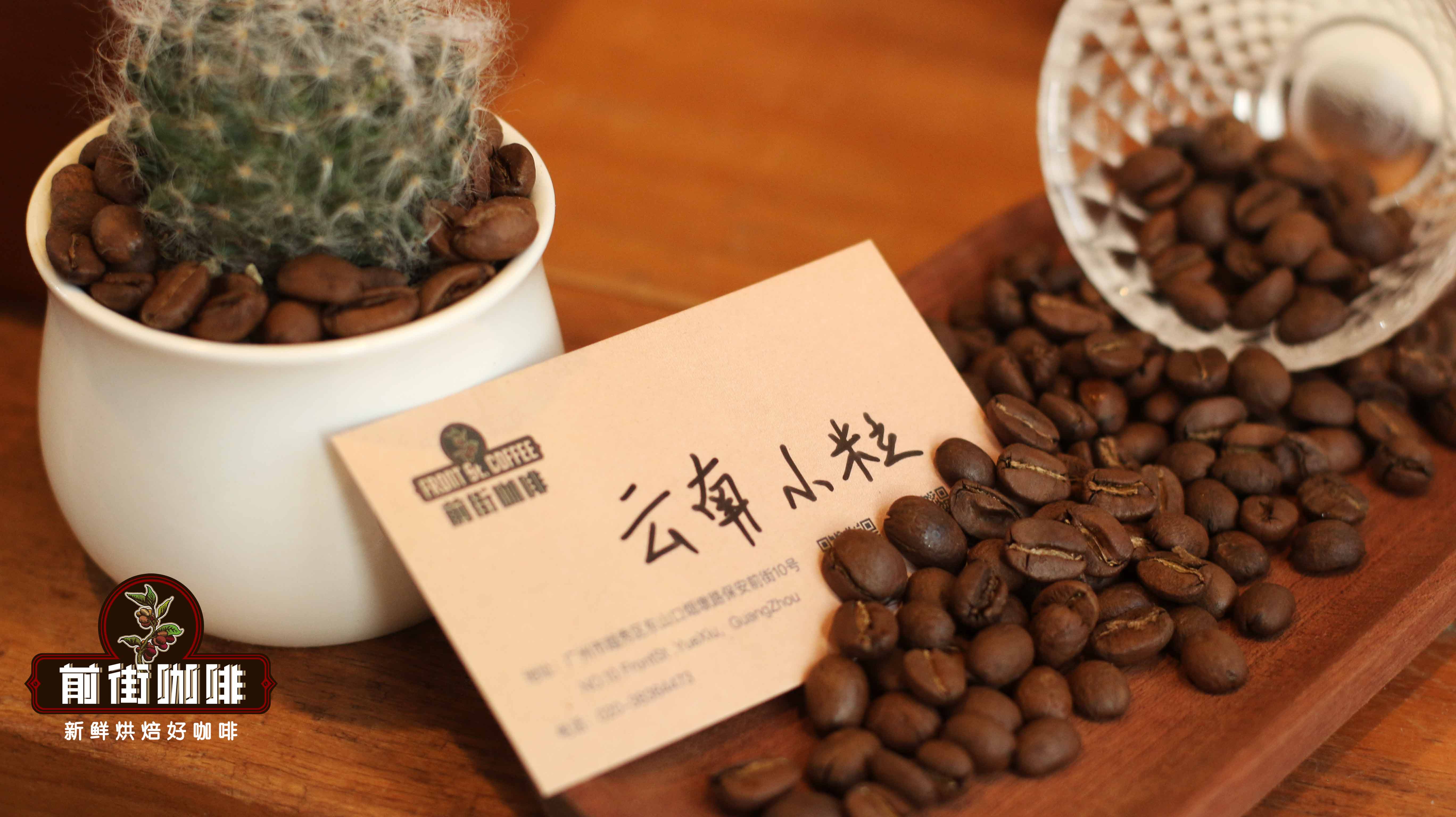
"What exactly has Yunnan coffee developed into today?" This is probably a question in the minds of many coffee lovers. At Front Street, we also often meet friends in our stores who are full of curiosity about Yunnan coffee beans.
As China's domestic coffee consumer market continues to expand, Yunnan, as the only province in China producing Arabica coffee beans, has naturally become a focus of attention. Some complain: "The Ethiopian beans I drink are so stunning, so why does Yunnan coffee taste like mud and fishiness?" Others retort: "Yunnan beans are clearly delicious now. The anaerobic natural one I drank last week was both sweet and aromatic." We can hear both of these completely opposite evaluations: "Yunnan coffee is no good" and "Yunnan coffee is great now." To sort out these claims, we need to start from the development history of Yunnan coffee.
What is Yunnan small-bean coffee?
Some people may wonder why Yunnan coffee is called "small-bean coffee." In fact, small-bean coffee refers to the Arabica species. This is because Hainan, China, also grows another type of coffee—Robusta, which is also called medium-bean coffee or Robusta beans. Generally speaking, Arabica performs better in flavor than Robusta.
In 1904, a French missionary planted Typica coffee trees in Zhugula Village, which is the earliest written record of coffee cultivation in Yunnan. By the 1930s, overseas Chinese Liang Jinshan took the lead in promoting Typica cultivation in Yunnan, and in the 1950s and 1960s the planting area was further expanded.
Typica has excellent flavor performance and is widely recognized as a specialty coffee variety, but its shortcomings are also obvious: low yield, susceptibility to leaf rust, and greater labor input in management. When international coffee prices decline, the income of Yunnan coffee farmers shrinks noticeably, their enthusiasm for growing coffee declines, and many switch to other cash crops. When Front Street visited Yunnan in 2013, we noticed that in many places coffee trees were in a semi-wild state, left to compete naturally and grow freely.
What truly rekindled the enthusiasm of Yunnan coffee farmers was Nestlé's entry. As the world's largest coffee seller at the time, Nestlé, while expanding the Chinese market, also funded and supported Yunnan's coffee planting industry.
In 1988, Nestlé supported Yunnan's coffee agriculture development, introduced Catimor 7963 from the Portuguese Coffee Rust Research Center (CIFC), carried out selection and breeding at the Dehong Tropical Agriculture Research Institute, and took the lead in trial planting in Hainan, Baoshan Lujiangba, and Ruili.
In 1991, Nestlé introduced Catimor P1, P2, P3, and P4 from CIFC for trial planting, where P stands for Population. Among them, P4 had the highest yield, so starting in 1994, Pu'er City began promoting the P series, with P4 accounting for the majority. Later, expert investigation confirmed that Catimor P1, P2, P3, and P4 corresponded to 7960, 7961, 7962, and 7963 respectively.
As for T5175 and T8667, they were introduced by Nestlé from Central America in 1994. These two lines were first trial-planted in Pu'er, and both had lower yields than 7963.
Under Nestlé's strong promotion, 99% of Yunnan coffee is Catimor, which is what we often call Yunnan small-bean today. These beans were originally purchased by Nestlé as raw material for instant coffee, and the requirements for flavor were not high.
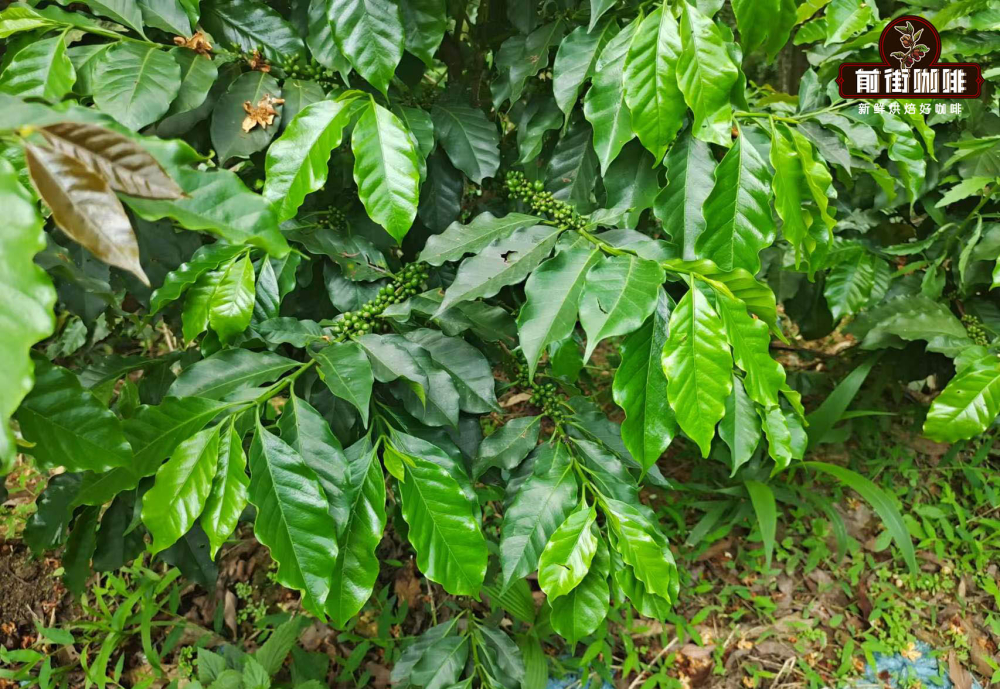
Why is it said that Yunnan coffee beans sometimes taste very "devilish," with woody and earthy, gamey notes? Part of the reason lies in Catimor itself. Catimor has tetraploid chromosomes. Although it belongs to the Arabica species, its lineage is not pure and contains about 1/4 Robusta genes. Having inherited Robusta genes, Catimor has higher yield, stronger disease and pest resistance, and better adaptability to the environment, but its flavor is compromised. Therefore, Yunnan small-bean coffee has long been positioned as raw material for instant coffee or as the base for blended coffee.
In recent years, China's domestic specialty coffee market has continued to grow, and more and more people are paying attention to Yunnan coffee. Some began to wonder: Can Yunnan produce specialty coffee? So many coffee professionals devoted themselves to building up the Yunnan origin. At present, there are two paths to improving the flavor of Yunnan coffee: the short-term approach is to use post-processing methods to mask undesirable flavors, such as the currently popular anaerobic and enzyme treatments; the long-term approach is to return to agriculture itself, starting with cultivation and varieties. If Catimor's flavor is not good enough, then switch to varieties with excellent flavor, such as Typica, Bourbon, and Geisha. In fact, Yunnan has all of these varieties, but the planting scale is too small and they are still in an exploratory stage, not yet enough to shake Catimor's dominant position in Yunnan, nor to reverse outsiders' flavor impression of Yunnan coffee. Yunnan coffee is indeed getting better and better, but it must be admitted that agricultural improvement cycles take at least five years, or as long as ten, and many links still need time to settle.
Front Street has always believed that whether a coffee bean from an origin is acidic or bitter, it carries the local flavor personality. Yunnan currently relies mainly on Catimor small-bean coffee for cultivation, so what best represents Yunnan coffee's flavor is naturally small-bean coffee. The Yunnan coffee in Front Street's daily-bean series uses washed Catimor from Baoshan. Baoshan is a production area with a relatively long history of coffee cultivation in Yunnan, and its cultivation level is among the best in the province, while washed processing best presents the true flavor of a place's coffee beans.
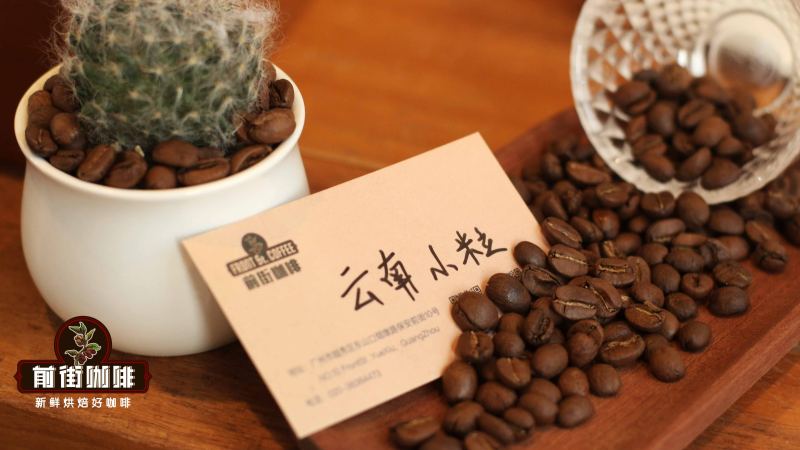
Front Street daily-bean series Yunnan small-bean coffee beans
Origin: Baoshan, Yunnan, China
Altitude: 1,200 meters
Processing method: washed processing
Variety: Catimor
In addition to single-origin pour-over beans, Front Street has also launched a Yunnan-flavored espresso blend, pairing Yunnan small-bean with Brazilian Red Bourbon and using a medium-dark roast to create a Front Street dark cocoa base blend designed specifically for espresso machines and moka pots. It has nutty, chocolate, and creamy flavors, moderate crema, and a soft mouthfeel, making it suitable for making all kinds of fancy coffee.
If you want to taste the best flavor of this coffee bean, Front Street recommends using freshly roasted beans for brewing, so as to experience the coffee's rich layers to the greatest extent. Coffee beans sent out by Front Street Coffee (FrontStreet Coffee) are all within 5 days of the roast date, because Front Street deeply understands that freshness is crucial to flavor. Front Street's roasting principle is "freshly roasted good coffee," so that every customer who places an order can receive the freshest possible state when the coffee arrives. The resting period for coffee is about 4 to 7 days, so when customers receive it, it is exactly at the stage of peak flavor.
Brewing parameters
Dripper: Hario V60
Water temperature: 90°C
Dose: 15 grams
Coffee-to-water ratio: 1:15
Grind size: 75% passing through a Chinese standard No. 20 sieve
Pour 30 grams of water and bloom for 30 seconds, then pour from the center in a thin stream while slowly circling to 125 grams. When the water level in the dripper drops to the point where the coffee bed is about to be exposed, continue pouring in circles to 225 grams. Total extraction time is about 2 minutes.
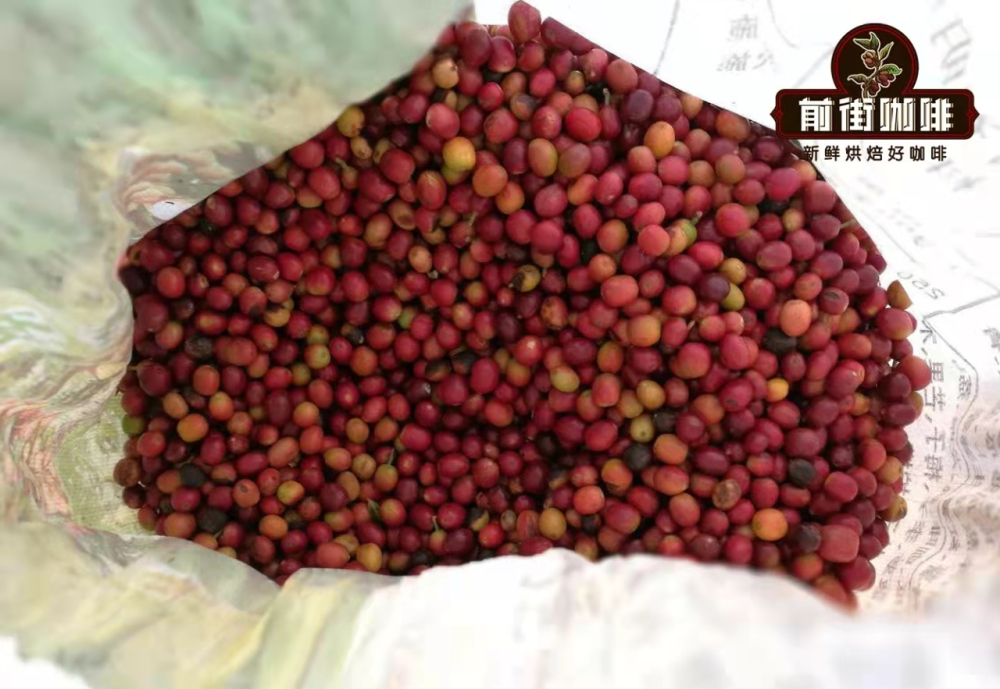
Yunnan small-bean coffee flavor: melon and fruit aroma, sweet melon, brown sugar, plum acidity, black tea note.
The above content is compiled by CoffeeHunters, a coffee news website.


