







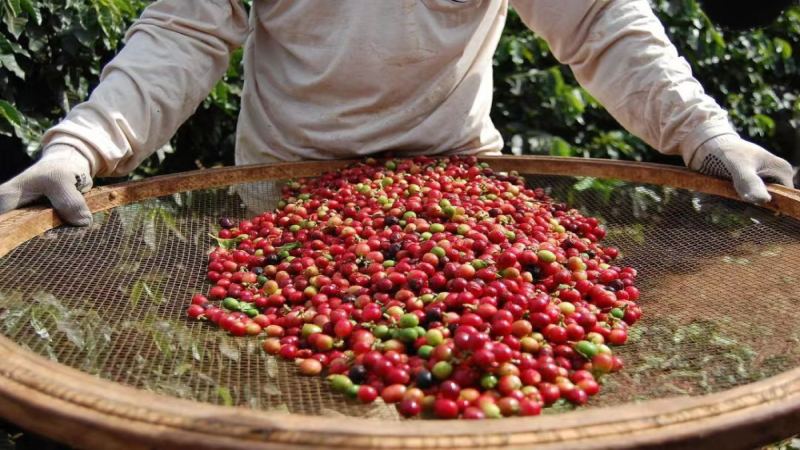
Brazil, as the world's largest coffee producer, has both large-scale commodity-grade coffee and specialty beans led by COE. This article systematically reviews the unique aspects of Brazilian coffee, from origin characteristics and grading systems to the evolution of processing methods, and provides detailed introductions to two Brazilian beans sold at Front Street Coffee stores—Cerrado Red Bourbon and Queen Estate Natural Yellow Bourbon—covering origin information, variety characteristics, processing methods, and brewing suggestions, taking you through a comprehensive understanding of this South American coffee giant's terroir and quality standards.
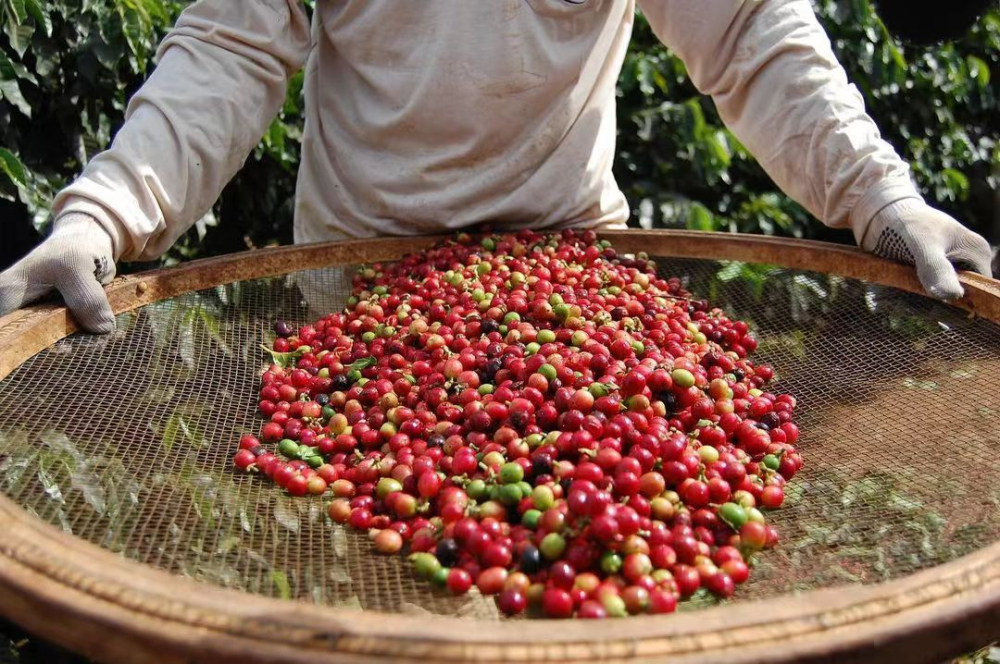
Which country produces the most coffee in the world? The answer is undoubtedly Brazil.
Brazil firmly holds the position of the world's largest coffee-producing country, with both large-volume commercial coffee operating on commodity standards and specialty coffee driven by the COE system. Although Brazil's total coffee production is astonishing, the Brazilian coffees currently sold by Front Street both online and offline occupy only two "seats." Why is that? A careful study of Front Street Coffee's bean list makes it easy to see that every coffee has a certain uniqueness. Front Street hopes to treat its offline stores as experience spaces, prioritizing presenting consumers with as rich a range of regional flavors as possible, so the selected coffees can basically represent the classic taste of their producing regions. Front Street believes that Brazilian coffee has stable flavors but also a certain uniformity, which is closely related to Brazil's highly mechanized production model.
Let's now learn about the two Front Street Brazilian coffee beans sold at Front Street Coffee stores. First up is Front Street Brazil's everyday drinking bean!
Front Street Brazil Cerrado Everyday Drinking Bean
Country: Brazil Region: South Minas Altitude: 1,000 meters Variety: Red Bourbon Processing Method: Pulped Natural Flavor: Nuts, chocolate, cream, peanut, caramel
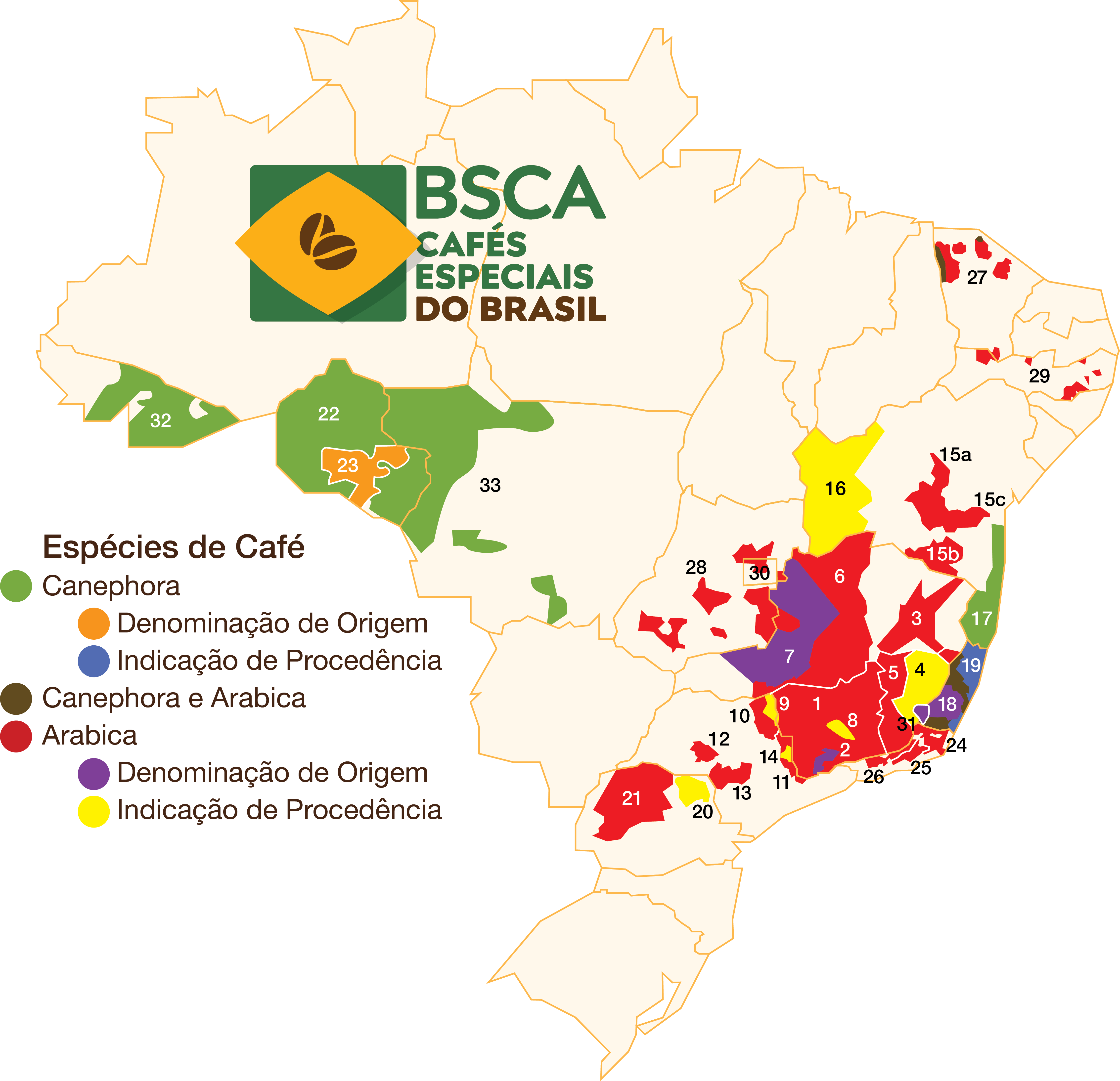
This Front Street Cerrado coffee bean comes from the state of Minas Gerais. The state's representative coffee-producing regions include Cerrado and South Minas, both of which are higher-altitude areas. Cerrado is located in western Minas Gerais and is a flat plateau with an altitude between 750m and 1,200m. South Minas is a hilly area with an altitude of 700m to 1,200m. Since 1999, among the estates that have stood out in Brazil's Cup of Excellence auction activities, South Minas has had the largest number. It is precisely because Front Street values South Minas's advantage in producing high-quality coffee beans that it锁定 Front Street's everyday drinking bean to this region.
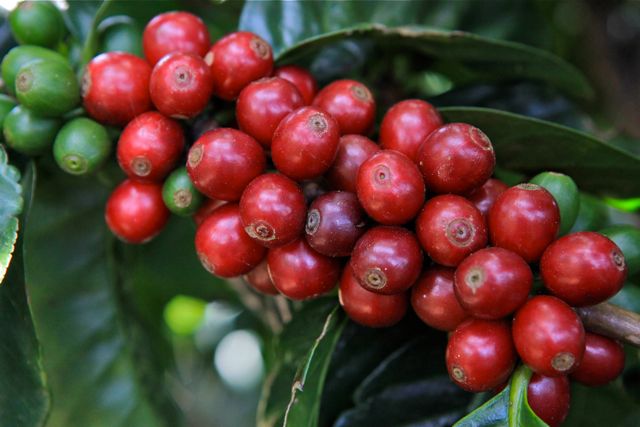
Flavor is closely tied to bean variety. Red Bourbon is what is commonly called the Bourbon variety; its coffee cherries turn wine-red when ripe, and the beans are relatively round. Bourbon planted at high altitudes often has better aroma and bright acidity, with a red-wine-like flavor on the palate. However, the source of fermentation aroma is not only related to variety; the special pulped natural processing method also contributes part of the flavor.
Before 1990, almost all Brazilian coffee used rough natural processing, which made Brazilian beans prone to picking up rotten-wood or earthy flavors, because the coffee cherries had to undergo two to three weeks of sun exposure. If rain or moisture returned during that period, musty odors could easily develop. To change this situation of complete dependence on weather, in 1990 Brazil developed the Pulped Natural method based on the country's relatively dry climate, in order to shorten processing time.
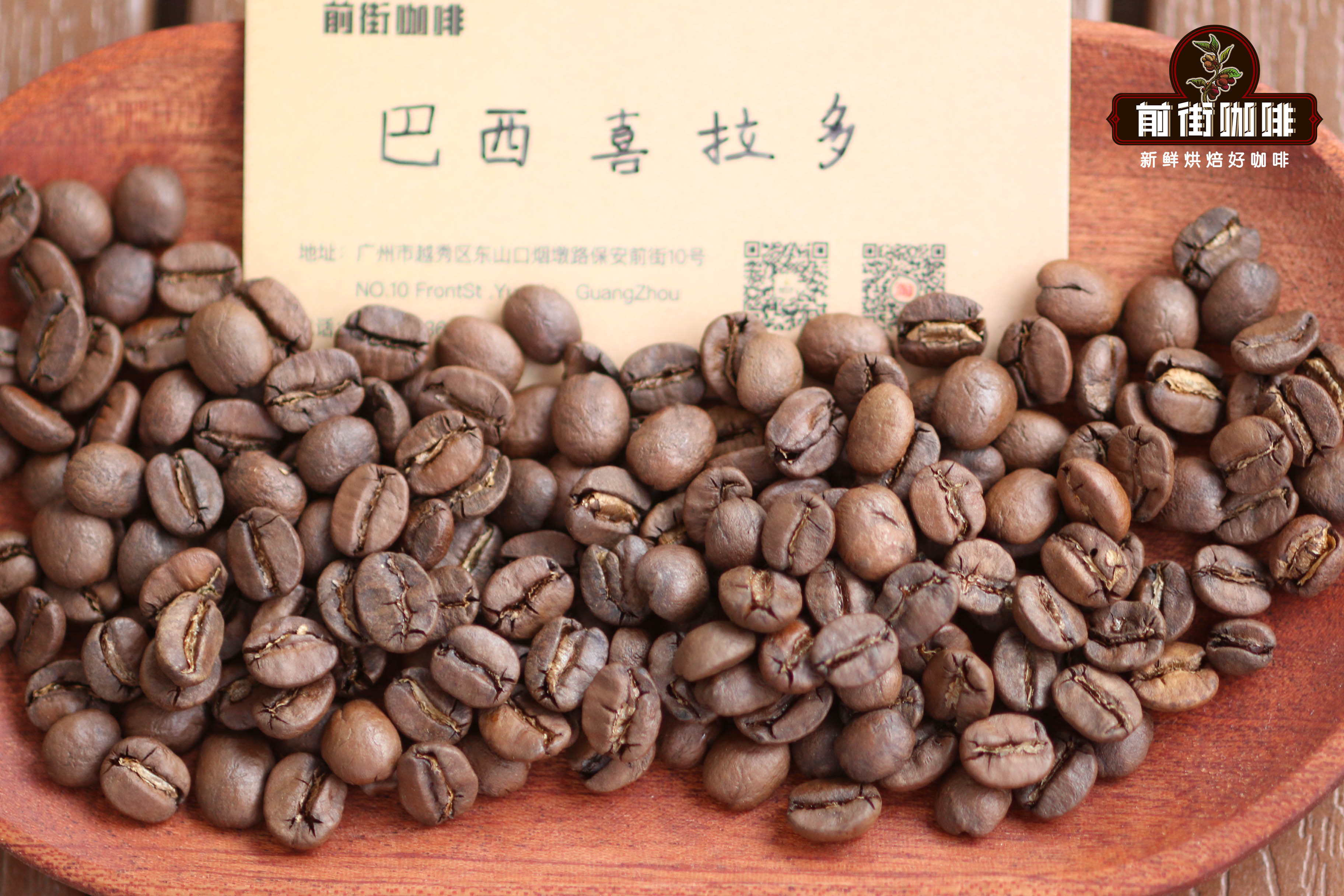
The Pulped Natural method first removes the skin and pulp of the coffee cherry, making it possible to control the fermentation degree of the mucilage-covered coffee beans after pulping. Traditional natural processing, by contrast, dries the cherries with skin and pulp still attached, making it impossible to observe the fermentation of the mucilage. The Pulped Natural method lies between natural and washed processing, but omits the washed process's "tank fermentation and clean-water rinsing" steps, instead placing the beans directly in the sun to dry. Although the methods may seem similar, because the fermentation step is lacking, the coffee beans' flavors are completely different. In the Pulped Natural method, during the removal of skin and pulp, fully ripe pulp falls off easily, while the skin of unripe green cherries is harder to handle, so a second sorting can be carried out to filter out unripe fruit and unify the ripeness of the coffee cherries. Compared with natural processing, Front Street believes that coffee beans selected and processed this way will have improved cleanliness and ripeness, bringing a more uniform cup.
The promotion of the Pulped Natural method does not mean that all Brazilian producing regions use it. The less humid Cerrado still mainly uses natural processing, and Pulped Natural actually plays a supporting role in Cerrado. However, this Front Street Brazil Cerrado Red Bourbon obtained by Front Street Coffee uses the Pulped Natural method precisely to amplify its fermented flavors.
Front Street also has another Brazilian coffee bean, namely Front Street Brazil Queen Estate on the bean list. This coffee bean comes from Brazil's Mogiana region, which is very close to southern Minas. The coffee is planted among shrubs, grasses, and other vegetation. This area is home to many farming families, some of which use traditional large-farm operating methods, while others adopt small-scale modern operations. The combination of modern technology and mountain coffee-growing culture creates the highest-quality green coffee beans. Through cupping, Front Street found that coffee beans produced in this region have a clear sweetness like cane sugar. Let's look at this coffee's green bean information:
Front Street Brazil Queen Estate Natural Yellow Bourbon Region: Brazil, Mogiana region Estate: Queen Estate Altitude: 1,400-1,950m Variety: Yellow Bourbon Processing Method: Natural processing
Unlike Brazil's large-scale harvesting and processing, Queen Estate uses refined natural processing, solving the quality decline caused by Brazil's large-scale centralized processing.
Front Street deliberately chose Yellow Bourbon coffee beans, different from Cerrado Red Bourbon. When ripe, this variety's coffee cherries are not red like ordinary coffee cherries, but yellow. This variety was first discovered in Brazil in 1930 and is currently mainly grown in Brazil. It is generally believed that it may have arisen through mutation after crossing a red-fruited Bourbon with a yellow-fruited Typica variant called "Amerelo de Botocatu" (discovered in São Paulo state in 1871). Because of its lower yield and relatively poor resistance to wind and rain, it has not been widely planted. However, when grown at high altitudes, it can perform extremely well in flavor, and in recent years it has gradually become more common.
When Front Street received Brazilian green beans, it noticed an interesting phenomenon: on the burlap sacks of Brazilian coffee beans, information like this can be seen: Brazil NY.2 SC – 17/18 FC. Upon investigation, it was found that this is Brazil's unique three-part grading method, which other countries do not use. The reason is that the producing area is too large and the bean output too great. In order to blend coffee flavors specifically for export, these coffee beans are often mixed together, resulting in uneven quality, which requires "cupping" for grading. In this way, consumers can roughly judge coffee quality simply by looking at the green bean information.
Brazilian coffee grading can be said to be very complex. Generally speaking, it needs to be considered from three aspects: defect rate, screen size, and cup quality.
1. Grading by defect rate Brazilian coffee uses a "deduction method" for evaluation, classifying grades according to how many defective beans are contained in every 300 grams of primary beans. There are seven levels from No.2 to No.8. A deduction of less than 4 can be classified as No.2. Of course, having not a single defective bean could be called No.1, but this situation is extremely rare and cannot maintain a stable supply, so Brazil sets No.2 as the highest grade rather than No.1.
2. Grading by bean screen size Screen size: screening is done with screens based on 1/64 inch, and screen sizes are usually 14 to 20. It should also be explained that screen size corresponds to the short side, that is, the "width," of the coffee bean. Among Brazilian coffee beans, the largest screen size is 19, but output is not large, so 17/18 is taken as the highest grade.
3. Cup quality fine cup|fine|good cup|fair cup|poor cup|bad cup|FC (Fine Cup) and GC (Good Cup) are relatively common. Many companies or platforms also add processing method (natural/washed/honey) and estate information.
It should be known that Brazilian coffee was once synonymous with "inferior coffee." Farmers pursued quantity while neglecting quality, and there were even impurities such as soybeans and small stones. Because Brazilian coffee was named after the port through which it was exported, the largest port, Rio bean (Rio de Janeiro), also became "notorious" coffee! The emergence of COE was precisely to change the quality of Brazilian coffee beans, and the NY grading method also standardized Brazil's coffee quality standards! Only after that was Brazilian coffee removed from the label of "inferior beans."
So what are the flavors of today's Brazilian coffee beans like? Next, follow Front Street to explore the mysteries of brewing!
Front Street Coffee brewing suggestions: Dripper: V60 Dose: 15g Water temperature: 90℃ Grind size: medium grind, 70% passing through a No. 20 standard sieve Water-to-coffee ratio: 1:15
Front Street uses staged extraction. The blooming water amount is twice the coffee grounds, that is, 30 grams of water for a 30-second bloom. Pour in a small stream in circles to 125 grams, then pause. When the water level drops and is about to expose the coffee bed, continue pouring to 225 grams and stop. The total extraction time is 2 minutes.
[Front Street Brazil Cerrado Red Bourbon] Flavor: high sweetness, clean, smooth, low acidity, with flavors of peanut, almond, nuts, and chocolate.
[Front Street Brazil Queen Estate Natural Yellow Bourbon] Flavor: balanced mouthfeel, with cane-sugar sweetness standing out amid an almond-cocoa main tone. It is a coffee with good body and abundant sweetness.
The above content is compiled by CoffeeHunters, a coffee news website.


