







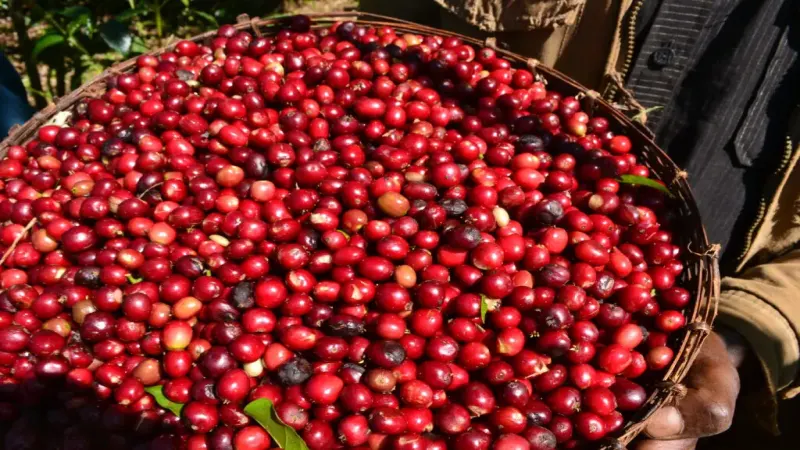
How Ethiopian Coffee Bean Origins Shape Flavor and Grade
Ethiopia is the birthplace of Arabica coffee and the world's fifth-largest Arabica producer. Its beans are grown across Harar, Limu, Djimma, Sidamo, Kaffa, Yergacheffe, and Wellega, where well-drained, slightly acidic red soil supports the crop. Harvest runs once a year: trees flower from March to April, red cherries are picked from September to December, and the new crop is exported from November to December.
The coffee bean process spans two main methods, washed and sun-dried, and quality is sorted through a grading system running from G1 to G9. Cultivation falls into forest or semi-forest coffee, garden coffee, and plantation coffee, with forest and semi-forest types making up about 60 percent. Roughly 25 percent of Ethiopia's population depends on coffee production directly or indirectly for its livelihood.
Ethiopia is the birthplace of Arabica coffee and the world's fifth-largest Arabica producer, known for its bright citrus-like acidity and tea-like sweetness in the finish. This article will systematically cover Ethiopia's coffee-growing regions, three cultivation models, the two major processing methods of washed and sun-dried, the grading and quality control system from G1 to G9, and the evolution of the coffee export trade. At the same time, drawing on Front Street Coffee's cupping experience, it will help readers understand the refreshing flavors that Ethiopian beans display under light-to-medium roasting, as well as the stylistic differences between washed and sun-dried Yirgacheffe and the basis for choosing between them.
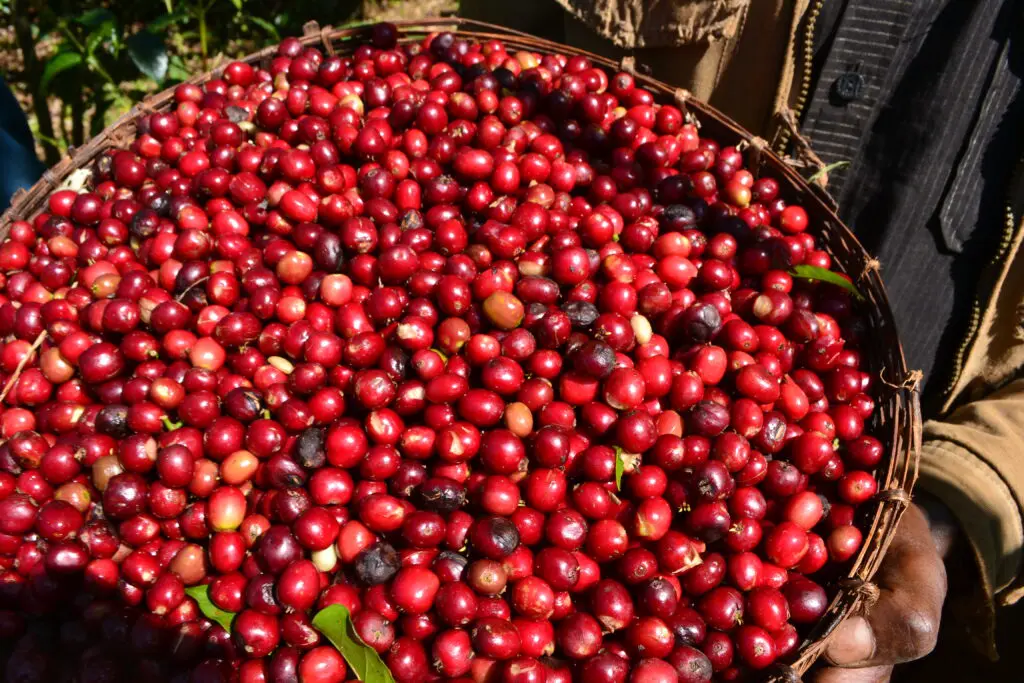
Ethiopia (also known as Abyssinia) is the birthplace of African Arabica coffee beans and one of the world's important Arabica coffee producers, ranking fifth in global output. Because it carries an acidic aroma distinct from traditional coffee and, under light-to-medium roasting, can display refreshing citrus-like acidity and a tea-like sweet finish, it has won the favor of a large number of coffee consumers around the world.
Overview of Coffee Cultivation in Ethiopia
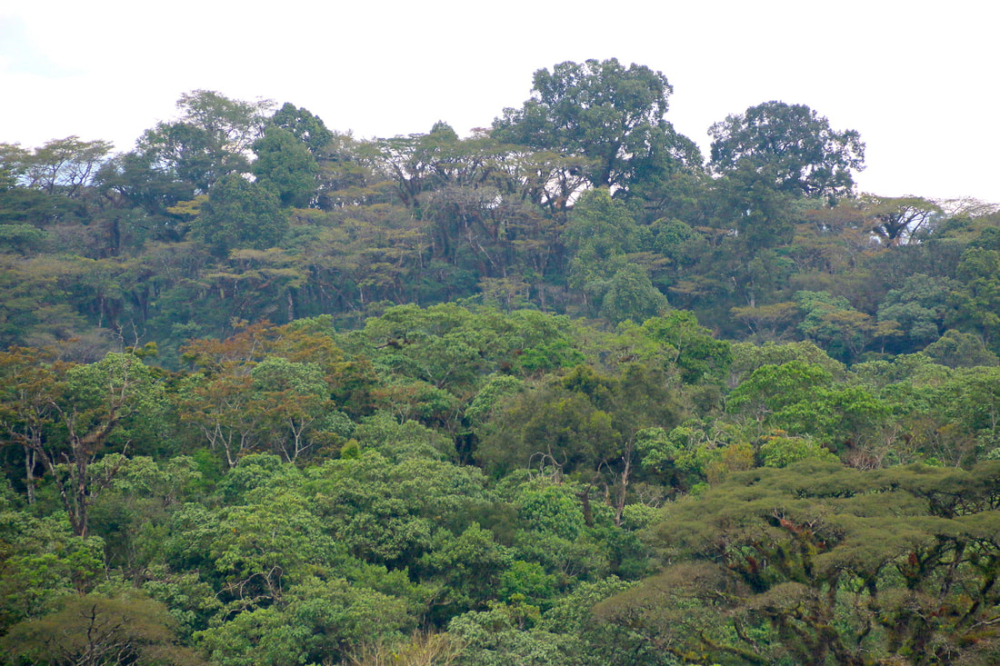
Ethiopia's natural conditions are very well suited to coffee tree cultivation. The main producing regions include Harar, Limu, Djimma, Sidamo, Kaffa, Yergacheffe, and Wellega. These areas have well-drained, slightly acidic soil with a loose red texture.
Among the many producing regions, Sidamo and Yergacheffe are the two most representative specialty coffee regions in Ethiopia. Ethiopian coffee is harvested once a year. Between March and April, the coffee trees bloom with white flowers, after which the fruit gradually develops. From September to December, the red ripe fruit enters the picking period, and from November to December, the new season's coffee begins to be exported.
At present, about 25% of Ethiopia's population depends directly or indirectly on coffee production for its livelihood. Farmers using traditional cultivation methods make up the majority; they rely on manual care for the coffee trees, apply organic fertilizers, and do not use harmful pesticides or herbicides, so most coffee produced in Ethiopia can be classified as organic coffee.
According to differences in cultivation methods, coffee can be divided into three categories: forest or semi-forest coffee, garden coffee, and plantation coffee. Among them, forest or semi-forest coffee accounts for 60%; in this type of wild coffee forest, pesticides are basically not used, and pest control instead relies on biological means.
Garden coffee accounts for 35%. This type of coffee garden adopts a multi-layered layout, with coffee trees on the lower level, relying on shade from other crops to obtain suitable growing conditions, and fertilizer mainly comes from fallen leaves, dry grass, and animal manure. Plantation coffee accounts for only 5% and is a modern cultivation model; the coffee also grows in groves, but new varieties are used and they are planted in rows spaced with other shade trees.
Ethiopian Coffee Bean Processing Methods
Most Ethiopian coffee beans continue to use the two most traditional processing methods: washed coffee and sun-dried coffee.
Washed coffee accounts for 35% of total exports. High-quality washed coffee is processed from freshly picked, fully ripe fruit, and the picking stage is very meticulous and closely monitored by professionals. The clean, selected coffee beans must be pulped on the same day they are picked, and then undergo steps such as fermentation, washing, drying, and husking. After processing, the moisture of the coffee beans is maintained at around 12%.
Sun-dried coffee accounts for 65% of total exports and is mainly completed through household picking. The red coffee beans are spread out on concrete floors or raised tables to dry until the moisture drops to about 11.5%, after which they are husked and cleaned.
Front Street believes that both processing methods have their merits. Washed Yirgacheffe brings a fresh, clean impression with bright acidity; the sun-dried process shows a more prominent juicy quality and sweetness. Therefore, whether washed Yirgacheffe or sun-dried Yirgacheffe tastes better depends on the drinker's personal preference.
Coffee Grading and Quality Control System
Ethiopia's coffee grading and quality control system covers three levels: producer, regional, and national. All coffee must be inspected by local inspection agencies before leaving the producing area, and afterward must be inspected again at the coffee inspection and grading centers in Addis and Dire Dawa to determine its quality grade. Coffee is graded before auction and sale, which is crucial to all parties involved in production, purchasing, export, and consumption. Before export, the coffee must also be sent to the national quality control agency for inspection to confirm that indicators such as origin and color meet export standards, thereby safeguarding the reputation of Ethiopian coffee.
At present, Ethiopia's coffee grading and quality control system is mainly based on two indicators: visual inspection and cup evaluation, examining contents such as coffee bean color, cleanliness, origin, taste, and characteristics. Export grades are indicated by simple numbers: the best washed coffee is grade 5, and the best sun-dried coffee is grade 4. After grading is completed, the coffee can be exported once the origin is marked, usually with payment by letter of credit, which both reduces the foreign exchange collection risk for exporters and provides quality assurance for importers.
1. All coffee is first classified by processing method into sun-dried and washed;
2. Each is then divided into 9 grades, G1 to G9, based on physical characteristics and basic cup quality scores;
3. Among them, G1 to G3 are cupped again according to SCAA standards to assess their flavor attributes in more detail, and G1 and G2 scoring no less than 85 points are rated as Q1;
4. G1, G2, and G3 scoring between 80 and 85 points are rated as Q2, and all G1, G2, and G3 scoring below 80 points are rated as G3;
5. Q1 and Q2 are classified as Specialty Grade for export, while G4 to G9 remain unchanged in their original grades and, together with G3, are classified as Commercial Grade for export.
Washed bean Grade 1 means 0 to 3 defective beans per 300 grams of green beans, and Grade 2 means 4 to 12 defective beans per 300 grams. Of course, in actual trading, buyers and sellers inevitably differ in their standards for judging defective beans (otherwise why could we pick out so many defective beans?), but comparisons of defect rates are still easy to distinguish. G1 has noticeably fewer defective beans than G2, which means that, excluding the influence of specific flavors and roast levels, Ethiopian G1 coffee beans are of higher quality and score higher than G2 coffee beans, at least in terms of defective flavors they can be clearly distinguished.
Ethiopian Coffee Exports
Coffee is Ethiopia's most important export cash crop and the main source of the country's foreign exchange earnings. Ethiopia's coffee exports account for about 3% of the world market share, making it the world's eighth-largest coffee exporter. Coffee export volume grew steadily from 58,000 tons in 1990-1991 to 110,000 tons in 1995-1996, and then remained at that level for several years.
In 2001-2002, export volume exceeded 110,000 tons, and in 2002-2003 it reached 127,000 tons. Because coffee prices on the international market declined for ten consecutive years, Ethiopia's foreign exchange earnings were severely affected. Before the sharp drop in coffee prices, coffee export revenue accounted for more than half of Ethiopia's foreign exchange earnings, but now it accounts for only about 35%.
However, according to a report by the International Coffee Organization, coffee prices began to recover in 2002, rising from 41 cents per pound in September 2001 to 52 cents in 2002, and then to 59.7 cents per pound in 2003. The average price in March 2004 was 60.8 cents per pound, an increase of 50% compared with September 2001. This is undoubtedly good news for Ethiopia.
The people of Ethiopia love drinking coffee. In 2003, domestic consumption accounted for 42.3% of total production, with per capita consumption of 3 kilograms. But more than half of each year's coffee production is still exported to earn foreign exchange, with major export destinations including the United States, Italy, the United Kingdom, Sweden, Norway, Greece, France, Belgium, Germany, and Australia.
Before 1974, the rights to coffee production, processing, and trade were all in private hands. During military rule, private farms were nationalized, and smallholder coffee producers were neglected. In 1991, Ethiopia's transitional government issued a new economic policy encouraging private merchants to export coffee, and the number of private coffee exporters increased sharply. At present, nearly 90% of coffee exports are controlled by private exporters.
Characteristics of Ethiopian Coffee
The natural characteristics of coffee beans include size, shape, acidity, texture, taste, and aroma. Ethiopian coffee beans are relatively small, highly aromatic, and carry a wine-like acidity, making them deeply loved by coffee enthusiasts.
After cupping many Ethiopian coffee beans, FrontStreet Coffee found that most Ethiopian beans display citrus-like acidity when roasted to a light-to-medium level, accompanied by slight floral notes, almond-like aroma, and a tea-like sweet finish, with a very refreshing mouthfeel.
The above content is compiled by CoffeeHunters, a coffee news website.


