







Yirgacheffe Coffee: What It Is and How to Brew It
Yirgacheffe is a coffee-growing region in southern Ethiopia, and the name on a bag usually refers to beans from that area. The coffee is known for bright acidity, floral aromas, and notes of citrus or tea. Many roasters sell it as a light roast to protect those flavors, and it often appears on cafe menus as a single-origin filter option.
Brewing Yirgacheffe well starts with a medium-fine grind and water just off the boil. A pour-over or drip setup shows the delicate flavors best, while a moka pot or espresso machine can work if you enjoy a stronger cup. Store beans in a sealed container away from heat, and grind right before brewing to keep the aromatics intact.
Yirgacheffe is one of Ethiopia's most recognizable specialty coffee regions, famed worldwide for its bright citric acidity, white floral aromatics, and honeyed sweetness. But do you know where this unique flavor actually comes from? From the establishment of washing stations in the 1970s, to the implementation of the ECX regional grading system, to the soil secrets of the Konga Cooperative, every link has shaped the classic flavor profile of Yirgacheffe. This article will systematically sort out the regional background and flavor definition of Yirgacheffe, and combined with Front Street Coffee's actual brewing experience, break down in detail the flavor differences between washed and natural lots, as well as the extraction parameters and drinking methods of Yirgacheffe as an SOE, providing coffee lovers with a complete practical guide.
For more specialty coffee news, welcome to follow our WeChat public account: Front Street Coffee (FrontStreet Coffee)
Friends often ask Front Street this question: "What exactly makes single-origin coffee so unique?" The answer they get is usually: "Once you've tasted Front Street Yirgacheffe, you'll understand." So what exactly is Yirgacheffe? It is located in the ancient East African country of Ethiopia, a small town famous for producing high-quality coffee beans, and the coffee produced there is also collectively called Yirgacheffe coffee.
◇What does the name Yirgacheffe mean?
The well-known Yirgacheffe is actually a small town in southern Ethiopia, originally under the jurisdiction of Sidamo. Later, due to the construction of washing stations, the local coffee displayed a distinctive "Yirgacheffe flavor," and thus broke away from Sidamo to become an independent region, rising to fame in the global coffee world.
Anyone who has come into contact with specialty coffee probably knows that the classic Front Street Yirgacheffe is renowned for its bright, uplifting citric acidity, white floral notes, and honey-like sweetness. Completely different from traditional bitter coffee, Front Street Yirgacheffe does not have a heavy, burnt-bitter mouthfeel; instead, it presents a fresh flavor spectrum similar to fruit tea, unforgettable after one sip, and therefore has become the specialty coffee type that many enthusiasts specifically ask for. If you have not yet experienced the classic "Yirgacheffe flavor," Front Street suggests starting with this Front Street washed Yirgacheffe everyday bean; its elegant white floral notes and lemon-citrus acidity can adapt to various brewing methods.
◇The establishment of washing stations
According to Front Street's understanding, the reason Yirgacheffe coffee beans can form such a distinct style is, apart from innate terroir conditions, largely due to washed processing. At that time, what people called "Yirgacheffe coffee" referred to beans produced through washed processing in the town of Yirgacheffe.
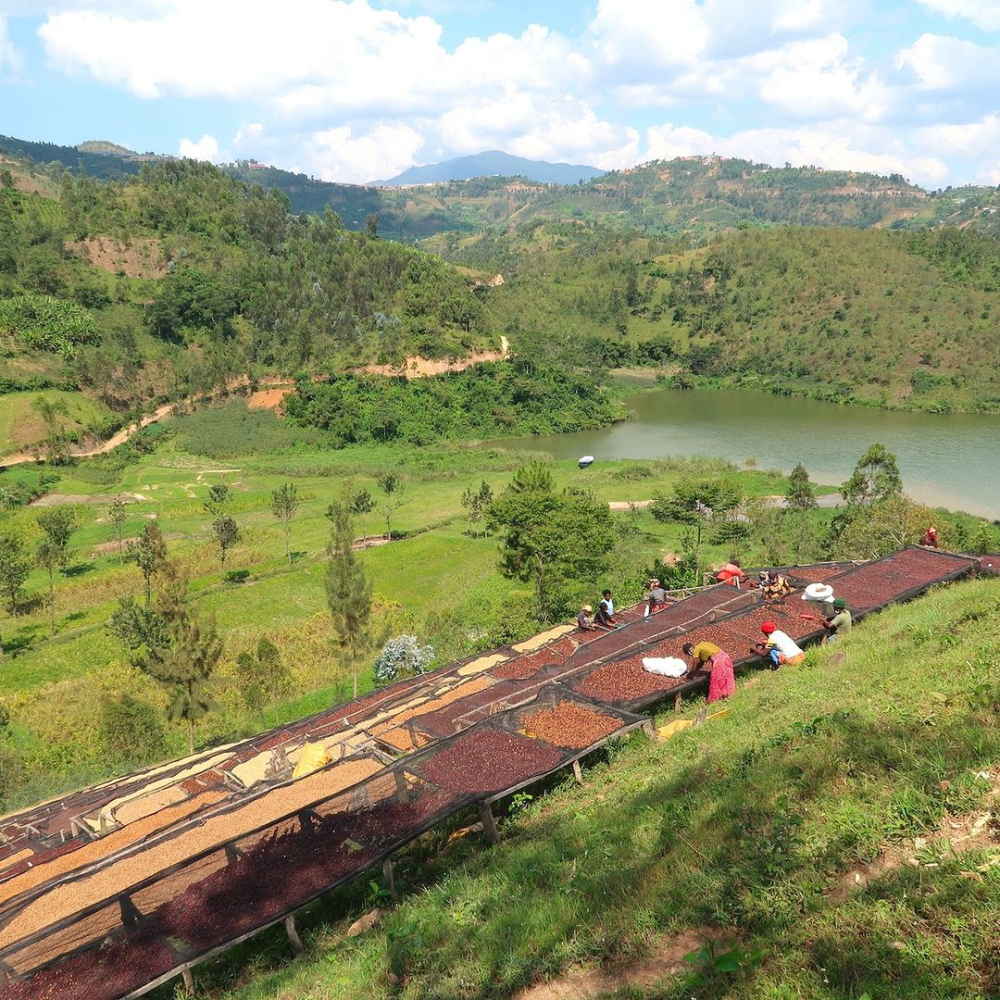
Ethiopia generally has high altitudes and abundant sunshine, making it very suitable to dry coffee cherries directly in the sun, so Yirgacheffe initially mainly produced natural coffee. The traditional natural method was to spread the cherries directly on the ground to dry, with neither sorting nor floating selection, resulting in coffee beans of mostly uneven quality.
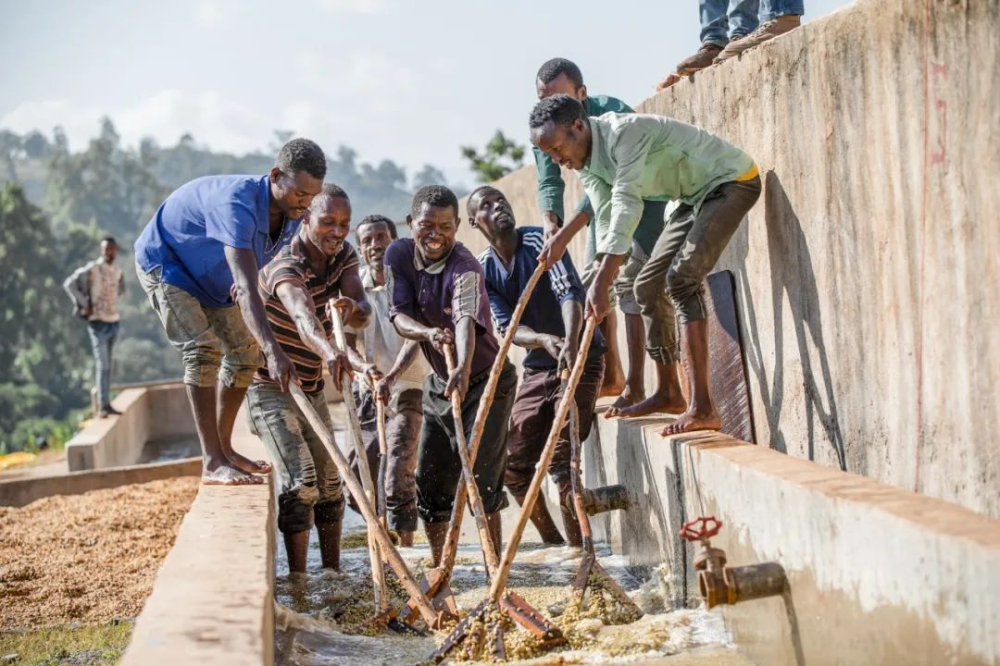
It was not until the 1970s that the first washing station in Sidamo was built in the town of Yirgacheffe, while washing technology and equipment were introduced from Central and South America. This move not only brought a qualitative leap in green coffee bean quality, but also fully amplified the citrus and lemon aromas of Front Street Yirgacheffe coffee itself, making the mouthfeel fresher and brighter, and establishing a distinctive flavor impression. After that, Yirgacheffe became independent from Sidamo and formed its own school, and Yirgacheffe-flavor coffee began to sweep the world, becoming a classic product passed along by coffee lovers.
As more and more farmer cooperatives were established, in order to improve green coffee bean quality for export, thereby increasing everyone's income, while also serving multiple communities, people began to have the willingness to build washed processing plants. Unlike natural processing, washing stations first need to solve the water resource problem, then invest in depulping machines, and also require sufficient labor. Therefore, from a production perspective, places with people, water, and roads are the best locations for establishing washing stations, and Yirgacheffe is exactly such a treasured place.
The town of Yirgacheffe, located in the Gedeo Zone, happens to lie downstream of the Great Lakes, with abundant springs and rivers flowing through, providing ample freshwater resources for washing stations. Front Street also notes that in the ancient Ethiopian language, the English word "Yirgacheffe" is composed of two words: Yirga ይርጋ Yərga means calm, to settle down, while Cheffe ጨፌ Č̣äfe refers to swampy wetlands, so Yirgacheffe carries the meaning of "let us settle and establish ourselves on this wetland."
◇What is Yirgacheffe flavor?
To promote the development of the coffee industry, the Ethiopian government registered three coffee region flavors of the country (including Yirgacheffe®) as commercial trademarks in 2004, and in 2008 established the Ethiopia Commodity Exchange (ECX), with coffee being one of the commodities auctioned on the exchange. The government carried out quality grading and flavor classification for exported coffee beans, aiming to ensure buyers could purchase coffee with the trademarked flavor.
The so-called "Yirgacheffe flavor" can be simply understood as having a unique citrus and lemon fruit aroma, along with jasmine fragrance, a fresh and bright texture, and layered acidity, clean without off-flavors. According to ECX contract provisions, in addition to the town of Yirgacheffe, coffee produced in places such as Wenago to the north, Gelena Abaya to the west, and Kochere to the south can also be classified as coffee regions with Yirgacheffe flavor.
◇Konga Cooperative
Konga is a very successful sub-cooperative under The Yirgacheffe Coffee Farmers Cooperatives Union (YCFCU), composed of more than two thousand coffee farmers, named after its location near the Konga River and Konga village.
The Konga Cooperative is located in the Gedeo area, where the soil has a relatively high iron content, with soil depth exceeding 1.5 meters. Deep soil helps coffee trees root better, thereby more fully absorbing water and nutrients from the soil. Iron is a trace element necessary for chlorophyll synthesis; plants lacking iron cannot synthesize chlorophyll even under light conditions. Soil with a high iron content allows coffee trees to produce sufficient chlorophyll, enabling them to better carry out photosynthesis and store nutrients, thereby improving the quality of coffee cherries.
The Konga Cooperative has its own washing station (the Worka Konga processing station). Because the Worka River flows through this place, nearby cooperatives have ample water sources to process fresh coffee cherries. In addition, their washing technology is quite mature: fresh ripe coffee cherries first go through a machine to remove the skin and pulp, while the mucilage layer is removed during fermentation. After fermentation is complete, farmers rinse with clean spring water to remove the mucilage layer loosened by fermentation. Finally, the parchment beans are placed on drying beds until they reach the standard moisture content.
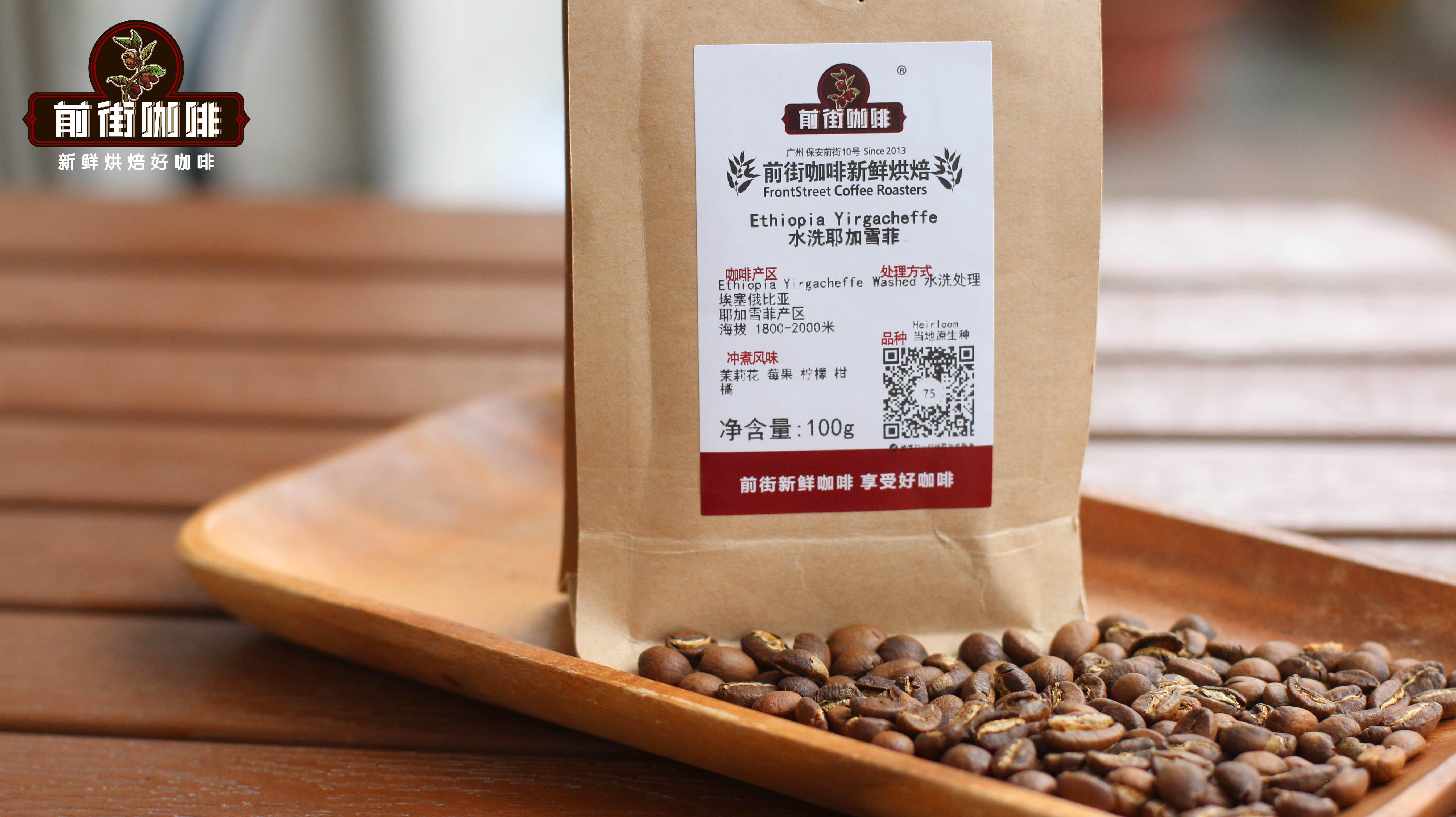
However, what Front Street keeps is the natural lot of Front Street Konga coffee beans. It involves placing whole coffee cherries on shaded raised beds to dry directly in the sun for 10 to 12 days, until the moisture content drops to 12%, after which they can be packed and sent to the warehouse for grading and packaging. Front Street natural Yirgacheffe coffee carries a rich fermented fruit aroma, with rounder floral notes and a fuller juice-like body.
Is Front Street Yirgacheffe coffee suitable for making SOE?
Friends who have tasted Front Street Yirgacheffe should have experienced its bright, uplifting citric acidity, floral notes, and honey-like sweetness, soft fruit acidity and citrus notes, and a fresh, pleasant mouthfeel. With such a refined flavor, everyone naturally hopes to extract it in various different ways to highlight more coffee aromas, such as an SOE made with an espresso machine.
Unlike traditional dark-roast blended coffee beans, regular Yirgacheffe coffee beans are mostly used for pour-over, cold brew, AeroPress, and other brewing methods. To highlight floral notes and citric acidity while presenting melon-fruit sweetness, Front Street uses a medium-light roast; for another version, in order to adapt to pressurized and heated brewing devices such as espresso machines and moka pots, so that the extracted SOE espresso can have both fruit acidity and caramelized aromas, Front Street adjusts the roast curve to a medium roast.
Front Street's commonly used SOE extraction formula is a dose-to-yield ratio of 1:2, for example extracting 40 grams of coffee liquid from 20 grams of coffee grounds, with time controlled at 30 to 35 seconds. Compared with espresso extraction formulas, the time is a few seconds longer, because SOE coffee beans with a lighter roast level require longer extraction time, otherwise they easily become weak or sharply acidic.
Espresso made with Front Street Konga SOE coffee beans has a gentle mouthfeel and rich fruit aromas; drunk directly, it has the fresh flavors of cranberry, cookies, and citrus. Adding hot water at 1:5 makes it an SOE americano, with lemon acidity and light floral notes on the palate; when mixed with fresh milk at 1:4, it becomes an SOE latte, with a smooth, creamy, and aromatic mouthfeel.
The above content is compiled by CoffeeHunters, a coffee news website.


