







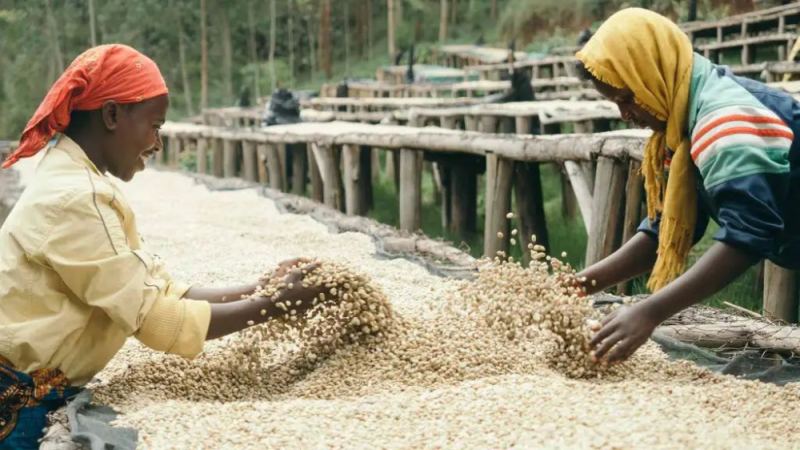
Yirgacheffe, as a star coffee-producing region in Ethiopia, is home to the Konga Cooperative, renowned for its unique red soil growing environment and strict natural processing methods. From the perspective of Front Street, this article takes you through the Konga Cooperative's geographical advantages, the characteristics of its heirloom coffee, and how to showcase its citrus and jasmine flavors through proper brewing parameters, while also sharing the importance of coffee bean freshness and bean-resting recommendations.
For the Yirgacheffe coffee category, many enthusiasts are already familiar with it, but when it comes to the production cooperatives behind it, quite a few people may be confused by names like Geddid, Konga, and Kochere. To help everyone clarify these concepts, Front Street today will use the Konga Cooperative as an example to take you deeper into the world of Yirgacheffe coffee.
The Growing Environment of the Yirgacheffe Region
The early residents of the Yirgacheffe coffee region mostly lived in swampy areas, and the place name itself carries the meaning of "choosing to settle on higher ground." This small town is located in the Gedeo region in the south, at an altitude between 1,700 and 2,100 meters, making it one of the highest coffee-growing areas in the world. It was originally part of the Sidamo region, but due to its unique and highly recognizable coffee flavor, it eventually became its own region. The three nearby sub-regions of Wenago, Kochere, and Gelena Abaya produce coffees with flavors similar to Yirgacheffe, which is why Kochere is also classified under Yirgacheffe. The entire Yirgacheffe region has 28 member cooperatives of varying sizes, each with limited production, mostly backyard-grown or intercropped with other crops, representing a typical smallholder model.
The flavor differences among Ethiopia's coffee regions are closely tied to their local growing environments. To let everyone experience the characteristics of different regions, Front Street has already brought in more than ten Ethiopian single-origin beans, five of which are from the Yirgacheffe region.
Konga Cooperative
The Konga Cooperative is one of the 26 cooperatives under the Yirgacheffe Coffee Farmers Cooperative Union (YCFCU), located 5 kilometers south of Yirgacheffe town. It was established in 1994 and joined YCFCU in 2002. Its name comes from the nearby Konga River basin and Konga village. The Konga Cooperative is made up of more than 1,500 smallholder family members, whose average cultivated area is less than 1.25 hectares, at an altitude of about 1,800 to 2,250 meters, mainly growing local heirloom varieties.
What makes Konga unique is its soil, which is iron-rich red soil that can reach a depth of 1.5 meters. The deep soil is full of nutrients, and its high iron content is extremely beneficial for coffee cultivation, because iron promotes chlorophyll production, allowing the plants to absorb more nutrients through photosynthesis, thereby improving fruit quality. It is precisely this superior geographical condition that creates Konga coffee's outstanding flavor. The local fertile red soil is one of the key factors behind the Konga Cooperative's ability to produce great coffee.
Konga Coffee Varieties
Observant friends may have noticed that most Ethiopian coffee beans are labeled as local heirloom varieties. What exactly are these varieties? Front Street has learned: Ethiopia is the birthplace of coffee and also coffee's genetic treasury, with a vast number of varieties that are difficult to identify. For protection purposes, the local government has not disclosed variety information, and many varieties have grown here for years, forming flavors characteristic of the origin, so they are collectively called heirloom varieties. The varieties of Konga coffee beans, like many Ethiopian beans, belong to local heirloom varieties.
In addition, in Ethiopia's green coffee bean export grading standards, bean size is not the basis for classification. Instead, grades are determined by the proportion of defective beans and cup quality, with fewer than 3 defective beans per 300 grams of green beans qualifying as G1. This also explains why Ethiopian beans vary in shape and size.
Natural Processing Method
Konga coffee belongs to the Yirgacheffe region—does it also use washed processing? Front Street mentioned earlier that Konga coffee is a naturally processed bean from the Yirgacheffe region. In fact, Yirgacheffe first used the oldest natural method, but in 1972 Ethiopia introduced washed processing technology from Central and South America to improve quality, making Yirgacheffe's jasmine and citrus aromas clearer and more refined, propelling it to world-class specialty status—and its superb washed processing technology played an indispensable role. After the 1970s, the region became mainly washed, turning into Ethiopia's most prominent washed coffee region.
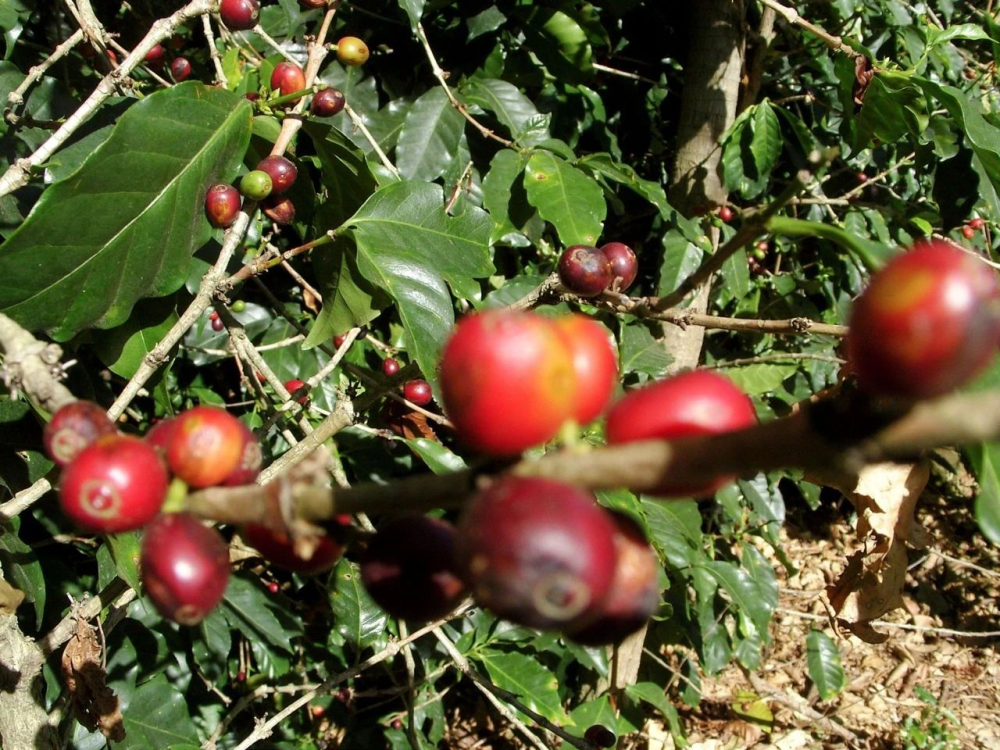
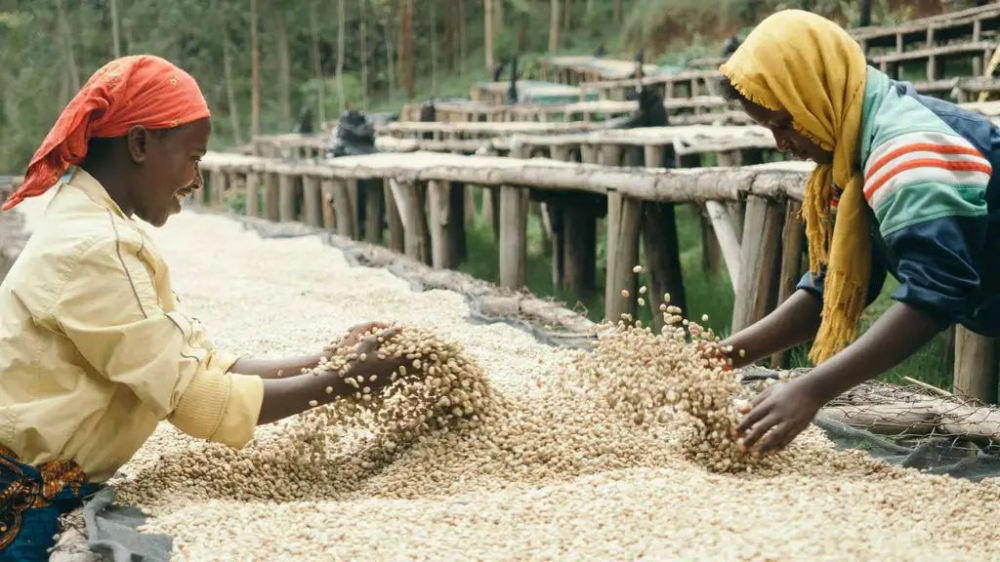
Konga's natural processing method: the cooperative has unified drying beds for drying coffee beans and is extremely strict in sorting coffee cherries, removing unripe, damaged, and overripe fruits, selecting only ripe bright red cherries. The parchment coffee cherries are placed on shaded raised drying racks and sun-dried directly for 2 weeks until the moisture content drops to 12%, then bagged and sent to warehouses for grading and packaging. Front Street believes: compared with washed coffee, natural coffee beans have slightly lower brightness but carry a rich fermented fruit aroma and a fuller juicy mouthfeel.
Front Street Coffee Brewing Recommendations:
When it comes to coffee brewing, Front Street has always believed that the freshness of coffee beans is crucial, as fresh beans can showcase rich flavors to the greatest extent. The coffee beans shipped by Front Street Coffee are all within 5 days of roasting, because Front Street deeply understands the impact of freshness on flavor. Front Street's roasting philosophy is "freshly roasted good coffee," so that every customer receives the freshest coffee possible. The bean-resting period is about 4-7 days, so when customers receive it, it is exactly at its peak flavor.
Of course, some customers need Front Street to grind the coffee for them, and that is no problem either, but Front Street reminds: after coffee beans are pre-ground, there is no need to rest the beans, because during transportation the pressure from carbon dioxide inside the packaging can also round out the flavor, so the ground coffee can be brewed immediately upon arrival. However, ground coffee needs to be used up promptly, because after contact with air it oxidizes quickly and its flavor dissipates faster. Therefore, Front Street recommends buying whole beans and grinding fresh right before brewing to better enjoy the coffee's flavor.
Front Street's Brewing Parameters for Konga Coffee:
Konga coffee beans have the classic Yirgacheffe flavor. To showcase the fresh citrus notes and preserve the jasmine aroma, Front Street uses a medium-light roast. Because Ethiopian coffee grows at high altitudes, the beans are harder. Front Street chooses: a V60 dripper, using its even flow rate to better highlight the layers of acidity and sweetness, a water temperature of 90°C to extract aromatic compounds with higher-temperature water, a water-to-coffee ratio of 1:15, a dose of 15g, and a grind size (80% passing through a Chinese No. 20 standard sieve).
Use staged extraction, blooming with 2 times the coffee dose in water, that is, 30 grams of water for a 30-second bloom. The bloom allows the coffee grounds to release internal carbon dioxide, making the later stages of extraction more stable. Pour in a small stream in circles until 125 grams, then pause, continue pouring until 225 grams and stop. After the dripper stops dripping, remove it. Start timing from the beginning of pouring; the extraction time is 2'00". Next, swirl the entire cup of coffee to mix it evenly, then pour it into a cup to taste.
Konga coffee flavor characteristics: after grinding, it has a fresh and elegant jasmine aroma; when brewed, you can taste lively berry and citrus acidity, with a creamy, honeyed sweetness. The overall mouthfeel is like drinking a blended juice, making one feel much more cheerful.
Ethiopian coffee is like a treasure trove that makes it impossible to stop exploring. Therefore, Front Street has brought in more than ten single-origin beans from different Ethiopian regions; and of course, there are also more than fifty coffee beans from other regions, with different flavors bringing you a different experience!
The above content is compiled by CoffeeHunters, a coffee news website.


