







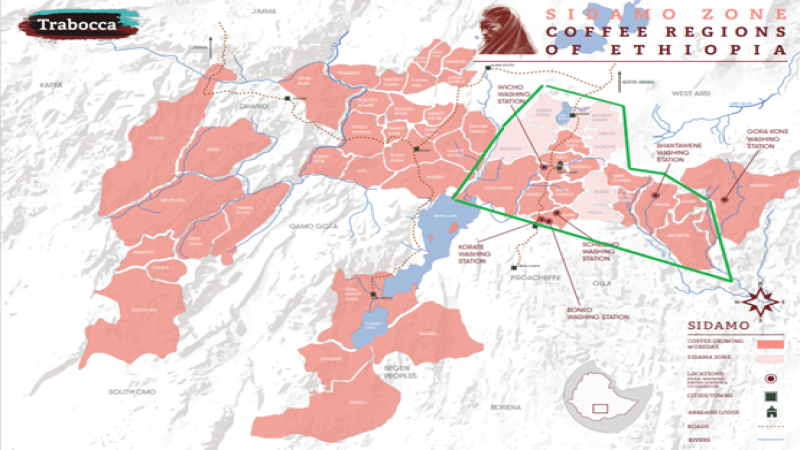
Why Does Sidama Coffee From Guji and Hambela Stand Out?
Sidama is one of Ethiopia's three trademark-registered coffee regions, lying on the highlands of the East African Rift Valley with abundant rain, moderate temperatures, nutrient-rich soil, and wide day-night temperature swings. About 60% of its coffee is washed. The cup is known for full body, bright acidity, and floral and citrus notes, with the Guji and Hambela divisions and Huakui naming drawing steady attention.
Ethiopian coffee trees grow mainly in the southern highlands between 1,100 and 2,300 meters, and cherries are picked between September and December, with new-crop exports starting in November. Farmers still rely on manual care and organic fertilizer, avoiding insecticides and herbicides. Frontstreet coffee shares brewing parameters and cupping notes for Sidama natural beans, adding practical coffee knowledge for readers comparing regional profiles.
Sidamo is one of Ethiopia's most representative specialty coffee regions, spanning the fertile highlands of the East African Rift Valley and renowned for its intense flavors, bright acidity, and rich floral and fruity notes. This article systematically covers Sidamo's geographical environment, the regional divisions of Guji and Hambela, the rise to fame and naming rules of Huakui coffee, and provides a detailed introduction to the cultivation model of the Arsi region. It also shares Front Street Coffee's brewing parameters and flavor evaluation of Sidamo natural beans, offering a comprehensive understanding of this region's unique charm.
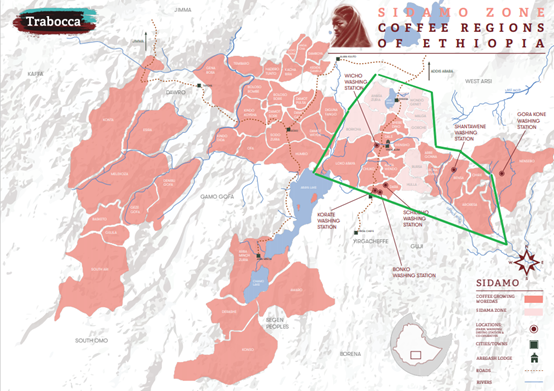
For more specialty coffee knowledge, please follow our WeChat official account: FrontStreet Coffee
Sidamo is located within Ethiopia, on the fertile highlands along the East African Rift Valley, and is one of the three coffee regions in the country that has completed trademark registration. With abundant rainfall, moderate temperatures, nutrient-rich soil, and significant day-night temperature differences, it creates an extremely ideal environment for coffee cultivation. About sixty percent of the coffee beans produced locally are processed using the washed method. Sidamo coffee is widely praised for its full flavor layers, substantial body, bright acidity, and floral and citrus notes, and is especially favored by coffee lovers who prefer prominent fruity flavors and rich aromas. In addition, this region also contributes some of Ethiopia's highest-altitude coffee lots.
Ethiopia's natural conditions are extremely favorable for coffee cultivation, with coffee trees mainly distributed across the southern highlands at altitudes of 1,100 to 2,300 meters. The country's coffee is harvested once a year, with red cherries gradually ripening for picking between September and December, and the new season's coffee entering the export period from November to December. At present, local farmers still follow traditional cultivation methods: relying on manual care for coffee trees, consistently refusing to use harmful insecticides and herbicides, and instead using organic fertilizers (mainly composed of fallen leaves, dried grass, and animal manure). It is precisely for this reason that Ethiopia enjoys the reputation of being the world's only pollution-free green organic coffee producer.
Major Coffee Regions of Ethiopia
Ethiopian coffee can be divided into eight major regions: Lekempti, Limu, Illubabor, Djimmah, Harar, Teppi/Bebeka, Sidamo, and Yirgacheffe.
Sidamo Guji Region
As an important specialty coffee region in Ethiopia, Sidamo is located in the south of the country, extending to the highlands on the southern shore of Lake Awasa in the East African Rift Valley, at altitudes between 1,500 and 2,200 meters. The significant day-night temperature difference extends the ripening period of coffee cherries, allowing them to accumulate more nutrients and ultimately giving the cherries layered sweet and sour expressions. Combined with the region's complex terrain, diverse soil types, and rich microclimates, Sidamo coffee exhibits tremendous flavor diversity.
The Guji region was originally under Sidamo's jurisdiction. Because it is remote and relatively underdeveloped, Guji coffee's rise and fame came relatively late. In the early days, its reputation was not as great as that of Yirgacheffe and Harar, but later, due to the outstanding flavor of its coffee beans, it was separated out and became an independent region. The area has fertile black soil and an average altitude of over 1,800 meters, and its unique geographical conditions create a terroir environment highly suitable for coffee tree growth.
In terms of administrative division, Guji belongs to Oromia Region→Guji Zone, making it a regional-type green coffee bean. Just as Yirgacheffe became widely known after gaining fame and then became independent from the broad Sidamo area as the sub-region Guji Zone, this lot of coffee is produced near the town of Dara Woreda in Sidama Province, by smallholder coffee farmers of the Shilcho Coop. The cooperative was founded in 1976 and is now a member of the Sidama Coffee Farmer Cooperative Union (SCFCU), the cooperative union of Sidama Province. SCFCU is a large Ethiopian coffee cooperative union with about 46 member cooperatives, ranking second in scale nationwide.
Hambela Region
According to Ethiopia's administrative system, it can be divided into four levels: Region, Zone, Woreda, and Kebele, roughly corresponding to China's province, city, district, and street. Huakui coffee beans come from Guji City in Sidamo Province, and can be further pinpointed to Hambella Kebele in Shakisso Woreda. Usually, when Hambela is mentioned, in most cases it refers to Huakui coffee beans, because Hambela's Huakui is simply too famous.
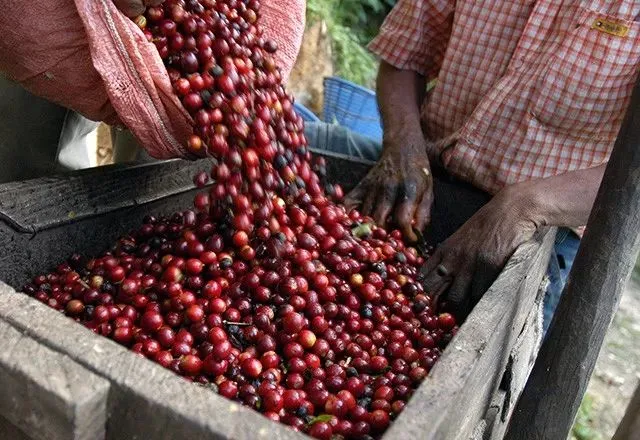
Hambela is a sub-region under the Guji region. At present, there are about 20 green bean processing plants of varying sizes distributed there, and Huakui coffee beans come from the Buku processing plant in Guji. This processing plant is located in Buku Abel village at an altitude of 2,200 meters. In addition to its innate terroir advantages, local farmers also take especially meticulous care of each coffee tree. They plant shade trees beside the coffee trees so that Huakui can receive sufficient sunlight without consuming too many nutrients, thereby retaining more of the essence in the coffee cherries.
Huakui Coffee
In 2017, a natural lot from the "Buku Abel" processing plant submitted by Ethiopia's DW company won the TOH (Ethiopia National Taste of Harvest competition) Ethiopian championship with intense strawberry and creamy aromas. In the same year, in the China division of the World Brewers Cup, Li Jianfei from Beijing CREMA Coffee Training defeated Geisha competing in the same event with the "Huakui" beans and won the national runner-up title in the brewing competition. Since then, Huakui coffee began appearing frequently on people's bean lists.
Li Jianfei, the brewing runner-up, once said in an interview that he believed the outstanding performance of this Ethiopian bean was enough to compete on the same stage with Panama's "Geisha" — Geisha — and vie for excellence.
After DW company rose to fame with "Huakui" that year, it expanded to 4 processing plants, namely "Buku Abel," "Buku Saysay," "Haro Soresa," and "Tirtiro Goye." But strictly speaking, only the natural coffee produced by the "Buku Abel" processing plant is called "Huakui." Huakui's naming method is calculated sequentially after 2017; for example, the 2018 lot is called "Huakui 2.0," the 2019 lot is called "Huakui 3.0," the 2021 lot is called "Huakui 5.0," the 2022 lot is called "Huakui 6.0," and the 2023 lot is called "Huakui 7.0," so this year's 2024 lot is naturally called "Huakui 8.0."
FrontStreet Coffee : Sidamo · Huakui 8.0 Coffee Beans Country : Ethiopia Region : Sidamo · Guji Region Altitude : 2,250–2,350 meters Variety : Local Heirloom Processing Method : Natural Process
Flavor : Floral, jackfruit, dried fruit, apricot, juicy
Arsi Region
Arsi is also a specialty coffee region under Sidamo. West Arsi is located between the famous Yirgacheffe coffee-growing area and Hararge, at an altitude of 1,900 to 2,200 meters, in the western part of the Sidamo region. The name of the area comes from a branch of the Oromo people who have long lived there.
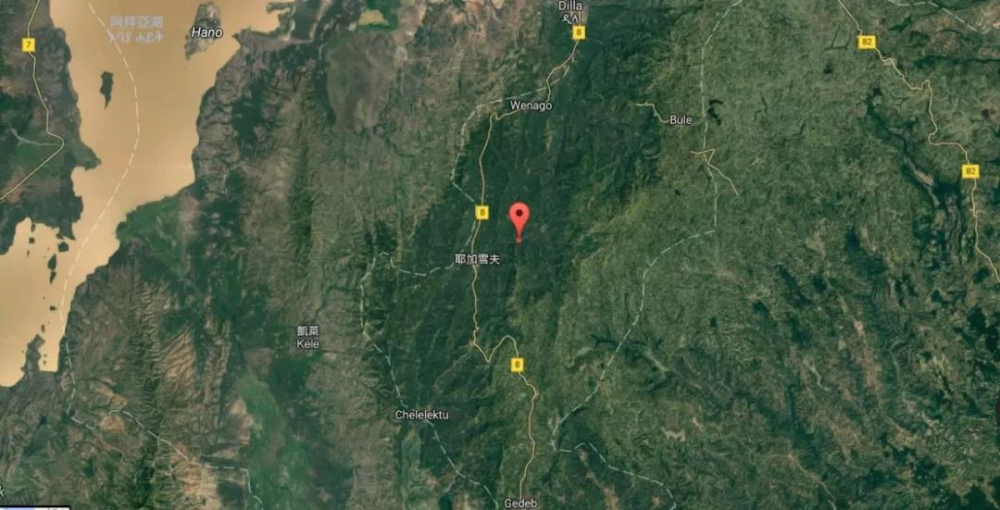
West Arsi is composed of three woredas (Ethiopia's third-level administrative divisions): Arsi, Bale, and East Shewa. About 88.52% of West Arsi's population is Oromo, which is of great significance in coffee history because they were the earliest tribe in human history to drink coffee, and half of the coffee produced in Ethiopia originates from this region.
Coffee cultivation in the West Arsi region is mainly based on a smallholder model, with each smallholder farm averaging about 2 to 3 hectares. Even so, this area is often slightly larger than the 1.5 to 2 hectares common in most parts of Ethiopia. Although coffee cultivation technology is still in a stage of development, compared with other regions, West Arsi's cultivation technology is developing quite rapidly. Coffee farmers do not need to hire temporary or full-time workers, but instead rely on family members to help select coffee. This allows them to better control coffee quality. Processing stations usually also pay extra for fully ripe red cherries, greatly increasing the enthusiasm of coffee farmers.
Natural Process
Coffee beans from the Sidamo region are mainly natural process. Front Street's two Sidamo coffees are both natural process.
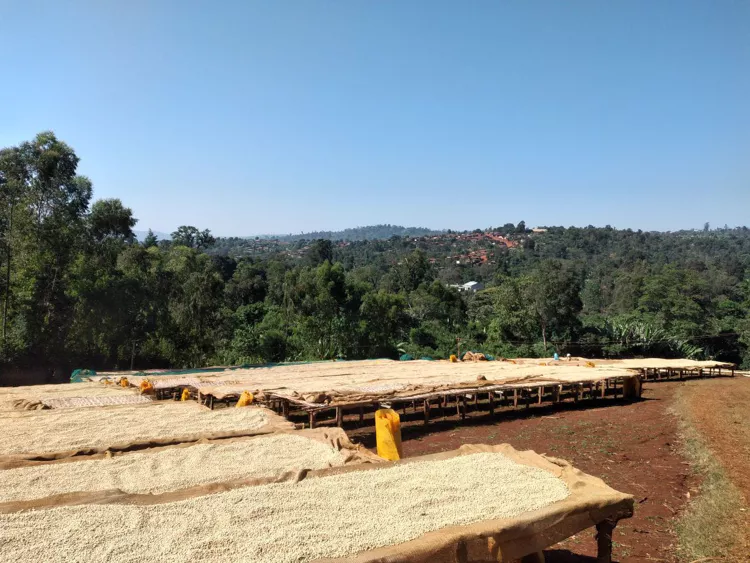
Every year during the coffee harvest season (December to January), the Buku processing plant only harvests fully red cherries, selecting coffee cherries with a Brix value of 30 or above and placing them on African raised beds to dry. Because the local day-night temperature difference is extremely large, coffee farmers take shading measures at noon to avoid excessive fermentation caused by overly high temperatures; at night, to prevent sudden rainfall, they wrap the cherries with plastic sheets. They turn the cherries continuously throughout the day and ensure the coffee cherries are not piled too thickly, which not only allows the fruit to dry evenly but also prevents sunburn or unpleasant fermented flavors. After about 18 days of natural processing, the green coffee beans' moisture content drops to 13%, and they can then be bagged and stored.
Front Street believes that different processing methods also cause coffee beans to present different flavors. Washed processing can better showcase the most authentic citrus acidity and floral-herbal aroma of Sidamo coffee beans, while natural processing adds aroma, sweetness, and fermented notes on top of the original flavor. Therefore, most of Front Street's daily drinking beans use the washed processing method.
Coffee Varieties
Some people ask Front Street: Why do Ethiopian heirloom coffee beans vary in size? Ethiopia is a treasure trove of coffee genes, worthy of being called Arabica's natural gene bank, with a great variety of varieties. Moreover, local coffee farmers mostly work under relatively backward conditions, making classification extremely difficult, so the government, for practical considerations, collectively calls them Heirloom. Therefore, Ethiopian heirloom coffee beans are always uneven in size and shape, but in flavor they can display a uniquely distinctive floral and fruity aroma.
Front Street's Parameters for Brewing Sidamo Coffee:
As a light-roasted Sidamo coffee, Front Street chose: V60 dripper, water temperature 90°C, water-to-coffee ratio 1:15, coffee dose 15g, grind size (80% passing through a Chinese No. 20 standard sieve).
Use staged extraction, blooming with twice the coffee dose in water, that is, 30 grams of water for a 30-second bloom. The purpose of blooming is to allow the coffee grounds to release internal carbon dioxide, thereby making subsequent extraction more stable. Pour in a small stream in circles until reaching 125 grams, then pause; continue pouring until 225 grams and stop. After the water in the dripper has completely dripped through, remove the dripper. Time from the start of pouring; the extraction time is 2'00". Then swirl the entire cup of coffee to mix it evenly before pouring it into cups for tasting.
[Natural Arsi Coffee Flavor]: It smells of berries and honey. On the palate, jam-like sweetness fills the mouth, with abundant sweetness, and a nectarine note in the finish, with a juicy mouthfeel. After cooling, it is even more like a cup of plum and nectarine juice.
[Natural Huakui 8.0 Coffee Flavor]: The floral and fruity aroma is very prominent. The flavors of berries, passion fruit, strawberry, and oolong tea are clearly recognizable, with very high fermented sweetness.
Comparing the flavors of these two beans, Arsi is slightly superior in fruity sweetness and juiciness, especially when warm, when the jam and honey flavors are irresistible; after the temperature drops, the juicy quality becomes even more distinct and very pleasant.
Huakui, on the other hand, leans toward tropical fruit flavors, and the alternating contrast between sweetness and acidity brings many surprises. Compared with each other, Huakui's fermented quality is stronger, as if it brings people into a world of fruit.
The above content is compiled by CoffeeHunters, a coffee news website.


