







Does water temperature change Red Cherry coffee quality?
The Yirgacheffe Red Cherry Project began in 2007 under the Dutch trader Trabocca. It pays farmers a premium for picking only fully ripe red cherries and backs that up with equipment and technical training, so better picking and coffee handling raise both cup quality and farm income. Naturally processed Red Cherry lots from the project now appear on specialty rosters.
For pour-over, keep the water between roughly 90 and 93 degrees Celsius. Yirgacheffe is known for jasmine aroma and citric acidity, and a moderate temperature extracts sweetness without stripping those top notes. Go cooler for a delicate floral cup, warmer for more body, and adjust grind to keep the total brew near two and a half minutes.
Yirgacheffe is famous for its jasmine floral aroma and bright citric acidity, making it an entry-level origin for many coffee lovers. The washed processing method has dominated since its introduction in the 1970s, but in recent years, the natural processing method has made a strong comeback, with the Yirgacheffe Red Cherry Project being particularly noteworthy. This project was initiated in 2007 by the Dutch trader Trabocca, aiming to improve Ethiopian coffee quality and farmers' incomes by incentivizing farmers to harvest fully red cherries, providing equipment, and offering technical support. Front Street Coffee's bean list also includes naturally processed Red Cherry coffee beans from this project. This article will provide a detailed interpretation of the Red Cherry Project's background, the unique terroir of the Yirgacheffe region, and share Front Street's Yirgacheffe Natural Red Cherry hand-brewing parameters and water temperature recommendations to help you better present this bean's floral aroma and fruity acidity.
Yirgacheffe coffee is renowned for its fresh jasmine floral aroma and bright citric acidity. Front Street has learned that washed Yirgacheffe coffee beans are the entry-level choice for many coffee enthusiasts. In fact, the washed processing method was introduced to the Yirgacheffe region in the 1970s when Ethiopian authorities, in order to improve green coffee bean quality, borrowed post-harvest processing methods from Latin America. Since then, Yirgacheffe coffee beans have mostly been processed using the washed method. In recent years, the natural processing method has become popular, and the Yirgacheffe region has also seen a resurgence of natural processing.
In recent years, the Yirgacheffe region has seen the emergence of many specialty natural beans, one of which is the Yirgacheffe Red Cherry Project.
What exactly is the Yirgacheffe Red Cherry Project? When it comes to "Red Cherry," many friends are familiar with the name, but what specifically is the Red Cherry Project? Perhaps only a few can explain it.
Ethiopia, hailed as the birthplace of coffee, possesses large areas of traditional, excellent coffee tree varieties. We know that Ethiopia is not a wealthy developed country; agricultural and pastoral populations account for 80% of the nation, and besides growing coffee, they also cultivate rapeseed, beans, wheat, and more. An average annual coffee production of 200,000 tons occupies the main agricultural labor force in Ethiopia.
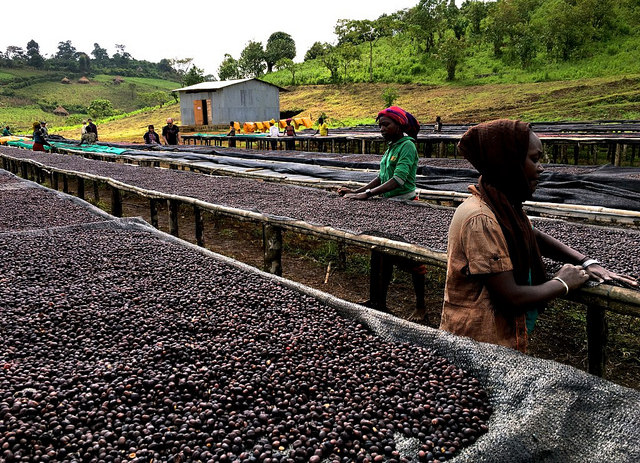
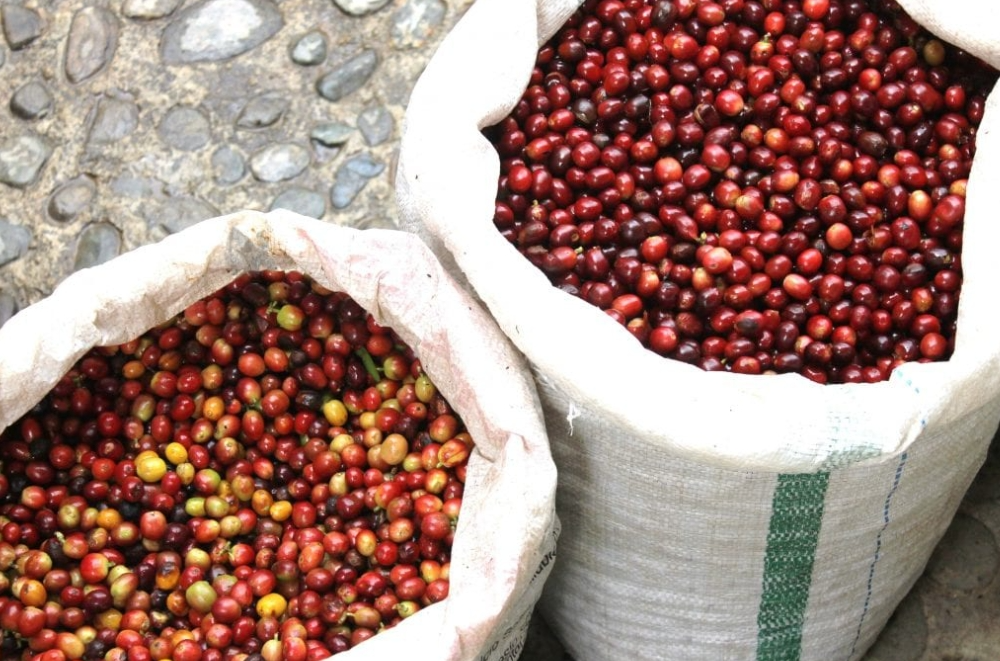
To enable Ethiopian coffee farmers to earn better incomes and improve local living standards, in 2007, the Dutch trader Trabocca and local farmers initiated the "OPERATION CHERRY RED PROJECT." It is purely aimed at incentivizing farmers to improve coffee bean quality. At the start of the harvest season in the origin, Trabocca designates harvest plans for specific microclimatic areas, hand-picking 100% ripe red coffee cherries, with yields of approximately 1,500 to 3,000 kilograms.
The Red Cherry Project invested $5,000 in 2008 to purchase new sun-drying racks. In 2009, it invested another $8,000 for new sun-drying racks and shade nets. In 2010, it invested $9,000 in a generator, and in 2011, it continued with a $10,000 investment to improve some local coffee transport roads, making coffee transportation more convenient and efficient. Interest-free loans provided by Trabocca were used to purchase new coffee cherry depulpers and bean sorting machines. To facilitate supplier procurement, it then invested $14,000 in 2012 to build a high-quality Addis Ababa coffee cupping laboratory.
Trabocca provides financial loan support, new hardware equipment, and production processing knowledge and technical assistance to help farmers raise their production levels. It promises that as long as the actual output quality meets the cupping standards in the Addis Ababa, Ethiopia, and Amsterdam, Netherlands, cupping rooms, it will purchase at a generous price. The passing standard set by Trabocca is 88 points.
The coffee beans from the Yirgacheffe Red Cherry Project are immediately packed in plastic inner bags (GrainPro bags or vacuum boxes for separate packaging) after processing at the origin, then transported to Djibouti to await shipping. Through real-time monitoring, safe transportation, and timely appropriate handling, it strives for perfect quality. Roasters can also buy high-quality coffee beans because of this Red Cherry Project, which also improves Ethiopian coffee quality and commands better prices; Trabocca can then return profits to farmers, continuously improving and enhancing quality. Front Street Coffee's bean list also includes a coffee bean from the Yirgacheffe Red Cherry Project.
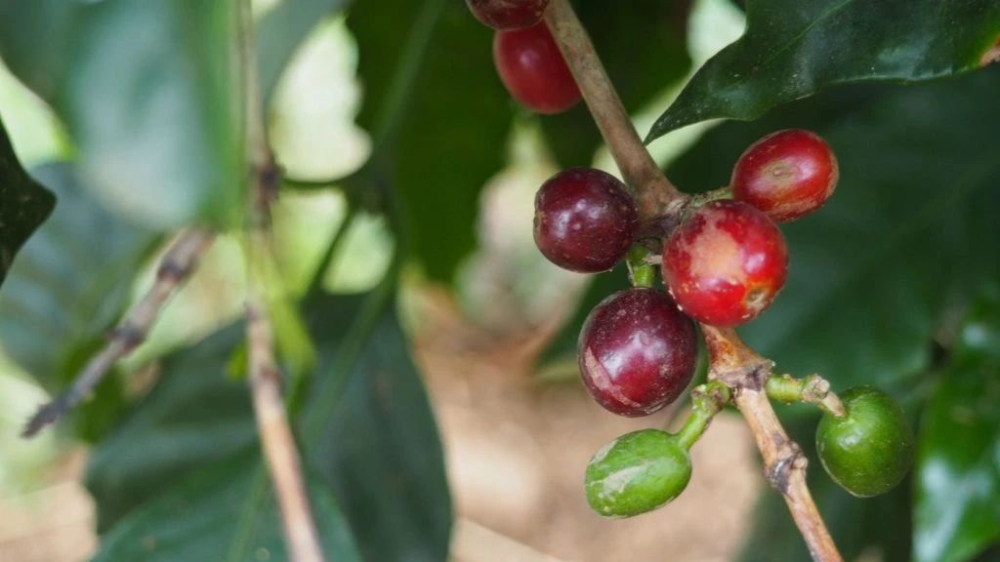
Front Street · Yirgacheffe Natural Red Cherry Coffee Beans
Region: Ethiopia, Yirgacheffe
Estate: Aletaland Estate
Altitude: 1,700–2,200 meters
Variety: Local heirloom varieties
Processing Method: Natural
During cupping, Front Street's Yirgacheffe Natural Red Cherry has a very clean and delicate mouthfeel, with obvious floral aromas, honey, a fine and lingering smooth texture, vanilla, soft cherry acidity, honey, premium hazelnut, white pomelo flavors, delicate sweetness, and a lingering finish where honey and cherry fruity acidity blend and persist.
Yirgacheffe itself is a small town with a population of about 20,000. The neighboring three small production areas, Wenago, Kochere, and Gelena Abaya, are also classified under the Yirgacheffe region because the coffee flavors they produce are almost identical to Yirgacheffe. Whether in culture or geographical environment, Yirgacheffe is similar to the nearby Sidamo, but Yirgacheffe seems even more favored with unique conditions. Top-quality Yirgacheffe coffee has floral notes, bright citrus acidity, lemony tones, and a silky smooth mouthfeel.
The Yirgacheffe region was originally part of the Sidamo region, but anyone who has compared Yirgacheffe coffee and Sidamo coffee knows that Yirgacheffe coffee has a fresh white floral aroma, while Sidamo leans more toward creamy berry acidity. With that white floral aroma, Yirgacheffe successfully broke out in the specialty coffee circle, prompting many Ethiopian coffee farmers to claim their coffee beans were Yirgacheffe beans. As a result, the Yirgacheffe region had to be separated to form its own region.
Front Street's bean list includes quite a few beans from the Yirgacheffe region, such as Natural Red Cherry, Washed Worka, Washed Kochere, Washed Gedeb, and more. With the Yirgacheffe region being so unique and its coffee flavor so enticing, how could Front Street miss the opportunity to list the Yirgacheffe region as a representative in its daily-drinker bean series?
Front Street · Washed Yirgacheffe Coffee Beans
Country: Ethiopia
Region: Yirgacheffe
Altitude: 1,900–2,000 meters
Variety: Local heirloom varieties
Processing Method: Washed
When roasting these two Yirgacheffe coffee beans, Front Street Coffee's roaster, considering the need to highlight the lemon and berry acidity and the fresh white floral aroma, adopted a medium-light roast level.
Front Street recommends using a finer grind when brewing these two lighter-roasted beans, thereby accelerating the dissolution rate of substances in the coffee beans and better extracting the pleasant fruity acidity and floral aroma. To avoid over-extraction due to excessive temperature, you can use a faster-flow dripper, such as Front Street's most commonly used Hario V60 dripper.
Similarly, because we want to increase the extraction yield and stimulate Front Street Yirgacheffe's bright flavors, we should prioritize using hot water at 91–93°C. Brewing directly with boiling water may likely cause over-extraction, while water that is too cool will fail to express the delicate flavors the coffee should have.
Front Street brewing parameters:
Dripper: Hario V60
Water temperature: 93°C
Coffee dose: 15 grams
Coffee-to-water ratio: 1:15
Grind size: 80% passing through a No. 20 sieve
Wet the coffee bed with twice the amount of water, let it bloom for 30 seconds, then pour in a steady circular motion from the center outward with a small stream. Once the water reaches 125 grams, begin segmented pouring. As the coffee liquid filters through, when the water level in the coffee bed drops below half of the dripper, start pouring the final segment of 100 grams in the same circular motion. Once all the coffee liquid has dripped through, remove the dripper, and finally swirl the coffee in the server to mix before enjoying.
The above content is compiled by CoffeeHunters, a coffee news website.


