







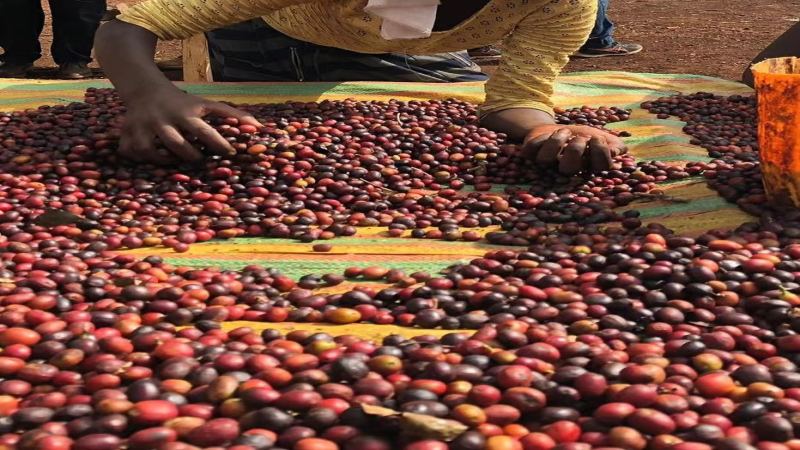
Kenyan coffee is world-renowned for its bright acidity and rich layers. What secrets lie behind its unique flavor? This article starts from Front Street Coffee's two Kenyan beans—the AA Little Tomato and the AB Kiamatina Little Cranberry—and systematically reviews the geographical conditions, cultivation patterns, and grading system of Kenyan coffee regions, with a focus on analyzing the lineage origins of the two classic varieties SL28 and SL34, as well as the complete process of the K72 Kenyan-style 72-hour double washed fermentation method. It also includes Front Street's roasting curve and V60 brewing parameters, helping coffee enthusiasts fully understand every key step of Kenyan coffee from green bean to cup.
For more specialty coffee knowledge, please follow: Front Street Coffee (Frontsteet Coffee)
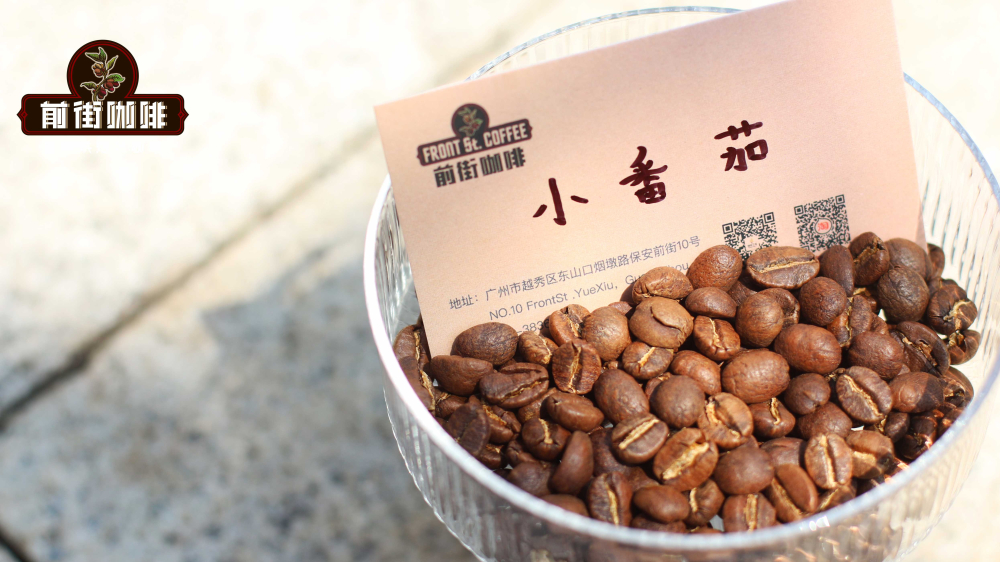
Although Front Street Coffee currently keeps only one Kenyan coffee on its bean list, old friends familiar with Front Street should remember that Front Street has previously offered many Kenyan beans. If you have been following Front Street all along, you have most likely tasted that Kenyan AA-level Front Street Little Tomato. The AA grade represents the highest specification for Kenyan coffee beans. This Little Tomato presents an intensely juicy acidic aroma, with berry aromas especially prominent at high temperatures and a sweet, full-bodied entry; as the temperature drops, the acidity becomes more concentrated, with a creamy smoothness as well. Below is the detailed profile of Front Street's Kenyan AA coffee:
Front Street Coffee: Kenya AA Little Tomato
Region: Kiambu
Micro-region: Gitwe
Soil: Volcanic clay
Altitude: 1400m-1800m
Varieties: L-28, SL-34, Ruiru 11
Processing: Kenyan-style 72-hour washed
Why does Kenyan coffee have such outstanding flavor performance? Front Street believes this is related to many factors such as altitude, growing environment, and processing method. But specifically for this Little Cranberry coffee, Front Street wants to first talk about its processing method: the K72 process. Little Cranberry coffee processed with the K72 method has a different flavor direction from ordinary washed Kenyan coffee. The K72 process adds an extra fermentation step on top of conventional washing, so Little Cranberry coffee has a brighter mouthfeel and especially striking acidity. Regarding the detailed steps of the K72 process, Front Street Coffee will explain them later in the article; let us first start step by step from the regional background.
01 | Introduction to the Kenyan Region
Friends with some knowledge of geography should know that Kenya is located in eastern Africa, bordering Ethiopia. But what many people may not know is that although Kenya and Ethiopia, known as the "birthplace of coffee," have similar growing environments, Kenya's coffee industry started quite late. According to Front Street's review, Kenya first planted coffee in 1893, introducing the Bourbon variety from Brazil (Bourbon, also called French mission, to commemorate the French missionaries who introduced it). Coffee did not move south into the interior, but instead crossed the Red Sea northward, like a fork-in-the-road story of "left or right." Only after hundreds of years of spreading, settling, and mutating across regions did it eventually return to its homeland: The Great Rift Valley.
Kenya is now one of the important coffee-producing countries, with about more than six million people nationwide making a living from the coffee industry, and the industry structure is mostly a combination of smallholders, wet mills, and cooperatives. Kenyan coffee is mainly washed processed, and coffee trees are mostly grown in mountainous areas at altitudes of 1400 to 2000 meters. Production areas include Ruiri, Thika, Kirinyaga, Mt. Kenya West, Nyeri, Kiambu, and Muranga. Kenya's well-known producing areas are mainly concentrated in the central belt, such as Nyeri, Kiambu, Kirinyaga, and the mountainous areas in the west near Uganda (Nakuru, Bungoma, Kitale, etc.).
02|Kenyan Coffee Cultivation
Most coffee farms are small-scale operations producing only a few hundred kilograms annually. Farmers decide which nearby processing factory (Coffee Factory) to sell their fruit to based on transport distance and purchase price. The land area held by farmers is usually very small, often measured by the total number of trees planted on a plot, which means producers often have more autonomy and can strategically pick coffee cherries and send the ripest fruit to the local washing station. The factories generally have abundant water resources to carry out fine washing procedures, including soaking the coffee beans in fresh water for long periods to strengthen the flavor signature unique to Kenyan coffee.
03|Kenyan Coffee Varieties
Kenya's main varieties are SL28 and SL34, bred and named by the "Scott Laboratories" in 1930. The Kenyan Asalia coffee beans currently sold at Front Street stores are exactly a combination of SL28 and SL34. According to botanists at SL Laboratories, both SL28 and SL34 are genetic variants.
Among them, SL28 brings together a mixed lineage of French mission, Mocha, and Yemeni Typica. The original purpose of breeding SL28 was to obtain coffee beans that could both produce abundantly and have high quality and disease and pest resistance. Although SL28's final yield did not reach the expected high level, its bronze-colored leaves and fava bean-shaped beans give it excellent sweetness, balance, and complex, changeable flavors, along with notable citrus and smoked plum characteristics. SL34 is similar in flavor to SL28, also possessing complex and changeable acidity and a high-quality sweet finish, but with a heavier, richer, and cleaner mouthfeel than SL28. SL34's lineage includes French mission, Bourbon, and more Typica components. Its bean appearance is similar to SL28, but it has stronger adaptability to sudden heavy rain. It is these two important varieties that lead us to appreciate the unique charm of Kenyan coffee. Currently popular varieties in Kenya also include Ruiru 11, which has strong disease resistance but slightly weaker flavor, as well as Batian, K7, and Kent, which have outstanding drought resistance.
Front Street's Kenyan AB Kiamatina Little Cranberry has a variety composition of SL-28, SL-34, and Ruiru 11. It displays the classic Kenyan coffee style: excellent sweetness, good balance, rich and changeable flavor layers, and obvious citrus and smoked plum characteristics.
04| Processing Method: Kenyan-style 72-hour Washed Process
Front Street believes that the core reason Kenyan coffee is known for its rich layers and clean mouthfeel lies in its special K72 process. Going through two washing and fermentation stages, commonly known as "double fermentation," is a quite complex and delicate green bean processing method. This processing method takes more time and water than ordinary washing, so Kenyan coffee is relatively more expensive, but it is also an indispensable craft for creating Kenyan coffee's unique acidic aroma and clean mouthfeel. Below, Front Street will break down its processing steps in detail for everyone.
First Washing and Fermentation
After the coffee cherries are harvested, they first undergo water-based density sorting. The principle is to sort using differences in the coffee fruit's own density and mass: high-density (heavier) beans sink to the bottom, while low-density ones float on the surface. Fully ripe and high-quality fruit has higher density, and these are selected to enter subsequent processing. After selecting high-quality fruit with acceptable ripeness, the skin is removed, and the beans are washed and soaked so that the residual mucilage on the surface of the green beans undergoes fermentation. The mucilage contains natural sugars and alcohol compounds, which play a key role in the development of coffee sweetness, acidity, and the overall flavor direction. Fermentation can last up to 24 hours, and after completion, most of the mucilage can be removed, leaving only the flavor substances inside the coffee beans.
Second Washing and Fermentation
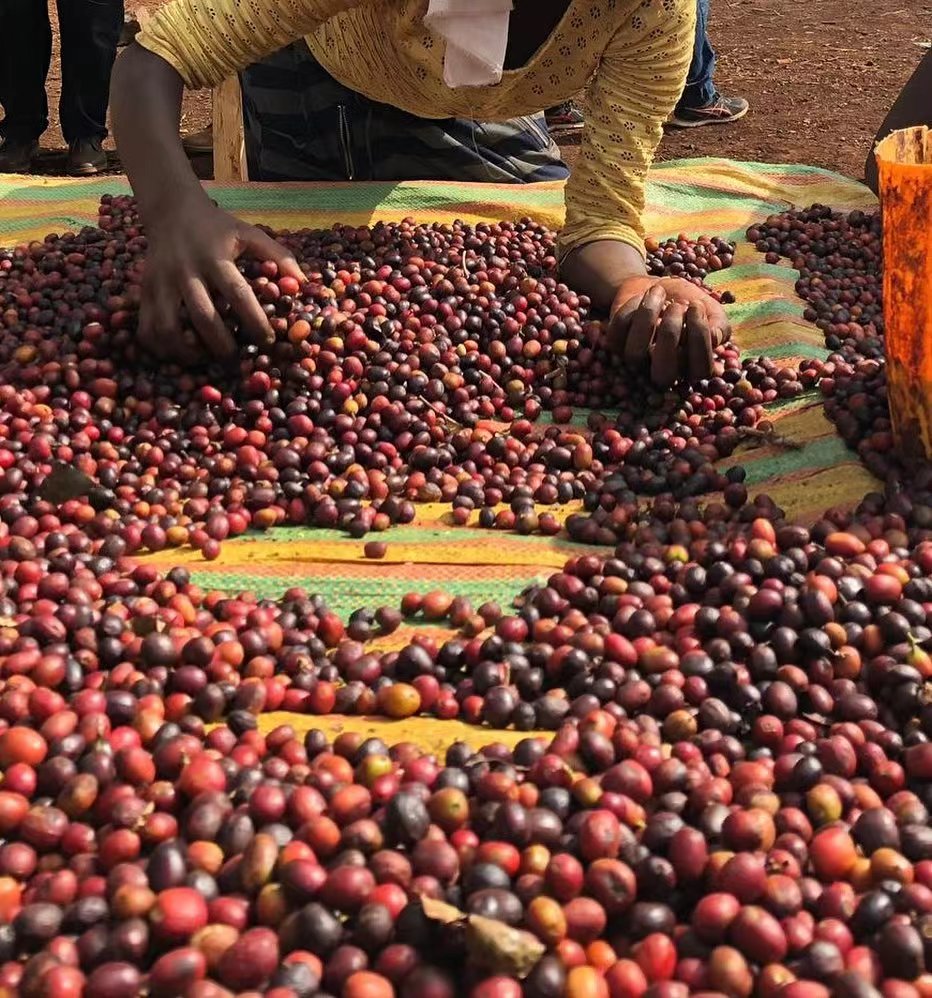
Then comes the second washing and fermentation stage. After the coffee beans from the previous stage are cleaned, they are soaked in water again for 12 to 24 hours. This process increases protein and amino acid content, and the acidity of the coffee beans thereby develops complex and delicate layers. Finally, all remaining mucilage is removed, and the coffee beans are transferred to raised drying beds for sun drying. The drying time depends on weather conditions and usually takes 5 to 10 days to complete.
05 | Front Street Kenya AB Kiamatina Little Cranberry Green Bean and Roast Analysis
This coffee's beans are on the smaller side, with medium density and not high moisture content to begin with. The roasting target was set around light-medium roast. Unlike the light roast used for other Kenyan beans, this Little Cranberry uses a light-medium roast to reduce the intensity of acidity, which can improve body and balance, making the overall performance sweeter and juicier. In the first batch of roasting, the drop temperature was higher, with a charge temperature of 200 degrees and relatively high heat. During roasting, it was found that this bean's altitude is not particularly high and the bean quality is slightly soft, so a roasting strategy of gradually reducing heat and stabilizing the rise was adopted. Heat was reduced separately when the beans reached the yellowing point, completed dehydration, and showed signs before first crack, to avoid scorching the bean surface, and the first crack time was appropriately extended to increase caramelization reaction time, improving flavor body and balance.
Roaster Yangjia 600g semi-direct fire
Charge when the drum temperature reaches 200°C, set airflow to 3, adjust heat to 150°C after 30 seconds, keep airflow unchanged, maintain heat at the turning point 1'38", at 5'16" the bean surface turns yellow, the grassy smell completely disappears, entering the dehydration stage, reduce heat to 120°C, adjust airflow to 4; at 7'05'' dehydration is complete, reduce heat to 80°C, at 8'00" the bean surface shows ugly wrinkles and dark spots, the toast smell clearly turns into coffee aroma, which can be defined as the prelude to first crack. At this time, listen clearly for the sound of first crack. At 8'28" first crack begins, reduce heat to 50°C, open airflow fully to 5 (adjust heat very carefully, not so low that there is no cracking sound), develop for 2'00" after first crack, drop at 193°C.
06|Kenyan Coffee Grades
Many people are confused by letters such as AA and PB in Kenyan coffee names, but in fact these are Kenya's coffee grade identifiers. Kenya is quite strict in controlling coffee quality, classifying beans by size and shape into AA, AB, C, E, PB, TT, T, ML, and MH. The original purpose of grading was to distinguish bean shape and size, but many people believe that larger beans contain more oils that produce coffee aroma, so larger beans also sell for higher prices on the market. AA is 17 mesh and 18 mesh, while AB is 15 mesh and 16 mesh. Take Front Street's Little Cranberry coffee as an example. It belongs to the AB grade, and compared with AA-grade beans, the size difference is visible to the naked eye. Within the same grade of beans, the highest level is estate beans, followed by "+", then ordinary AA and AB grades. Grade C is smaller beans, and Grade E is extra large, namely elephant beans. The later TT, T, ML, and MH are substandard beans seen only locally.
As for quality distinction, Kenya uses a numerical grading method to determine coffee quality, but this numerical grading method is less publicized and not many people know about it. Therefore, grading still prioritizes bean size. PB, which differs in shape, is roughly equivalent to AA, but if it is estate level or + level, each is raised by two levels or one level respectively. For example, AB estate beans are roughly equivalent to AA+ and PB+. Flavor grades in order are TOP, PLUS, and FAQ. FAQ means "Fair to Average Quality," and may contain some slight defective beans, but this does not affect flavor.
Many friends have given feedback to Front Street, saying that Kenyan coffee generally brews up on the acidic side. So how should acidic Kenyan coffee beans be brewed? Front Street provides the brewing parameters used for store output:
V60 dripper
Water temperature 91°C
Water-to-coffee ratio 1:15
Dose 15g
Grind size (80% passing rate on China No. 20 standard sieve)
Front Street brewing method: use 30 grams of water for 30 seconds of blooming, pour in a small stream in circles until 125 grams for a stage break, and when the water level is about to expose the coffee bed, continue pouring until 225 grams and stop pouring. When the water level is about to expose the coffee bed, remove the dripper. (Start timing from the beginning of blooming.) Extraction time is 2'00".
Kenyan coffee brewed this way has a relatively balanced body, with obvious yet soft sweet and sour notes, and rich citrus, grapefruit, and berry flavors. If you have already mastered three-pour extraction and know how to adjust the coffee's mouthfeel, you can change the parameters in future brewing to find an extraction method that suits you.
The above content is compiled by CoffeeHunters, a coffee news website.


