








How Does Coffee Processing Change Mandheling Flavor?
Mandheling coffee from Sumatra is defined by wet hulling, a local coffee processing method that leaves the cup mellow with prominent herbal notes. Golden Mandheling, a trademark registered by PWN, is sorted by hand through four rounds, so the green beans are larger and more uniform, the flavor is cleaner, and the appearance more consistent than standard Mandheling.
A contrasting example is the sun-dried Mandheling from Wahana Estate, which is rare because local weather usually limits natural coffee processing. Drying the fruit intact brings ripe fruit and fermented notes rather than the herbal profile of wet-hulled beans. Knowing how to process coffee beans this way helps explain why two Mandheling lots from the same island can taste so different.
Mandheling coffee is the most representative coffee category in Sumatra, Indonesia, and its unique wet-hulling process gives it a mellow, herbal flavor profile. Golden Mandheling, as a trademarked product registered by PWN, presents a cleaner and more transparent quality after four rounds of hand sorting. In contrast, the Wahana Estate sun-dried Mandheling introduced by Front Street Coffee this year is especially rare due to local weather constraints, bringing a flavor experience of ripe fruit and fermented notes. This article will explain in detail the processing methods, roasting suggestions, and brewing parameters of these two types of Mandheling, helping coffee lovers fully understand the charm of Indonesian Mandheling.
For more specialty coffee knowledge, please follow the WeChat official account: Front Street Coffee (FrontStreet Coffee)
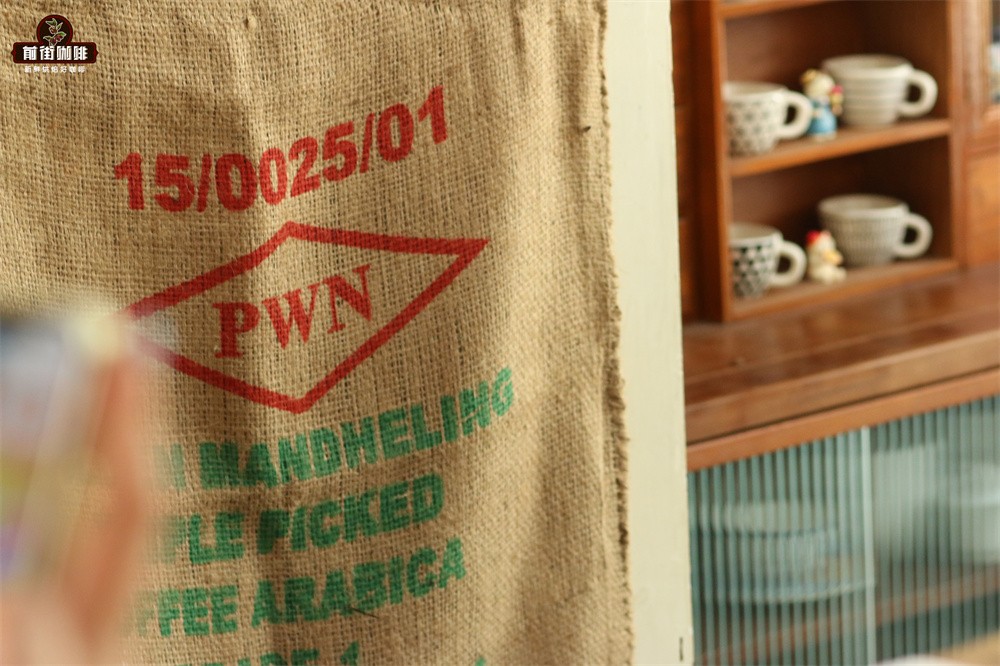
Front Street Coffee’s Front Street Golden Mandheling comes from Mandheling coffee beans acquired in Indonesia by Pwani Coffee Company (PWN for short), and the name “Golden Mandheling” is precisely the trademark registered by PWN. Simply put, Front Street Golden Mandheling is not necessarily all that unique in flavor; Front Street Indonesian Mandheling coffee bean flavor leans mellow with prominent herbal notes, but thanks to the same company’s four rounds of hand sorting of the Golden Mandheling green beans, the beans are larger and more uniform, the flavor performance is cleaner, and the appearance is more consistent.
The Origin of Mandheling Coffee
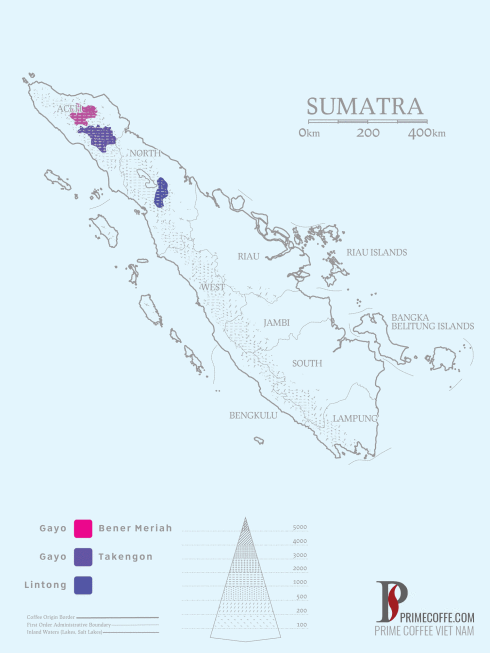
Coffee cultivation in Indonesia began during the Dutch colonial period and gradually developed its own unique coffee flavors, among which the most famous is Sumatra Mandheling coffee. “Mandheling” was originally the name of a tribe, and the Japanese mistakenly treated it as the name of a coffee during its spread, so the name was passed down by a strange coincidence. Today, Mandheling has derived multiple categories, such as Golden Mandheling, Tiger Mandheling, Aged Mandheling, Lintong Mandheling , etc. Today we will focus on the story of Golden Mandheling.
The “Battle” for Golden Mandheling
As is well known, Japanese people are extremely meticulous in their study of things, especially in the field of food. Mandheling was popularized by the Japanese, so they naturally had more advantages in seizing high-quality resources. In order to improve the problem of the relatively high proportion of defective beans in Mandheling, the Japanese side established strict screening standards. After the processed green beans undergo density and color sorting, they still need to be hand-picked four times before obtaining Front Street Golden Mandheling with uniform color and even bean shape. Front Street Golden Mandheling, after strict screening, not only removes the muddy and miscellaneous flavors common in ordinary Mandheling, but also has a cleaner and more transparent taste, with more prominent sweetness.
Golden Mandheling has been registered as a trademark, but interestingly, the registrant is not a Japanese company. Instead, an Indonesian company beat them to it, namely PWN (Pwani Coffee Company). Afterwards, the Japanese company was forced to change the name to “Gold Top Mandheling,” which is also known as Ding Shang Golden Mandheling.
Special Processing Method
Because the local weather is dominated by the rainy season and typhoons are frequent, it cannot meet the good weather conditions required for sun drying. In addition, the local economic level is limited, making it difficult to adopt the more costly washed method. Taking these factors together, the highly regional wet-hulling method emerged. Wet-hulling is a way of processing coffee beans quickly: after removing the coffee bean’s skin and pulp, it undergoes a short fermentation and then drying, after which the mucilage and parchment layer are removed, followed by continued drying in the later stage until the moisture content drops to 12%. On the surface of wet-hulled Mandheling coffee beans, varying degrees of compression cracks can be clearly seen. Front Street Coffee (FrontStreet Coffee) believes that these are not defective beans, but an inherent characteristic of Mandheling coffee beans.
This year, Front Street Coffee (FrontStreet Coffee) harvested a batch of Mandheling beans processed by the sun-dried method. Constrained by local weather conditions, the sun-dried method is relatively difficult for local people to carry out. The sun-dried process omits the fermentation step and directly dries the beans to 12% moisture content, then removes the skin and pulp, resulting in a flavor profile with ripe fruit notes.
Front Street PWN Golden Mandheling Coffee and Front Street Sun-Dried Mandheling
Front Street PWN Golden Mandheling Company: PWN Region: Sumatra Altitude: 1100-1600m Variety: ateng Processing method: wet-hulled
Roasting Suggestions Front Street Golden Mandheling is a green bean with a relatively high moisture content, and there is a large moisture deviation compared with sun-dried beans, so extra attention is needed during the dehydration stage. Front Street Coffee (FrontStreet Coffee) suggests closing the damper immediately after loading the green beans, then opening the damper to 3 after 30 seconds of soaking, and when the green bean color turns light green or white, opening the damper to 4, then opening it to the maximum after first crack.
Machine: Yangjia 800N, 550g green beans charged Charge temperature: 200°C Turning point: 5'40", 148°C First crack: 9'54", 191.2°C Development after first crack 3'30", discharged at 204.5°C
Brewing Suggestions Dripper: Kono dripper Water temperature: 86°C Dose: 15 grams Coffee-to-water ratio: 1:15 Grind size: medium grind for pour-over (EK43s setting 11) *Reason for choosing the Kono dripper: The Kono dripper has fewer ribs and they are located at the bottom, so the filter paper can fit closely against the dripper, thereby restricting airflow and extending the contact time between water and coffee grounds, allowing the coffee grounds to be fully extracted and improving body.
Brewing technique: staged extraction
First use 30 grams of water for a 30-second bloom, then pour in a small stream in circles to 125 grams and pause for a stage; when the water level drops and is about to expose the coffee bed, continue pouring to 225 grams and stop; when the water level drops again and is about to expose the coffee bed, remove the dripper (timing starts from the beginning of the bloom). Extraction time is 2'00". Flavor description Rich and varied layers, mellow and clean, with excellent balance, strong nut and chocolate flavors, intense spice and caramel aromas, accompanied by fruity notes, and a long finish.
Front Street Wahana Estate Sun-Dried Mandheling
Coffee region: Lake Toba
Altitude: 1000 to 1700 meters
Soil: volcanic soil
Coffee varieties: Bourbon, Typica
Processing method: sun-dried processing
Harvest year: 2020
Grade: G1
Roasting Suggestions Machine: Yangjia 800N, 550g green beans charged Charge temperature: 200°C Turning point: 5'50", 154°C First crack: 9'39", 183.6°C Development after first crack 2'30", discharged at 195°C
Brewing Suggestions Dripper: V60 dripper Water temperature: 90°C Dose: 15 grams Coffee-to-water ratio: 1:15 Grind size: medium-fine grind (BG#6S) Staged extraction First use 30 grams of water for a 30-second bloom, then pour in a small stream in circles to 125 grams and pause for a stage; when the water level drops and is about to expose the coffee bed, continue pouring to 225 grams and stop; when the water level drops again and is about to expose the coffee bed, remove the dripper (timing starts from the beginning of the bloom). Extraction time is 2'00".
Flavor description Tropical fruit, fermented notes, moderate acidity, smooth mouthfeel, prominent sweetness
The above content is compiled by CoffeeHunters, a coffee news website.


