







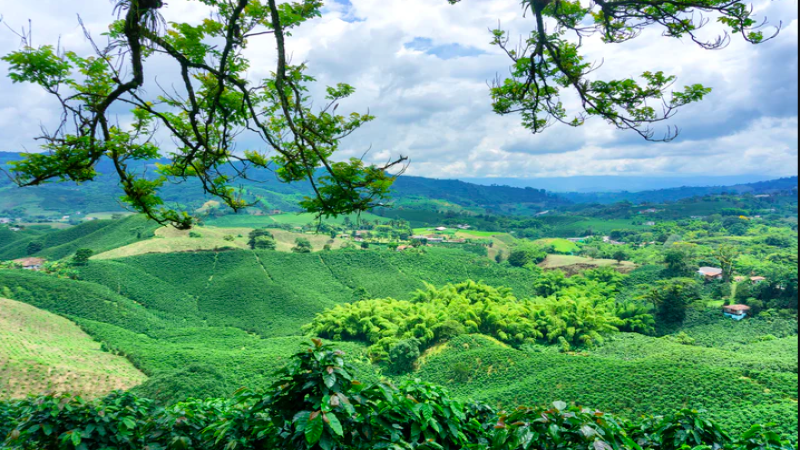
Colombia is the world's third-largest coffee producer and the largest processor of washed Arabica, with specialty-grade beans making up as much as 40% of its coffee exports. From the establishment of the first experimental plantation by Don Mariano Ospina Rodriguez in the 19th century to the founding of the National Federation of Coffee Growers in 1927, Colombia's coffee industry has undergone more than a century of development. In this article, Front Street will take you through this history, outline the characteristics of representative regions such as Huila and Cauca, and focus on Finca El Diviso in the Huila region and its Sidra variety—a coffee that has drawn widespread attention since it was chosen by Anthony Douglas, the 2022 World Barista Champion. What exactly makes it so unique?
To learn more about specialty coffee, welcome to follow our WeChat official account: FrontStreet Coffee
Colombia is the world's third-largest coffee-producing country and also the largest processor of washed Arabica coffee, with specialty-grade beans now accounting for as much as 40% of its exported coffee beans. On the menus of many cafes, Colombian coffee is almost never absent. At Front Street, for example, varieties such as Rose Valley, Flower Moon Night, Big Belly Button, Sidra, and Huila can all be offered as pour-over.
Today, Front Street will start with the history of coffee cultivation in Colombia and take everyone on an online visit to this great specialty coffee country.
Colombian Coffee History
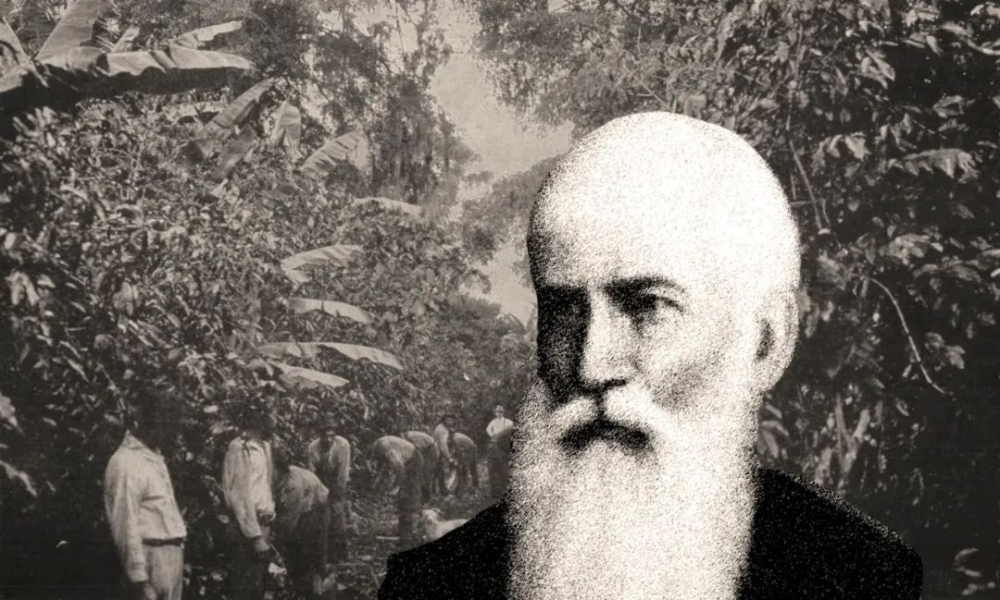
According to Front Street's research, the introduction of coffee to Colombia dates back to the 19th century, and Don Mariano Ospina Rodriguez was one of the earliest pioneers to conduct coffee-growing experiments.
In 1835, Don Mariano established a coffee experimental plantation in the city of Fredonia in Antioquia Department. Drawing on his deep knowledge and experience in coffee cultivation, he began teaching and promoting coffee-growing techniques to local farmers.
In 1857, Don Mariano was successfully elected president of Colombia.
In 1879, the Colombian government passed the Coffee Act to promote the development of the coffee-growing industry.
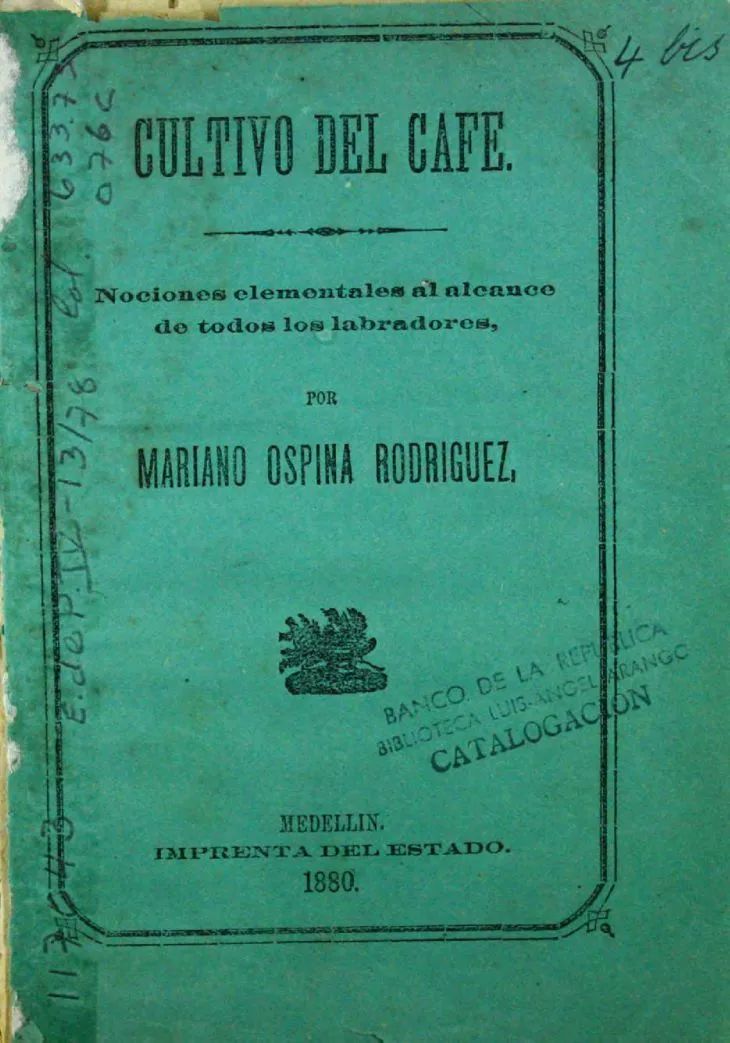
In 1880, Don Mariano published the country's first textbook on coffee cultivation, titled Coffee Growing: Basic Concepts Every Farmer Can Master. Not long afterward, the price of Colombian coffee on the New York market rose from 10.6 cents per pound in 1887 to 18.8 cents per pound in 1893.
During the 1920s and 1930s, the Colombian government carried out land reform and provided support to small producers. Front Street believes that the success of Colombia's coffee industry is inseparable from the marketing and promotion efforts of the country's National Federation of Coffee Growers (FNC).
In 1927, the National Federation of Coffee Growers of Colombia was announced in Medellin. This is a union organization that brings together 560,000 coffee-producing families from 590 municipalities across 22 departments nationwide. The first FNC chairman was Luis Mariano Ospina Perez, grandson of President Mariano. Under his leadership, the FNC successfully consolidated the country's coffee industry and achieved tremendous success in the international market. This move elevated coffee to Colombia's main export crop and completely transformed the country's economic landscape.
Colombian Coffee Regions
Colombia is located in northern South America. On a map, its coffee-growing belt follows the Andes Mountains, extending from south to north, with production areas mainly concentrated in the western part of the country. Because the growing regions span a wide area, geographic conditions and climate characteristics vary from place to place, creating different coffee production seasons. It can be said that Colombia harvests coffee all year round.
Colombian coffee is grown at high altitudes, between 1,000 and 2,500 meters. Influenced by the complex terrain of the Andes, the local microclimates are diverse, rainfall is abundant, and the temperature remains around 18 degrees Celsius year-round, which is highly conducive to the growth of coffee trees. This is also the primary reason for Colombia's outstanding coffee quality. About 30% to 40% of the country's rural population depends on coffee production for a living, and agricultural operations are mainly based on small farms, with coffee cultivation being no exception. Farms are usually only about two hectares in size, and farm owners carefully tend the plants in their gardens and plant tall trees or banana trees around the coffee trees to provide shade.
Geographically, Colombia's coffee-growing areas can be divided into three major regions: north, central, and south, with the southern region producing especially outstanding coffee beans. Next, Front Street will discuss several representative regions: Huila, Cauca, Narino, and Santander.
A Representative Colombian Specialty Coffee Estate—Sidra
At the 2022 World Barista Championship, champion barista Anthony Douglas chose Colombian Sidra coffee beans in the competition. Coincidentally, 2019 World Barista Champion Jooyeon Jeon also chose Sidra coffee (though produced in Ecuador). This made people curious about what exactly Sidra coffee is.
After reviewing the information, Front Street learned that Sidra coffee originally came from Pichincha Province in Ecuador, where locals call it Sydra. According to the information, Sidra is a laboratory-cultivated variety developed by crossing Typica and Red Bourbon. Later, through genetic comparison, it was found that Sidra is genetically similar to Ethiopian native varieties. Therefore, some scholars speculate that Sidra may have been developed by crossing an experimental research variety exported from Ethiopia with local Bourbon coffee varieties in Ecuador. At present, Sidra is mainly grown in two producing countries, Ecuador and Colombia.
After Anthony Douglas's exposure in the competition, everyone began looking for the beans used by the champion barista. The Sidra coffee beans Anthony used came from Finca El Diviso in Colombia's Huila region.
Where Is Finca El Diviso?
Finca El Diviso is located in Huila, one of Colombia's most famous coffee regions, at an altitude of about 2,100 meters and covering an area of 14 hectares. This is a family-run coffee estate founded by Jose Uribe Lasso in 1996 and has more than 25 years of coffee-growing experience.
At present, the estate is mainly managed by Nestor Lasso. He is young and full of drive. His grandfather introduced him to the vast world of coffee, while his father inherited the farm and was even more outstanding in coffee cultivation. Influenced by his family, Nestor continuously pursues improvement in coffee growing and processing. Twelve bean varieties are planted on the estate, including Caturra, Colombia, Sidra, Castillo, Geisha, and Bourbon.
Nestor's family manages the estate together, and the quality of the coffee beans has continued to improve, bringing Nestor greater returns as well. They successfully established a new large farm to grow and produce higher-quality coffee beans, working continuously in the hope of turning it into a great family estate. For Nestor, Finca El Diviso is a fortunate new starting point. He believes that the land in Huila is very fertile and that anyone hardworking and willing can escape poverty by growing coffee in this nutrient-rich soil.
What Are the Characteristics of Front Street Sidra Coffee?
Although genetic testing shows that Sidra has a genetic connection with Ethiopian coffee varieties, it is currently mainly grown in Colombia and Ecuador, at altitudes of 1,650 to 1,800 meters. In addition, some origins also grow a small amount of Sidra on a small scale for experimental purposes.
The Sidra plant has a thick trunk and can grow up to 4 meters tall. It requires appropriate shade when planted and is immune to many pests, but it is susceptible to leaf rust and coffee berry disease. The leaves are slender, and the flowers have five petals. It bears fruit densely, resulting in high yields, and the fruit is larger and rounder than that of most Arabica varieties; the green beans are slender and strip-shaped, somewhat similar to Geisha.
Given that Sidra is still grown in relatively small quantities and has floral and fruity characteristics comparable to Geisha, presenting flavors such as peach, citrus, grape, and honey, with moderate acidity and a rounded mouthfeel, its price is also relatively high.
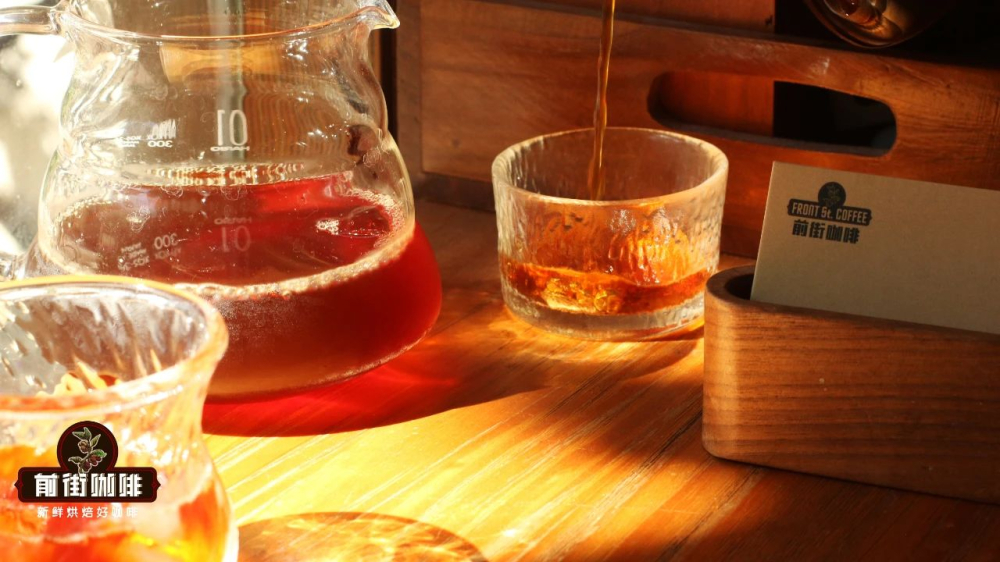
Front Street has also introduced Sidra coffee beans from Finca El Diviso. These beans use a double anaerobic washed process, highlighting the coffee's rich acidity. Front Street uses a medium-light roast, and in cupping it shows rich fruit flavors such as apricot, citrus, and grape.
Front Street Sidra Coffee Bean Pour-Over Parameters
Dose: 15g
Ratio: 1:15
Water temperature: 91 degrees
Grind size: medium-fine grind (80% passing through a No. 20 sieve)
Pouring method: three-stage
For the first stage, pour 30ml and bloom for 30 seconds. For the second stage, pour 120ml in a slow circular stream. When the water level drops to the halfway point, pour 90ml in a slow circular stream for the third stage. Extraction time is 2 minutes.
The above content is compiled by CoffeeHunters, a coffee news website.


