







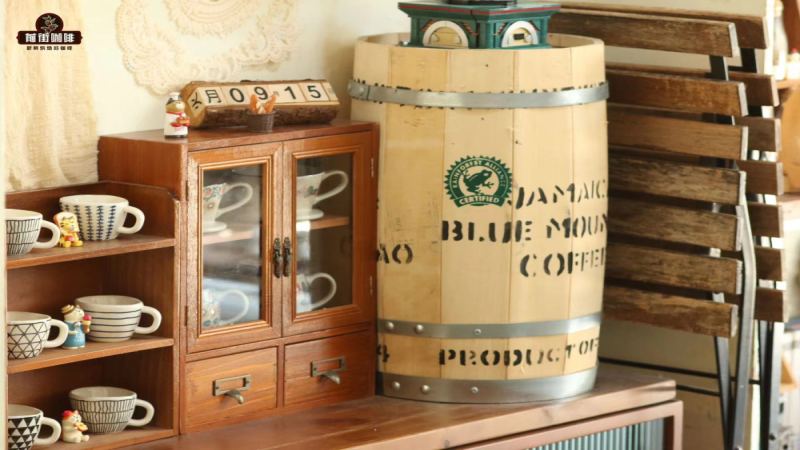
Why Has Classic Coffee Like Blue Mountain Become More Affordable?
Authentic Jamaican Blue Mountain No. 1 beans now sell for about 158 yuan per 100g, and a 200ml cup in-store runs around 60 yuan. That is a clear drop from the years when a single 200ml cup of genuine Blue Mountain cost over 60 yuan and was treated as a luxury. Production is limited, at most roughly 900 tons a year.
The price fell for two reasons. After the Jamaican government ended Japan's priority purchasing rights in 2012, more of the crop reached other markets, and specialty coffee culture spread. Grade differentiation and brewing parameters still matter for buyers, so a coffee store selling certified Blue Mountain No. 1 should be able to document origin and grade.
Blue Mountain coffee was long regarded as synonymous with expensive coffee. In the early years, a 200ml cup of authentic Blue Mountain often cost over 60 yuan, deterring ordinary consumers. With the global spread of specialty coffee culture and the Jamaican government's cancellation of Japan's priority purchasing rights in 2012, the price of Blue Mountain coffee has gradually returned to reason. Front Street Coffee currently offers authentic Blue Mountain No. 1 coffee beans at 158 yuan/100g, with a 200ml cup of Blue Mountain coffee priced at 60 yuan in-store. This article will outline the reasons behind the price changes of Blue Mountain coffee, its flavor characteristics, methods for grade differentiation, and the brewing parameters recommended by Front Street Coffee, to help coffee enthusiasts gain a comprehensive understanding of this classic coffee.
For professional coffee knowledge exchange and more coffee bean information, please follow Coffee Workshop (WeChat public account: cafe_style)
For more specialty coffee beans, please add private WeChat Front Street Coffee (FrontStreet Coffee), WeChat ID: qjcoffeex
In an era when domestic coffee consumption culture had not yet taken shape, when it came to expensive, high-quality coffee, Blue Mountain was almost the first name that came to everyone's mind. Ten or twenty years ago, getting a cup of genuine Blue Mountain coffee was no easy feat. Even if one was lucky enough to come across it, a 200ml cup of Blue Mountain coffee cost over 60 yuan. By the consumption standards of that time, this was undoubtedly quite a luxurious experience.
However, with the spread of the specialty coffee concept across various regions and adjustments by the Jamaican government to Blue Mountain coffee origin policies, the price of Blue Mountain coffee is no longer prohibitively high, and getting a cup is much more convenient. Front Street Coffee currently sells authentic Blue Mountain No. 1 coffee beans at 158 yuan/100g, with a 200ml cup of Blue Mountain coffee priced at 60 yuan in-store.
Why has Blue Mountain coffee become cheaper?
In the past, the reason Blue Mountain coffee prices remained high was mainly that after each year's harvest, 90% of Blue Mountain coffee beans were sold to Japan, with only 10% flowing to other countries and regions. Blue Mountain coffee itself has limited annual production, at most around 900 tons. Combined with the complex local terrain, to ensure the quality of each coffee bean, the harvesting process is entirely done by hand, and the investment in manpower and resources drove up costs.
The origin of Blue Mountain coffee's large exports to Japan dates back to 1969. At that time, the Japanese government assisted the Blue Mountain region in recovering coffee bean production after hurricane damage. In gratitude, the Jamaican government signed a priority purchasing rights agreement for Blue Mountain coffee beans with Japan in 1972. For a considerable period afterward, Blue Mountain coffee beans were almost monopolized by the Japanese market.
However, as specialty coffee culture spread across most countries worldwide, the Jamaican government realized that consumers in more regions should have the opportunity to discover Blue Mountain coffee. In 2012, the Jamaican government officially canceled Japan's priority purchasing rights. Other countries no longer faced difficulties in purchasing Blue Mountain coffee beans, and the price of Blue Mountain coffee consequently fell back to normal levels.
Why do so many people enjoy drinking Blue Mountain coffee?
Good mountains, good water, and good soil allow excellent varieties to fully realize their advantages. Today, the coffee beans grown in the Blue Mountain range all belong to the oldest Arabica variety—Typica. The standout characteristic of this variety is its clean and serene flavor.
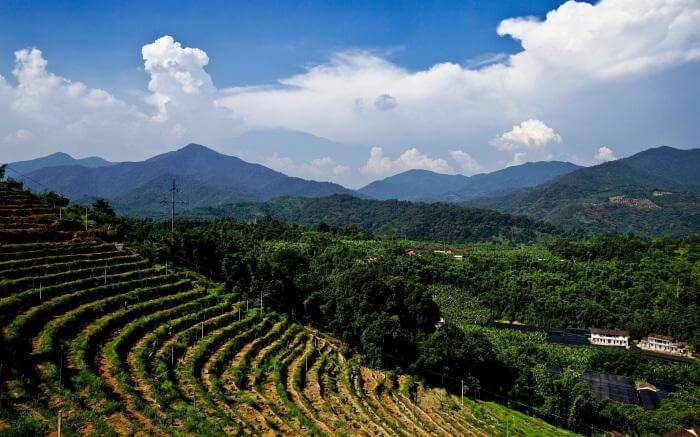
The Blue Mountain range features mineral-rich volcanic soil and a microclimate that is warm year-round with abundant rainfall. As long as Typica is planted at high altitudes, it can present a clear sweetness and delicate aroma that is difficult to replicate in other regions, with a balance of acidity, sweetness, and bitterness, and a mellow, well-balanced mouthfeel.
For this reason, the Jamaican government explicitly stipulates that only coffee grown at altitudes between 910-1700m can be called Blue Mountain coffee. Coffee produced at 460-909m is called Jamaica High Mountain Coffee, and that below 460m is called Jamaica Prime Coffee.
Through cupping, Front Street Coffee has found that medium-dark roasted Blue Mountain coffee exhibits a very balanced and mellow flavor, with dark chocolate, roasted nuts, and faint fruity acidity, where various flavors present themselves in a complementary manner. It has been loved by generation after generation precisely because its taste is classic and unpretentious, leaving a long, pleasant aftertaste.
How to distinguish authentic Blue Mountain No. 1 coffee?
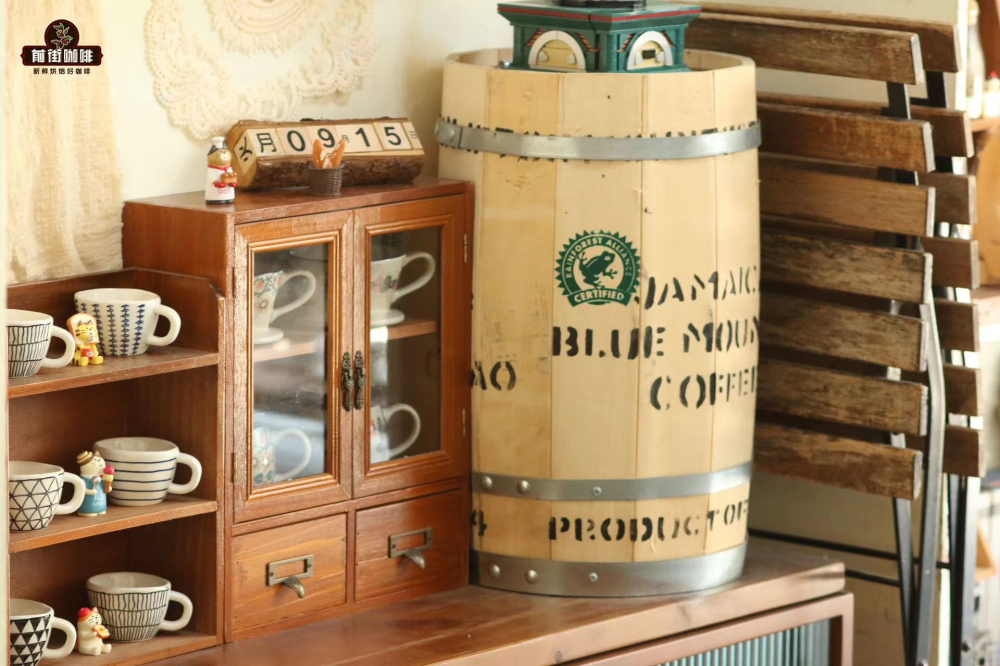
For Jamaican Blue Mountain coffee, the CIB also classifies grades based on coffee bean size and defect rate after processing, including Blue Mountain No. 1, Blue Mountain No. 2, Blue Mountain No. 3, and Blue Mountain Peaberry. Currently, Blue Mountain coffee imported into China is mainly Blue Mountain No. 1 grade (identification standard: 96% of coffee fruits must reach a size of 17 mesh or above, and the defect rate of processed coffee beans must not exceed 2%), and 100% is shipped in wooden barrels.
When purchasing Blue Mountain coffee beans, you can observe the bean shape: plump and uniform particles, oval surface, with both ends slightly upturned.
You can also ask the merchant to present the quality certificate issued by the Jamaican government, the authorized sales certificate issued by the exporting Blue Mountain coffee producer, or the Jamaican Blue Mountain coffee certificate of origin. The original wooden barrels of Blue Mountain No. 1 coffee beans and the authorized sales certificate issued by the Blue Mountain coffee producer can both be seen at Front Street Coffee stores.
How to brew Blue Mountain No. 1 coffee beans for a great taste?
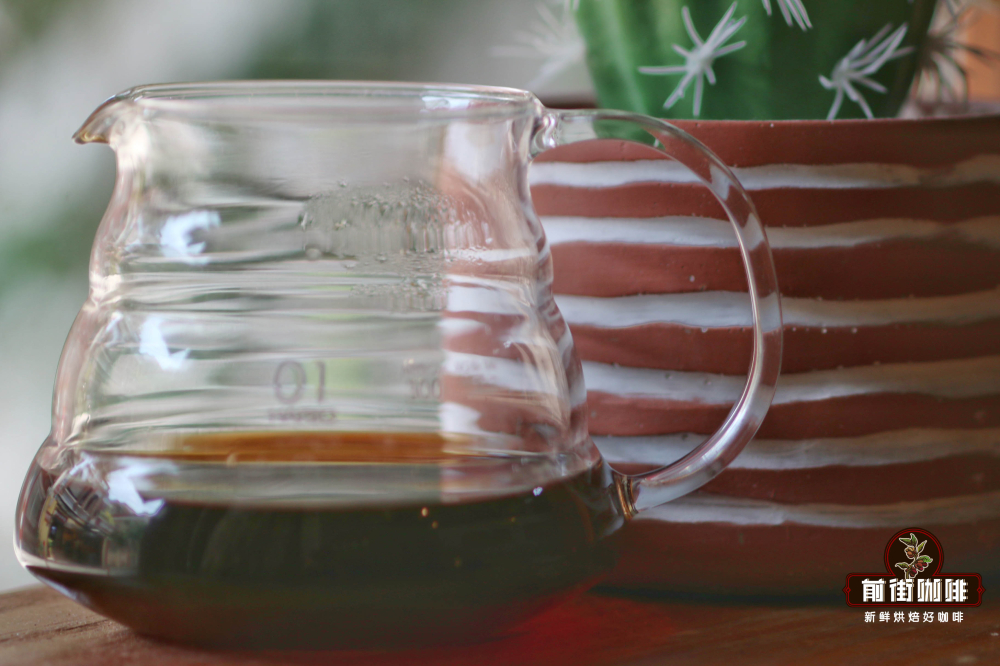
To fully showcase the mellow and balanced flavor characteristics of Blue Mountain No. 1 coffee beans, Front Street Coffee roasts them until just before second crack, which is a medium-dark level. To more completely extract the sweet and mellow substances in the coffee, Front Street Coffee uses a Kono dripper for pour-over extraction.
The short rib design of the Kono dripper allows 2/3 of the filter paper to fully conform to the dripper and form a seal, thereby slowing the speed at which water passes through the coffee grounds, making the coffee's mouthfeel more mellow and substantial. Because it is medium-dark roasted, coffee substances dissolve quickly. To avoid over-extraction, Front Street uses a lower water temperature for extraction, combined with the slower-flow Kono dripper, aiming to extract as much coffee substance as possible under low-temperature conditions.
When Front Street Coffee produces Blue Mountain coffee in its daily store operations, it uses the following parameters for extraction: Kono dripper, 88°C water temperature, 1:15 coffee-to-water ratio, 15g coffee dose, grind size (70-75% passing through a No. 20 standard sieve).
The brewing method is as follows: In the first stage, pour 30g of water for blooming, with a blooming time of 30 seconds; in the second stage, pour water until about 125g, then wait for the coffee liquid to drop; when it has dropped by half, pour the final stage of water until 225g. After all the coffee has dripped through, end the extraction. The total extraction time is generally around 2 minutes 10 seconds.
Front Street Coffee Jamaican Blue Mountain No. 1 coffee flavor profile: rich dark chocolate and nutty flavors, creamy smooth mouthfeel, balanced acidity, sweetness, and bitterness.
The above content is compiled by CoffeeHunters, a coffee news website.


