







How does coffee brewing with different ratios change cold brew?
Cold brew is made by steeping coffee grounds in low-temperature water for hours, and the coffee-to-water ratio is the main lever on the final cup. Tests with Kenya beans at 1:8, 1:10, 1:12, and 1:15 show that more water gives a lighter, thinner brew, while less water gives a heavier, more concentrated one.
Low-temperature extraction releases aroma and acidity compounds first, which is why cold brew tastes sweet-and-sour rather than bitter. During coffee brewing, grind size and steep time work alongside the ratio, so changing one parameter without adjusting the others shifts the balance. Many daily recipes settle on about 1:10 and serve the concentrate over ice.
Cold brew coffee, with its light mouthfeel and sweet-and-sour flavor profile brought by low-temperature extraction, has become the top choice for many coffee lovers at home. However, different coffee-to-water ratios, grind sizes, and steeping times all create noticeable differences in the final taste. This article uses the Kenya·Small Tomato coffee beans as an example, conducting experiments with four coffee-to-water ratios—1:8, 1:10, 1:12, and 1:15—to compare in detail the concentration, acidity, sweetness, and aftertaste of cold brew at each ratio, helping you find the cold brew recipe that suits you best. At the same time, we share why Front Street Coffee prioritizes the 1:10 ratio in daily production, and how serving over ice accommodates different taste preferences.
For more specialty coffee knowledge, please follow our WeChat public account: FrontStreet Coffee
The core principle of cold brew coffee is using low-temperature water to steep coffee grounds for an extended period. In a cold water environment, small-molecule compounds leaning toward aroma and acidity are more easily released, so the final product typically has a light mouthfeel with prominent sweet-and-sour notes. Moreover, cold brew has almost no requirements for equipment or space—just prepare coffee grounds, a bottle, water, and a refrigerator at home, and you can easily achieve caffeine freedom.
Regarding cold brew production, friends often ask Front Street: What exactly are the differences between cold brews made with different ratios? Where is the impact of coffee-to-water ratio on coffee reflected?
Cold brew is a typical immersion extraction, where coffee grounds and low-temperature water stay in contact in the same container for a long time, and flavor compounds gradually dissolve out. When other conditions remain fixed, the higher the proportion of water, the lower the concentration of the coffee liquid, the lighter the taste, and the thinner the mouthfeel; conversely, the lower the proportion of water, the higher the concentration, the heavier the taste, and the fuller the mouthfeel.
Therefore, to achieve a balanced flavor performance, it is essential to choose an appropriate coffee-to-water ratio.
How long does cold brew need to steep? How fine should the coffee grounds be ground?
All parameters in any extraction scheme are interrelated. For cold brew, the coffee-to-water ratio is not the only variable determining taste—grind size, steeping time, water quality, and the coffee beans themselves are equally critical.
Although low-temperature extraction can reduce the precipitation of bitter compounds, it does not completely avoid them. To get a delicious cold brew, the coffee grounds should not be ground too fine, and the steeping time should not be too long. Regarding grind size, it is recommended to control the pass rate through a Chinese No. 20 standard sieve at about 80% to 85%, with particles visually similar in size to granulated sugar; the steeping time is best controlled between 6 and 16 hours, which ensures sufficient contact between grounds and water while avoiding negative flavors from over-extraction.
In terms of coffee bean selection, Front Street used the Kenya·Small Tomato on the bean shelf as the experimental subject. This bean undergoes the K72 washed processing method, with varieties SL28 and SL34. Both SL28 and SL34 are varieties cultivated and screened through multiple generations; SL28 belongs to the Bourbon genetic group, carrying the bright tonality and rich acidity of the original Bourbon; SL34 is closer in lineage to Typica, with relatively milder acidity.
Iced coffee made with Kenya AA coats the entire mouth with dark berry flavors on entry, accompanied by a full small tomato aroma. Drinking it iced is extremely satisfying, making it the top choice bean for many people making cold brew.
What are the taste differences between cold brews made with different coffee-to-water ratios?
Cold brew is kept at a low temperature of 0 to 10°C throughout, so the extraction efficiency itself is very low. Combined with the coffee grounds and water being essentially static, with no external assistance during the process, the dissolution rate of flavor compounds is quite limited. To make the experimental results more intuitive, Front Street set up 4 common coffee-to-water ratios: 1:8, 1:10, 1:12, and 1:15, with all other parameters kept consistent.
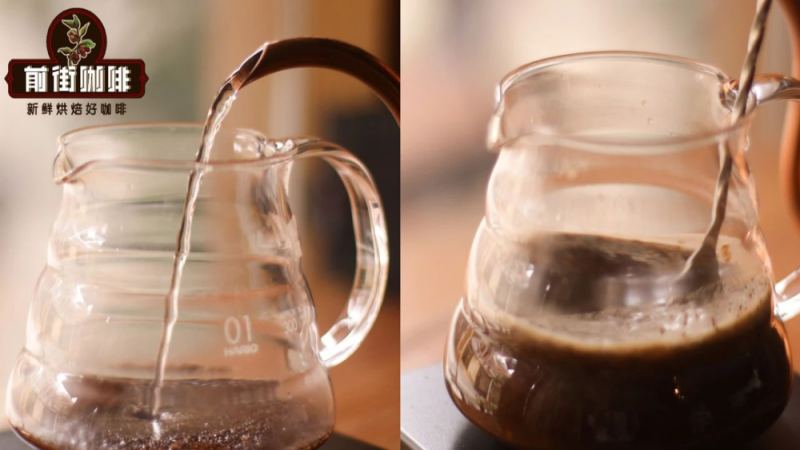
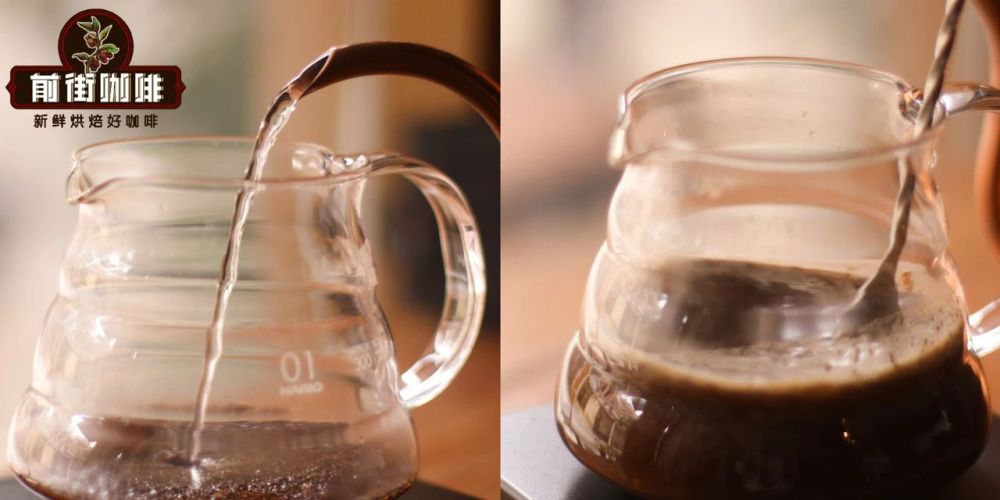
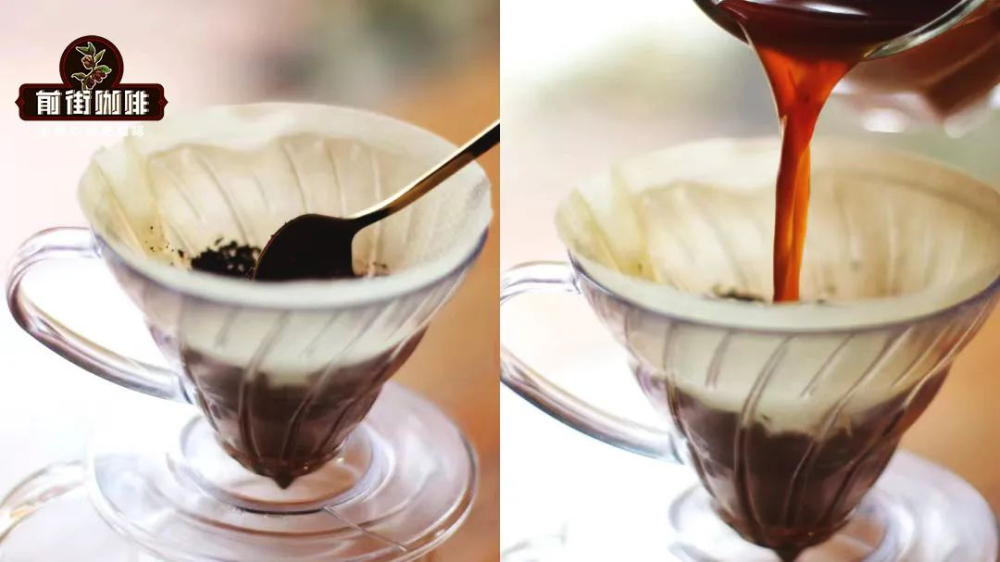
The production process is completely identical: pour the coffee grounds and water into a container in sequence, stir evenly, seal, and place in the refrigerator. When the time is up, remove and filter (you may stir once midway).
Coffee beans: Kenya·Small Tomato
Coffee dose: 18g
Steeping time: 6 hours
Grind size: fine granulated sugar / 80% pass rate through Chinese No. 20 standard sieve (EK43s setting 9.5)
Coffee-to-water ratio: 1:8, 1:10, 1:12, 1:15
Corresponding water amounts: 144g, 180g, 216g, 270g
The coffee liquid with a 1:8 ratio has the darkest color, the strongest and most sour taste, with a mouthfeel that even carries a hint of saltiness; the flavor shows only a small amount of berries, and the aftertaste leans bitter;
The coffee liquid with a 1:10 ratio smells of fresh sugarcane, with flavors of red plum, berries, and snow pear tea; the mouthfeel is slightly heavy, acidity is relatively high, and sweetness is not obvious;
The cold brew with a 1:12 ratio has the clearest mouthfeel, with flavors including small tomato, red plum, smoked plum juice, sugarcane, and the lingering fragrance of preserved plum candy; the concentration is moderate, and acidity, sweetness, and bitterness reach a balance;
The coffee liquid with a 1:15 ratio has the lightest color and a thin body, with only a slight acidity of black plum and berries; the taste is flat, but bitterness is almost imperceptible.
From the above comparison, it is clear that the 1:8 ratio, due to too little water, does not give the coffee flavors enough space to release, easily presenting negative characteristics of heaviness and bitterness; the 1:15 ratio, due to too much water, over-dilutes the soluble compounds, resulting in insufficient body and a bland, tasteless drink.
Among the 1:10 and 1:12 groups, the 1:12 ratio performs best when drunk directly in terms of flavor and mouthfeel, yet Front Street prioritizes 1:10 in many articles and daily production. What is the reason?
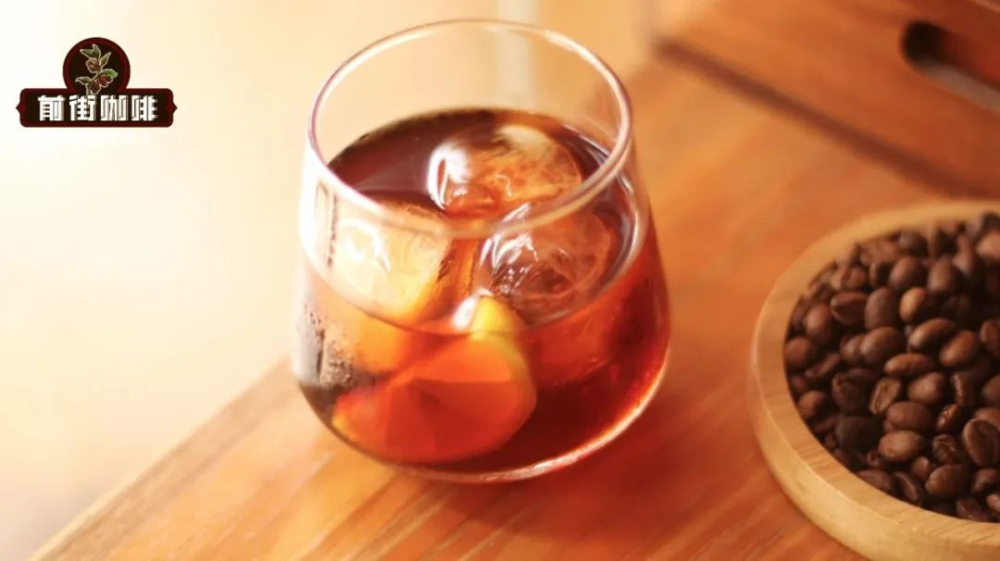
First, to keep the cold brew at a low-temperature mouthfeel, in addition to serving it in an ice cup, Front Street usually adds 1 to 2 hard ice cubes, so that even if the coffee is diluted, the flavor does not change much; second, each guest has different taste preferences—some like it light, some prefer it strong. When the ice cubes are first added, the coffee has a full, rich mouthfeel; as time passes and the ice gradually melts, the coffee becomes lighter. Therefore, using a high-concentration cold brew served over ice accommodates both the "heavy taste" crowd and the "light taste" crowd.
The above content is compiled by CoffeeHunters, a coffee news website.


