







In the landscape of Ethiopian specialty coffee, the Guji Hambela region shot to fame thanks to a natural-process lot that won the 2017 TOH championship, bringing the Huakui series into the public eye. In this article, Front Street Coffee will systematically sort out the terroir differences between the Sidamo and Guji regions, the natural processing techniques of the Buku Able processing station, and the evolution of Huakui from 1.0 to 5.0, fully presenting the green bean characteristics, roasting records, cupping performance, and V60 brewing recipe of Huakui 5.0 coffee beans, helping coffee enthusiasts understand why this bean can combine both a strawberry-cream-like sweetness and a blackcurrant-juice-like richness.
For more specialty coffee knowledge, please follow the WeChat public account: Front Street Coffee (FrontStreet Coffee)
The Yirgacheffe region, with its bright acidity and fresh flavors, has led many people to mistakenly believe that the whole of Ethiopia produces only this one style of clean coffee. In fact, what Front Street wants to introduce today is another region famous for its unique flavors—Sidamo. Front Street Coffee (FrontStreet Coffee)'s Huakui 5.0 coffee beans from the Guji region of Sidamo have won over batch after batch of loyal fans precisely because of their full-bodied juice-like character.
First, let's get to know the Sidamo coffee region.
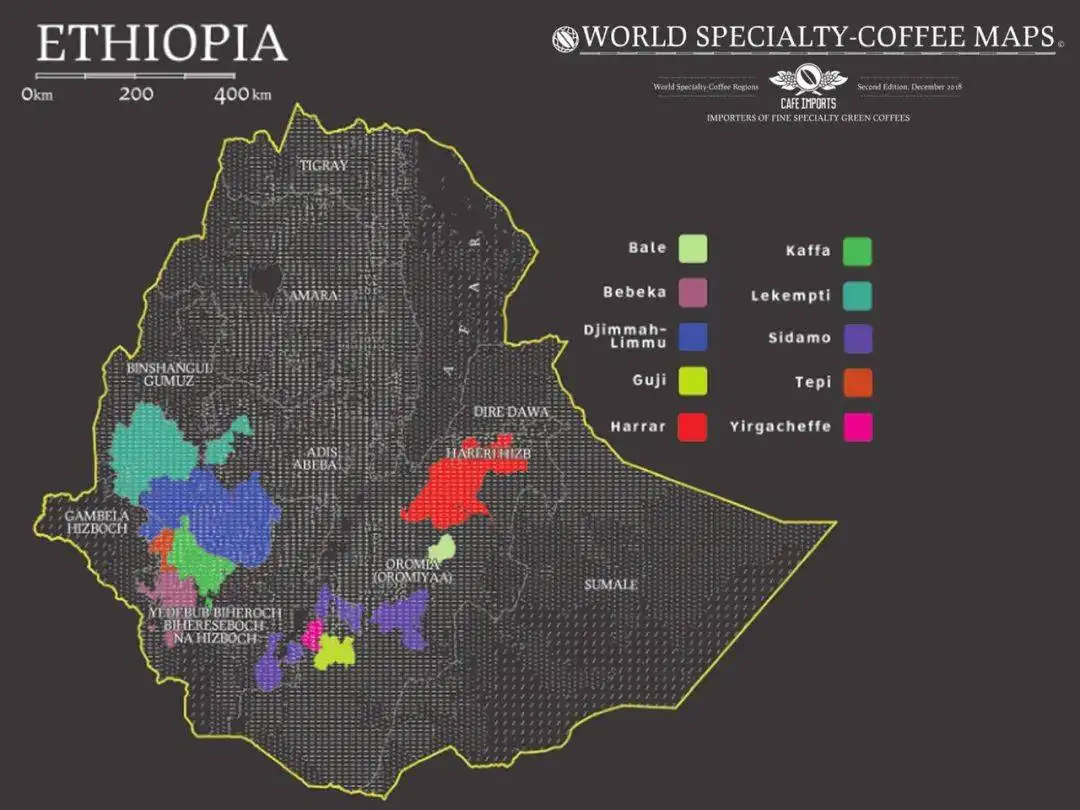
As one of Ethiopia's specialty coffee regions, Sidamo is located in the south of the country, adjacent to the Yirgacheffe region. The coffee produced here has extremely diverse flavors, because the soil composition, microclimates, and the vast number of native varieties differ from area to area, giving the coffee from each plot a distinct personality and difference.
In actual tasting, Front Street Coffee (FrontStreet Coffee) has found that coffee beans from different areas of Sidamo generally have abundant fruity acidity and rich aroma, making them very suitable for enthusiasts who pursue strong flavors but do not want too heavy a mouthfeel, achieving a good balance between aroma and taste. The Huakui coffee beans discussed in this article come from the Hambela sub-region of the Guji region in Sidamo. As Huakui won an award in 2017, this region began to enter the public eye. Let's now learn about Hambela.
Guji Coffee Region
The Guji region originally belonged to Sidamo and was designated an independent region by the Ethiopian Commodity Exchange (ECX) in 2010. It is located southeast of Yirgacheffe, with terrain that includes towering mountains, valleys, and plains, complex and varied. The soil in this area is fertile black soil (Vertisol), nearly two meters deep, with an average altitude of over 1,800 meters. These distinctive geographical conditions bring about a large temperature difference between day and night, providing an ideal terroir foundation for producing high-quality specialty coffee.
The most famous coffee bean in the Guji region is undoubtedly Huakui. In 2017, it won the championship at the TOH (Ethiopia National Taste of Harvest Competition) with its outstanding strawberry-cream flavor, truly earning the title of "Huakui."
Before becoming "Huakui," it was originally a competition-level award-winning bean. In February 2017, Ethiopian DW Coffee Company participated in the TOH green bean competition held by the African Fine Coffees Association and submitted a natural-process coffee bean from the Buku Abel processing station in the Sidamo region. With its rich berry aroma and creamy texture, it won the championship in the natural group that year.
In the same year, this championship lot was spotted by a green bean trader in Beijing. Because of its championship status, it was named "Huakui" and introduced to the domestic market, implying "the chief of a hundred flowers, outshining all others." Later, this bean was used by a competitor in the China coffee brewing championship as a competition bean, defeating many opponents using Geisha and winning the runner-up spot that year, which was also the first time Huakui made a name for itself in China. As the competition's popularity rose, this traditional natural bean from the Buku Abel processing station successfully "debuted," and with its affordable price and pleasing flavor, it quickly became a widely recognized high-quality Ethiopian coffee in the industry.
Buku Processing Station
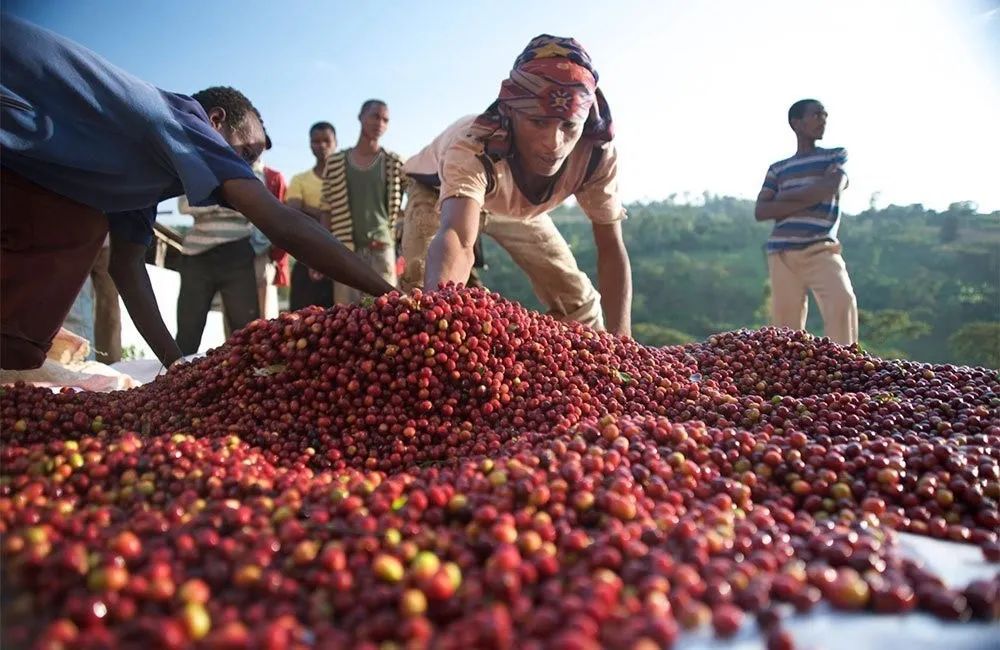
The Buku processing station is located in Buku Abel village at an altitude of 2,200 meters. From the very beginning of cultivation, the coffee trees were planted in nutrient-rich reddish-brown soil and given shade care, allowing Huakui to fully receive sunlight and generate rich aromas without consuming too many nutrients, thereby retaining more of the essence within the coffee cherries. During the harvest and processing season (December to January), the unique growing environment and natural climate together shaped Huakui's distinctive flavor.
The Buku processing station requires that the picked red cherries reach a sugar content of 30 or above before natural processing begins. In the first two days of natural processing, the humidity of the red cherries must be maintained so that the fruit sugars can fully ferment and react. At the same time, the high altitude allows the processing station's nighttime temperature to drop to around 12 degrees Celsius, without producing overly fermented odors due to excessively high temperatures. When the midday temperature is higher, shading is promptly carried out to prevent the red cherries from sunburn.
The coffee farmers select only fully red cherries, that is, fully ripe coffee cherries, using manual picking and drying on African raised beds, limiting the thickness of the fruit layer and turning them regularly every 24 hours without interruption, ensuring even sun exposure and ventilation, and more precisely controlling the degree of fermentation. Front Street believes that Huakui coffee beans use fully ripe, high-sugar coffee cherries, and after natural drying, the sugars in the pulp and pectin are absorbed by the coffee beans, so Huakui's sweetness is more prominent than that of coffee beans from other Sidamo regions.
Huakui Coffee Beans
After the Buku processing station's Huakui had been famous for many years, Huakui 2.0 was launched in 2018, and Huakui 3.0 and 3.1 were launched in 2019. At first, in the 2018 and 2019 Huakui, Front Street could taste flavors similar to the 2017 Huakui, but the body and finish were not as good as the 2017 version.
By comparing different batches, we realized that the main source of the 2017 Huakui's aroma was that the Huakui coffee beans contained some particularly small-sized varieties; and in the 2018 and 2019 Huakui, similar small beans also appeared, sometimes a few bags out of ten would contain similar small beans. In 2019, we confirmed this information and informed the green bean supplier. Starting in 2020, Huakui split into two types: 4.0 and small-bean Huakui, so small-bean Huakui does not belong to the [X.0] series. Similarly, in 2021, the two beans were named small-bean Huakui and Huakui 5.0 respectively.
Front Street Coffee (FrontStreet Coffee): Ethiopia Huakui 5.0 coffee beans Region: Guji Hambela Processing station: Buku Able Altitude: 2,350 meters Variety: Ethiopian native variety Processing method: Natural process
Front Street Coffee (FrontStreet Coffee) Green Bean Analysis Ethiopian native variety coffee beans look uneven in size because there are simply too many varieties in Ethiopia, like a natural gene bank of Arabica. On the one hand, the varieties are numerous and difficult to identify and classify; on the other hand, the Ethiopian government, for protection reasons, is unwilling to disclose variety information, so they are collectively called Heirloom native varieties. Because of mixed planting and harvesting, this is also the main reason why Ethiopian beans vary in size. After receiving the green beans, Front Street Coffee (FrontStreet Coffee) noticed that the beans of the new season had a relatively high moisture content, so the roaster extended the dehydration time to allow the bean surface and bean core to heat evenly. To express this bean's sweetness, acidity, and floral and fruity aroma, we used a medium-light roast level.
Front Street Coffee (FrontStreet Coffee) Roasting Record
Yangjia 800N, charge amount 480g: charge when the drum temperature reaches 175 degrees Celsius, set airflow to 3, heat to 120. When it rises to 140 degrees, set airflow to 4. Roast until 6'00'', temperature 151.7 degrees, the bean surface turns yellow, the grassy smell completely disappears, and dehydration is complete. When ugly wrinkles and dark spots appear on the bean surface, and the toast smell clearly turns into coffee aroma, this can be defined as the prelude to first crack. At this time, listen carefully for the sound of the first crack. At 9'50'', first crack begins, open the airflow fully, reduce heat to 80 at 188 degrees, first crack development time 1'40'', drop the beans at 196 degrees.
Front Street Coffee (FrontStreet Coffee) Cupping Report Front Street Coffee (FrontStreet Coffee) conducts cupping within 8-24 hours after the sample coffee beans are roasted. The cupping bowls generally used by Front Street Coffee (FrontStreet Coffee) baristas have a capacity of 200ml ceramic bowls, marked with 150ml and 200ml graduation lines. According to SCAA standards, the water TDS is about 150ppm; if the TDS is too low, it easily causes over-extraction, and if too high, it affects the taste and easily causes under-extraction. The water temperature used for cupping is 94 degrees Celsius. The grind size is controlled so that the pass rate through a No. 20 standard sieve (0.85 mm) is 70%-75%. Ratio: 11 grams of coffee powder plus 200 milliliters of hot water, that is, 1:18.18, so that the extracted concentration falls exactly within the golden cup range of 1.15%-1.35%, with a steeping time of 4 minutes.
Dry aroma: citrus, berries
Wet aroma: blackcurrant, rose
On the palate: almond, strawberry, blackcurrant, fermented notes, lasting sweetness Front Street Coffee (FrontStreet Coffee) Brewing Tips
Dripper: V60 #01 Water temperature: 90-91 degrees Dose: 15g Coffee-to-water ratio: 1:15 Grind size: medium-fine grind / caster sugar size (77% of powder passing through a No. 20 sieve)
Front Street brewing method: First rinse the filter paper and preheat the dripper and coffee pot. Use 30 grams of water for a 30-second bloom, then pour in a small stream in circles until 125 grams for a pause, and when the water level drops and is about to expose the coffee bed, continue pouring until 225 grams and stop. When the water level drops and is about to expose the coffee bed, remove the dripper. (Timing starts at the beginning of the bloom.) The extraction time is 2 minutes 05 seconds.
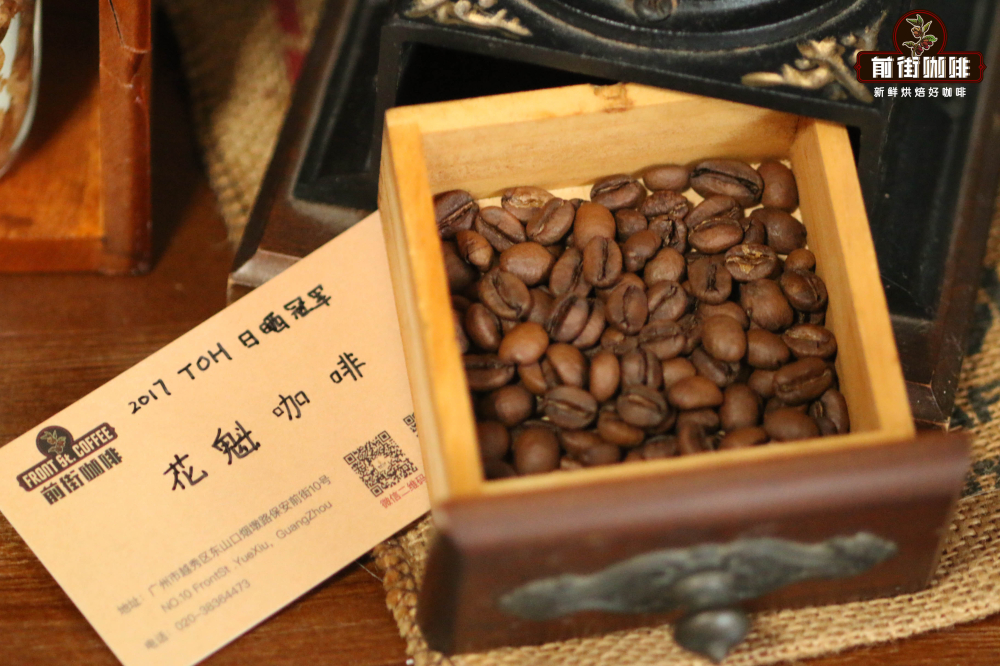
Huakui coffee brewing flavor: almond aroma when hot, berry sweetness and acidity after it gradually cools, blackcurrant juice-like character, honey finish, lasting sweetness.
The above content is compiled by CoffeeHunters, a coffee news website.


