







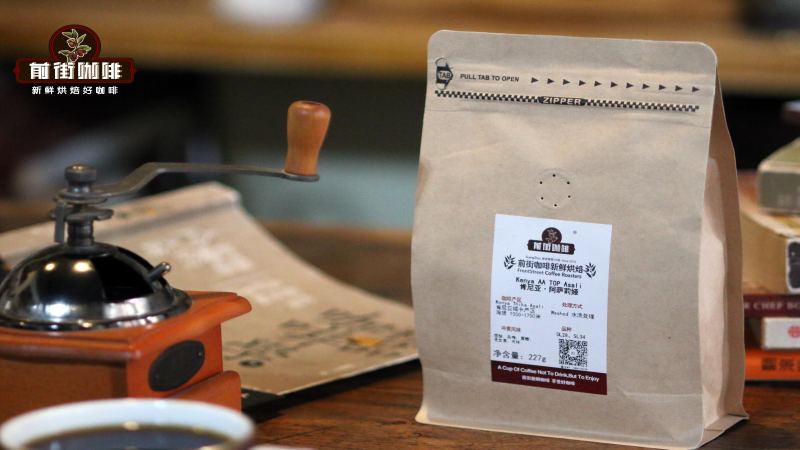
How does Kenya AA grading work for coffee green bean?
Kenya AA is the top grade in Kenya's classification system, judged mainly on bean size, color, appearance and density. Larger, more uniform beans are considered better for aromatic development during roasting, so the biggest and cleanest batch earns AA. Kenyan coffee green bean graded AA carries the country's signature fruity acidity, often dark plum, smoked plum, apricot and a black tea finish.
The article covers Thika near Nairobi, where about 2,000 growers farm at 1,550 to 1,750 meters, and where SL28 and SL34 now make up roughly ninety percent of quality production. It explains the K72 double fermentation washed process and a light roast with V60 three-stage brewing. Kenya coffee from Thika traces back to trees introduced from Ethiopia in the late nineteenth century.
Kenya AA is the highest grade in Kenya's coffee classification system, known for its plump beans and bright flavor. This article starts from the grading logic of Kenyan green beans, takes an in-depth look at the cultivation history and terroir characteristics of the Thika production area, explains how the classic Kenyan-style 72-hour double fermentation washed process (K72) works, and focuses on the two varieties, SL28 and SL34, which account for ninety percent of Kenya's high-quality coffee production. The article also combines Front Street Coffee's Front Street Kenya Asali coffee beans to recreate its light roast approach and V60 three-stage brewing parameters, presenting the typical Kenyan flavor of dark plum, smoked plum, apricot, and black tea aftertaste.
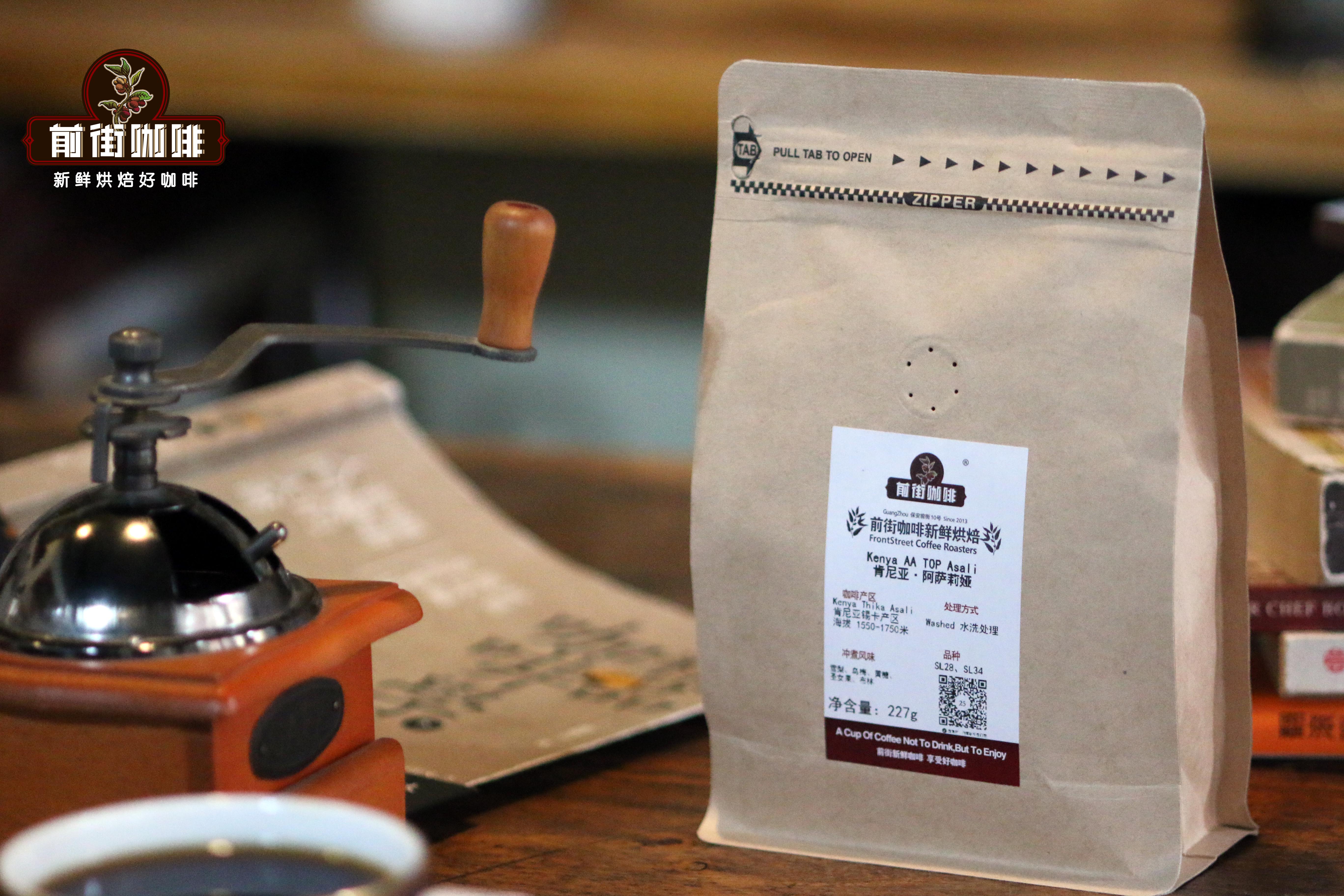
Front Street Coffee: Front Street Kenya Asali Coffee Beans
Region: Thika, Kenya
Processing Station: Asali Honey Processing Station Altitude: 1550-1750 meters Grade: AA TOP Varieties: SL28, SL34 Processing Method: Kenyan 72-hour washed
The grading of Kenyan coffee green beans is based on indicators such as bean size, color, appearance, and density. In the view of local industry practitioners, bean size is the primary factor in judging quality—coffee beans that are larger and more uniform in appearance are more conducive to the formation and accumulation of aromatic substances during roasting. For this reason, the largest and highest-quality batch of Kenyan coffee is classified as AA grade. The Front Street Kenya coffee beans selected by Front Street Coffee are precisely from the highest AA grade, carrying Kenya's signature fruity acidity.
Thika Production Area, Kenya
Thika is a small town near Kenya's capital, Nairobi, and there are many coffee plantations around Nairobi. Thika itself is an industrial town, but it is surrounded by farmland and waterfalls, and the area has about 2,000 coffee growers. The history of coffee cultivation in the Thika area can be traced back to the late nineteenth century, when coffee tree species were introduced from the neighboring country of Ethiopia to the north. After subsequent local variety improvement, the commonly cultivated varieties now include Bourbon, Kents (including SL34 and SL28), Typica, and Riuri 11. Today, about ninety percent of the cultivated varieties are SL34 and SL28, and the new variety Batian, released in 2007, has not yet been promoted on a large scale. The flavor expression of this production area is bright fruity acidity, a thick berry juice-like body, and honey-like sweetness.
Kenyan-Style Washed Processing
The biggest difference from Central and South America is that Kenya's washed processing uses double fermentation, commonly known as K72 washed processing. This method is carried out by repeating a "fermentation—washing" cycle: after harvest, the highest-quality coffee cherries are first selected, then depulped and fermented. The first round of fermentation lasts 24 hours, after which they are rinsed clean with clean water.
Immediately after, a second 24-hour fermentation is carried out with clean water and then washed again. This cycle is repeated three times in total, for a total duration of 72 hours, hence the name Kenyan-style 72-hour fermentation washed processing method, abbreviated as [K72]. Front Street Coffee believes that compared with conventional washed processing, the K72 washed method can further strengthen the acidity and cleanliness of the coffee beans.
SL28 and SL34 Coffee Varieties
Kenyan coffee varieties mainly include SL28, SL34, K7, Ruiru11, and Batian, among which SL28 and SL34 together account for 90% of Kenya's total high-quality coffee bean production. SL comes from the abbreviation of Kenya's Scott Laboratories. In the 1930s, Kenyan coffee trees were widely infected with coffee berry disease, and Scott Laboratories was commissioned by the government to begin cultivating disease-resistant new varieties.
Among the research results, No. 28 and No. 34 showed strong disease resistance and exceptionally outstanding flavor, so they were promoted to farmers for widespread cultivation. The SL series belongs to the Bourbon lineage in the coffee tree family and shows excellent acidity in the Kenyan production area. Through cupping, Front Street found that SL28 and SL34 present good sweetness, balance, and complex, changeable flavors, with notable citrus and smoked plum characteristics.
Brewing Flavor of Front Street Kenya AA Coffee Beans
This Kenyan coffee obtained by Front Street has the flavor of stone fruits such as mulberry and plum. In order to preserve the fruity aroma as much as possible, Front Street's roaster chose a light roast. Through cupping comparison, its dry aroma shows the fragrance of cherry tomatoes, smoked plum, and caramel, while on the palate it has the texture of dark stone fruits such as plum, plum, and apricot, with full acidity. Therefore, in the brewing stage, Front Street also strives to retain more of the fruity charm of Front Street Kenya AA.
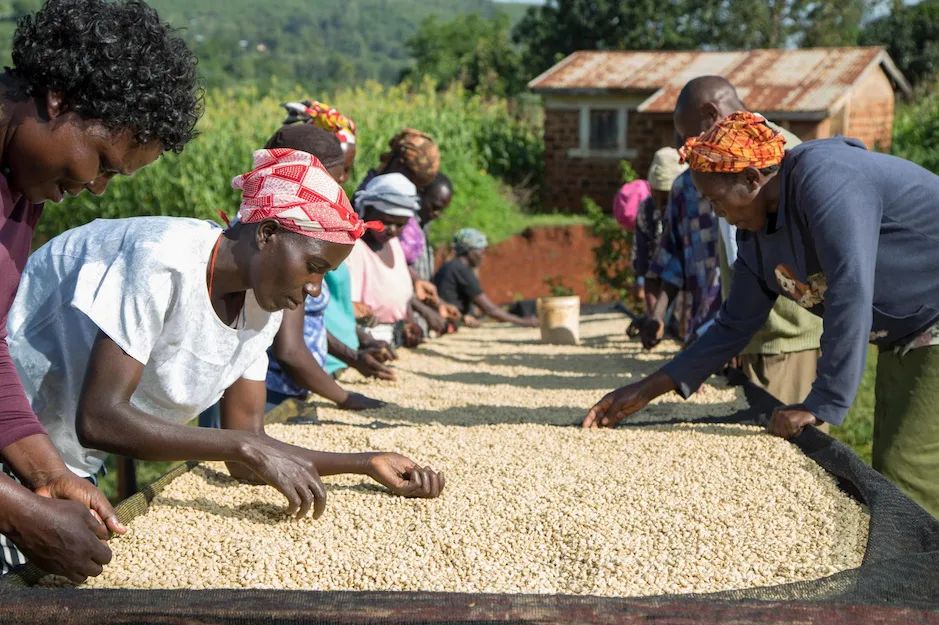
Light roasting allows high-altitude coffee beans to retain more floral and fruity aromas. Compared with medium-dark roasting, lightly roasted beans have a denser internal structure and require higher water temperature and finer grinding to better release flavor substances. Here, Front Street uses hot water at 92-93 degrees Celsius for extraction, with the grinding coarseness controlled so that the passing rate through a No. 20 standard sieve is 80%.
Front Street's flavor description for every coffee is based on freshly roasted beans. If coffee beans are stored for more than a month, the aroma is often partially lost and difficult to recreate during brewing. Front Street deeply understands the importance of freshness, so it only ships coffee beans freshly roasted within 5 days, ensuring that everyone can enjoy the most complete tasting window when receiving them.
In terms of dripper selection, Front Street Coffee's baristas are accustomed to using a resin V60 dripper to extract medium-light roasted coffee beans. The V60 body has guide ribs connecting the top and bottom, as well as a large central round hole, which can speed up the flow of water downward; the spiral-shaped vent groove design extends the water flow path and increases the contact time between coffee grounds and hot water. Each stream of water converges along the grooves toward the center of the dripper, concentrating the pressure on the coffee grounds and producing a coffee with richer layering.
The pour-over parameters are:
Dripper: V60
Water temperature: 92 degrees Celsius
Coffee dose: 15g
Coffee-to-water ratio: 1:15
Grind size: fine granulated sugar size (80% passing through a No. 20 sieve)
Three-stage extraction: First pour 15 grams of coffee grounds into the dripper and tare the weight. For the first stage, pour in 30g of water for a 30-second bloom, and start timing at the same time, using a small stream throughout and pouring from the center outward in circles, making sure to wet the entire coffee bed. For the second stage, begin pouring with a slightly larger stream and add 120g of water, with the purpose of raising the entire coffee bed. The water column should be poured vertically and evenly. At this point the timing scale shows 150g, and the pour is completed in about 55 seconds. When the liquid level drops to the halfway point, begin using a small stream in small circles to pour the third stage of 90 grams, trying to control the stream so it does not swirl too much, as this can easily disturb the coffee bed and cause under-extraction. The final total poured water is 240 grams, and the drip completion time is about 2 minutes 10 seconds. After removing the dripper, shake the coffee liquid in the server evenly and it is ready for tasting.
This Front Street Kenya Asali coffee tastes of the acidity of dark fruits such as dark plum and smoked plum, with a solid sweet-and-sour texture of apricot and stone fruits at medium temperature, and a rounded black tea aftertaste.
The above content is compiled by CoffeeHunters, a coffee news website.


