







Is Coffee From Guji Ana Sora Worth Trying?
The Guji Ana Sora Dorothy coffee from Front Street Coffee is an Ethiopian bean grown at the Ana Sora estate and processed with an enzymatic washed method. That process helps draw out clear white peach, jasmine, and oolong tea notes, giving the cup a profile that differs from the berry-heavy natural coffees usually associated with Sidama.
Guji became an independent producing region after splitting from Sidama in 2010, and it has since built a strong competition record, including Huakui's 2017 TOH natural-group win and Huaxu's 2020 washed-group win. Ana Sora sits within this region, and its enzyme-washed lots are typically brewed as filter coffee to keep the floral and stone-fruit character readable.
Ethiopia, as the birthplace of coffee, has nurtured numerous stunning producing regions and flavors. Among them, the Guji region, after gaining independence from Sidama in 2010, rapidly rose to prominence with champion beans like Huakui and Huaxu, becoming a focal point in the specialty coffee world. The "Dorothy" recently launched by Front Street Coffee comes from the Ana Sora estate in the Guji region, using an enzyme-washed process, presenting rich white peach, jasmine, and oolong tea notes. This article will delve into the producing region background, estate story, processing techniques, and brewing parameters of this coffee, taking you through a comprehensive understanding of this peach oolong-flavored coffee that overturns traditional Ethiopian impressions.
When it comes to Sidama coffee, most people first think of the berry and creamy notes represented by Huakui. Hambela Huakui's reputation is so massive that even large chain brands like Luckin have included it as a menu option.
The land of Ethiopia can be described as a treasure trove everywhere, with two internationally renowned coffee-producing regions: Yirgacheffe and Sidama. Yirgacheffe mostly uses washed processing, showcasing bright jasmine floral notes and citric acidity, with a clean and crisp mouthfeel; Sidama typically follows the most traditional natural method, making the coffee's sweet and sour sensations more pronounced, with better body, like a cup of berry juice that leaves a lasting impression.
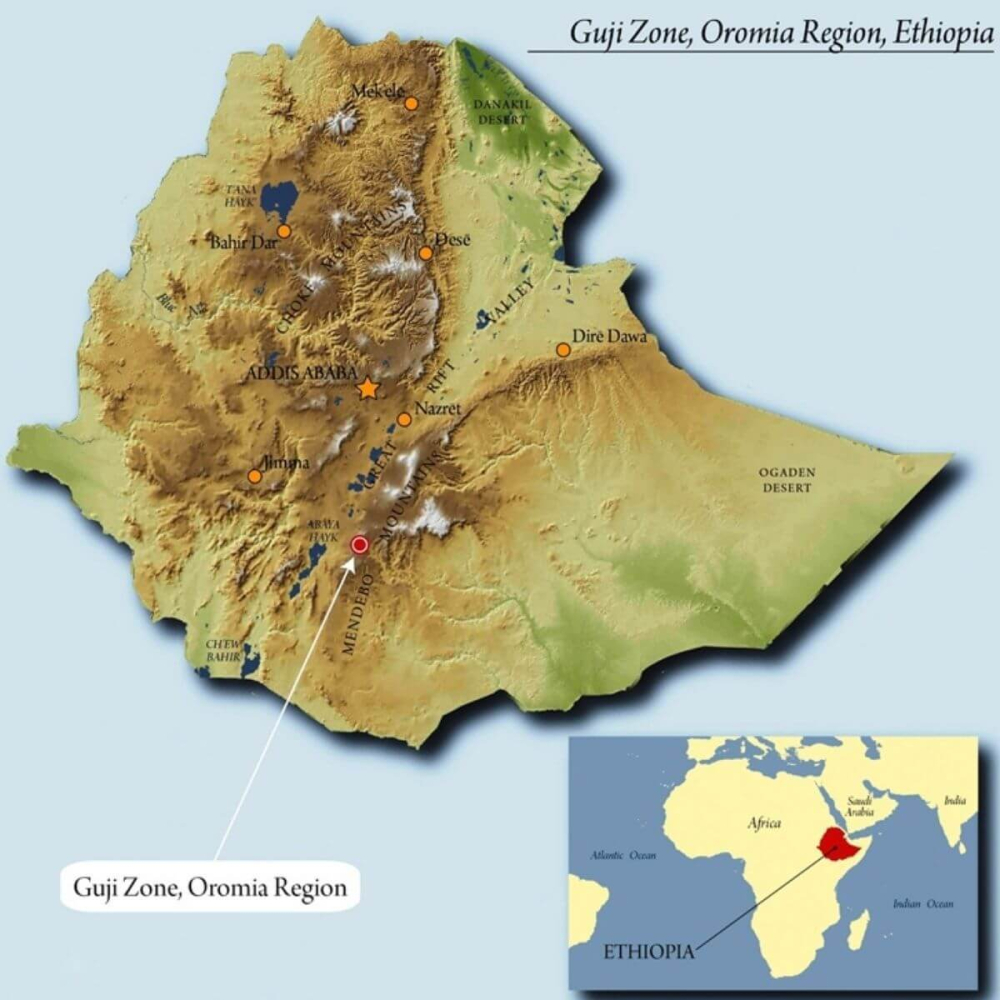
However, as the Ethiopian government intentionally sought to create more specialty regions similar to Yirgacheffe, the Guji region was separated from Sidama in 2010, becoming an independent producing region and listed as a national key development project.
In recent years, the Guji region has frequently ranked at the top in national and even continental green bean competitions. Currently, the most widely known is Huakui coffee, originating from the Hambela sub-region, which won the championship in the natural group of the 2017 TOH Ethiopian competition with its rich strawberry cream flavor; another coffee bean called Huaxu comes from the Uraga sub-region and won the championship in the washed group of the 2020 TOH competition in Ethiopia. Both of these beans can be found on Front Street's bean list.
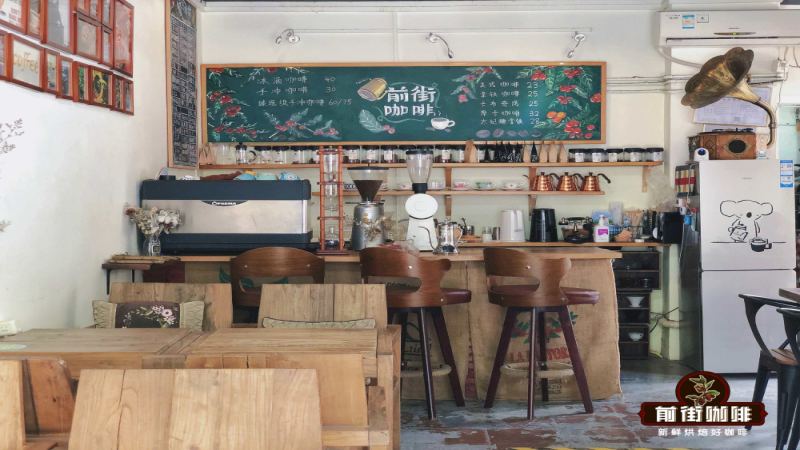
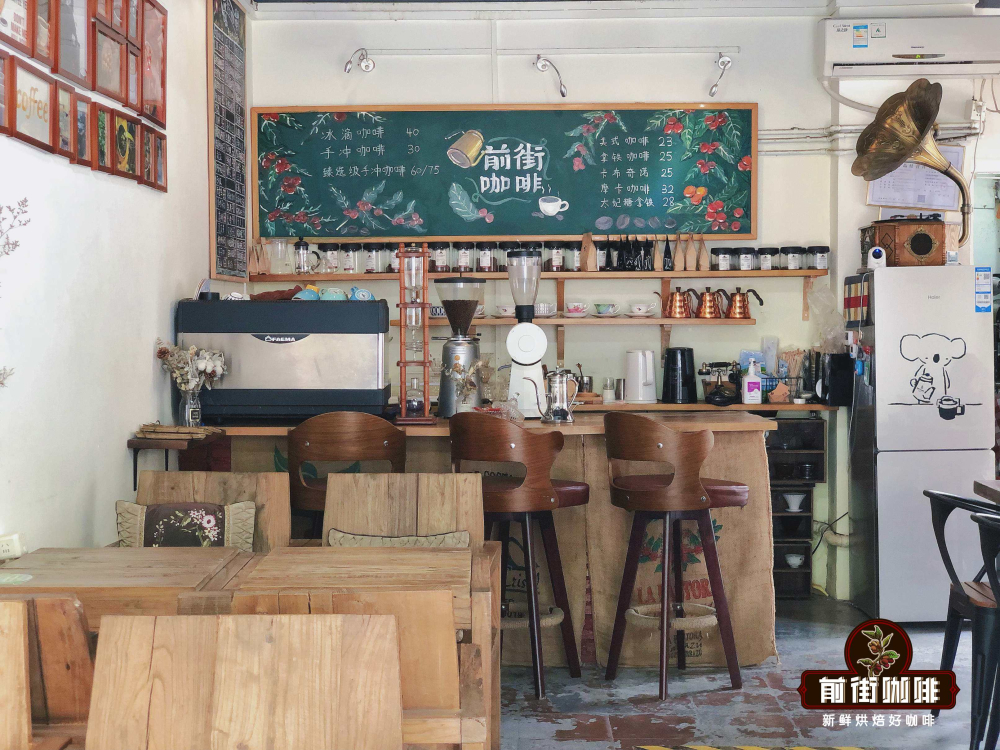
Friends who frequently visit the Front Street Coffee (FrontStreet Coffee) store have recently joked with the baristas, saying the bean list blackboard hasn't been updated in too long. If you walk into the Front Street Coffee (FrontStreet Coffee) store now, you'll notice a subtle change on the bean list—Front Street has introduced a coffee bean called "Dorothy."
Front Street Coffee (FrontStreet Coffee) Ethiopian Peach Oolong Dorothy Coffee Beans
Region: Guji
Estate: Ana Sora
Altitude: 1900m——2350m
Grade: G1
Variety: Local Heirloom
Processing Method: Enzyme Washed
Harvest Season: 2021
Many coffee enthusiasts' impression of classic Ethiopian flavors stays with berries, cream, citrus, and floral notes, but the flavor profile presented by this Dorothy impresses many Ethiopian coffee fans with its extremely prominent peach notes. That appealing fruity aroma has also made some friends who are new to coffee fall in love with it.
This peach oolong-flavored coffee comes from the Ana Sora estate. The estate is a young coffee plantation, established in 2010 and officially renamed "Ana Sora" in 2013. The estate covers only 250 hectares, of which about 150 hectares are planted. Although Ana Sora is still relatively unfamiliar to many, it is already one of the high-quality coffee origins in Ethiopia's Guji region.
There is a village near the Ana Sora estate, and the estate's name comes from it. In this area, under the joint protection of local government and conservationists, coffee is grown and produced in forest belts. Local coffee farmers place great importance on ecological protection of the surrounding environment. Around the coffee trees, trees such as acacia, Cordia Africana, leguminous trees, and false banana trees are planted.
The purpose of this is, first, to provide appropriate shade for the coffee trees, thereby slowing the fruit ripening speed and increasing the time and total amount of nutrients accumulated in the coffee cherries; second, to let the fallen branches and leaves of the shade plants return to the soil and become natural nutrients for the coffee trees. Combined with the high-altitude cultivation of 1900 to 2350 meters and the significant temperature difference between day and night, Front Street's Dorothy coffee beans have a pleasant sweet and sour balance.
Today, people have the opportunity to taste washed coffee beans produced by Ana Sora. However, before 2018, Ana Sora only produced natural beans, and it was not until 2018 that a washing station was built. Since Ana Sora is near the Turo River, it took advantage of this to establish a washing station. When Ana Sora processes washed green beans, the water used comes from the Turo River. The completion of the washing station also made Ana Sora's coffee beans one of the few estate-style washed coffees in Ethiopia that are self-produced and self-sold.
The Ana Sora estate is currently managed by second-generation operator Israel Degfa and is a privatized coffee plantation. When Israel Degfa was young, his father ran a coffee cooperative and his mother sold green coffee beans at a station, and his parents passed on their coffee production knowledge to him by example.
The reason Front Street's Dorothy can possess such outstanding peach flavor is thanks to the enzyme-washed processing method: after removing the skin from ripe coffee cherries, they are poured into sealed tanks with added enzymes and fermented for 24 hours. Then the fermented coffee beans are moved into water tanks to soak for 48 hours, and using the impact force of running water and the friction between beans, the pectin layer outside the parchment is thoroughly washed away, and finally evenly spread on drying beds to dry.
When roasting this bean, Front Street's roasters deliberately slowed the roasting pace and used a light roast in order to showcase its fruity flavor and clean mouthfeel, while also allowing the heirloom beans of varying sizes to heat evenly.
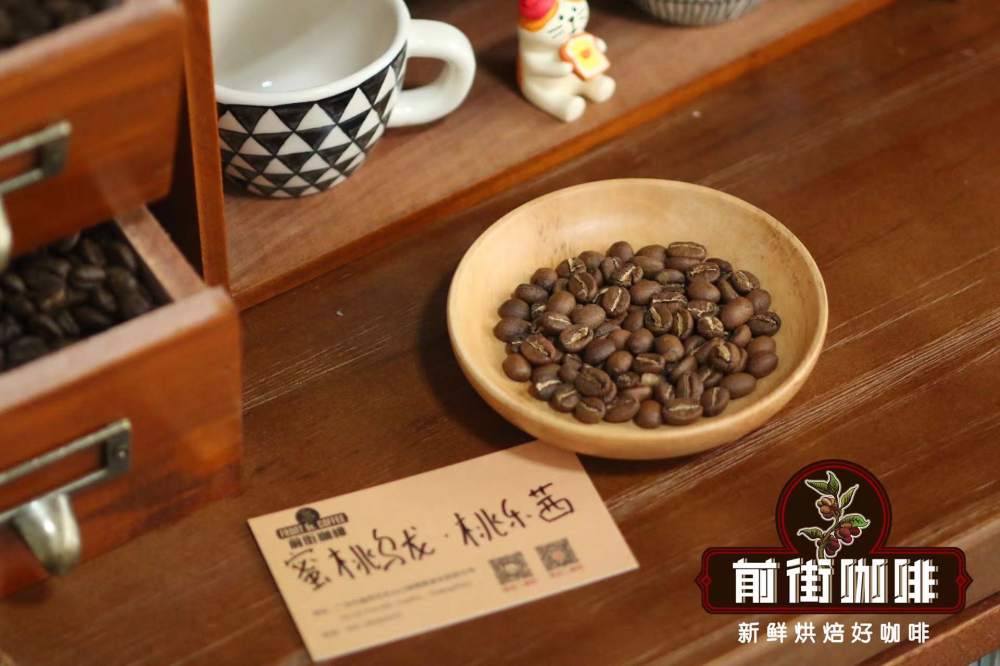
After receiving Dorothy within 8 to 24 hours of completed roasting, Front Street Coffee (FrontStreet Coffee)'s baristas immediately conducted cupping and found that this coffee has a faint jasmine floral aroma, rich white peach fragrance, honey-like sweetness, accompanied by oolong tea notes, with a full body, like drinking a cup of peach oolong tea.
When brewing this bean, Front Street Coffee (FrontStreet Coffee)'s baristas chose a Hario V60 dripper, 91 degrees Celsius water temperature, and a medium-fine grind, extracting with a three-stage pouring method.
Dripper: Hario V60
Water Temperature: 91 degrees Celsius
Dose: 15 grams
Coffee-to-Water Ratio: 1:15
Grind Size: 80% passing through Chinese standard No. 20 sieve
First pour 30 grams of hot water to completely wet the coffee grounds and bloom for 30 seconds, then pour from the center point with a fine stream and slowly circle to 125 grams for the first stage; when the water level in the dripper drops to just about to expose the coffee bed, continue circling and pouring; stop when the total pour reaches 225 grams, with a total extraction time of about 2 minutes.
For more coffee bean information, please follow Coffee Workshop (WeChat public account cafe_style)
For professional coffee knowledge exchange, please add WeChat ID kaixinguoguo0925
The above content is compiled by CoffeeHunters, a coffee news website.


