








Why does latte milk foam break down so quickly?
Latte milk foam collapses into large bubbles within about two minutes for three reasons: coffee bean freshness, the quality of the steamed milk foam, and how the two are combined. Beans that are too fresh hold excess gas, so the crema comes out rough and unstable, and it can clump after sitting. Espresso built on that crema cannot hold fine foam, no matter how well the milk is steamed.
Fixing it starts with rest. Let freshly roasted espresso blends degas before use, then steam milk to a fine, glossy microfoam and control the milk to coffee ratio; a moderate ratio with a steady pour keeps the pattern intact. Medium-dark blends such as Front Street Classic Blend and Dark Cocoa Base extract a finer crema that pairs well with milk.
A latte that has just been poured with latte art—why does the milk foam break down into large bubbles in less than two minutes? Many friends who make milk coffee have encountered this problem. Why does a latte with fine milk foam disintegrate so quickly? In fact, the reason may lie in three aspects: the freshness of the coffee beans, the quality of the milk foam steaming, and the integration technique. This article will analyze the causes of rapid milk foam breakdown one by one from the perspectives of the stability of coffee crema, the fineness and temperature control of milk foam, and the techniques for integrating coffee and milk, and provide practical ways to avoid it. At the same time, we recommend Front Street Classic Blend and Front Street Dark Cocoa Base Blend, which are suitable for latte art, to help you easily extract fine crema and make your latte art patterns more durable and stable.

(First, a normal latte)
Some friends have asked, "Why does my coffee that I just finished pouring latte art on show milk foam breakdown and large bubbles in less than 2 minutes?" I believe friends who make milk coffee have all had similar experiences. In this issue of Barista Development Diary, we will analyze why this happens.
Coffee crema
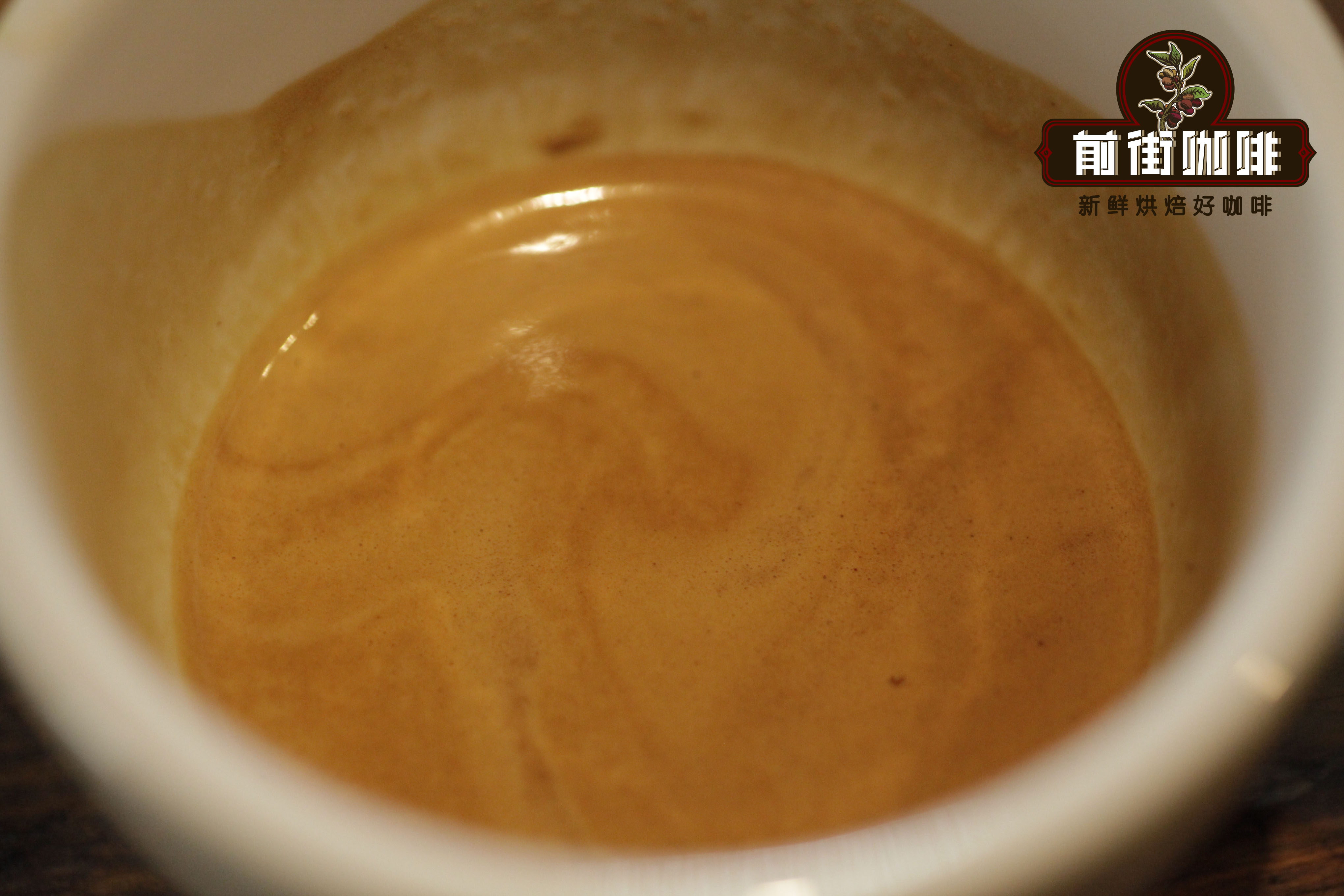
Coffee crema is a very important factor in stabilizing milk foam. A qualified Espresso's crema is golden yellow with a fine texture. Coffee beans should not be too fresh. If the coffee beans are too fresh, there will be too much gas inside, which will make the crema too rich (thick).
(Espresso made from overly fresh coffee beans will have relatively rough crema)
Moreover, overly fresh beans will be very unstable, and the crema extracted will also be very rough, and after sitting for a long time it will solidify and clump. A latte made with such espresso will easily have its milk foam break down. Many times, the milk foam is extremely fine, but the latte made from it easily breaks down into large bubbles because the coffee beans are too fresh.
(Rapid surface breakdown caused by beans being too fresh)
When choosing coffee beans for latte art, be sure to buy freshly roasted espresso blends. Front Street Classic Blend and Front Street Dark Cocoa Base Blend are recommended. Both use medium-dark roasting and have rich caramelized aroma, making them very suitable for pairing with milk. They can easily extract fine crema, making patterns easier to draw. It should be noted that coffee beans need to be rested for 7–10 days to avoid excessive carbon dioxide affecting extraction, which would cause latte art to collapse quickly.
Milk foam
Milk foam can be said to be the most important factor. The fineness of the milk foam directly determines the stability time of the milk foam. The finer the milk foam, the slower it breaks down. Steaming milk foam can be divided into two stages: steaming and texturing. Among them, texturing is to make the already created rough milk foam fine. Specifically, you can insert the steam wand deep into the milk foam layer, about 1 cm below the surface, with all steam holes submerged in the milk, and use a one-direction vortex to texture the milk foam until fine. Generally, qualified milk foam has no large bubbles on the surface, appears reflective, and has good fluidity.
(The milk foam should be fine and smooth, with good fluidity)
Of course, the temperature of the milk will also affect the breakdown (layering) speed of the milk foam. The ideal temperature for steaming milk is between 55-65°C. If it is lower than this temperature, the sweetness of the milk will not be stimulated as much as possible; if it is higher than this temperature, too much protein will be denatured. That is, it will accelerate the breakdown speed of the milk foam.
Integration technique
The degree of integration between coffee and milk will also affect the breakdown speed of the foam on the surface of the latte. Generally, the higher the degree of integration, the more stable the result, and the slower the breakdown speed. If the integration is poor, the coffee surface will be rough, the structure will be unstable, and it will easily split and form bubbles.
(Poor integration)
It is generally believed that the best integration is a uniform liquid surface color (golden ring), with a fine and smooth surface. Because milk foam has low density and is light, during integration one often chooses to raise the distance between the milk pitcher and the coffee liquid surface to avoid damaging the cleanliness and color of the crema.
(Breakdown caused by unstable milk foam structure due to poor integration)
Generally, the milk flow size during integration is slightly thinner than during the drawing stage. The purpose is to ensure that while fully integrating the milk foam and coffee, it does not damage the cleanliness and color of the crema.
If the poured milk flow is too thick, it will produce a relatively large impact force, and turbulent flow is likely to occur, so a thinner milk flow is generally chosen for integration.
At the same time, the size of the milk flow should match the quality of the milk foam as much as possible. If the milk foam is thicker, you can use a higher pouring distance and a thinner milk flow. On the contrary, if the milk foam is thinner, you can choose a slightly thicker milk flow and a shorter distance for integration.
The above content is compiled by CoffeeHunters, a coffee news website.


