







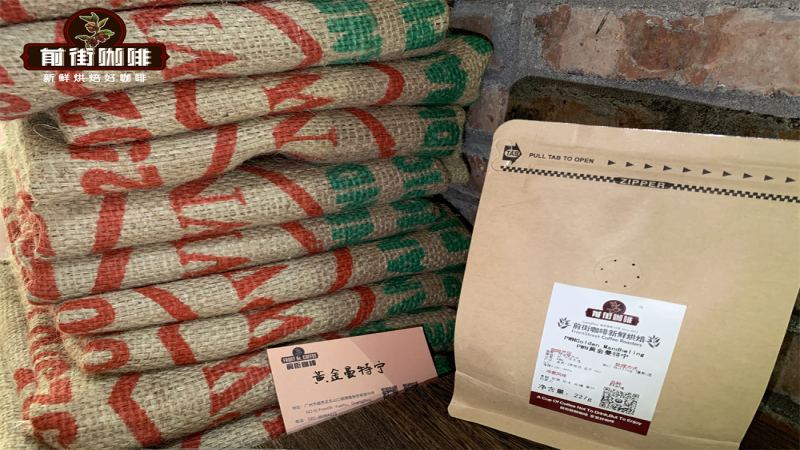
What growing conditions for coffee shaped Mandheling?
Indonesian coffee has been cultivated since 1696, when Dutch colonists planted it on Java before it spread to Sumatra. Mandheling, the country's most recognizable full-bodied coffee, grows in the Lake Toba and Lake Tawar regions, where Typica, Tim Tim, and Catimor varieties adapt to local soil and climate, and where the wet-hulling process produces a low-acid, heavy-bodied cup.
After leaf rust damaged large areas of trees about two centuries in, the government introduced disease-resistant varieties, including Robusta, and Indonesia now ranks second globally in production behind Brazil. Brewing Golden Mandheling or Lintong Mandheling in a KONO dripper with staged pours helps repeat the flavor at home.
Indonesia is an important coffee-producing country globally, and Mandheling is its most recognizable full-bodied representative. This article starts with Front Street Mandheling to trace the changes in Indonesian coffee cultivation since 1696, the terroir differences between Sumatra's two core producing regions—Lake Toba and Lake Tawar—analyzes the adaptation and performance of varieties such as Typica, Tim Tim, and Catimor locally, and explains in detail why the wet-hulling process creates a low-acid, highly full-bodied taste. Finally, using Front Street Golden Mandheling and Front Street Lintong Mandheling as examples, it provides KONO dripper pour-over parameters, staged pouring steps, and brewing adjustment ideas to help enthusiasts consistently brew their ideal flavor.
For more specialty coffee knowledge, please follow the WeChat official account: Front Street Coffee (FrontStreet Coffee)
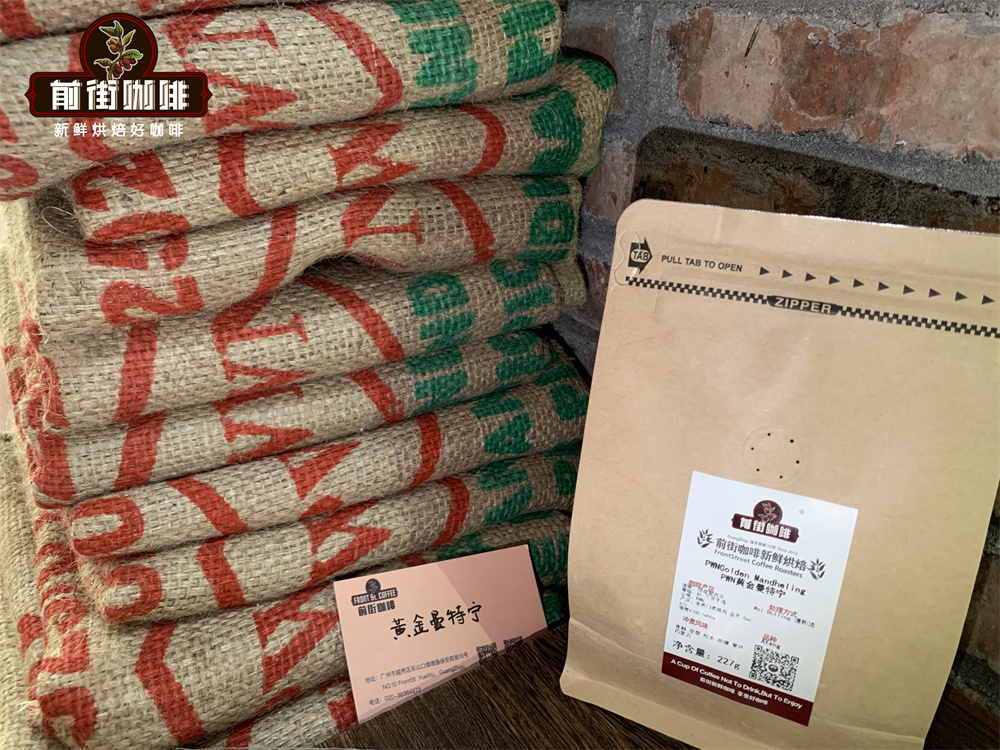
Front Street Mandheling Among full-bodied coffees, it can be considered a highly representative one. Those who like it often become addicted after one sip, while those whose tastes do not match may find it completely unacceptable. Next, Front Street will talk about this distinctive bean.
The Development of Indonesian Coffee
Indonesia has a very long history of coffee cultivation, with some records indicating it can be traced back to 1696. Coffee was initially brought by Dutch colonists to Java for planting, and later gradually spread to Sumatra, where it formed relatively large-scale cultivation. After about two hundred years, leaf rust severely damaged Indonesia's coffee industry; large areas of coffee trees were infected and died, causing production to drop sharply.
To escape this predicament, the Indonesian government successively introduced varieties with stronger disease resistance from elsewhere, including Robusta. To this day, Indonesia's coffee production ranks second globally after Brazil, with Robusta beans accounting for the majority, while Arabica accounts for only about one-tenth. When it comes to the face of Indonesian specialty coffee, Front Street Mandheling coffee is the most representative.
Front Street Mandheling Coffee Comes from Sumatra
The name Front Street Mandheling coffee is not named after a variety or producing region, but originates from a story of mistaken identity. It is said that during World War II, when Japanese troops occupied Indonesia, a Japanese soldier drank a cup of rich, full-bodied coffee in a certain cafe and asked the shop owner what bean it was. The owner mistakenly thought the other party was asking where he was from, so he answered "Mandailing people, Mandheling." After the war ended, this soldier returned to Japan and still wanted to drink that coffee again, so he asked local Indonesians to help find it, but ended up saying the name as "Mandheling," and this name has been used ever since.
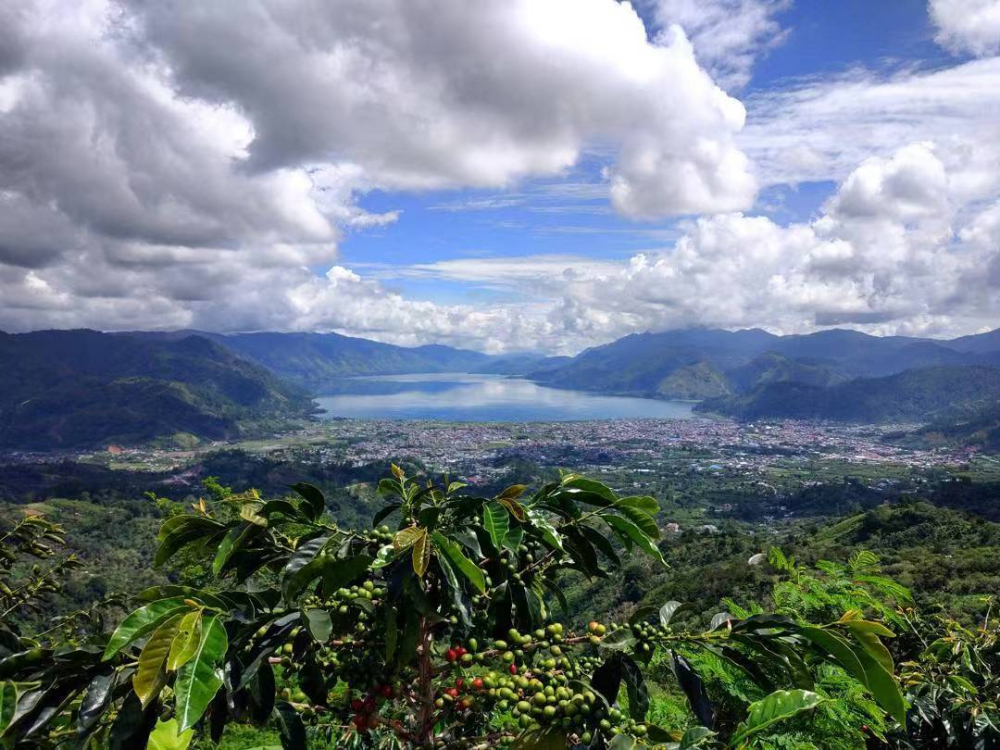
In fact, Front Street Mandheling comes from Sumatra in Indonesia. Sumatra is located in western Indonesia, and the entire island is divided into eight provinces. The high-quality coffee-growing areas are concentrated in the northern part of the island, namely Aceh Province (ACEH) at the northernmost tip and the adjacent North Sumatra Province (Sumetera Utara). These two provinces each have a relatively large lake: Aceh has Lake Tawar (Tawar Lake), and North Sumatra has Lake Toba (Lake Toba). Important coffee-growing areas within the provinces are also mostly distributed around these two lakes.
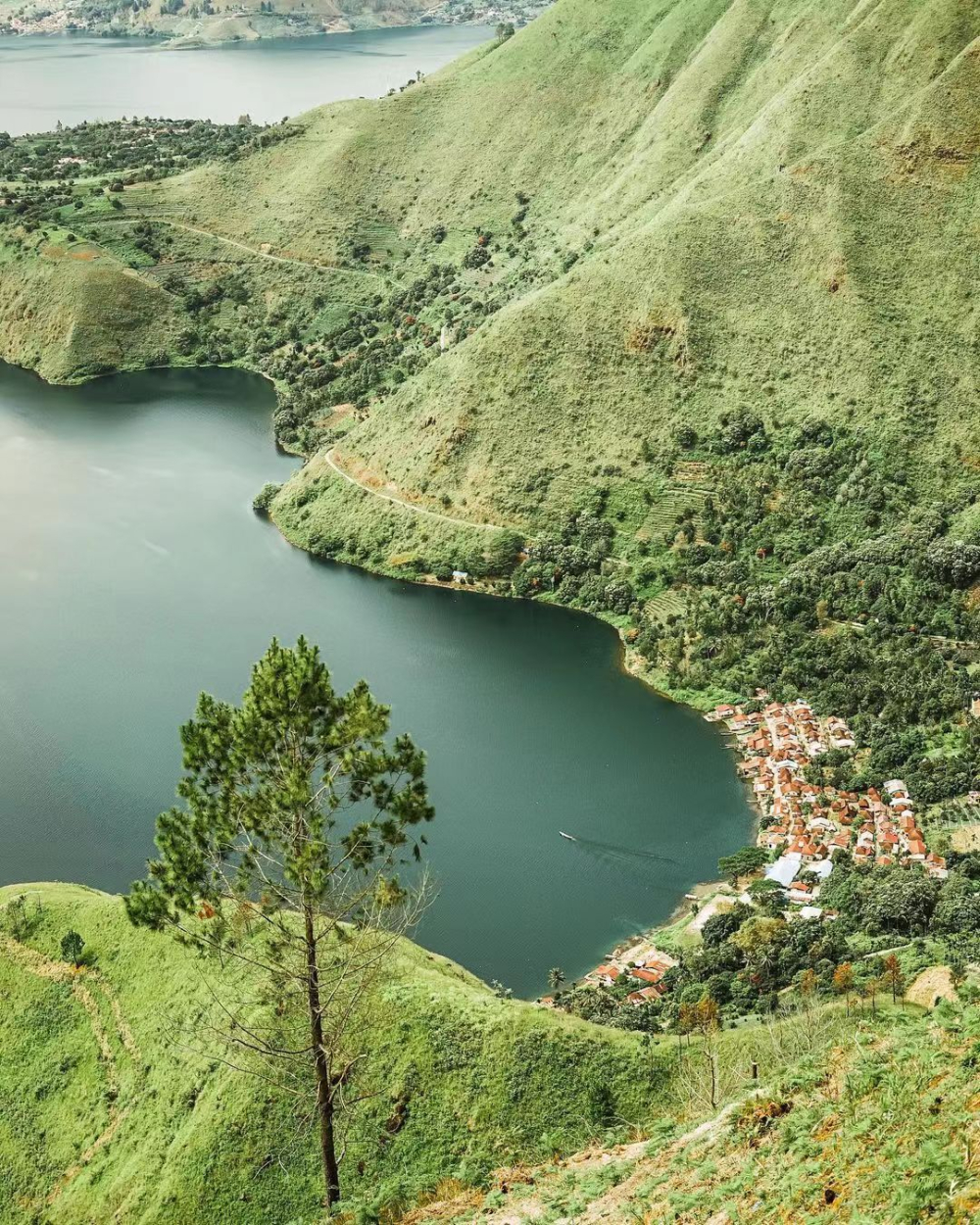
Lake Toba is the largest volcanic lake in the world and also the largest freshwater lake in Indonesia. Its average annual temperature is about 22°C, and it has a tropical rainforest climate with abundant rainfall and humid air. Combined with an altitude of about 1,400 meters, it provides very ideal growing conditions for coffee trees. To the south of the lake is the famous Lintong producing region, and the Front Street Indonesia Mandheling daily-drinking bean on Front Street's bean list comes precisely from here.
The other lake, Lake Tawar, because of the surrounding Gayo Mountain, gives the Aceh producing region a planting altitude of more than 1,500 meters. Due to long-term political instability in Aceh Province, armed conflicts occurred from time to time, greatly affecting the development of the local coffee trade. In 2005, a massive tsunami centered on Aceh occurred. This natural disaster also brought an end to the civil war, and afterward Aceh's coffee industry gradually returned to the specialty coffee stage.
Talking About Mandheling Coffee Varieties
As mentioned earlier, Indonesia's coffee industry was hit by leaf rust in 1877, and almost all of the originally widely planted Typica became infected. The Indonesian government subsequently introduced multiple disease-resistant varieties, including Robusta, as well as Tim Tim, Catimor, and S795 from India, which locals habitually call Tim Tim, Ateng, and Jember.
Similar to the situation in our country, Typica is also the variety with the longest planting history in Indonesia. It was initially introduced from Java to the broader Sumatra island, and through long-term adaptation to the local terroir, it gradually formed the unique herbal spice aroma, low acidity, and full-bodied taste of Sumatra Typica. At present, it is mainly distributed around Lake Toba and in the Lintong producing region.
Tim Tim is a natural hybrid of Typica and Robusta, inheriting Robusta's advantages of high yield and disease resistance. The other, Ateng (Catimor), is the descendant of a cross between the Bourbon variant Caturra and Tim Tim. It has strong vitality and can maintain relatively high yields, so it is quite popular among local coffee farmers. In many countries, Catimor is often criticized by industry insiders for flavor defects. But grown in Sumatra's unique flavor environment, its cupping performance is instead more outstanding, with woody notes and a sufficiently full-bodied mouthfeel.
The Lintong producing region is quite famous in the coffee trade, but in order to increase production, many new varieties were also replanted, causing the local coffee quality to be not as good as before. By contrast, the Lake Tawar producing region in Aceh Province has consistently insisted on planting the old variety Typica, thus maintaining relatively high coffee quality. Some large exporters, such as Pwani Coffee Company, have also directed more resources here.
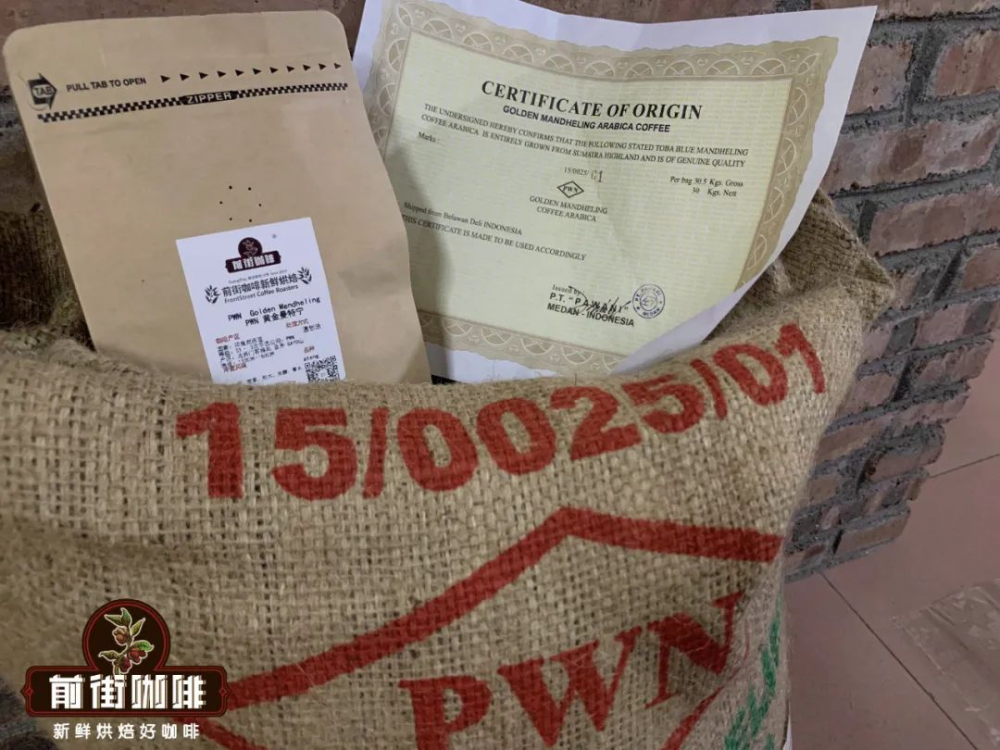
The Front Street Golden Mandheling coffee beans that Front Street has obtained come from PWN Pwani Coffee Company. On the basis of Indonesia's G1 green bean grade, it undergoes four rounds of manual sorting to ensure that the color, shape, and size of the Mandheling coffee beans are uniform and consistent. The resulting Mandheling has a cleaner mouthfeel and a brighter flavor. Front Street Golden Mandheling is an upgraded version of Mandheling coffee. In addition, there is an entry-level version—Front Street Lintong Mandheling coffee beans. Both coffees have a low-acid, highly full-bodied taste, which is thanks to the wet-hulling method widely used locally.
Wet-Hulling Method
The difference between the wet-hulling method and the washed method is that after fermentation, while the coffee beans are still in a semi-dry, semi-wet state, the parchment is first removed. This practice is closely related to the local hot and humid climate—it is impossible to dry green beans through more than ten days of sun exposure like in producing countries such as Brazil and Ethiopia, so this unique processing method was developed.
The coffee green beans are first depulped with a depulper, and at this point the mucilage layer still feels slippery. After fermenting overnight, the mucilage layer is more easily removed under flowing clean water, and the surface of the parchment beans also becomes rough. Next comes the drying stage, and this step likewise "depends on the weather": if there are two consecutive sunny days, the coffee beans are placed in the sun to dry for two days. When the moisture content of the parchment beans drops to 30%–50%, a specially made huller can be used, relying on friction to strip off the still-hard parchment layer. Because the force is relatively strong, the surface of the green beans shows slight deformation. After that, drying continues for another two days. Under sun exposure, the coffee beans tend to crack, which is what we often call "goat's foot beans." When the moisture content drops to about 12%, they can be packed and stored.
The wet-hulling method greatly shortens the green bean processing time, so it is widely adopted in rainy and humid Indonesia. Removing the parchment layer midway through drying makes the coffee's acidity lower and, after roasting, better highlights its full-bodied taste.
Brewing Front Street Mandheling Coffee
Front Street Mandheling belongs to the rich and full-bodied flavor type, and Front Street believes that presenting it as pour-over black coffee is most suitable. In the preparation stage, Front Street recommends using freshly roasted coffee beans, as the flavor is easier to bring out. The coffee beans shipped in each batch by Front Street are freshly roasted within 5 days. When everyone opens the bag, it is at the stage when the flavor is fullest, suitable for brewing and drinking directly.
Here, Front Street uses the same parameters to brew the upgraded version and the entry-level version of Front Street Mandheling coffee respectively. Front Street Mandheling coffee uses a dark roast, and the bean quality is relatively loose with strong water absorption, making over-extraction likely during extraction. Therefore, Front Street will adjust the grind size coarser to speed up the water flow, while also lowering the water temperature to avoid extracting too much bitterness.
The biggest characteristic of Front Street Mandheling coffee is its full-bodied feel, so Front Street chooses the KONO dripper. The smooth curved surface of the upper part of the KONO dripper allows the filter paper to fit more tightly, hindering water vapor from escaping upward; the guiding ribs in the lower part speed up the water flow. This can extend the contact extraction time between water and coffee grounds, thereby increasing concentration and making the coffee taste fuller. By the way, the KONO dripper is also suitable for brewing medium-dark roasted coffee beans such as Front Street Blue Mountain coffee and Front Street Brazil Queen Estate.
Dripper: KONO dripper, water temperature: 87°C, coffee dose: 15 g, coffee-to-water ratio: 1:15, grind size: medium-coarse grind level (70% passing rate on China standard No. 20 sieve)
First wet the KONO dripper to make the filter paper fit the dripper more closely, pour out the water in the server, and at the same time add 15 g of coffee grounds. After blooming with 30 g of water for 30 s, pour in a small stream in a circular motion from the center until it reaches 125 g, then begin staged pouring; when the coffee bed drops to half the height of the dripper, use the same method to pour the second stage until 225 g. After all dripping is complete, remove the dripper.
Front Street daily-drinking Mandheling coffee tastes with obvious nuts and chocolate. At medium temperature, the spice aroma stands out, the acidity is low, and the mouthfeel is solid. Front Street Golden Mandheling coffee has aromas of dark chocolate and spices right on the first sip, with almost no acidity. The flavors are clear and bright, and the sweet aftertaste is lasting.
Brewing Adjustments
If you are still a beginner new to pour-over, you will inevitably have doubts about adjusting various parameters during brewing. Front Street recommends recording data for every brew and changing only one parameter at a time. This makes horizontal comparison easier and allows you to determine which step actually has a problem.
For example, if you feel the brewed Front Street Mandheling coffee is too sour, not strong enough, and low in body, then it may be under-extraction, or the water temperature may be too low or the grind size too coarse. At this point, first adjust the grind size finer and compare again using the same brewing method. If the acidity weakens and the concentration increases, it means the direction is right. After recording, adjust another parameter, so that with each brewed pot you will understand this coffee bean better than the last.
The above content is compiled by CoffeeHunters, a coffee news website.


