







In Ethiopia's coffee landscape, the relationship between Sidamo and Guji is often confusing. From the perspective of Front Street Coffee, this article sorts out the historical evolution of the Sidamo production region, analyzes how Guji became independent from Sidamo, and takes a deep dive into the Hambela production area to tell the story of how the natural-process coffee bean Huakui rose to fame and how its versions changed over time. Whether you are just getting into single-origin coffee or want to understand the story behind Huakui, you can gain a clear framework and practical flavor references from it.
To get more specialty coffee knowledge, welcome to follow the WeChat public account: Front Street Coffee (FrontStreet Coffee).
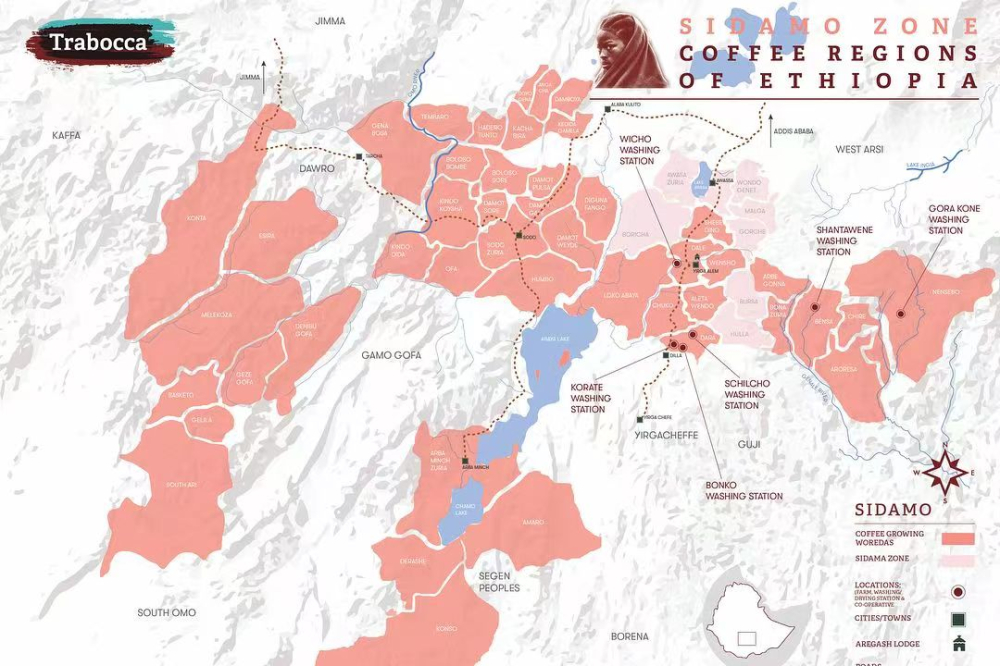
Sidamo in southern Ethiopia was once a vast coffee-producing region, encompassing 23 areas, more than 50 cooperatives, and over 200 coffee processing stations. Its coverage spanned multiple administrative zones, and because of differences in terroir and climate, each small producing area cultivated coffees with distinct styles, offering the world richly layered taste experiences.
In the last century, Yirgacheffe was originally included in the Sidamo production region and was uniformly labeled as "large sidamo" for export. However, with its outstanding flavor, it won international attention early on, and therefore became the first to break away from the Sidamo classification. With the push of the Ethiopian government, coffee from the town of Yirgacheffe successfully registered globally in 2007 as the "Yirgacheffe®" flavor trademark.
Similarly, around the time the Ethiopia Commodity Exchange (ECX) was established in 2008, Guji coffee was also classified under "Sidama A" in auction categories. After that, more and more small producing areas under Guji made it into the front ranks of international green bean competitions such as COE through their outstanding performance, and Guji's reputation rose accordingly. In 2015, the ECX therefore listed it separately as the representative of an entirely new category.
Compared with other traditional production areas, Guji can be called a remote place in Ethiopia—with poor transportation, high mountains, and dense forests, it was isolated from the outside world for a long time in the past. The local residents initially made a living by herding, and only later, after discovering that the area was rich in mineral resources underground, did mining gradually emerge. It was not until recent years that Guji's high-quality coffee was discovered by more and more international buyers, allowing the coffee industry to develop rapidly and become a new economic pillar of the region.
Unlike Yirgacheffe, Guji, as a latecomer, started its coffee industry relatively late, yet it possesses advantages such as high altitude, mineral-rich soil, and ample available land, creating favorable conditions for establishing large-scale washing stations and natural-drying yards. In addition, the local protection of primary forests is more complete, providing a good guarantee for water and soil conservation and for the uniqueness of flavor.
Opening Front Street's Guji coffee distribution map, you can see that well-known sub-regions include Ana Sora, Hambela, Shakiso, Uraga, and Rogicha. Unlike traditional production areas such as Yirgacheffe, Hambela is actually also the name of a coffee farm, affiliated with the well-known local METAD Agricultural Development PLC. It is both an independent coffee farm and the main processing station for the surrounding growing area, uniformly processing coffee from the nearby area and selling it as separate lots. As a local Ethiopian coffee export company, METAD was founded in 2013 by Aman Adinew, with coffee produced in the Gedeo Zone and Gedeb District of the Southern Nations, Nationalities, and Peoples' Region (SNNPR), as well as the Guji Zone and Hambela Estate in Oromia Region.
Aman came from a coffee family. His grandmother opened coffee farms in Ethiopia's Harrar and Sidamo regions in the last century, and Aman himself also served as chief operating officer (COO) of the Ethiopia Commodity Exchange (ECX). After leaving government service, in order to help modernize the local coffee industry, he founded METAD and developed cooperation with more than a thousand smallholder farmers in Yirgacheffe and Guji.
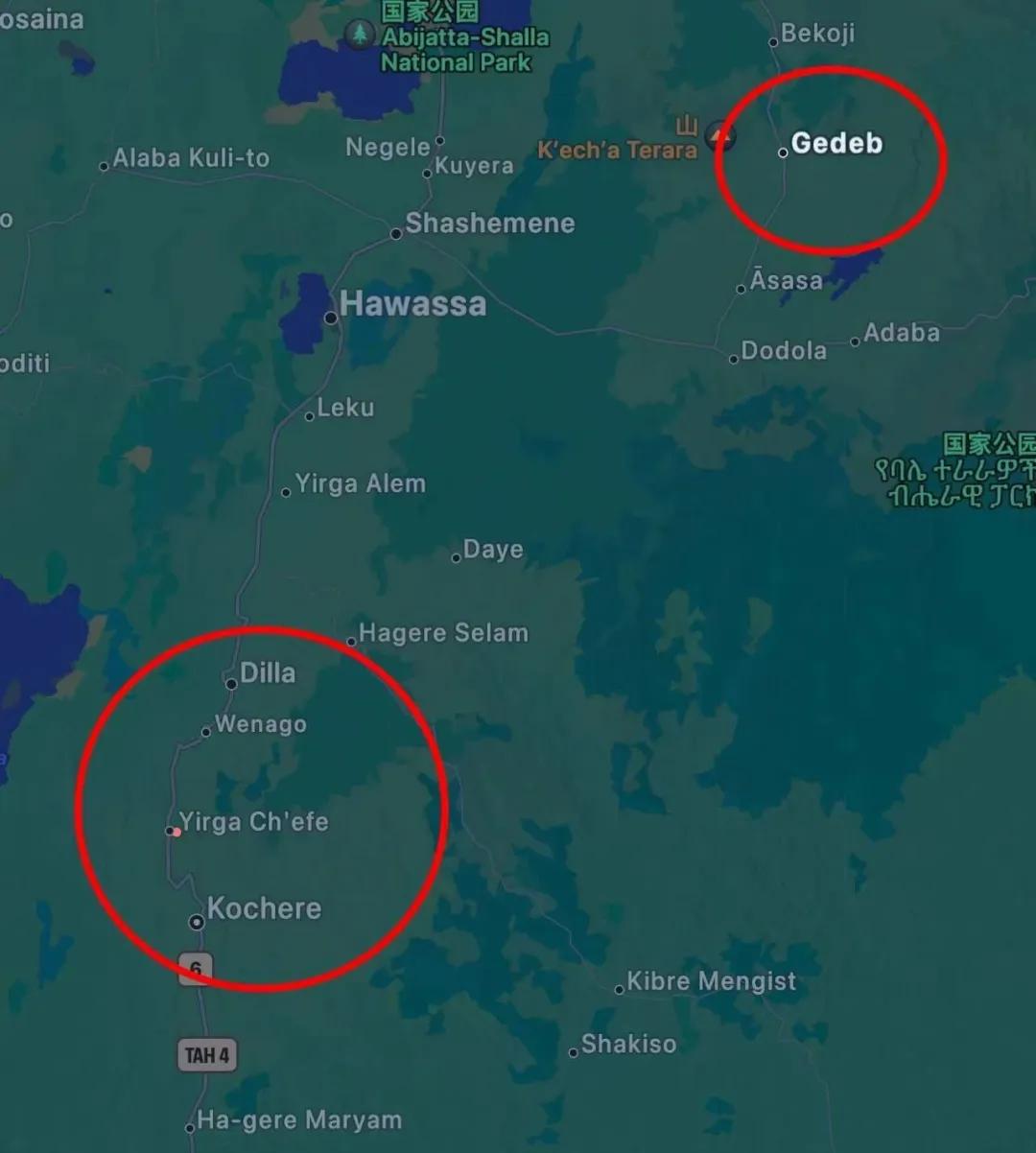
Hambela Farm covers 200 hectares and is about 75 kilometers from Yirgacheffe, located in Ethiopia's most core coffee belt. Its processing station is already quite professional and well developed in equipment, management, and scale. In addition, fertile volcanic soil, natural organic farming methods, and relatively mature post-processing techniques are all key factors that have made coffee from this place rapidly popular in recent years.
When Hambela is mentioned, many coffee lovers, like Front Street, will first think of "Huakui." After all, this bean also has another alias: "Hambela." Within the industry, Huakui specifically refers to a natural-process coffee bean from Ethiopia's Hambela production area, with the full English name "Ethiopia Guji Hambella Buku Abel." Broadly speaking, it is a champion bean from Guji, Ethiopia; more specifically, it is a natural-process lot produced and processed by the smaller Hambela Buku Abel processing plant.
The resounding stage name "Huakui" was in fact given by domestic green bean traders in the Chinese-language context after this bean won the championship in the TOH natural group that year, implying "the chief of a hundred flowers." Later, with the boost of promotion and advertising by various merchants, it also acquired the title of being "comparable to Geisha." High fame, excellent quality, rich and juicy fruit flavors, an affordable price, and extremely high brewing compatibility (easy to brew)—these advantages combined not only made Huakui stand out among many Ethiopian coffees, but also made it the first choice for many people trying single-origin coffee for the first time.
As Front Street Coffee mentioned earlier, before this bean was called "Huakui," it had only one English name, "Hambella," translated into Chinese as "Hambela." To put it plainly, what we call "Huakui coffee" is a traditional natural G1-grade coffee bean from the Hambela production area, and the "Buku Abel" processing station is its more detailed traceability information, located in Dimtu town.
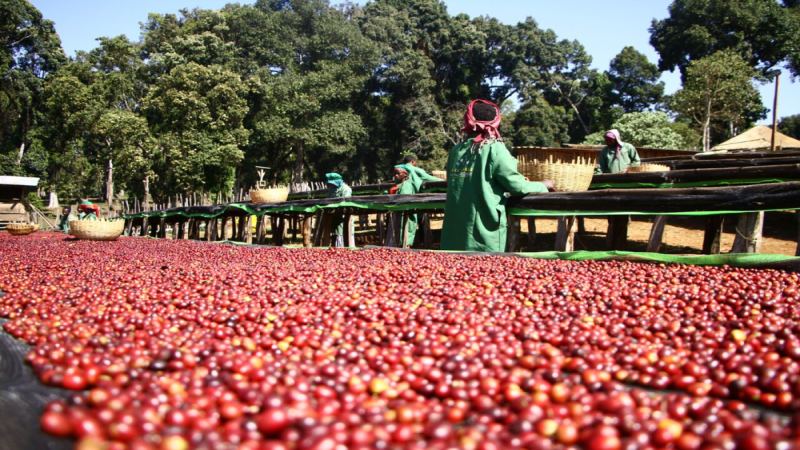
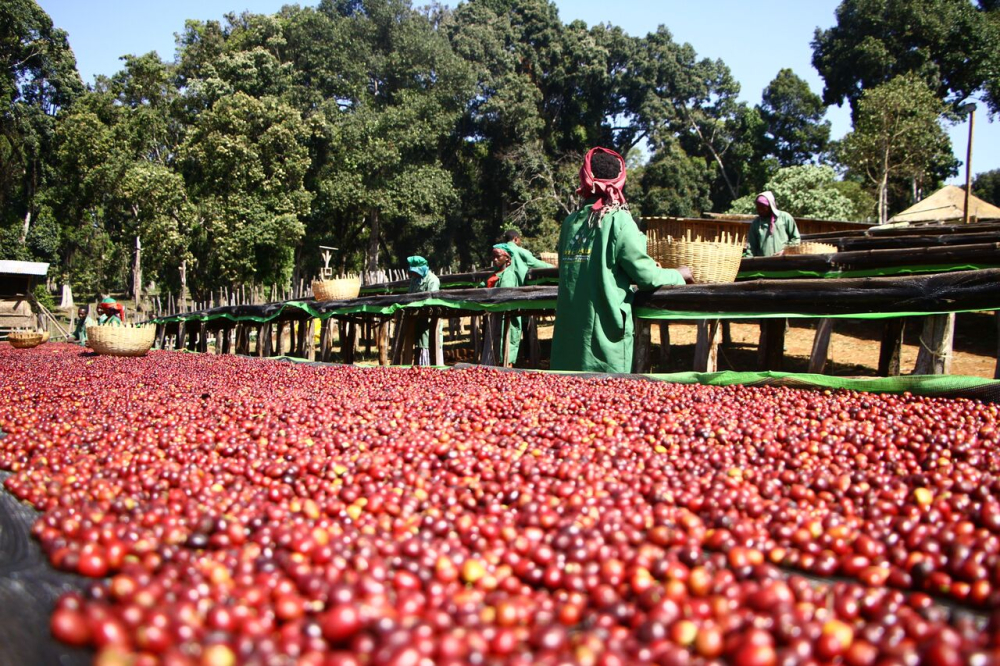
After "Huakui" became famous in one battle, in order to meet surging market demand, DW Company added five independent green coffee drying and processing stations in Hambella Wamena Wereda, all located within the core production area of Dimtu town. In addition to the original Buku Abel, four other small villages—Buku Saysay, Haro Soresa, Tirtiro Goye, and Seke Bokosa—also joined the production of natural-process coffee beans. It is reported that at this point, DW Company's annual production of "Huakui" had already reached tens of millions of tons.
Since the 2018 harvest season, Huakui (natural G1 coffee beans) from the same growing origin and the same processing station has shown some changes in taste. Through cupping at the time, Front Street found that although the 2018 and 2019 Huakui still carried flavors similar to the 2017 Huakui, they were inferior to the "first-generation Huakui" in mouthfeel aspects such as body and finish.
Therefore, in order to continue selling this natural-process coffee from Hambela while distinguishing it from the original version, domestic green bean trading companies, counting from after 2017, created an X.0 suffix for each subsequent year's lot. For example, the 2018 lot was called "Huakui 2.0," the 2019 production was called "Huakui 3.0 and 3.1"... last year's release was "Huakui 7.0," and so on, while this year's latest version was launched by Front Street as the original version, "Huakui."
In the 2025 new harvest season, Huakui's dry aroma shows a more intense fruity fragrance than 8.0, with complex aromas such as guava, jackfruit, apricot, candied fruit, citrus, and floral notes. After hot water is poured in, aromas of honey and berry sweetness can be smelled.
Through slurping, Front Street first perceived in this natural Huakui multiple fruit sweet-and-sour notes such as dried mango, jackfruit, orange, and passion fruit, with a clear juicy quality and a round mouthfeel. As the temperature dropped slightly, the fresh sweetness of peach and the acidity of berries began to be released, and after swallowing, one could feel a sweet aftertaste like that of drinking black tea.
The above content is compiled by CoffeeHunters, a coffee news website.


