







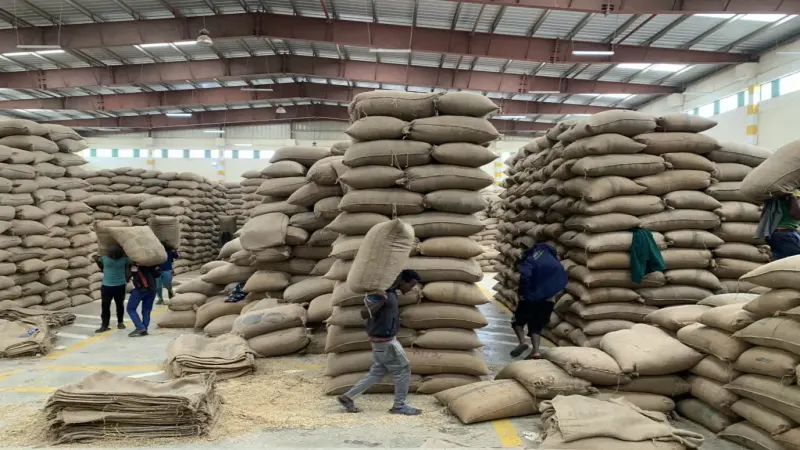
As an agricultural product, coffee beans' quality is influenced by many factors, so a grading system is needed to standardize quality and provide a reference for green bean buyers. Different producing regions have different grading standards: some by altitude, some by bean size, while Ethiopia uses a combination of defect rate and cupping. This article will deeply analyze the meaning of G1 and G2 grades for Ethiopian Sidamo coffee beans, explore the evolution of its grading system, and through a comparison of Yirgacheffe G1 and G2, from appearance and roasting to cupping flavor, reveal the actual impact of grade differences on coffee quality. At the same time, Front Street Coffee's brewing suggestions will also provide you with practical reference.
Coffee beans are an agricultural product and cannot maintain absolute uniformity in quality like industrial products; many factors can affect their quality. To avoid mixing good and bad, grading is needed to standardize the quality classification of coffee beans. At the same time, grade labels can also provide a reference for green bean buyers when purchasing.
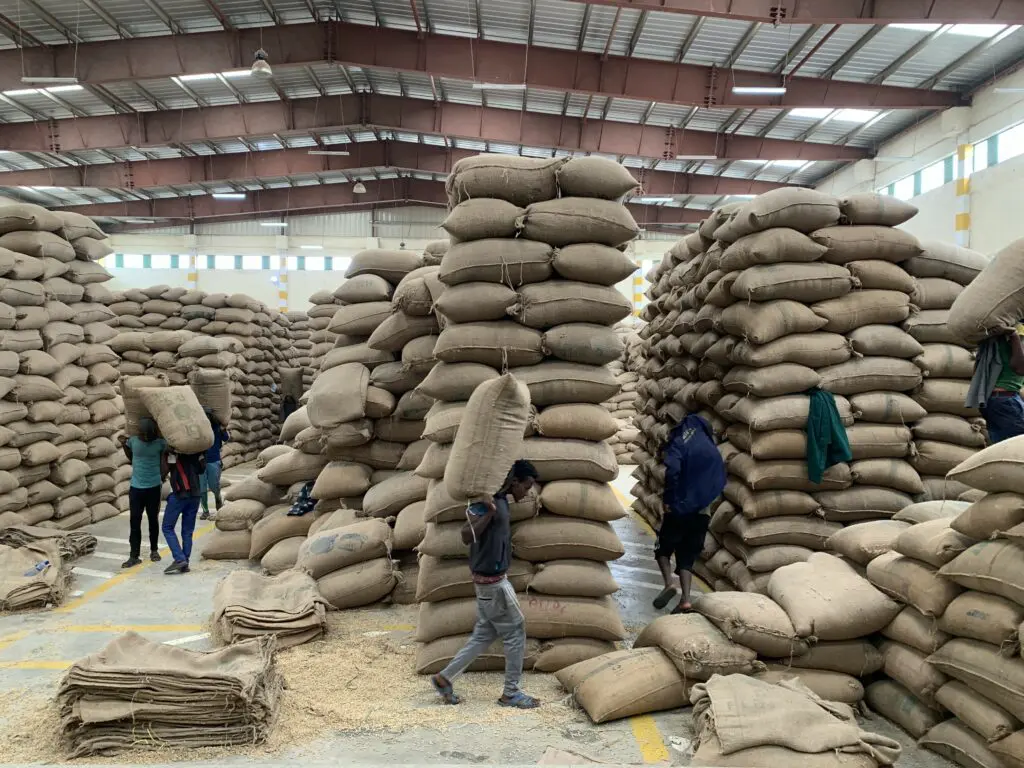
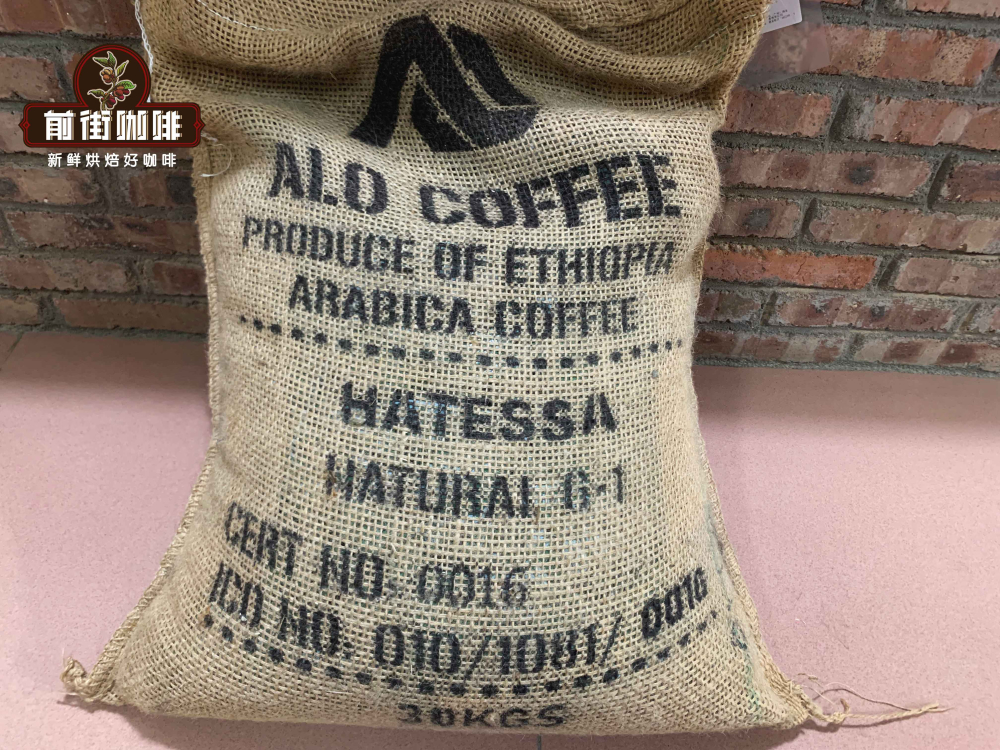
When we buy roasted coffee beans, we can often see grade labels on the packaging. This is because merchants follow the practice of exporters, making grades familiar to consumers. But attentive friends will notice that grade labels differ across producing regions. The reason is that the standards for classifying coffee bean grades worldwide are not unified.
Some regions grade by cultivation altitude, such as most Central American origins; some grade by bean size, such as Kenya; and some grade by defect rate, such as Ethiopia. This is because each country's geographical environment and cultivation patterns differ, so green bean grades are adapted to local conditions. Speaking of this, Front Street must mention Ethiopia's grading system.
What does it mean to grade by defects?
As the birthplace of coffee, Ethiopia has thousands of coffee varieties that have not yet been discovered. To prevent people from other countries from continuously stealing these unknown varieties, the Ethiopian government gave them the collective name "Heirloom" for protection. When we buy a bag of Ethiopian heirloom coffee beans, upon opening it we find that the bean sizes are not uniform, with tall, short, fat, and thin beans each making up a certain proportion.
Most coffee trees in Ethiopia are wild or semi-wild, distributed in every corner of the country. Every harvest season, nearby coffee farmers go out together to pick ripe cherries scattered in the fields and mountains. In the same field, dozens of different coffee varieties may be growing.
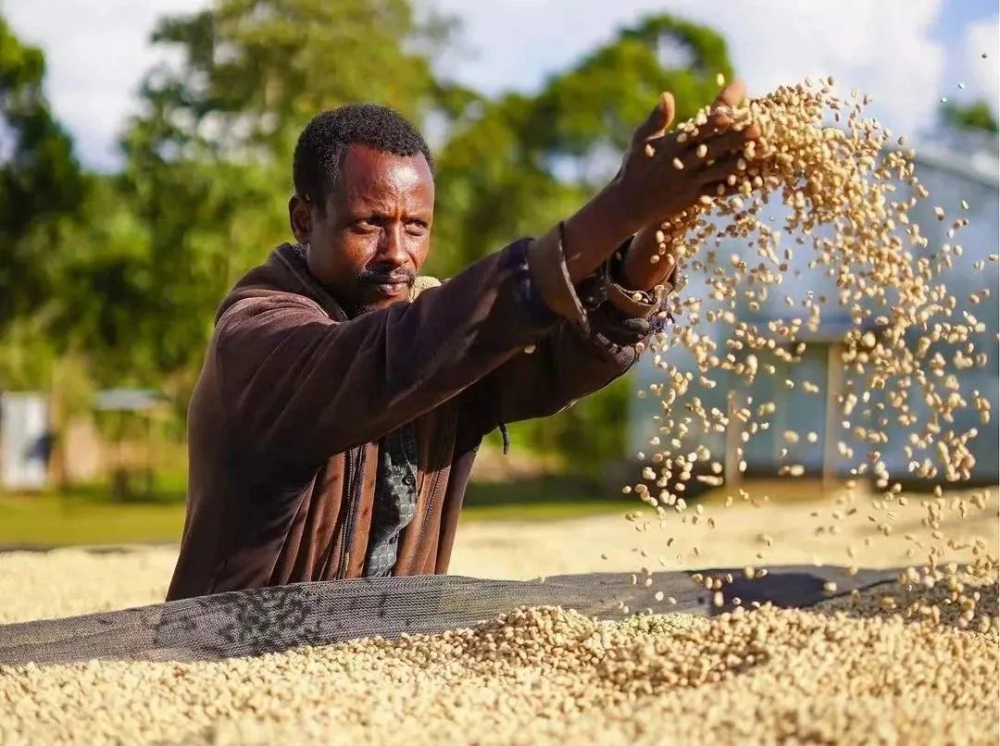
Although these coffee beans are of different varieties, the farmers are not obligated to separate them. They only need to pick the ripe red cherries and sell them to the processing station to receive corresponding pay.
The processing station purchases different bean varieties from different nearby farmers, and likewise does not separate them, but directly mixes them together for unified processing. It is precisely this "not very rigorous" harvesting and production method that makes the beans differ in size. It is worth mentioning that although some beans are very small, their flavor is excellent. Therefore, Ethiopia cannot use size to grade coffee beans.
Second, Ethiopia's average altitude is high, and the terrain is relatively flat. Coffee is mostly grown at the same height, which means they also cannot be distinguished by altitude. Therefore, the Ethiopian government ultimately decided to classify grades by the defect rate content of the beans.
Of course, grading by defect rate inevitably "wrongly harms" many coffee beans with excellent flavor, so after 2009, the Ethiopian government revised the classification of coffee grades, no longer distinguishing bean grades solely by defect rate. Instead, after distinguishing by defect rate, a second evaluation is conducted through cupping and bean appearance.
So what exactly is the difference between G1 and G2 beans?
Very good, today's example is again the Yirgacheffe we all know~~ The green beans in the picture below are Yirgacheffe green beans of G1 grade and G2 grade respectively, both washed. Let's first look at their appearance and see what differences there are!
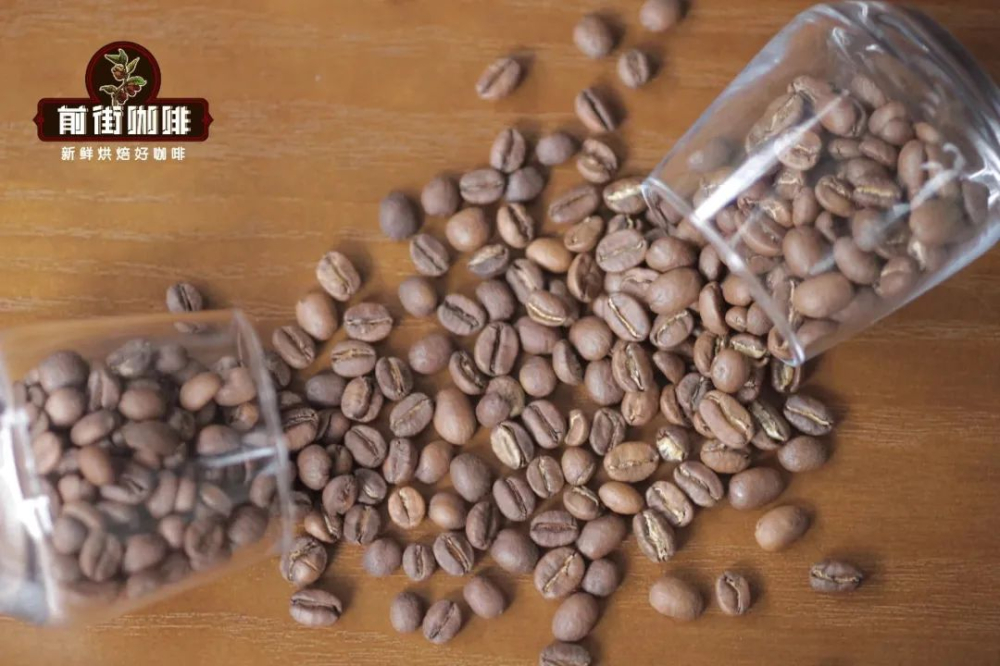
It can be seen that the G1 grade Kochere green beans are obviously plumper than the G2 grade green beans, and the color is more uniform. If you look closely, you can find that in terms of the number of defects, G2 has more than G1, although this is only natural! Next, let's remove their defective beans and roast them, and see what differences they have after roasting!
Roasting complete! The color values of the two show slight differences due to different bean sizes. Front Street used a light roast. Light roasting allows the beans to retain more floral and fruity notes, thus interpreting the Yirgacheffe flavor.
Brewing parameters: 15g coffee grounds; 1:15 coffee-to-water ratio; EK43 grinder at setting 10; 92°C water temperature; V60 dripper; three-stage brewing method.
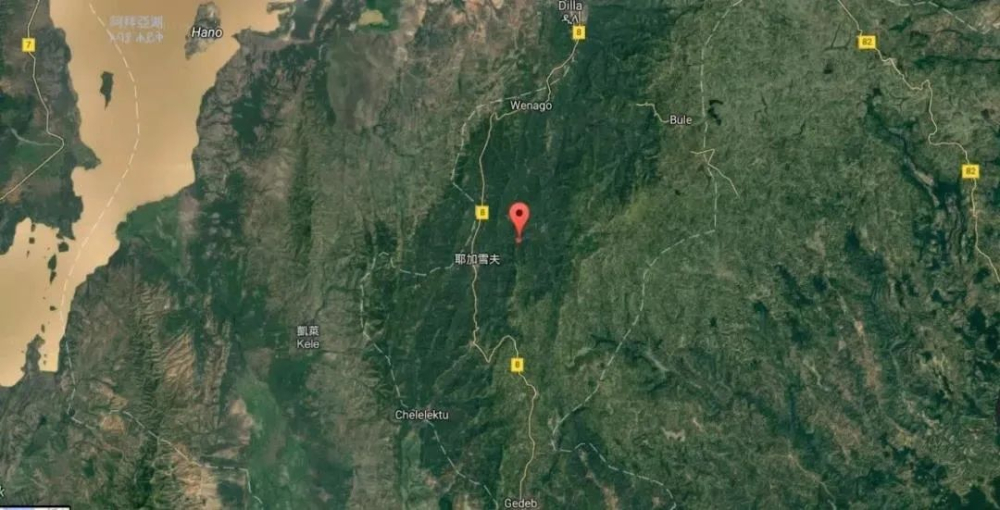
First, we use twice the amount of water relative to the coffee grounds for a 30-second bloom; after the bloom ends, pour the second stage of 120ml hot water in a steady small stream while circling in large circles; when the water level is about to reach the bottom, pour the final stage of hot water (75ml) in a steady stream while circling in small circles; finally, just wait for the dripping to finish, and it's done!
Through tasting, Front Street can tell that the G2 grade Yirgacheffe has a very classic regional flavor: lemon, white floral, citrus acidity, and a green tea finish. The G1 grade Yirgacheffe, on the basis of this flavor, has brighter acidity, a cleaner mouthfeel, and a slightly longer aftertaste! But if not compared directly, the difference between them is still not very obvious.
In summary, we can know that G1 and G2 Yirgacheffe do not differ much in flavor; G1 simply has a better mouthfeel than G2, and this is the main difference in grade. What needs to be known is that grades are mainly provided as a reference for green bean buyers when purchasing. Once they reach the roasted coffee market, the impact of these grades is very small. After all, cafes by default purchase high-grade, high-quality coffee beans. Apart from the top two grades under higher grading standards, lower grades are almost rarely seen~ So everyone does not need to worry too much about the grade of the beans ha~
The above content is compiled by CoffeeHunters, a coffee news website.


