







How Does Volcano Pour-Over Sweeten Japanese Dark Roast Coffee?
Volcano pour-over is a Japanese-style hand-brewing method where small, frequent intermittent pours during the main extraction phase make the coffee bed rise and fall like an eruption. The result is a dark roast coffee with strong sweetness and a smooth texture, carrying pine wood spice, caramel, and dark chocolate aroma. It suits beans with high expansion and plenty of carbon dioxide.
Core parameters are a 1:12 coffee-to-water ratio, 88°C water, and a Kalita trapezoidal dripper with staged pouring. After blooming, carbon dioxide builds inside the coffee bed until it bulges; the main pours break that structure and release the gas. Dilution after brewing is optional. Dark roast Sumatra Golden Mandheling is one bean type that fits the method well.
Volcano pour-over is a highly visually striking classic technique in Japanese-style hand brewing. The coffee bed rises and falls like a volcanic eruption during pouring, and the brewed dark roast coffee has an exceptionally rich sweetness. This article starts from the underlying logic, analyzing why volcano pour-over can form a unique coffee bed spectacle, why the sweetness is extremely high, and provides complete brewing parameters and operating steps. It also explains the suitable bean types: dark roast beans requiring high expansion rate and abundant carbon dioxide, such as Front Street Sumatra·Golden Mandheling (dark roast). Finally, it includes a 1:12 coffee-to-water ratio, 88°C water temperature, Kalita trapezoidal dripper staged pouring plan and dilution suggestions, helping coffee enthusiasts replicate at home a smooth coffee with pine wood spice, caramel sweetness, and dark chocolate aroma.
For more specialty coffee content, welcome to follow: Front Street Coffee (Frontsteet Coffee)
Front Street has discussed this brewing method more than three times already. The reason is that it truly sets itself apart from traditional methods: the resulting dark roast coffee has full-bodied sweetness, and the entire extraction process is highly visually appealing.
In the past, Front Street mostly demonstrated how to brew directly, but today we'll take a different angle and break down the principles behind this brewing method. Almost forgot to mention, it is a very classic one in Japanese-style hand brewing—the volcano pour-over method.
What is volcano pour-over?
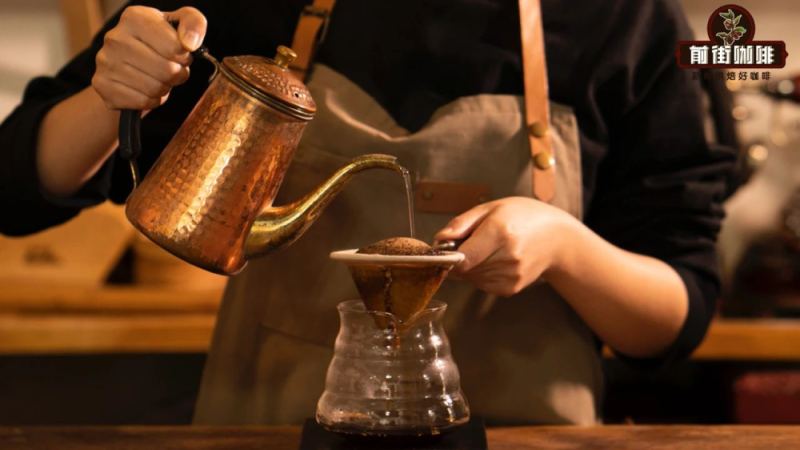
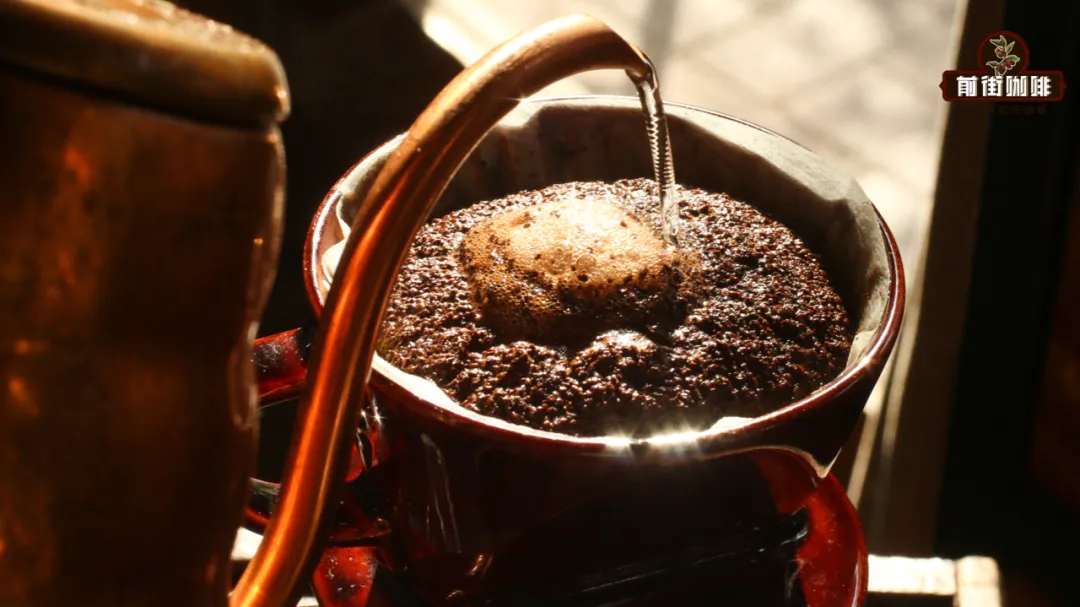
It is named "volcano pour-over" because during the extraction process, the coffee bed continuously presents a scene similar to a volcanic eruption. The key to achieving this effect is that during the main extraction phase, a large stream of water is not used; instead, a small stream with small, frequent intermittent pours is used throughout.
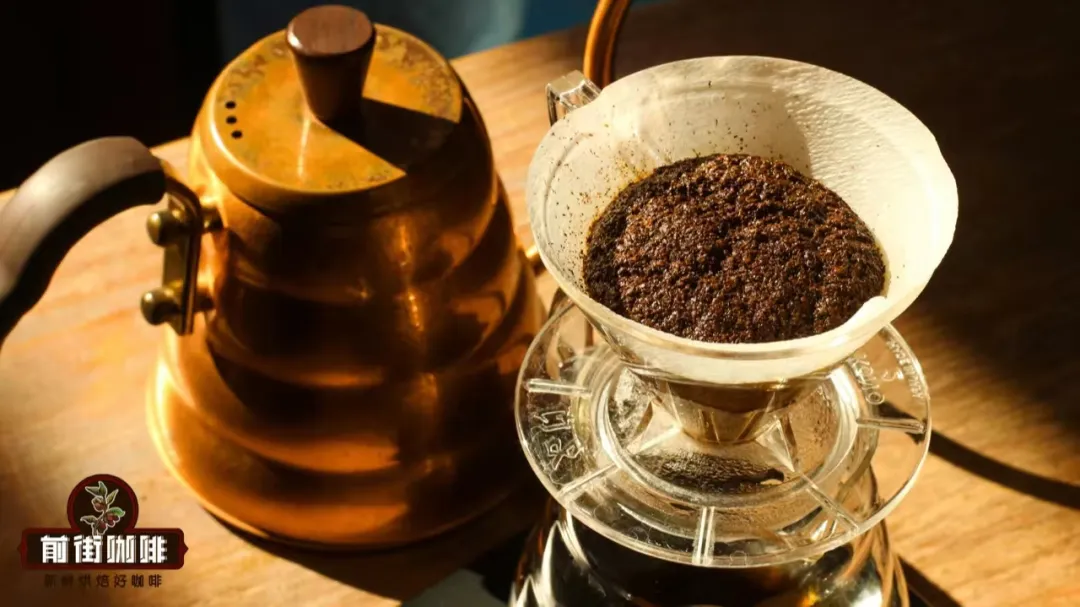
Everyone knows that the coffee grounds in the dripper bulge up after blooming, because the coffee grounds are continuously releasing carbon dioxide. But after water connects the coffee grounds to each other, the entire coffee bed becomes like a giant "cage." The carbon dioxide being released has no outlet and can only accumulate inside the coffee bed, thus forming a bulge.
When the main extraction phase begins, the hot water poured in breaks this "cage," allowing carbon dioxide to escape. This is why a large amount of foam can be seen emerging when pouring after blooming. With volcano pour-over, each pour uses very little water and the circular motion is small, so only a small portion of carbon dioxide is released each time; naturally, foam can be seen continuously emerging with each pour—it simply never finishes venting.
However, to form this spectacle, the coffee beans must meet two conditions: first, an extremely high expansion rate; second, abundant carbon dioxide. Therefore, this method is not suitable for light roast coffee with high density, low expansion rate, and low carbon dioxide content. It mainly targets dark roast beans. After all, it was specifically designed for dark roast coffee in the first place.
Next, Front Street will explain the second characteristic of volcano pour-over: the brewed coffee has extremely high sweetness!
Why does volcano pour-over produce dark roast coffee with very high sweetness?
Volcano pour-over is not only famous for its unique coffee bed appearance; the coffee it brews also has very high sweetness. This is mainly achieved through a different extraction approach from usual—high concentration, low extraction! A large dose of coffee grounds and a small liquid yield is almost standard for all classic Japanese-style brewing. In an era when measuring tools were not widespread, this setup could be said to be the best solution for avoiding bitterness. By reducing the hot water poured, the substances that hot water can extract are limited, thereby avoiding the release of bitterness.
But a small liquid volume inevitably means that the extraction efficiency in terms of water volume will decrease. Therefore, to extract enough flavor substances from the coffee, one must improve other parameters besides water volume to increase extraction efficiency. Thus came the practice of pouring the total water amount in small, frequent increments.
The essence of coffee extraction is that water, as a solvent, contacts the coffee grounds and then carries out soluble substances from the coffee grounds based on concentration differences. The fewer substances contained in the water, the more coffee substances it can carry out. Pouring in small, frequent increments ensures that each time the water contacting the coffee grounds is low in concentration, so the extraction rate can naturally be improved.
At the same time, there are intervals between pours, which lengthens the total extraction time. As extraction time increases, water contacts the coffee grounds for longer, and extraction efficiency can be further improved.
But if there are too many stages and the time is too long, it becomes easy to bring out some undesirable substances. So at this point, the coffee grounds need to be ground somewhat coarsely, so that even under long extraction, the coffee grounds will not easily release negative substances such as miscellaneous bitterness and astringency. Alright, without further ado, next Front Street will share how to brew the classic volcano pour-over!
How to brew volcano pour-over?
First, we need to choose a dark roast coffee bean that meets the goal. On Front Street's bean list, Front Street Golden Mandheling is obviously the most suitable choice. Under dark roasting, the unique aged wood and earthy aroma, dark chocolate and other flavor expressions of Front Street Golden Mandheling, combined with its extremely high sweetness, are simply too alluring. Based on the above, the brewing parameters Front Street will use for volcano pour-over are as follows:
Beans used: Front Street Sumatra·Golden Mandheling (dark roast)
Coffee dose: 20g
Grind setting: Ek43 setting 11 (70% passing rate on a No. 20 sieve, coarse granulated sugar texture)
Coffee-to-water ratio: 1:12
Brewing water temperature: 88°C
Dripper used: Kalita trapezoidal dripper
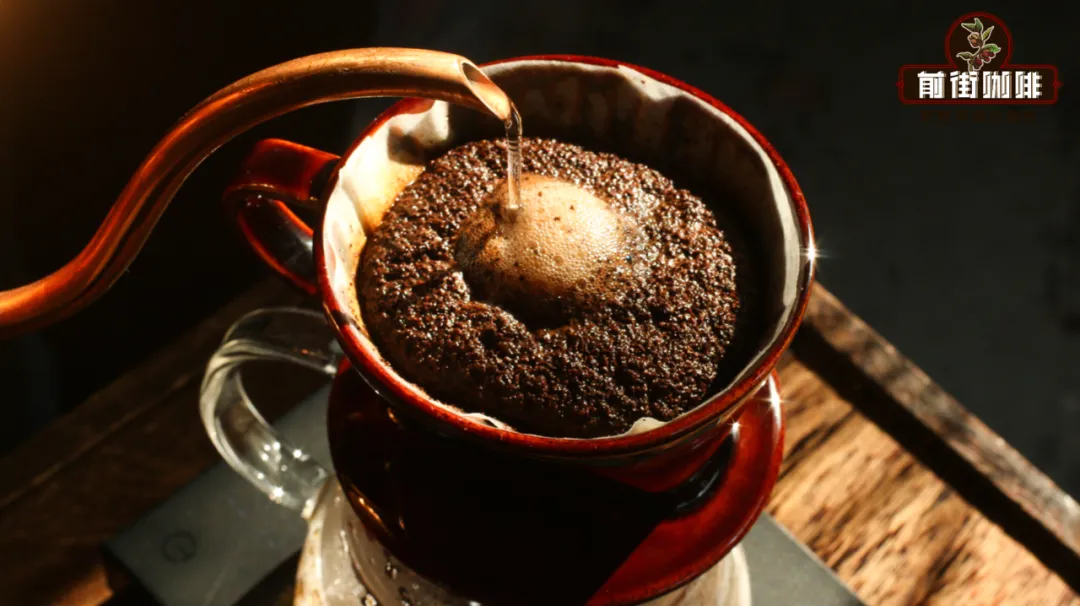
Although there will be many pours, the entire pouring process is actually mainly divided into two parts: blooming and multiple uninterrupted pours. So, the first thing we need to do is still blooming! Use 40ml of hot water for blooming (too much is useless), and the time is still 30 seconds.
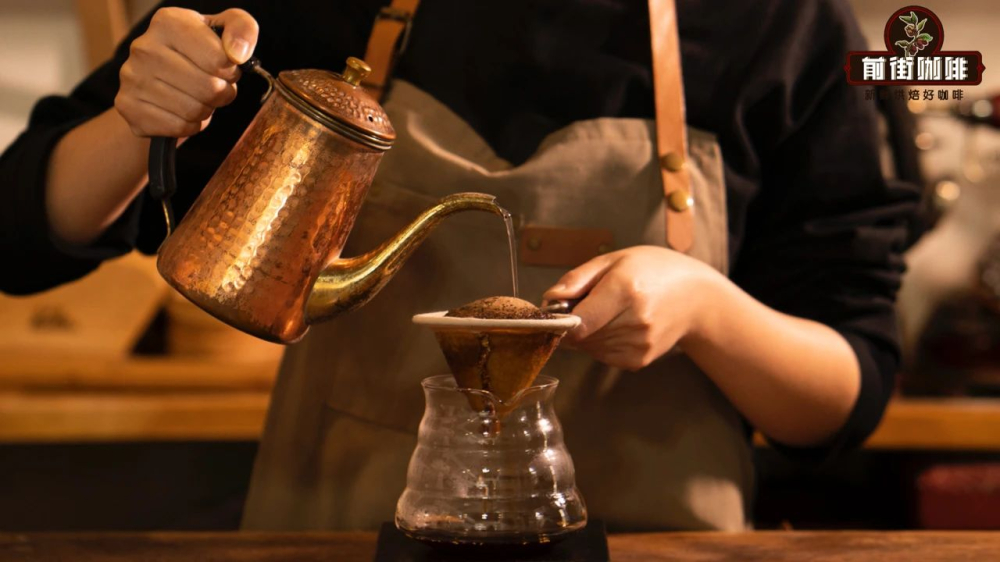
After blooming ends, we pour in small, frequent increments. Pour 20ml each time, in a small circle at the center of the dripper, and then the interval between pours is when you see the coffee bed about to collapse (about 5 seconds). After that, during the brewing process, you can continuously see the entire coffee bed rising and falling, with bubbles constantly emerging where hot water is poured—truly a "volcanic eruption" spectacle.
After extraction ends, we cannot drink it directly, because the amount of water used is small, so the coffee concentration at this point is extremely high, and it is hard for us to accept such a high-concentration cup of coffee. Therefore, we need to dilute this cup of coffee by adding extra water, so as to dilute the coffee concentration to a range we can accept.
Generally, Front Street will add 50~60ml of hot water for dilution, resulting in a moderate coffee concentration, neither too strong nor too weak. When drinking, one can clearly perceive pine wood and spice notes, prominent caramel sweetness, rich dark chocolate aroma, and an overall moderate body, but with a smooth and soft mouthfeel. Simply put, it is very comfortable to drink, with no burden at all.
If you also like dark roast coffee, then you might as well try this simple, easy-to-do brewing method with maximum therapeutic effect. Not only can you enjoy a visual feast during the brewing process, but in the end you can also harvest a cup of coffee with extremely high sweetness~
The above content is compiled by CoffeeHunters, a coffee news website.


