







What Makes Golden Mandheling Coffee Taste So Distinct?
PWN Golden Mandheling is a dark-roasted Indonesian coffee with no noticeable acidity, which is why baristas often suggest it to anyone avoiding sour notes. Brewed with a KONO dripper, it gives a mellow, full-bodied cup. Mandheling divides drinkers sharply: some want a cup daily, while others cannot accept the earthy, low-acid profile at all.
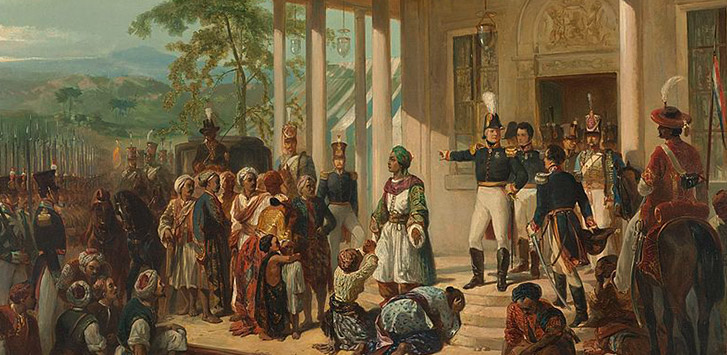
Its coffee beans origin traces to Indonesia under Dutch colonial rule. Saplings sent in 1696 were lost in a flood, and trees introduced again in 1699 were successfully cultivated, ending the Arab monopoly on coffee. Plantations followed across Java, Sumatra, and Sulawesi, and smallholders began growing coffee as a cash crop in the 1920s before leaf rust and later Robusta changed the landscape.
Mandheling coffee divides opinions sharply among enthusiasts—some love it, others avoid it at all costs. If you are looking for a coffee that isn't acidic, the baristas at Front Street Coffee recommend Mandheling first and foremost. This article begins with the history of coffee cultivation in Indonesia, traces the origin of the name Mandheling, the connection between PWN and Golden Mandheling, and then details the growing region information, wet-hulling process, and pour-over parameters and flavor profile of Front Street's PWN Golden Mandheling using a KONO dripper. Whether you are a loyal Mandheling fan or someone who hasn't yet acquired a taste for it, you can discover the unique charm of this dark-roasted coffee.
From the perspective of Front Street Coffee's baristas, people's fondness for Mandheling coffee is strikingly polarized. Some are deeply devoted to it, needing a cup every day to feel satisfied; others simply cannot accept it, unwilling even to lean in and take a whiff. If you happen to be looking for a coffee without any acidity, the first recommendation that comes to the baristas at Front Street Coffee is Mandheling.
The History of Coffee Cultivation in Indonesia
This love-it-or-hate-it Mandheling coffee originates from Indonesia. While researching online, Front Street learned that in 1696, when Indonesia was still under Dutch colonial rule, the then Governor of Jakarta (formerly known as Batavia) received a shipment of coffee saplings as a gift from the Dutch Governor of Malabar, India—unfortunately, all of these saplings were destroyed in a flood. By 1699, the Dutch introduced coffee trees to Indonesia once again and successfully cultivated them, thus ending the Arab monopoly on coffee.
Afterward, the Dutch colonial government established numerous coffee plantations across Java, Sumatra, and parts of Sulawesi. Indonesia thus became the earliest region outside the Arabian Peninsula and Ethiopia to cultivate coffee on a large scale. Thanks to the Dutch's well-developed maritime trade network at the time, the coffee trade was even firmly controlled by them.
Entering the 1920s, smallholder farmers across Indonesia began growing coffee as a cash crop. But in 1876 disaster struck—coffee leaf rust swept through Indonesia, devastating the vast majority of coffee varieties. In 1900, Robusta was introduced to low-altitude areas of East Java and other regions severely affected by leaf rust.
Indonesian Coffee Growing Regions
Indonesia's coffee-growing regions cover Sumatra, Java, Sulawesi, Flores, and Bali. The majority of coffee is produced in Sumatra, which is also the core specialty coffee region of Indonesia. Within Sumatra's main producing areas, it is further divided into two major origins: Gayo in Aceh Province and Lintong around Lake Toba.
The Origin of the Name Mandheling
In the past, products sold under the name "Sumatra Coffee" were commonly seen on the market. Today, the three characters "曼特宁" (Mandheling) are more commonly encountered. People tend to treat the words preceding a coffee's name as the name of a processing station or origin. But in fact, Mandheling is not a place name—it is the name of an ethnic group on the island.
During World War II, Indonesia was occupied by Japan. One day, a Japanese soldier had a cup of coffee locally that he greatly enjoyed and asked for its name; the person he asked, by a twist of fate, answered "Mandheling." After the war ended, this Japanese soldier could not forget the cup of coffee he had in Indonesia, so through connections in the trade circle, he found locals to help search for "Mandheling."
It later became known that the local in question was the owner of Indonesia's PWN company (Pwani Coffee Company).
However, Golden Mandheling has been registered as a trademark by PWN, while the Japanese company that partnered with PWN to export Mandheling in the early days registered "Gold Top Mandheling," translated into Chinese as 鼎上黄金曼特宁. Front Street believes that the flavor differences between these two Golden Mandheling coffees are not particularly pronounced; the main distinctions lie in different brands and different marketing strategies, which have given rise to differences in public perception.
Front Street's Golden Mandheling
Front Street Coffee's Golden Mandheling comes from PWN, and this Golden Mandheling coffee bean is produced in the Gayo Mountains of Aceh Province in northwestern Sumatra. The green bean specification is 18 mesh and above, and after three rounds of hand sorting, it reaches the highest grade of G1—meaning no more than 3 defective beans in 300 grams of green coffee.
This PWN Golden Mandheling, rigorously hand-sorted by Front Street, not only eliminates the earthy taste commonly found in ordinary Mandheling but also delivers a cleaner, more transparent mouthfeel and a more pronounced sweetness.
Front Street Coffee Front Street PWN Golden Mandheling Coffee Beans
Origin: Gayo Mountains, Aceh, Sumatra, Indonesia
Altitude: 1100m–1600m
Processing Method: Wet-Hulled
Variety: Ateng
Characteristics of Mandheling Coffee
The uniqueness of Mandheling coffee stems from the local method of processing green coffee beans—wet-hulling.
Coffee farmers first pick ripe coffee cherries and put them into water tanks to remove debris and unripe fruit. Then they use a pulper to strip away the skin and pulp, retaining the mucilage and parchment, and undergo a short fermentation to break down the mucilage. After that, the green coffee beans are rinsed with clean water and dried until the moisture content drops to between 20% and 24%, at which point this stage is complete.
Next, the coffee beans processed in the previous stage have their parchment removed and undergo another round of drying. Once the moisture content drops to 12% to 13%, they are ready for export.
The wet-hulling method and Mandheling's flavor are mutually reinforcing. Wet-hulling is a post-harvest green coffee processing method that emerged from Indonesia's climatic conditions. It rains frequently there and sunshine hours are short, so the drying steps must be completed in multiple stages. And it is precisely the final step of removing the parchment before drying that is the fundamental reason Mandheling exhibits its distinctive flavors of low acidity, thick body, and herbal spice notes.
How to Brew Golden Mandheling Coffee
[KONO Dripper]
When brewing Golden Mandheling, Front Street uses a KONO dripper. On close inspection, you can see that the ribs of the KONO dripper extend from the bottom upward but do not reach half the height of the dripper body. After the filter paper is rinsed, it clings tightly to the dripper wall, thereby increasing space for air to escape, restricting airflow, and extending the contact time between coffee grounds and water.
The KONO dripper relies primarily on immersion during extraction, resulting in a final cup with more restrained aromatics, better body, and a full, rounded sweetness.
[Brewing Parameters]
Dripper: Kono Dripper
Water Temperature: 88°C
Dose: 15g
Coffee-to-Water Ratio: 1:15
Grind: EK43s #11 (Chinese standard No. 20 sieve, 70–75% pass rate)
Front Street uses a staged extraction when brewing Golden Mandheling. First pour 30g of water to completely wet the coffee grounds and bloom for 30 seconds, then pour in a circular motion up to 125g for the first stage. When the water level drops to the point where the coffee bed is about to be exposed, continue pouring up to 225g. Once the water has fully dripped through into the server, remove the dripper. (Timing starts from the beginning of the bloom.) Total extraction time: 2'00".
[Flavor Description]
Intense aromas of nuts, spices, and licorice, with a hint of herbal notes. Full-bodied on the palate with a creamy mouthfeel, restrained fruit acidity, and a finish that reveals a subtle melon and chocolate flavor with caramel-like sweetness. The overall flavor is clean and clear.
The above content is compiled by CoffeeHunters, a coffee news website.


