







How Do Kenyan Coffee Seeds Shape Flavor and Grading?
Kenyan coffee seeds arrived only at the end of the 19th century, brought by missionaries, so the country's growing history is shorter than neighboring Ethiopia and Yemen. Most trees now grow in the highlands north and west of Nairobi, on the southern slope of Mount Kirinyaga and the eastern slope of the Aberdare Range. The SL-28 and SL-34 varieties, plus the AA grade, define the cup.
Kenyan Arabica is known for bright acidity, red wine aroma and a full body, with AA as the representative specialty grade. A pour-over works well with 15g of grounds at a 1:15 ratio and 93℃ water. Front Street Coffee's Cherry Tomato AA batch and the Azalia cold brew usage show how the same coffee seed performs across brew methods and roasts.
Although Kenya is adjacent to Ethiopia and Yemen, its coffee cultivation history is much shorter, with seeds only introduced by missionaries at the end of the 19th century. Today it is famous for varieties like SL-28 and SL-34 and distinct berry notes, with AA grade being a specialty representative. This article, from the perspective of Front Street Coffee, reviews Kenya's main producing regions, grading system, and variety characteristics, explains the sources of its bright acidity, red wine aroma, and full body, and provides a three-stage pour-over recipe with 15g grounds, 1:15, and 93℃, while also introducing the Front Street Cherry Tomato AA batch and the Azalia cold brew usage.
For more specialty coffee knowledge, welcome to follow FrontStreet Coffee.
In Africa, coffee has long been integrated into daily life. Whether in the most remote corners of the East African Rift Valley or the Maasai Mara savanna where the Maasai herd livestock, the aroma of coffee always drifts in cities and villages, and people stop in their tracks following the scent and savor it. In this article, FrontStreet Coffee uses a cup of coffee to talk about the coffee story of Kenya, Africa.
Kenya is located south of Ethiopia and Yemen, only a few hundred kilometers from these two world-renowned coffee-producing countries. However, its coffee cultivation history is far shorter than theirs, and coffee seeds were not brought here by missionaries until the end of the 19th century.
Most of Kenya's coffee trees are distributed in the highlands north and west of the capital Nairobi, and the producing areas are mainly divided into two parts. One part extends south from the southern slope of Mount Kirinyaga, the country's highest peak, to near Nairobi, and because it hugs the equator, it has become Kenya's largest coffee-producing area; the other part is smaller and is located on the eastern slope of the Aberdare Range.
When FrontStreet Coffee cupped Kenyan coffee beans, what left the deepest impression was Kenya AA grade. It is a rare good coffee, known for its rich aroma and balanced acidity, and is deeply favored by enthusiasts. Its taste is perfectly balanced, with wonderful and intense flavors, fresh yet not overpowering, bringing a complete rather than heavy taste experience. Kenya AA is one of the most popular coffees in Europe. With a light sip, it feels as if the entire tongue is impacted at once, fresh yet not overpowering, a complete rather than heavy experience.
Kenya grows high-quality Arabica, and the coffee beans almost concentrate the essence of the entire tree, with slight acidity, thick aroma, and bright complex fruit notes and grapefruit notes. It is suitable for both pour-over and cold brew. FrontStreet Coffee often uses Kenyan Azalia coffee beans to make cold brew. Azalia has lively acidity and is overall like a glass of juice. When made into cold brew, it reveals the fresh fragrance of cherry tomatoes and grapefruit, and the entry is a refreshing and light acidity, very suitable for summer. For this reason, Europeans prefer Kenyan coffee, and in the UK it even surpasses Costa Rica to become the most popular coffee.
Kenyan coffee trees can flower twice a year. Most trees bloom in March and April after the long rainy season, and the harvest period in most producing areas lasts from October each year to the end of the year. Some trees also bloom in October or November and are harvested in July of the following year. Kenyan coffee always relies on hand-picking, and farmers pick only ripe red cherries, with each tree needing to be re-picked about every ten days.
Most Kenyan farms are small-scale operations producing several hundred kilograms per year. Based on transport distance and purchase price, they decide whether to sell the cherries to nearby processing plants (Coffee Factory). For example, the famous Karagoto coffee is actually a processing plant around Karatina town, which collects coffee cherries from nearby farmers, processes and exports them, and also provides farmers with cultivation technical support; Karagoto itself, together with Tegu and Ngunguru processing plants, forms a cooperative (Tekangu Farmers Cooperative Society, FCS). Most of Kenya's well-known producing areas are concentrated in the central region, such as Nyeri, Kiambu, Kirinyaga, as well as the mountainous areas in the west near Uganda (Nakuru, Bungoma, Kitale, etc.).
Kenya's representative varieties SL-28 and SL-34 are precisely two of the 40 coffees cultivated by that laboratory at the time. Today's popular Kenyan varieties also include Ruiri 11, which has high disease resistance but slightly inferior flavor, as well as Batian, K7, and Kent, which have strong drought resistance. When FrontStreet Coffee cupped the SL28 variety, its flavor performance showed complex and varied acidity and excellent sweetness.
Kenyan coffee has many varieties and different grades, so there are many choices for a single cup. Beans from the same producing area are often divided into multiple grades, which can easily confuse consumers who do not know much about it. FrontStreet Coffee has compiled information on the grading of Kenyan coffee beans to share with everyone.
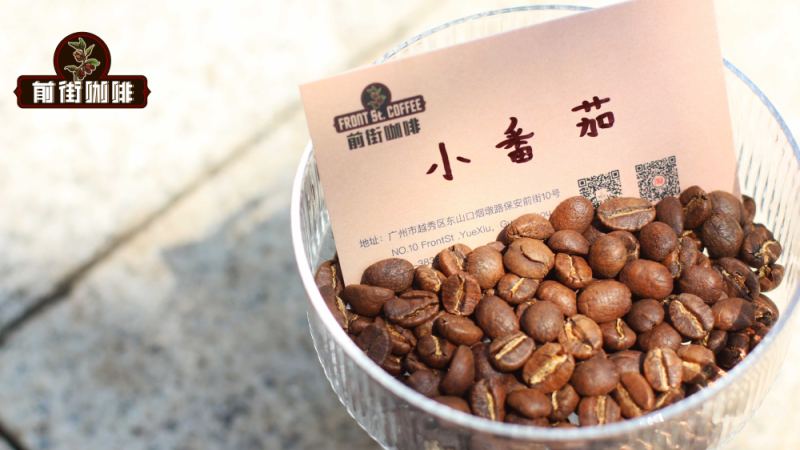
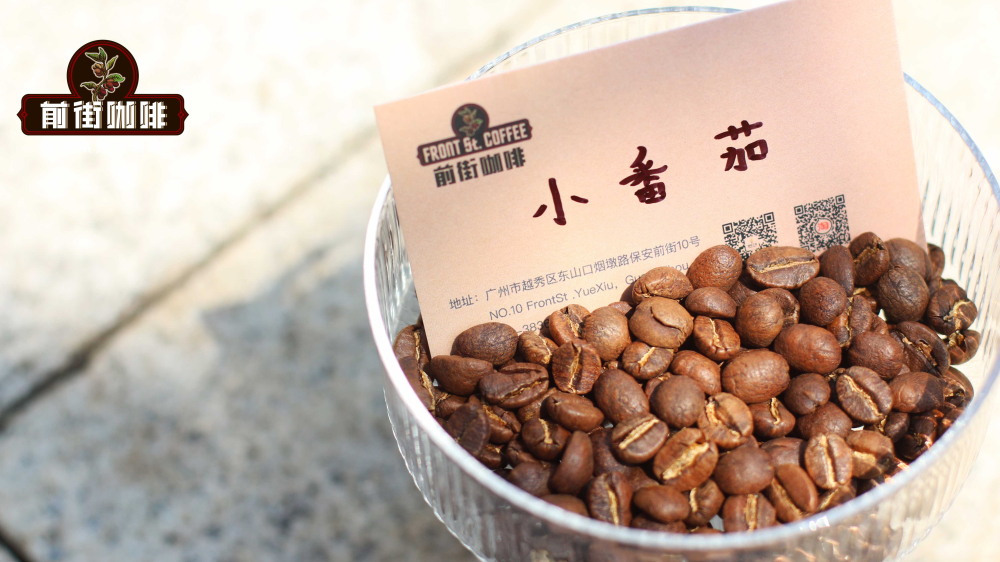
Kenya has strict quality control for coffee, grading by bean size and shape into AA, AB, C, E, PB, TT, T, ML, MH. These grades mainly distinguish bean shape and size and do not absolutely represent quality level. Many people believe that larger beans contain more oils that produce coffee aroma, so larger beans are more expensive on the market. Front Street Cherry Tomato belongs to Kenya's highest AA grade batch and has the typical flavor of Kenyan specialty coffee. Everyone can place orders at the Front Street Tmall flagship store or Front Street Taobao store.
The industry often uses "blackcurrant juice" to describe typical Kenyan coffee: heavy body, red-wine-like aroma, and distinct fruit acidity. These characteristics are hard to find in other producing areas. After cupping and brewing Kenyan Cherry Tomato coffee, FrontStreet Coffee found that its taste shows rich berry flavors and a full-bodied texture.
When making pour-over Kenyan beans, FrontStreet Coffee uses 15g of coffee grounds and brews at a ratio of 1:15. The grind size is 75% passing through a No. 20 sieve, and the water temperature is 93℃, avoiding the extraction of bitter substances at high temperatures and also avoiding overemphasizing acidity at lower temperatures.
Use FrontStreet Coffee's simplest three-stage method: in the first stage, first use 30g of water to fully wet the coffee bed into a "hamburger" shape and bloom for 30s; in the second stage, at 54s on the timer, pour water to 125g, then stop and wait until the water level drops to 2/3 of the coffee bed before pouring the third stage; in the third stage, at 1'40" on the timer, pour water to 225g, with a total extraction time of 2'10". After extraction is complete, gently swirl, and wait until the coffee liquid is fully uniform before tasting.

This Kenyan coffee bean shows an obvious full-bodied tomato juice texture at high temperature, with dark plum acidity and honey sweetness; after cooling, it brings out slight nuts, a juice-like texture, and bright acidity.
For more specialty coffee beans, please follow: FrontStreet Coffee.
The above content is compiled by CoffeeHunters, a coffee news website.


