








Why is Panama Geisha coffee so expensive?
Panama Geisha coffee commands high prices because the variety produces small yields and thrives only in specific high-altitude terroir, while its floral and citrus cup profile wins top auction scores. Geisha was first collected in Ethiopia's Kaffa forests in 1931, reached Costa Rica's CATIE as T2722 in 1953, and arrived in Panama in the 1960s, where Hacienda La Esmeralda later brought it to fame.
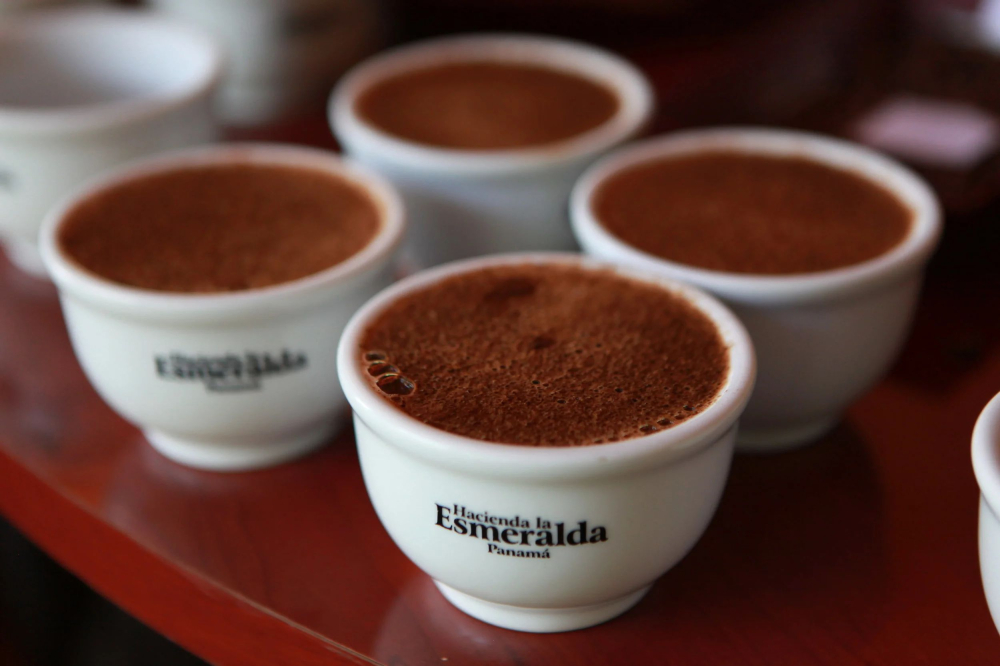
The Peterson family of Hacienda La Esmeralda noticed the variety's white floral aroma, clean mouthfeel, and berry, citrus, and bergamot finish, then entered it in the 2004 reliable of Panama competition as Geisha. Its red, green, and blue label grading reflects lot quality. Brewing an Esmeralda Red Label Natural Geisha rewards careful control of grind, water temperature, and ratio to draw out those notes.
Geisha coffee is widely recognized as a star variety among specialty coffees, conquering countless coffee lovers with its intense floral aroma and citrus and berry notes. But with prices often reaching hundreds or even thousands of dollars per pound, it makes people wonder: why is Geisha so expensive? This article begins with Geisha's discovery in Ethiopia, tracing how it traveled through CATIE to Panama, was discovered by the Peterson family of Hacienda La Esmeralda, and shot to championship fame in one fell swoop. It then analyzes the terroir advantages of the Boquete production region, Hacienda La Esmeralda's red, green, and blue label grading system, and the specific brewing parameters and flavor performance of Front Street Coffee's Esmeralda Red Label Natural Geisha, helping readers fully understand this variety's value and charm.

For more specialty coffee knowledge, please follow the WeChat public account: Front Street Coffee (FrontStreet Coffee)
In 2003, the Peterson family sensed the enormous potential hidden in the Geisha variety. When they first cupped it, the cup presented a rather intense white floral aroma, an extremely clean mouthfeel, and a finish with notes of berries, citrus, and bergamot, thus laying the foundation for the classic flavor profile of Panamanian Geisha. Everyone was astonished, and they immediately decided to enter the variety in the 2004 BOP (Best of Panama) competition, officially naming it "Geisha," translated into Chinese as "瑰夏."
Geisha Originated in Ethiopia
Like most Arabica varieties, Geisha's roots also lie in Ethiopia, the birthplace of coffee. In 1931, people first collected Geisha from the wild environment of the Kaffa forests in southern Ethiopia, initially seeking new disease-resistant varieties, and its name came from the nearby Geisha Mountain. After that, it was sent to research institutions in Kenya, Uganda, Tanzania, and other places for trial planting. In 1953, it entered Costa Rica's Tropical Agricultural Research and Higher Education Center (CATIE), recorded under the number T2722. Although several local farms had planted it, Geisha's branches were fragile and yields were low, so it never won farmers' favor and was never widely promoted.
Entering the 1960s, CATIE distributed T2722 Geisha to coffee growers in Panama, and only then did Geisha truly set foot on Panama's fertile soil. By the 1990s, the Peterson family, owners of Hacienda La Esmeralda, began to devote themselves deeply to coffee production and bought a new high-altitude farm—Jaramillo. At that time, many coffee trees on the farm were infected with leaf rust, but Daniel Peterson noticed that the Geisha trees suffered only slight damage, so they decided to transplant the Geisha that had originally been mixed with other varieties to more areas of the farm while also increasing its cultivation altitude.
After years of comparison and testing, Daniel and his sister Rachel finally locked onto this variety in 2003. That same year, two weeks before the Best of Panama competition (BOP) began, while selecting competition lots at their internal cupping table, they discovered that the Geisha variety exhibited outstanding flavors such as jasmine, citrus, peach, blueberry, bergamot, and sugarcane. These flavors differed somewhat from the popular preferences in the coffee world at the time, but Daniel still insisted on entering Geisha in the competition and took first place in one stroke. Today's astonishing Panamanian Geisha coffee is precisely that same T2722 variety from back then.
In 2005, Hacienda La Esmeralda sent Geisha to compete in the Specialty Coffee Association of America (SCAA) evaluation, defeating many star seed contenders, winning the honor of world-class specialty coffee, and sweeping the world championships in 2006 and 2007, once again drawing the attention of coffee people around the globe. Afterward, coffee-producing regions everywhere introduced Geisha one after another, including Yunnan in China, which also began growing this popular variety. Although Geisha can now be produced all over the world, Front Street believes that as the discoverer of Geisha's flavor, Hacienda La Esmeralda not only checks coffee quality layer by layer, but its natural processing method best presents the classic "Geisha taste."
What Is Top-Level Geisha Coffee?
Although many origins grow Geisha, each production region has its own unique terroir, and different terroirs create different coffee flavors, so Geisha also displays its own respective flavor tones. Front Street believes that Geisha's flavor becoming such a huge hit is inseparable from Boquete's exceptional environment.
Panama has only three main coffee-producing regions: Boquete, Volcan, and Renacimiento, yet it produces the world's most expensive coffee. The Boquete production region is a town in Chiriqui Province, located on a plateau at about 1,000-2,000 meters above sea level on the eastern side of Baru Volcano. It faces the warm, humid Caribbean monsoon, while behind it lies the cold Atlantic current. The mountains are high and steep, and within them Volcan Baru National Park is an ecological conservation area with rich biodiversity, seven microclimates, and year-round mist, plus abundant rainfall, creating excellent local growing conditions. Front Street's Geisha coffees from Hacienda La Esmeralda and Elida Estate in Panama come from the Boquete production region.
Geisha is very particular about its growing environment, requiring high altitude, fertile soil, and cloud cover or plant shade, and it cannot be directly exposed to the sun. The owner of Hacienda La Esmeralda has said that the farm needs a large number of shade trees to shield the delicate Geisha from sunlight, and in the early planting stage traditional pruning must also be used, otherwise the plants easily die. Geisha planted at higher altitudes takes longer for the coffee fruit to mature, and its flavor expression is also more complex and unique.
After Geisha won championship honors, the Peterson siblings managed the Geisha coffee trees on the farm more systematically based on altitude, area, and cupping performance. The areas where Geisha is planted were divided into three major plots: Cañas Verdes, Jaramillo, and El Velo.
To ensure the traceability of each coffee lot, Peterson refined each major plot into different small plots, so buyers who purchase Geisha coffee can check the specific planting plot information through the lot. Jaramillo's average altitude is above 1,650 meters, and the humid, cold air of the high mountains fills the Geisha coffee here with natural essence. Front Street's Esmeralda Red Label comes from the Mario plot in Jaramillo, uses natural processing, and presents an aromatic bouquet of rose, citrus, berries, and honey.
After years of experimentation, Hacienda La Esmeralda in Panama found that only Panama Geisha coffee beans harvested from coffee trees grown above 1,400 meters can display the special flavor that Geisha coffee beans should have. Therefore, the main grading is based primarily on planting altitude, supplemented by actual cupping results, dividing Geisha beans into "red, green, and blue label" grades. Front Street Coffee (FrontStreet Coffee) believes that the biggest difference between Hacienda La Esmeralda's marketing strategy and that of other estates is that, based on cupping performance as well as planted variety and planting plot, it divides its products into five major brands. There are three brands for the Geisha variety: Esmeralda Special, Private Collection, and Geisha 1500. There are two brands for the Catuai variety: Diamond Mountain grows and Palmyra.
Panama Geisha Coffee Characteristics
Panama Geisha coffee beans (Geisha) are a very rare coffee variety. Over the past five-plus years, they have continuously caused a sensation among coffee connoisseurs around the world. Geisha coffee beans are considered the brightest, richest, and most intensely aromatic coffee variety.
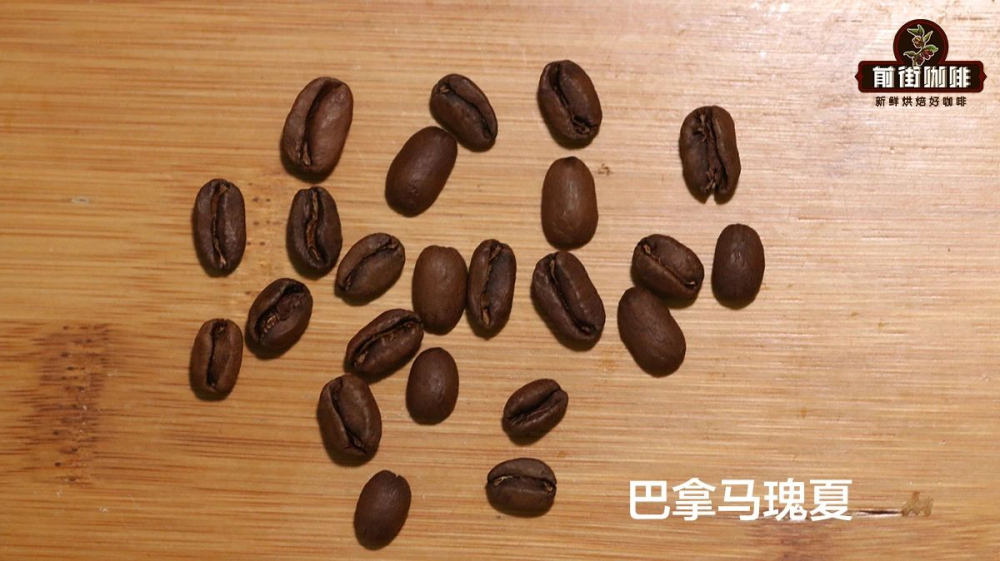
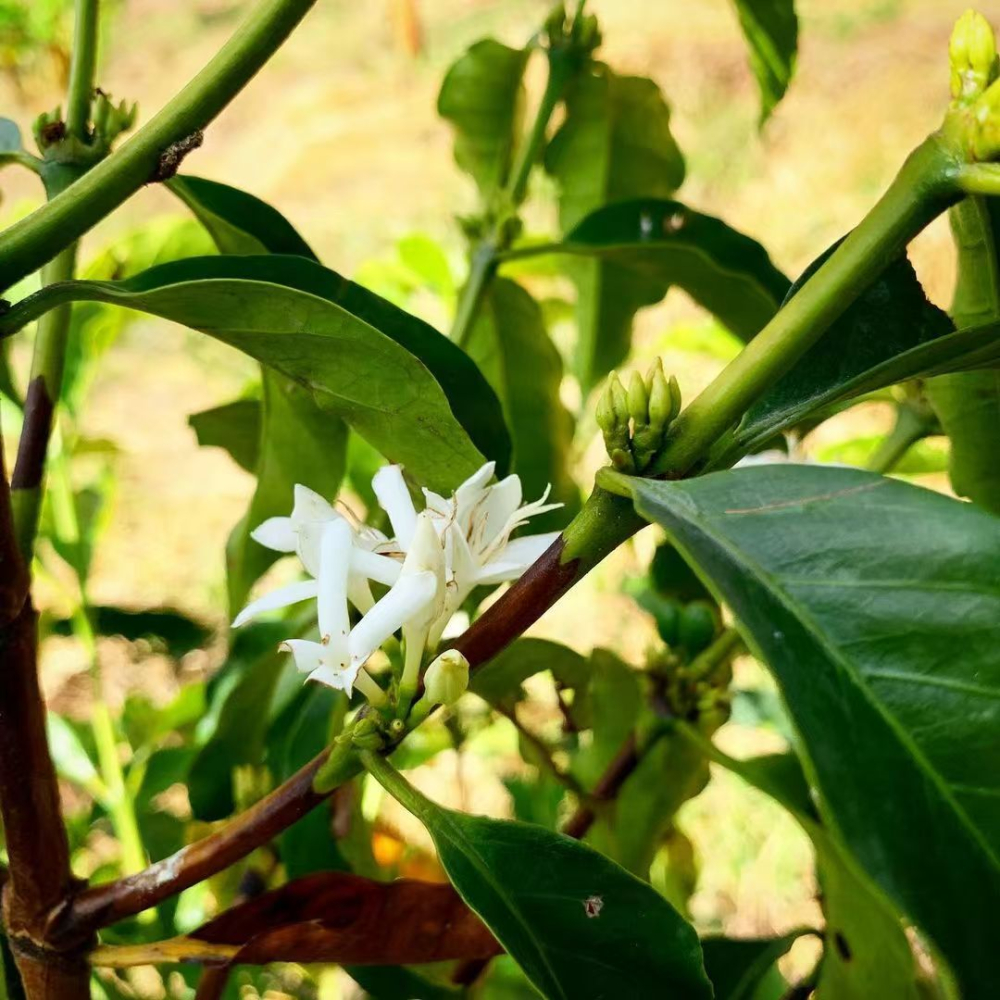
Geisha coffee trees grow at very high altitudes and have beautiful slender leaves. Geisha coffee fruit and green Geisha coffee beans are also slightly slender compared with other top-quality high-altitude coffees. Geisha has a full sweetness, an extremely clean mouthfeel, and rich aromas that extend from berry and citrus notes all the way to mango, papaya, and peach. A very obvious bergamot-like aftertaste is also a typical cupping attribute. Geisha coffee beans are often champions among coffee varieties. Geisha coffee beans have a cupping evaluation of moderate body.
How Should Front Street Esmeralda Red Label Geisha Be Brewed Without Wasting It?
Below, Front Street demonstrates the brewing steps for the store's Esmeralda Red Label Natural Geisha. You can use it as a reference and compare it with your own brewing approach.
Geisha coffee's flavor is world-famous for its rich floral aroma and complex fruit notes. Front Street's roaster hopes to preserve more of Geisha's high-quality acidity, so a medium-light roast is chosen (slight adjustments are made for different lots). This roast level does not change much of the high hardness of beans grown at high altitude, so brewing requires a certain increase in extraction rate to present a fuller flavor layering. Here, a higher water temperature and a slightly finer grind are used to draw out more aromatic substances. In addition, Front Street wants Geisha coffee's flavor expression to be clearer, so the coffee-to-water ratio is widened a bit, using 1:16.
The pour-over parameters for Red Label Geisha coffee are:
Dripper: V60
Water temperature: 91-92°C
Dose: 15g
Coffee-to-water ratio: 1:16
Grind size: fine granulated sugar size (sifting to 80% through a No. 20 sieve)
Three-stage extraction: First, pour 15 grams of coffee powder into the dripper and tare the weight. For the first stage, pour in 30g of water to bloom for 30 seconds, and start timing at the same time. Throughout, pour with a small stream from the center point and begin spiraling outward, making sure to wet the entire coffee bed.
For the second stage, begin pouring with a slightly larger stream and add 120g of water. The purpose is to raise the entire coffee bed. The water stream should be poured vertically and evenly. At this point, the scale shows 150g, and pouring is finished in about 55 seconds.
When the liquid level drops to the halfway point, begin the third stage by pouring 90 grams with a small stream in a small spiral. Try to control the stream so the spiral is not too large, as it can easily disturb the coffee bed and cause underextraction. The final total poured water is 240 grams, and the drip finishes in about 2 minutes 10 seconds. After removing the dripper, swirl the coffee liquid in the server to even it out, and it is ready to taste.
The pour-over Esmeralda Red Label Geisha coffee tastes clean with jasmine, citrus, and tropical fruit acidity. The flavor layers vary with temperature, the overall mouthfeel is smooth, and the tea-like finish is pleasant.
The above content is compiled by CoffeeHunters, a coffee news website.


