








Although all three are espresso diluted with water, Americano, Long Black, and Lungo each have their own distinct approach. The Americano traces its origins to the habit of WWII American soldiers diluting Espresso, while the Long Black reflects Australians' insistence on rich flavor, and the Lungo achieves a greater liquid volume by extending the extraction time. The three differ noticeably in the order of adding water, the water-to-coffee ratio, and cup size, ultimately presenting vastly different mouthfeel and crema performance. This article will break down the similarities and differences among these three black coffees from three dimensions—historical origins, preparation methods, and flavor characteristics—and share Front Street Coffee's specific parameters and blend approach when producing Americano and Long Black.
There are many ways to brew coffee—French press, siphon, pour-over, espresso, cold brew, Americano, and so on—each with its own intricacies; naming conventions are equally diverse, and different regions often have their own terms. Today Front Street Coffee will discuss the differences among several common coffees, especially Americano, Long Black, Lungo, and espresso.

Americano
Among the many coffee categories, Americano and espresso have the highest appearance rates. The name Americano is no stranger to anyone who knows a bit of English and drinks coffee; in Chinese, it's simply called "美式咖啡" (Americano). Its origin dates back to World War II—American troops stationed in Europe couldn't get used to the extremely strong local Espresso (drip black coffee was more popular back in the US), so they added water to dilute the espresso. In other words, the original purpose of the Americano was to bring coffee concentration down to what Americans at the time could accept. Later, Italian immigrants brought espresso cafés to the United States, and espresso-based Americano gradually gained popularity; the practice of "pouring coffee first, then water" also conveyed the meaning of diluting strong coffee. Today, Americano has few hard-and-fast rules regarding the order of operations—the only difference is whether the crema is preserved or broken up.
There are also two other drinks often confused with Americano—Long Black and Lungo.
Long Black = water + Espresso
Americano = Espresso + water. In Australia, locals love a black coffee called "Long Black." As the name suggests, it's a cup of coffee without milk. Black coffee basically never contains milk, making it very friendly to those who are lactose intolerant or simply dislike milk.
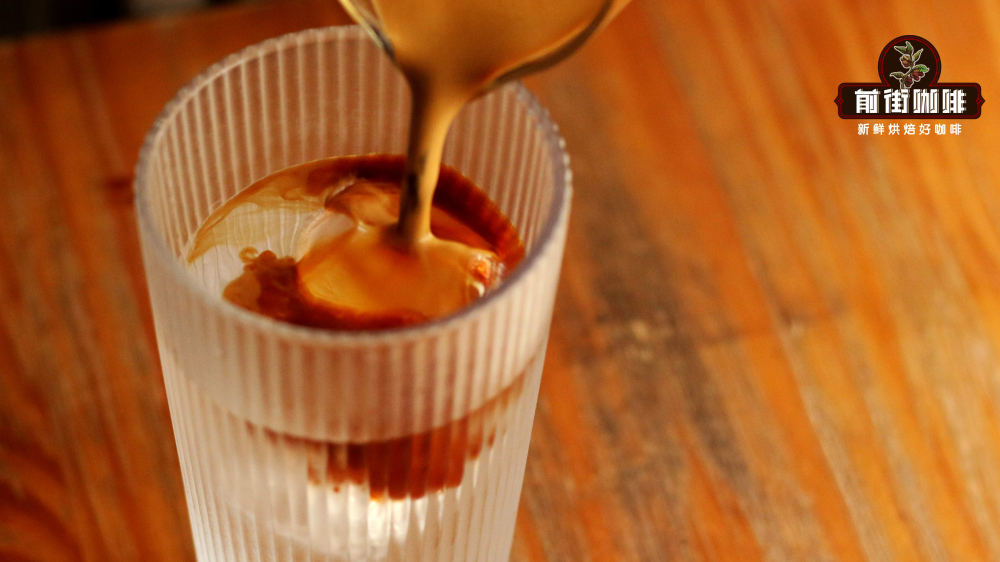
The Long Black is made by first pouring hot water into the cup, then adding Espresso. It's a specialty coffee native to Australia, also composed of espresso and water. After the Australian-style Flat White became popular in China, many cafés simply introduced Australian espresso products wholesale, integrating them into their existing espresso menus.
Long Black is also translated as "澳黑咖啡" (Aussie black coffee), and it has another nickname—"short black"—which is what Australians call espresso diluted with water. Long Black originates from Australia, where locals prefer richly flavored coffee that Americano can't satisfy; since espresso is called Short Black in Australia, Long Black is essentially slightly diluted espresso—reduced in concentration while still retaining crema and a full-bodied richness. A Long Black is served in a smaller cup than an Americano, about 150ml, and is made by pouring water first and then the espresso, which preserves the crema; because less water is added than in an Americano, the taste and intensity are superior.
After espresso spread to Australia, New Zealand, and other places, Australians fell in love with this rich flavor and developed various Aussie-style coffee drinks based on local tastes—Starbucks' Flat White, for instance, originates from Australia's Flat White. When Australians make a Long Black, they extract two shots of espresso (40g) and pour them into a cup containing 100-120ml of hot water, keeping a thick layer of Crema on the surface. A Long Black made this way lets you taste both the rich coffee flavor and directly experience the texture of the coffee crema.
Front Street Coffee also uses a double shot of espresso when making Long Black, following a 1:3 ratio. First prepare 120g of hot water, then pour the extracted double shot into the hot water.
The most intuitive difference between Americano and Long Black lies in the amount of water added. Americano typically contains more water, with a coffee-to-water ratio generally between 1:5 and 1:8. This is because Americans are accustomed to the low concentration of drip coffee—just a hint of coffee flavor is enough. Australians, on the other hand, pursue a richer coffee flavor, serving in smaller cups with a lower water ratio, resulting in naturally higher concentration. After the rise of espresso, espresso-based Americano also requires a large amount of water to recreate that light coffee taste.
Front Street Coffee believes there is no fixed ratio for how much water to add to a Long Black—it depends more on the barista's understanding of the coffee bean's flavor profile, with the amount of water determined by the flavor they want to express. For example, the Americano served at Front Street Coffee's shops uses Front Street's own roasted Sunflower Warm Sun blend coffee beans, which under ideal extraction should present notes of wine, vanilla, cream, chocolate, and berries. To highlight these aromas, Front Street Coffee conducted multiple comparisons and finally settled on a 1:3 ratio.
In recent years, LUNGO has also accumulated a loyal following in the market. Lungo coffee is made by extending the Espresso extraction time to about one minute, yielding approximately 50-60ml of coffee liquid; this drink is called "Lungo coffee." Some baristas even extract it directly to a full cup, such as 200ml.
"Lungo" means "long, extended" in Italian, and it is clearly a stretched-out version of espresso. Actually, discussing espresso's flavor profile is only something from recent years. In the past, coffee beans were generally roasted until black and shiny—trying to find flavors in them was like searching for a riot of colors within blackness. A good espresso was about mouthfeel satisfaction and intensity stimulation; after swallowing, no bitterness would return, leaving only a burnt aroma on the palate—that was all.
The above content is compiled by CoffeeHunters, a coffee news website.


