







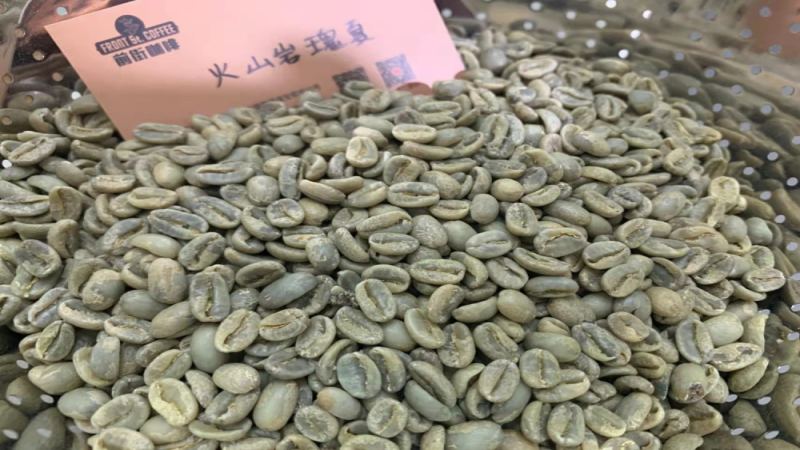
In October 2021, a Panama Boquete Geisha coffee bean named Las Rocas quietly arrived at port. Its packaging was exquisite, but behind it lay the secret of Hacienda La Esmeralda discontinuing its Blue Label Geisha. Why did Hacienda La Esmeralda cancel the Blue Label? Is Las Rocas the replacement for the Blue Label? Front Street takes you through the history of Blue Label Geisha, sorts out Hacienda La Esmeralda's Geisha grading, plot distribution, and processing methods, and deeply analyzes the origins of Las Rocas Volcanic Rock Geisha. Whether you are a Geisha enthusiast or a coffee professional, this article will unveil this mysterious new bean for you, so you can understand how to continue tasting Hacienda La Esmeralda's Geisha flavor at an affordable price.
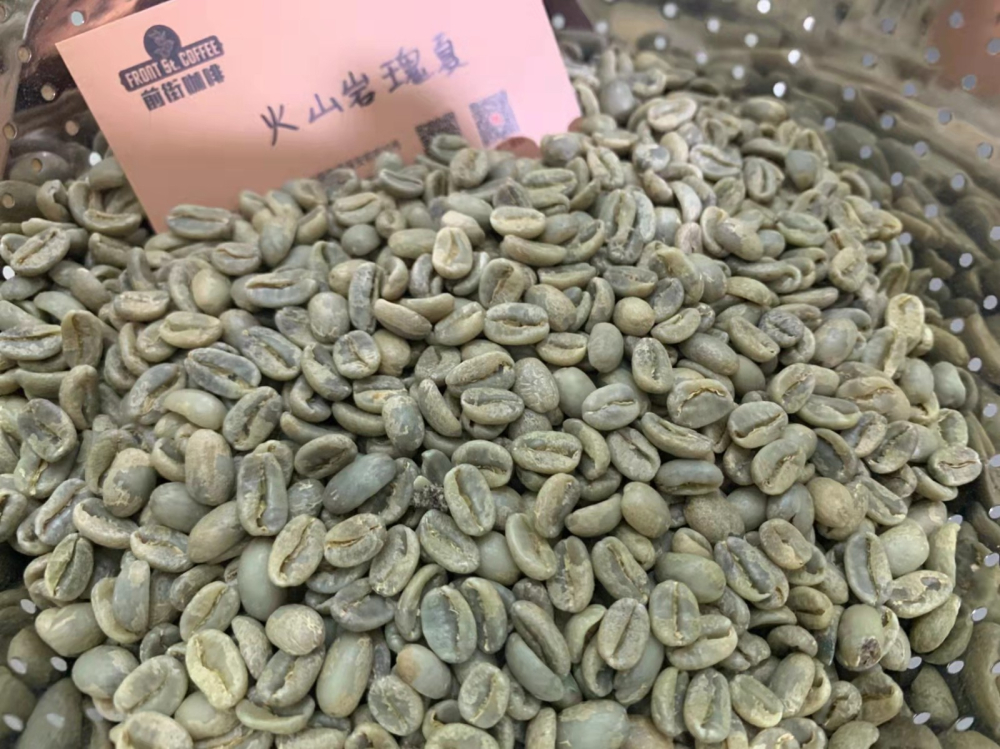
What exactly is the story behind Hacienda La Esmeralda's Las Rocas Geisha?
In October 2021, many coffee shops put a coffee bean named "Las Rocas" on their shelves, claiming it came from Hacienda La Esmeralda's Geisha. What exactly is going on? Front Street takes you through the whole sequence of events.
About half a year earlier, Hacienda La Esmeralda had still not released news of a Blue Label lot, and the industry began to speculate whether Hacienda La Esmeralda intended to abandon the Blue Label series and keep only the Red Label (Esmeralda Special) and Green Label (Private Collection) series for Geisha coffee beans going forward. According to past convention, the Blue Label would follow on the market about a month after the first Red Label was released, but that year the Blue Label never appeared. As a result, more and more people concluded that Hacienda La Esmeralda had already cut the Blue Label series.
Front Street Blue Label is a Geisha coffee brand under Hacienda La Esmeralda, referring to high-quality blended Geisha grown on the estate. Front Street Blue Label Geisha can be seen as Hacienda La Esmeralda's "affordable" product line, allowing consumers to experience the flavor of Hacienda La Esmeralda Geisha at a relatively modest price.
In the 2020 new harvest season's Blue Label, Hacienda La Esmeralda launched a naturally processed Blue Label Geisha version for the first time. Front Street Coffee, which loves to do research, of course would not miss this opportunity and was among the first to bring in a batch of natural Blue Label for comparison. However, in 2021, for reasons unknown, Hacienda La Esmeralda canceled the Blue Label grade of Geisha. Before 2020, only Hacienda La Esmeralda's Red Label and Green Label Geisha offered naturally processed versions, and the newly added naturally processed Blue Label version in 2020 was undoubtedly a boon for consumers.
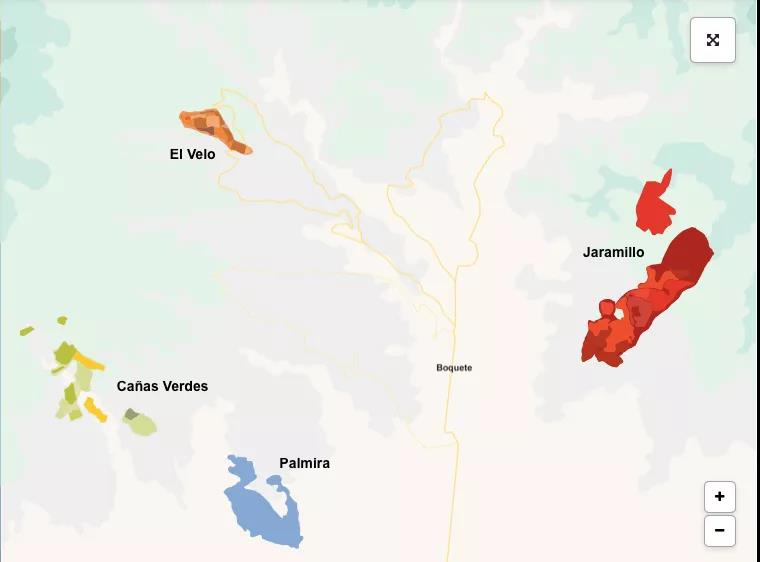
Hacienda La Esmeralda Plot Distribution Hacienda La Esmeralda is extremely meticulous in dividing the plots where Geisha is grown, mainly consisting of three plots: Jaramillo, Canas Verdes, and El Velo. Each plot is further subdivided into smaller plots.
Jaramillo has annual rainfall of 4000ml, average daytime temperatures of 19-25°C, average nighttime temperatures of 11-15°C, and an average altitude of 1600-1700m. The Jaramillo plot is subdivided into 5 small plots: Mario, Noria, Reina, Bosque, and Buenos Aires.
Canas Verdes has annual rainfall of 3500ml, average daytime temperatures of 16-23°C, average nighttime temperatures of 10-15°C, and an average altitude of 1600-1800m. Canas Verdes includes a total of 9 small plots: Lino, Coronado, Fundador, León, Montaa, Trapiche, Chinta, Cabaa, and Tumaco.
El Velo is the most recently purchased plot by Hacienda La Esmeralda, with an average altitude of 1700-1900m. In addition to growing Geisha and Catuai, this plot also has a small number of other introduced varieties, such as Laurina, Pacamara, Mocha, and SL28. El Velo is divided into a total of 7 small plots: Guabo, Portón, Durazno, Higo, Buena Vista, and guila.
Hacienda La Esmeralda Geisha Grades After years of experimentation, Hacienda La Esmeralda found that only Geisha grown above 1400 meters in altitude can display its proper refined flavor. Therefore, Hacienda La Esmeralda divides the Geisha coffee grown on the estate into three grades, primarily based on growing altitude and secondarily on actual cupping results.
Esmeralda Special Esmeralda Special is what we commonly call Red Label. Red Label lots of Geisha are grown at an altitude of 1600-1800 meters, with cupping scores above 90 points, mainly from the two producing areas of Jaramillo and Canas Verdes. Red Label lots may be washed or naturally processed. Red Label lots can only be obtained through global auctions.
Private Collection Private Collection, commonly known as Green Label. Green Label lots do not participate in auctions but are still excellent in quality. Green Label Geisha is grown at an altitude of 1600-1800 meters and is mainly a blend of lots from different plots such as Jaramillo and Canas Verdes.
Because it adopts the model of blending different plots, there are sometimes cases where Green Label and Red Label have very similar flavors. Although Green Label is not as high-grade as Red Label, it still carries the classic flavors of Geisha: floral aroma, fruity aroma, citric acidity, and a thick, juicy mouthfeel. Green Label Geisha is likewise washed or naturally processed.
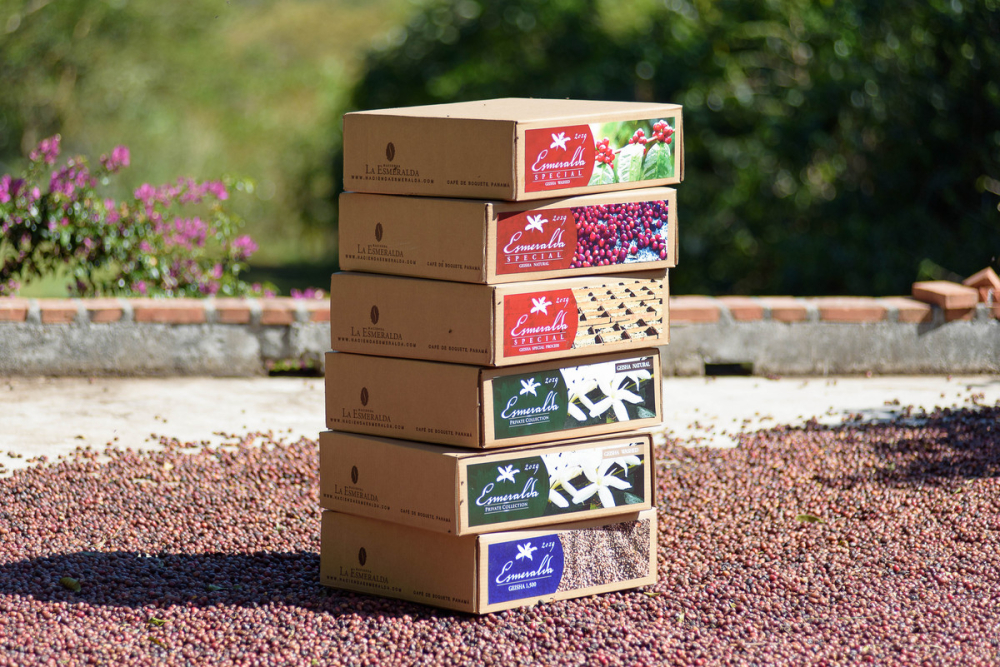
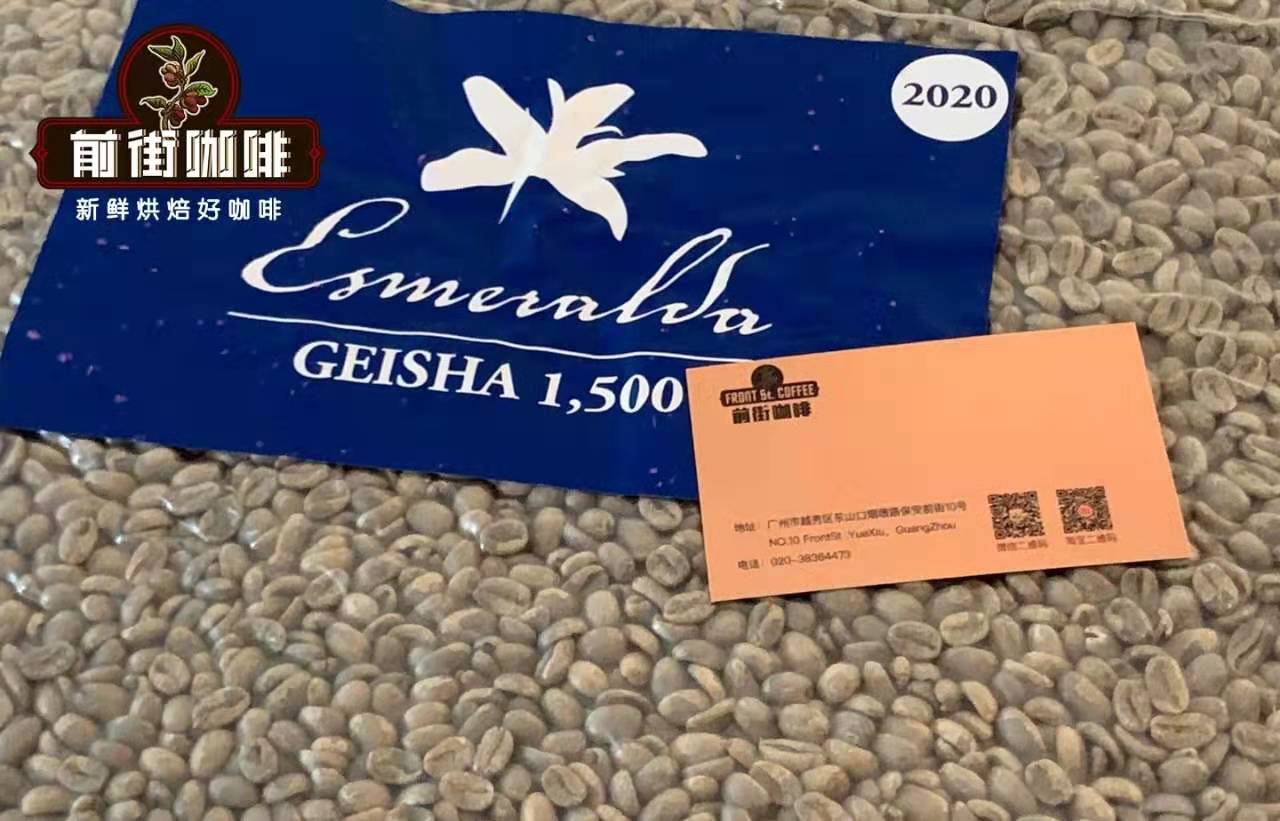
Geisha1500 Geisha1500 is what is commonly known as Blue Label. Grown at an altitude of 1400-1500 meters, Blue Label blends Geisha coffee beans from three different plots: Jaramillo, Canas Verdes, and El Velo.
In previous years, Blue Label Geisha was only washed processed, but this year's Blue Label lot added a natural processing method, and this coffee introduced by Front Street Coffee is this year's new harvest season natural Blue Label Geisha.
Front Street Geisha Processing Methods
Hacienda La Esmeralda's washed processing uses a depulper to separate most of the fruit pulp from the coffee beans of the harvested cherries, then guides the parchment beans into a clean water tank and soaks them in water for fermentation to completely remove the remaining mucilage layer. Through water processing, unripe beans and defective beans are selected out due to buoyancy, and then depulping is carried out, also called pulping, which is passing the coffee cherries through a machine to remove the skin, leaving the coffee with mucilage to rest and ferment in a fermentation tank for 1 to 2 days to break down the mucilage attached to the coffee beans.
Then the coffee beans are rinsed clean with clean water, and the parchment green beans are dried until the moisture content reaches 12% for storage. The parchment is removed at the time of export.
In Hacienda La Esmeralda's natural processing, the harvested coffee cherries are sent directly to the courtyard to dry. The coffee cherries slowly dry while the coffee beans are still inside, and the coffee beans become full of fruity and aromatic notes. The coffee cherries are dried evenly. Depending on the weather and the composition of the site, the coffee is dried on concrete tables for 3 to 5 days (8 hours per day). When it reaches sufficient dryness, it is placed in a Guardiola dryer and rotated for 72 hours to complete the drying process and prevent fermentation. After drying is completed, a machine is used to remove the pulp and other parts.
The Guardiola is the preferred drying method; as long as the coffee batch size allows, the Guardiola can handle large quantities of coffee. The Guardiola is a horizontally rotating drum that allows warm air to flow around the beans and eliminate moisture. After the coffee beans are dried, they are placed in nylon bags and left in the warehouse for 30 to 45 days. This step is also called "eposo" and helps stabilize the coffee beans and improve the flavor in the cup. Front Street believes that this refined natural processing can very stably control the degree of fermentation of the coffee, thereby stabilizing the flavor of each lot and ensuring coffee quality.
Front Street Coffee Roasting Analysis Blue Label Geisha uses a medium-light roast, with the aim of highlighting the floral and fruity aromas and Geisha's uniquely pleasant acidity.
Charge at a drum temperature of 180°C, with heat at 130 and the damper set to 3; the turning point is at 1'32", and when the drum temperature reaches 104°C, open the damper to 4 while keeping the heat unchanged; when the drum temperature reaches 151.6°C, the bean surface turns yellow, the grassy smell completely disappears, and it enters the dehydration stage; at 7'56", ugly wrinkles and dark streaks appear on the bean surface, and the toast smell clearly turns into coffee aroma, which can be defined as the prelude to first crack. At this time, you need to listen clearly to the sound of the first crack point. First crack begins at 8'30", the damper is opened to 5, development after first crack lasts 1'28", and the beans are dropped at 190°C.
Front Street Coffee Brewing Recommendations Coffee dose: 15g Ratio: 1:15 Grind: fine grind (80% passing through a No. 20 standard sieve) Water temperature: 91°C

Front Street Three-Pour Brewing Method 1. Pour 30 grams of water for the first pour and bloom for 30 seconds.
2. After the bloom ends, pour the second pour, circling outward from the center for 100 grams. This pour can be done slowly; Geisha coffee is very resistant to extraction and needs a certain amount of pouring time to bring out its aroma. After pouring, wait until the water level drops to half.
3. Just before the coffee bed is exposed, pour the third pour of 95 grams, for a total poured water amount of 225 grams. Wait for the coffee to finish filtering, then remove the dripper. The total brewing time is about 2 minutes.
Front Street Geisha Coffee Flavor Description [Front Street Red Label] (Natural) has bright rose and citrus aromas, brown rice, berries, apricots, complex fruits, honey, a thick juicy mouthfeel, rich flavor layers, and obvious sweetness.
[Front Street Green Label] (Washed) has a rich jasmine aroma on entry, high sweetness, citrus, berries, juiciness, cream, green tea, orange peel, cantaloupe, an overall rich flavor layering, and a lasting finish of floral aroma and citrus.
[Front Street Blue Label] (Washed) has a soft acidity of lemon and grapefruit on entry, and as it cools slightly there are oolong tea, honey, and sucrose sweetness in the finish, with a relatively clean and bright mouthfeel. (Natural) smells of fermentation aroma and fruity sweetness; on entry there is the sweetness of melon and tropical fruits, with a juice-like mouthfeel, and the overall sweetness is very high.

But unfortunately, by 2021, Hacienda La Esmeralda announced that the 2021 harvest season Geisha coffee beans would only include the Red Label and Green Label series, with more detailed classifications, and the Blue Label was not mentioned. Many people were spreading the rumor that this year's Blue Label was canceled. Subsequently, Front Street also received clear news that Esmeralda would not release the Blue Label Geisha series in 2021.
So does that mean we can no longer drink affordable, high-quality Panama Geisha coffee? Not necessarily. In October 2021, a Panama Boquete Geisha coffee bean named "Las Rocas" arrived at port. This was a brand-new brand of Geisha coffee with exquisite packaging. You should know that not many estates in Panama produce Geisha. After repeated verification by Front Street, it was confirmed that Las Rocas Volcanic Rock Geisha coffee indeed comes from Hacienda La Esmeralda. It precisely filled the production gap left by Blue Label Geisha.
It seems Blue Label Geisha did not disappear, but simply changed its vest and continued to appear on the consumer market. This batch of coffee beans uses washed processing, and the processor is still Hacienda La Esmeralda. It can be seen that the quality of this batch of beans is still as excellent as Blue Label. Those craving Blue Label Geisha coffee beans can look forward to it!!!
The above content is compiled by CoffeeHunters, a coffee news website.


