







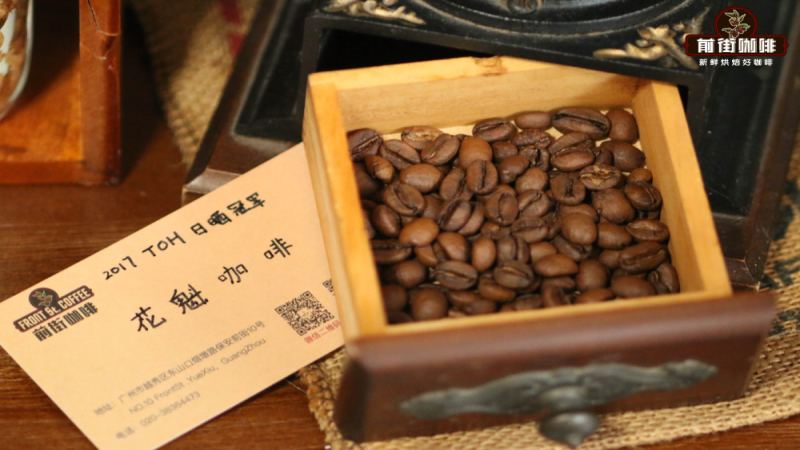
Since its debut in 2017, Huakui coffee has quickly become popular for its bright strawberry and cream aroma, making it a highly sought-after Ethiopian bean in cafes. From the initial TOH championship batch to the current 8.0 version, many enthusiasts have noticed that Huakui's flavor seems to change every year. This article will take you back to Huakui's origin, Guji Hambella, to learn about the sun-drying process at the Buku Abel processing plant, review the flavors and roasting curves of each version of Huakui that Front Street Coffee has acquired over the years, and analyze the causes of Huakui's aroma and the sources of its year-to-year differences. It will also share Front Street's V60 brewing parameters and techniques to help you better appreciate this classic coffee interwoven with passion fruit and berry notes.
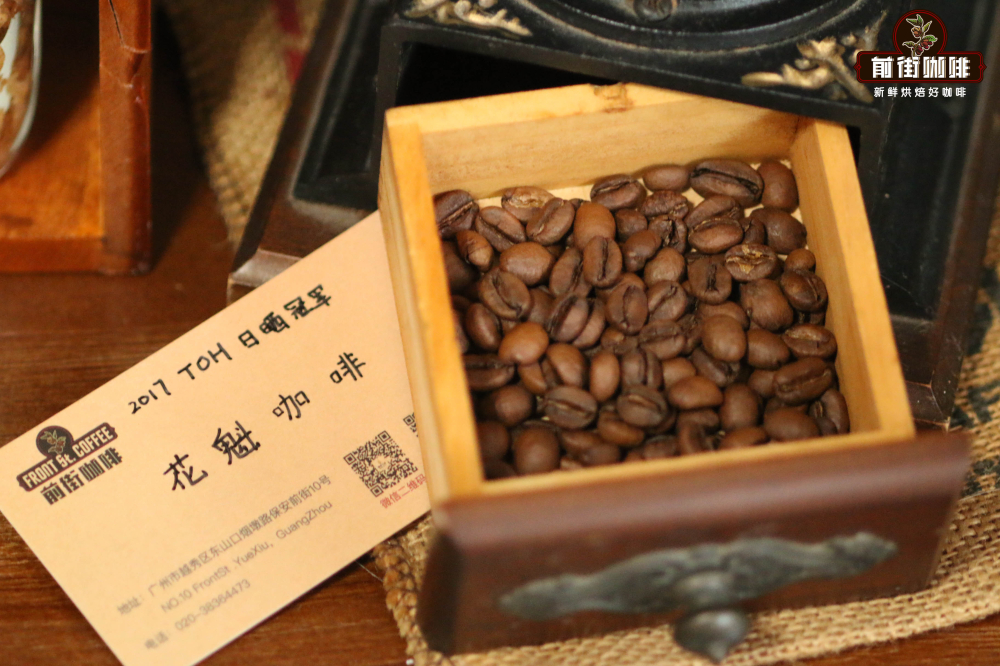
When Sidamo is mentioned, one coffee bean called "Huakui" is unavoidable. Since its birth in 2017, Huakui has maintained very high popularity. With its distinct strawberry-and-cream profile, it swept through many cafes, but because its starting point was so high, when each new harvest season arrives, people always compare it with previous years. Now this series has been updated to its eighth generation—"Huakui 8.0"—but quite a few friends have反馈 to Front Street that "this year's Huakui doesn't taste like Huakui" and "the flavor is different from before." Where exactly does this feeling come from?
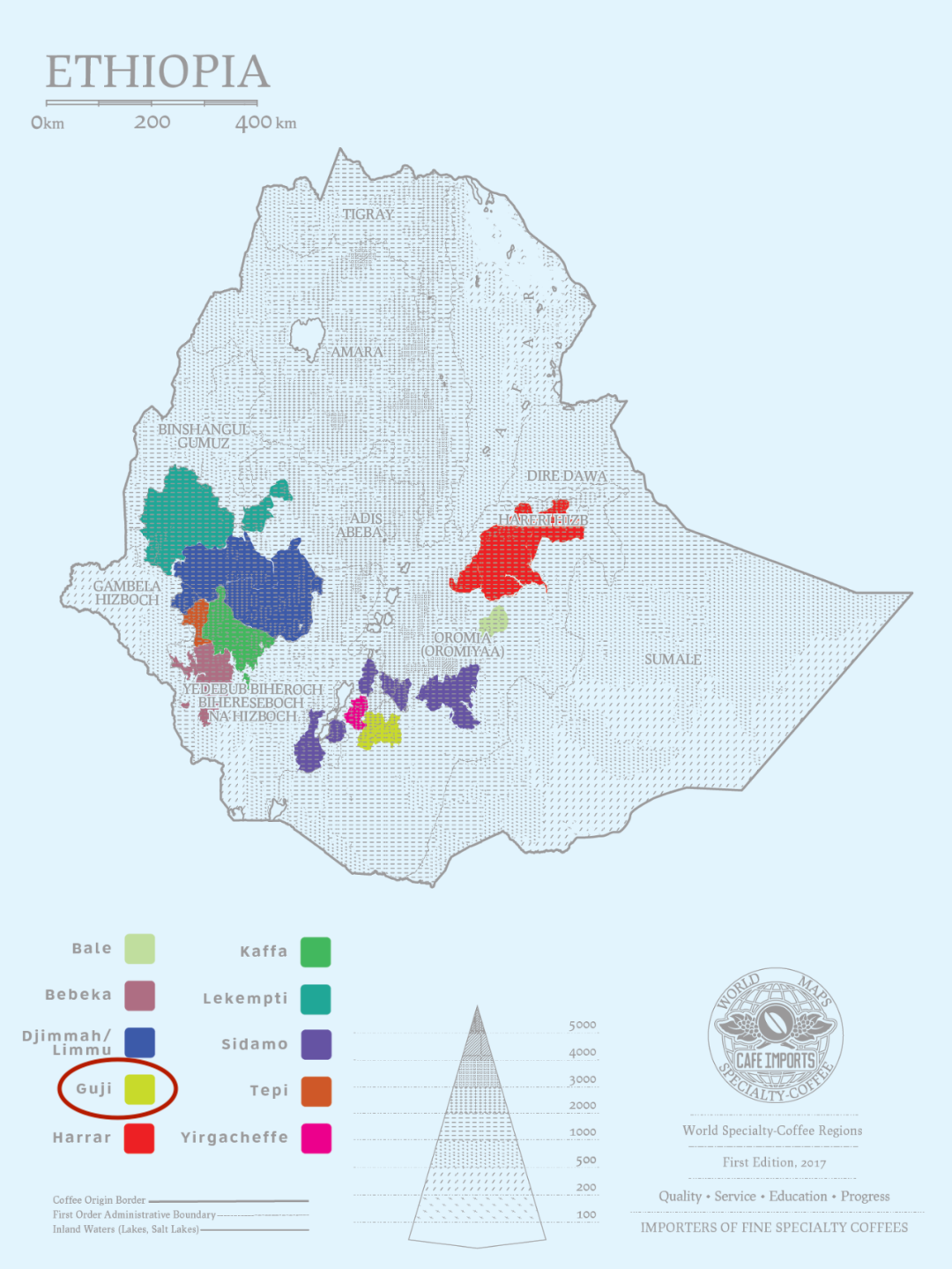
Guji Producing Region
The Guji producing region was originally part of the Sidamo producing region and was separately designated as a new region by the Ethiopian Commodity Exchange (ECX) in 2010. It is located southeast of Yirgacheffe, with complex terrain including towering mountains, valleys, and plains. The soil in this area is fertile black soil (Vertisol), nearly two meters deep, with an average altitude exceeding 1,800 meters. The unique geographical conditions bring significant temperature differences between day and night, providing an ideal terroir foundation for producing high-quality specialty coffee.
Guji Subregion—Hambella
Hambella faces Yirgacheffe's Kochore across the mountains to the west, and is adjacent to other Guji subregions—Shakiso, Uraga, and Kercha—to the southeast, north, and south respectively. At present, the Hambella producing area has about 20 processing plants of different scales.
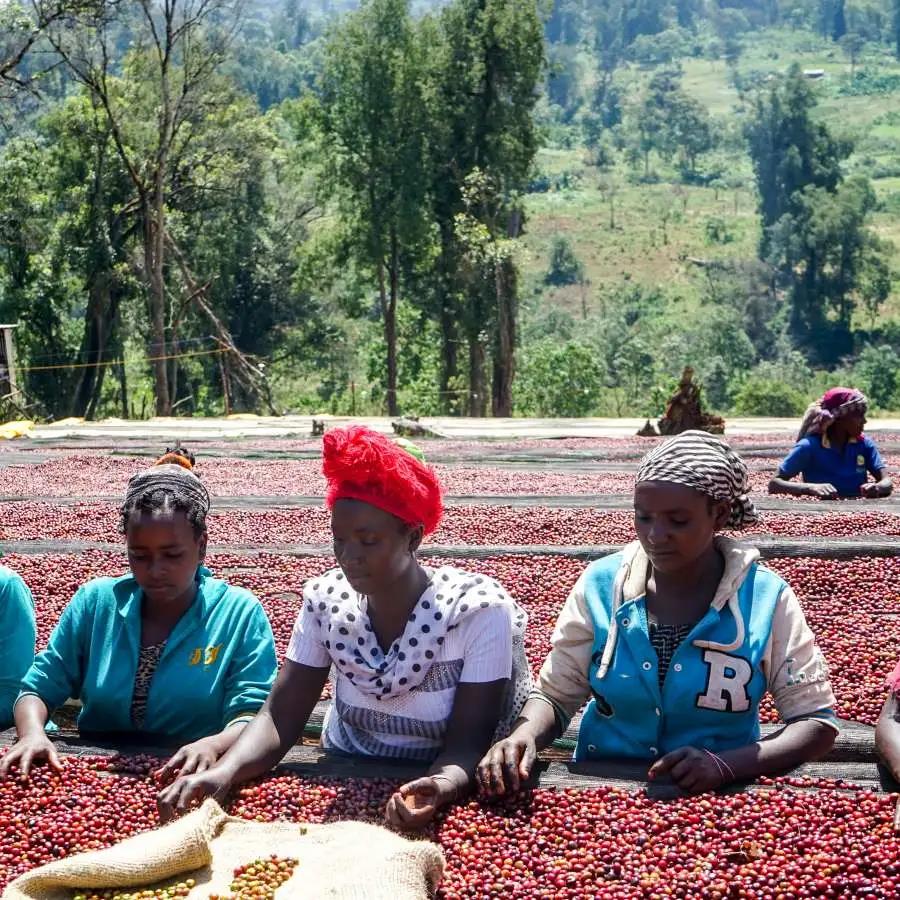
In the Hambella mountains, villagers live deep in the mountains at an altitude of 2,000 meters, with no roads and no electricity. The tap built with government assistance at the village entrance is the whole village's only source of drinking water. Although people and livestock live together in thatched huts, the atmosphere here is free and happy. Local children ride small donkeys to fetch water at the village entrance, always overjoyed, shyly exchanging corn and avocados found from who knows where for candy from the world beyond the mountains. On the drying beds, the coffee farmers turning the red coffee cherries are barefoot, singing, with sincere smiles. The beloved Huakui coffee beans are exactly what, after being hand-selected one by one by these simple villagers, finally make their way into the cup.
In 2017, a sun-dried bean from DW Company's "Buku Abel" processing plant won the TOH championship. A Chinese green bean importer named this bean Huakui; at the time, it had a rich strawberry and cream aroma. After that, DW Company expanded its estate processing plants in Dimtu, in the core producing area of Hambella, to four: "Buku Abel," "Buku Saysay," "Haro Soresa," and "Tirtiro Goye," with an annual coffee output of about 1,100 tons.
Strictly speaking, among these estates and processing plants, only sun-dried coffee from the "Buku Abel" processing plant can be called "Huakui coffee beans." This is also the reason why Huakui 2.0, Huakui 3.0, and Huakui 3.1 appeared successively in 2018 and 2019.
First, how did the name "Huakui" come about?
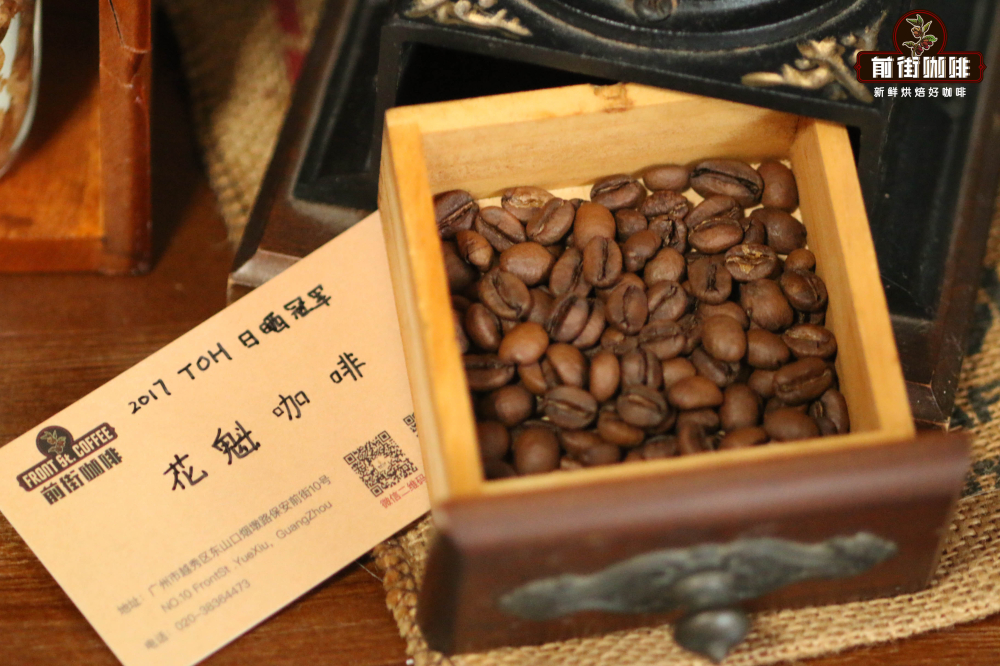
If you look carefully, you will find that the Chinese name and English name of this bean "Huakui" do not correspond. The Chinese name is "Huakui," while the English name is "Hambella," which literally translates as "Hambella." In 2017, Ethiopian DW Green Bean Company sent coffee beans to compete in the TOH (the Taste Of Harvest) green bean competition hosted by the African Coffee Association. A sun-dried lot from the "Buku Abel" processing plant won the TOH Ethiopia championship with its rich strawberry and cream aroma. This lot of green beans was subsequently introduced by a green bean trader in Beijing, and because of its championship status, it was given the name "Huakui."
In the same year, Li Jianfei from Beijing used this Huakui coffee to win second place in the China region of the 2017 World Brewers Cup, further boosting Huakui's popularity. That year, the Geisha variety was all the rage, and almost all competitors chose Geisha, yet Huakui, an Ethiopian heirloom variety, defeated many Geishas and took second place (although winning second place cannot rely on Huakui's quality alone, Huakui's excellent quality was undoubtedly one of the important factors). Therefore, it is not hard to understand why people would think this Huakui was comparable to Geisha.
The sun-drying process of Huakui coffee beans
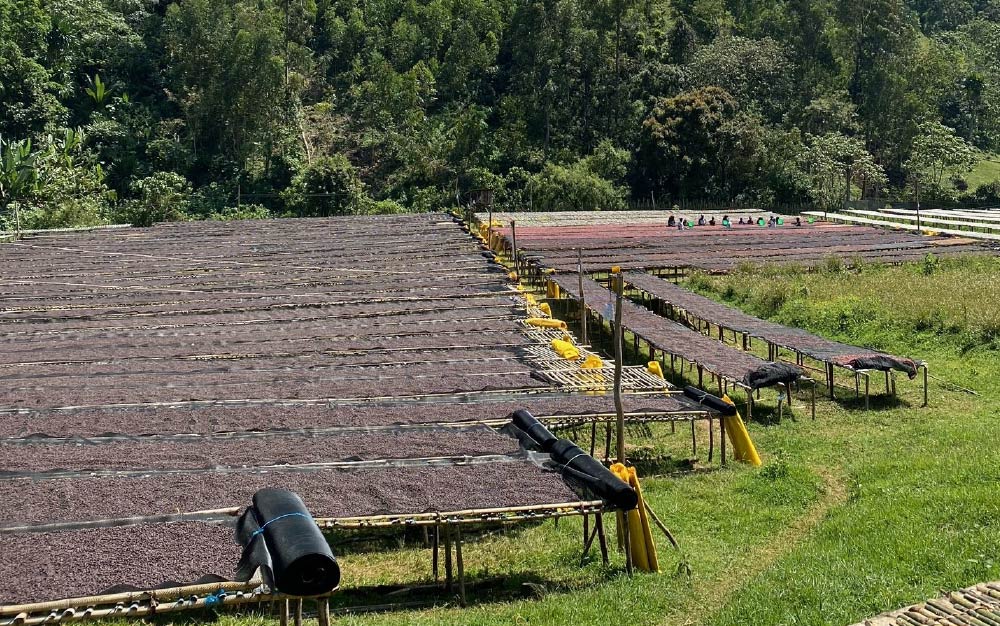
During the annual coffee harvest and processing season (December to January), the red coffee cherries picked by farmers must reach a sugar content of 30 or above before sun-drying can begin. In the first two days of sun-drying, the moisture of the red coffee cherries must be maintained so that the fruit sugars can fully undergo fermentation. At the same time, the high-altitude location allows the processing plant's nighttime temperature to drop to around 12 degrees Celsius, while not causing excessive fermentation due to overly high temperatures. At midday, when the temperature is higher, the cherries are covered in time to avoid sunburn. At night, thick plastic sheets are used to wrap them in case of sudden rain.
In this way, the red coffee cherries ferment and dehydrate at a relatively low temperature. After 18 days of sun-drying, when the moisture content of the green coffee beans drops to about 13%, sun-drying is stopped. They are packed into burlap sacks and placed in a warehouse under natural conditions of 12-22 degrees Celsius and 45-55% humidity for about 50 days of green bean resting and further dehydration. When the green bean moisture content reaches about 11%, they are then transported to the processing plant for hulling, sorting, and sale.
Introduction to the Huakui coffee beans acquired by FrontStreet Coffee over the years
FrontStreet Coffee—Ethiopia Huakui G1 Coffee Beans
Producing Region: Guji Hambella Processing Plant: Buku Able Altitude: 2,250-2,350 meters Variety: Local heirloom Grade: G1 Processing Method: Sun-dried Flavor: Strawberry, passion fruit, berry, pineapple, cream, nuts
FrontStreet Coffee—Ethiopia Huakui 2.0 Coffee Beans Producing Region: Guji Hambella Processing Plant: Goro Processing Plant Altitude: 2,316 meters Variety: Local heirloom Grade: G1 Processing Method: Sun-dried Flavor: Floral, tropical fruit, red wine, nuts
FrontStreet Coffee—Ethiopia Huakui 3.0 Coffee Beans Producing Region: Guji Hambella Processing Plant: Goro Processing Plant Altitude: 2,300 meters Variety: Local heirloom Grade: G1 Processing Method: Sun-dried Flavor: Floral, berry, mango, pineapple, apricot
FrontStreet Coffee—Ethiopia Huakui 3.1 Coffee Beans Producing Region: Guji Hambella Processing Plant: Mansa Shantang Processing Plant Altitude: 2,125 meters Variety: MANSA heirloom Grade: G1 Processing Method: Sun-dried Flavor: Tropical fruit, citrus, caramel, cream
FrontStreet Coffee—Ethiopia Huakui 4.0 Coffee Beans Producing Region: Guji Hambella Processing Plant: Buku Able Altitude: 2,350 meters Variety: Dega Processing Method: Sun-dried Lot: 2020 new lot Flavor: Rose, cream strawberry, citrus, passion fruit, oolong tea
In this batch of Huakui 4.0 purchased by FrontStreet Coffee, the beans are smaller than those of Huakui 3.0, and the reason lies in the different variety. Huakui 3.0 is an Ethiopian heirloom variety, while Huakui 4.0 is the Dega variety.
What is the Dega variety?
This year Ethiopia held the Cup of Excellence (CoE) for the first time, and the classification of coffee varieties among the top 28 finalists was unexpectedly detailed. Dega, ranked 21st, has two quite different versions of the origin of its name. One theory is that the name Dega comes from a type of firewood, and the aroma of Dega during roasting is similar to the smell of this firewood burning.

Another theory is that dega is the root of the word for "highland and shady place" in Ethiopian languages, and Dega also often grows in high-altitude areas. Unfortunately, because Dega did not enter the top 14 of this COE competition, no relevant flavor descriptions were collected. The Huakui 4.0 that FrontStreet Coffee acquired this time is exactly the Dega variety.
Roasting records of the 5 Huakui coffee beans from FrontStreet Coffee
FrontStreet Coffee Huakui G1 roasting curve: Yangjia 800N, charge weight 480g: charge when the drum temperature reaches 160 degrees Celsius, air damper set to 3.5, gas at 160, turning point at 1'32"; at 5'38'' and 154°C the bean surface turns yellow, the grassy smell completely disappears, and dehydration is complete. When the drum temperature is 162°C, reduce gas to 140, set the air damper to 4. When the bean surface shows ugly wrinkles and dark spots, and the toasted bread smell clearly turns into coffee aroma, it can be defined as the prelude to first crack. At this time, listen clearly for the sound of the first crack. At 8'37'' first crack begins, open the air damper fully, reduce gas to 80 at 191°C, set the air damper to 5, first crack development time 1'20'', drop at 198.1 degrees.
FrontStreet Coffee Huakui 2.0 roasting curve: Yangjia 800N, charge weight 480g: charge when the drum temperature reaches 190 degrees Celsius, air damper set to 3, gas at 140, turning point at 1'32"; at 5'51'' and 154°C the bean surface turns yellow, the grassy smell completely disappears, and dehydration is complete. When the drum temperature is 152°C, reduce gas to 120, set the air damper to 4. When the bean surface shows ugly wrinkles and dark spots, and the toasted bread smell clearly turns into coffee aroma, it can be defined as the prelude to first crack. At this time, listen clearly for the sound of the first crack. At 9'50'' first crack begins, open the air damper fully, reduce gas to 50 at 177 degrees, set the air damper to 5, first crack development time 1'30'', drop at 193 degrees.
FrontStreet Coffee Huakui 3.0 roasting curve: Yangjia 800N, charge weight 480g: charge when the drum temperature reaches 175 degrees Celsius, air damper set to 3, gas at 120, turning point at 1'32"; at 6'00'' and 152°C the bean surface turns yellow, the grassy smell completely disappears, and dehydration is complete. When the drum temperature is 116°C, raise gas to 140, set the air damper to 4. When the bean surface shows ugly wrinkles and dark spots, and the toasted bread smell clearly turns into coffee aroma, it can be defined as the prelude to first crack. At this time, listen clearly for the sound of the first crack. At 10'00'' first crack begins, open the air damper fully, first crack development time 1'40'', drop at 195 degrees.
FrontStreet Coffee Huakui 3.1 roasting curve: Yangjia 800N, charge weight 480g: charge when the drum temperature reaches 190 degrees Celsius, air damper set to 3, gas at 120, turning point at 1'38"; at 5'44'' and 153°C the bean surface turns yellow, the grassy smell completely disappears, and dehydration is complete. When the drum temperature is 136°C, raise gas to 1146, set the air damper to 4. When the bean surface shows ugly wrinkles and dark spots, and the toasted bread smell clearly turns into coffee aroma, it can be defined as the prelude to first crack. At this time, listen clearly for the sound of the first crack. At 8'28'' first crack begins, open the air damper fully, reduce gas to 50 at 173 degrees, keep the air damper unchanged, first crack development time 1'40'', drop at 192 degrees.
FrontStreet Coffee Huakui 4.0 roasting curve: Yangjia 800N, charge weight 480g: charge when the drum temperature reaches 175 degrees Celsius, air damper set to 3, gas at 120. Raise to 140 degrees, set the air damper to 4. Roast until 6'00'', temperature 151.7 degrees, the bean surface turns yellow, the grassy smell completely disappears, and dehydration is complete. When the bean surface shows ugly wrinkles and dark spots, and the toasted bread smell clearly turns into coffee aroma, it can be defined as the prelude to first crack. At this time, listen clearly for the sound of the first crack. At 9'50'' first crack begins, open the air damper fully, reduce gas to 80 at 188 degrees, first crack development time 1'40'', drop at 196 degrees.
FrontStreet Coffee Brewing Parameters & Technique
In order to fully extract the rich layering of Huakui coffee beans, Front Street uses a relatively high water temperature and a finer grind for extraction, but to avoid over-extraction caused by high temperature, it uses a faster-flowing dripper such as the V60. The V60 dripper has a 60-degree conical shape. The conical angle allows the coffee grounds to gather together, and during pouring it also lets the water flow automatically converge toward the center of the dripper, ensuring sufficient contact time between water and coffee grounds, thereby extracting a suitable coffee liquid. In addition, the ribs on the inner wall of the V60 dripper extend in a clockwise spiral from the bottom to the top, leaving enough space between the filter paper and the dripper, improving water flow, and together with the large hole at the bottom, the flow rate is relatively faster than with many drippers.
Dripper: V60 #01 Water Temperature: 90-91 degrees Dose: 15g Coffee-to-Water Ratio: 1:15 Grind Size: EK43s setting 10 / caster sugar size (80% passes a No. 20 sieve)
Front Street brewing technique: pour 30 grams of water in the first stage for a 30-second bloom, then pour 95 grams (the electronic scale shows about 125 grams), finishing the pour in about 1 minute. When the water level drops to 2/3 of the coffee bed, pour the remaining 100 grams (the electronic scale shows about 225 grams), finishing the pour in about 1 minute 40 seconds to 1'45". The drip finishes at 2'00'' ~ 2'10", remove the dripper, and extraction is complete.
Brewing Flavor Description [Huakui G1] Smooth, passion fruit, fermented wine aroma, jackfruit, strawberry. [Huakui 2.0] The overall mouthfeel is clean, the berry aroma is more pronounced, and it has a nutty fragrance, making the mouthfeel richer. [Huakui 3.0] Light strawberry jam, black tea tea-like sensation, short sweet finish. [Huakui 3.1] Floral, cream, tropical fruit, caramel, long-lasting sweet aftertaste. [Huakui 4.0] Citrus acidity, full berry juice sensation, lemon black tea tea-like sensation, long-lasting sweetness.
From the flavor performance of the brews above, Front Street believes that in fact it is not only Huakui; basically most coffees' taste fluctuates every year. Why? Coffee is essentially still a plant, an economic crop. Factors including climate, planting soil, fertilization conditions, and rainfall in a given year will more or less affect coffee yield and quality, and later the processing technology and control of details during processing will also more or less affect the final coffee taste. So in fact Huakui's taste will have slight differences every year.
In addition, picking and sorting are also factors that make each year's lot different. If you look carefully, you will find that the 2017 Huakui coffee beans were uneven in size (a characteristic of Ethiopian coffee beans, first because the coffee grading system is based on defects, and second because there are many heirloom varieties). The next year's Huakui 2.0 coffee beans became uniform in size, and now Huakui 4.0's beans are smaller than Huakui 3.0's. But from the appearance of the coffee beans, differences from previous years can also be seen. Coming to this year, Huakui's changes are not limited to this. This year, washed Huakui coffee beans and black honey-processed Huakui coffee beans can even be seen, and the name Huakui has also become more diverse.
The above content is compiled by CoffeeHunters, a coffee news website.


